Best Crypto Exchanges Compared: Fees, Security, and Features
Picking a crypto exchange is one of those decisions that feels way harder than it should be. There are dozens of platforms, they all claim to be the safest and cheapest, and half of them are...

Picking a crypto exchange is one of those decisions that feels way harder than it should be. There are dozens of platforms, they all claim to be the safest and cheapest, and half of them are basically shouting at you to sign up. But the one you land on actually matters a lot. It decides how much you bleed in fees, how safe your money is, and whether you'll want to throw your phone across the room during a market crash when their app freezes.
So I put together this comparison to cut through the noise. We'll look at what the major players charge, how they protect (or don't protect) your funds, what coins you can actually buy, and whether they're a pain to use day to day.
Quick stat to set the scene: Chainalysis reckons global crypto adoption jumped more than 24% in transaction volume during 2023. Which means a whole lot of people are pouring money into exchanges without reading the fine print. If that's you, no judgment. Let's fix it.
Table of Contents
- Why Choosing the Right Crypto Exchange Matters
- Key Criteria for Evaluating the Best Crypto Exchanges
- Fee Structures Compared
- Security Features That Actually Protect Your Assets
- Supported Coins and Trading Tools
- Beginner vs. Advanced Trader Needs
- How to Choose the Right Exchange for Your Goals
- Frequently Asked Questions
Why the Exchange You Pick Actually Matters
Think of an exchange as the front door to crypto. It's where your regular money turns into Bitcoin or whatever else, where your trades go through, and where your funds just... sit until you move them somewhere safer. And that last part is the scary bit. A bad exchange can quietly nibble away at your returns with sneaky fees, leave you exposed to hackers, or ghost you when you need support most.
If you needed proof this stuff is serious, look no further than FTX. When it collapsed in November 2022, it took roughly $8 billion in customer money down with it. That's not a rounding error. That's people's savings, gone. Ever since, regulators have been watching much more closely, and the exchanges that survived have generally tightened up their compliance, insurance, and transparency. But don't assume they're all equal now. They're not, and the gaps between them can genuinely change how well your investments do.
And if you're thinking about crypto as one slice of a bigger financial picture (which, honestly, you should be), it helps to look at how it fits alongside everything else you own. Resources like Wealthmax are useful for that kind of zoomed-out view, treating crypto as part of a portfolio rather than some isolated gamble you make at 2am.
What Actually Separates a Good Exchange From a Bad One
Before we get into specific platforms, let's talk about what to look for. Most solid comparisons come down to four things, and they all matter for different reasons.
There's the fee situation, obviously. That covers the maker/taker percentages on trades, plus what you pay to withdraw or deposit. These numbers swing wildly, from 0.1% to well over 1% per trade, depending on the platform and how you're paying.
Then there's security, which I'd argue is more important than fees. We're talking cold storage ratios, insurance funds, two-factor authentication, and whether the exchange has ever been hacked. A cheap exchange with weak security is a terrible deal, because one breach can vaporize your entire balance while you sleep.
Coin selection and liquidity decide whether you can even buy the stuff you want, and whether you'll get a fair price when you do. Thin liquidity means slippage, and slippage means you pay more than you expected on bigger orders.
Finally, user experience. The boring-sounding stuff. How good is the mobile app, how fast is support, how painful is the KYC signup, and does the platform actually teach beginners anything? This gets overlooked a lot, but it matters more than you'd think.
The trick is weighing all four together. Rock-bottom fees mean nothing if the security is a house of cards.
Fees: The Numbers Nobody Reads Until It's Too Late
Fees are usually the first thing people check, and fair enough. If you trade a lot, you can lose thousands a year to a fee structure you never bothered to understand. Most exchanges run a maker-taker model, where "makers" who add liquidity with limit orders pay less than "takers" who yank liquidity out with market orders. Simple enough in theory.
Here's how the big platforms stack up on standard spot trading fees for regular folks:
| Exchange | Maker Fee | Taker Fee | Withdrawal Fee (BTC) | Fiat Deposit Fee |
|---|---|---|---|---|
| Binance | 0.10% | 0.10% | Network-based (~0.0002 BTC) | Free (bank transfer) |
| Coinbase | 0.40% | 0.60% | Variable, network-based | 1.49% (bank) / 3.99% (card) |
| Kraken | 0.16% | 0.26% | Network-based (~0.00015 BTC) | Free (ACH) / 3.75% (card) |
| KuCoin | 0.10% | 0.10% | Network-based (~0.0004 BTC) | Varies by provider |
| Bitstamp | 0.30% | 0.40% | Network-based | Free (SEPA) / 5% (card) |
| Gemini | 0.20% | 0.40% | Free (limited monthly) | Free (ACH) / 3.49% (card) |
You can see the pattern pretty quickly. Binance and KuCoin come in cheapest on the baseline, which is why the high-frequency crowd loves them. Coinbase is pricier, no getting around that, but it makes up for it with a slick interface and a brand people actually trust. For a lot of beginners, that trade-off is worth it. You're basically paying a bit extra for peace of mind.
One thing worth knowing: most exchanges will knock your fees down if you hold their native token. Pay your Binance fees in BNB and you get a discount. KuCoin does the same thing with KCS. Over a year of active trading, those little discounts add up more than you'd expect, so it's worth factoring in.
Oh, and how you deposit money matters a ton. Card payments are almost always the most expensive option everywhere, often north of 3%. Bank transfers (ACH, SEPA) are usually free or close to it, but slower. You might be waiting one to three business days for the money to land, which is annoying when the market's moving.
Security: This Is Where the Good Ones Show Off
If fees are where exchanges compete, security is where they really separate themselves. Chainalysis reported that over $1.7 billion got stolen from crypto platforms and protocols in 2023 alone. Let that sink in. No exchange is bulletproof, so you want one that takes this seriously.
Cold Storage and Insurance
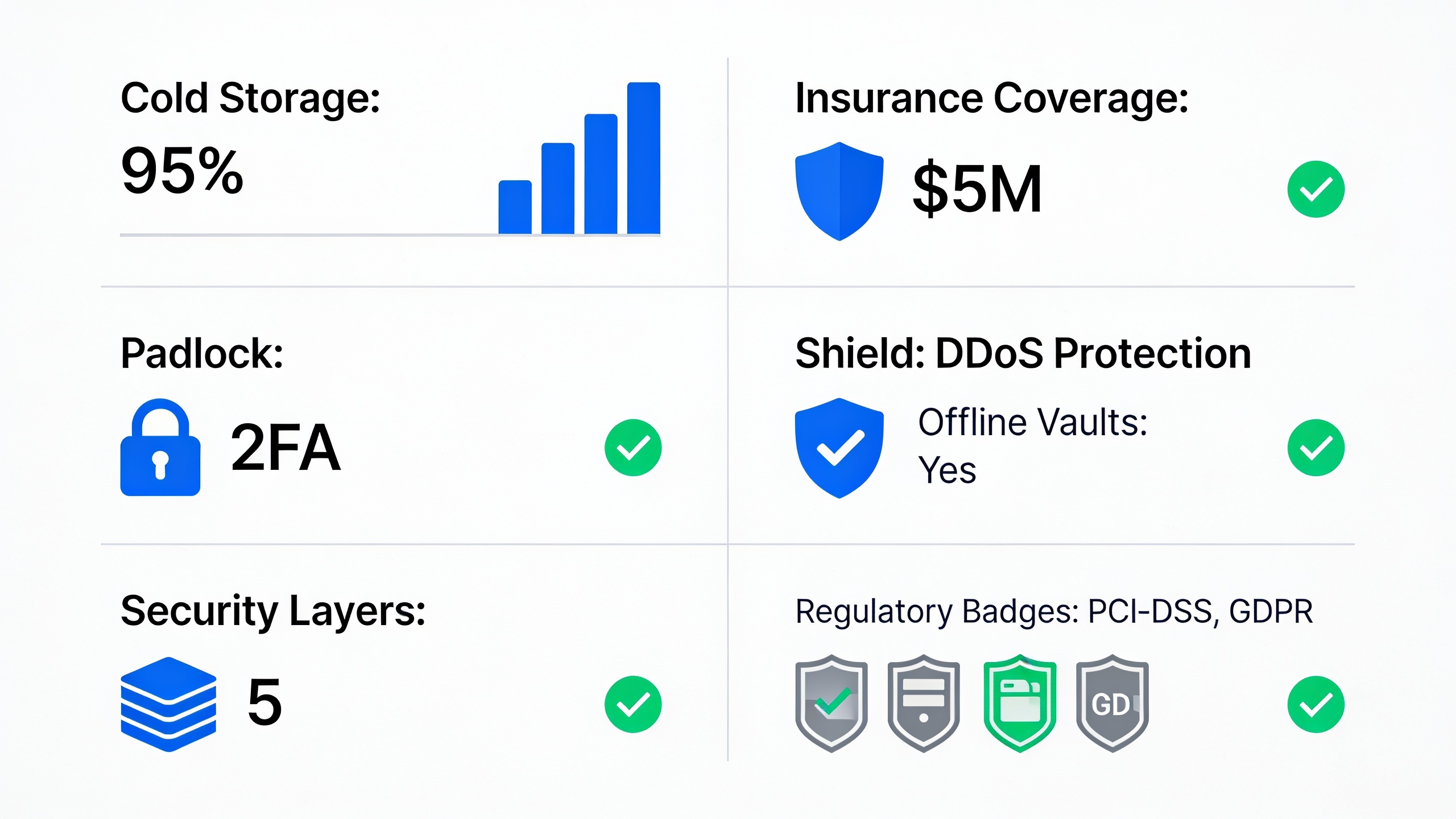
The reputable ones keep the huge majority of user funds, usually somewhere between 90% and 98%, in cold storage. That just means offline wallets, physically disconnected from the internet, so a hacker sitting in some basement can't touch them remotely. Coinbase says it keeps around 98% of customer crypto in cold storage and carries crime insurance on the portion sitting in hot wallets. Kraken and Gemini do similar things, and Gemini's worth a mention here because it's one of the few carrying extra insurance through Aon on the digital assets it holds in custody. That's not nothing.
2FA and Withdrawal Whitelisting
Two-factor authentication is just standard now, table stakes. But the better exchanges go a step further with withdrawal address whitelisting. Basically, you pre-approve which wallet addresses you're allowed to send funds to, which adds a delay. And that delay can be the thing that saves you if someone breaks into your account, because they can't just drain it to a fresh address instantly.
Track Record
Honestly, the most revealing security stat is just... history. What's actually happened to them? Binance got hit in 2019 and lost around 7,000 BTC, but they'd set up a Secure Asset Fund for Users (SAFU) and reimbursed everyone affected. Kraken, meanwhile, has never had a major hack since launching back in 2011, which tells you something about how conservatively they've built things. When you're comparing platforms, dig into whether they've been breached and how they handled it. That tells you way more than any glossy marketing page.
| Security Factor | Binance | Coinbase | Kraken | Gemini |
|---|---|---|---|---|
| Cold storage ratio | ~90% (est.) | ~98% | ~95% (est.) | High, undisclosed exact % |
| Insurance fund | SAFU reserve | Crime insurance | Not publicly detailed | Aon-backed insurance |
| Major breach history | 2019 (reimbursed) | None major | None reported | None reported |
| Regulatory licenses | Multiple regional | US-regulated, publicly listed | US and international licenses | NYDFS-regulated trust |
Can You Actually Buy the Coins You Want?
Past fees and security, the question most people really care about is dead simple: can I buy the thing I want to buy? And this is where the size and reach of an exchange starts to matter.
Binance is the giant here, supporting over 350 cryptocurrencies and a mountain of trading pairs. If you're hunting obscure altcoins, it's your playground. KuCoin plays a similar game and often lists newer tokens before the big names do, which is great if you like getting in early on projects nobody's heard of yet (with all the risk that implies). Coinbase and Kraken are more cautious. They vet coins carefully before listing them, so you get a smaller menu but arguably a more trustworthy one. Coinbase runs 200+ assets, Kraken sits around 190.
If you want to do more than just buy and hold, the tools matter too. Margin trading, futures, staking, automated recurring buys. Binance and KuCoin have huge derivatives markets, with leverage up to 125x on some pairs. Do I recommend 125x leverage? Absolutely not. That's a fast way to lose everything unless you genuinely know what you're doing, and most people don't. Coinbase went the opposite direction, keeping things simple and offering staking rewards on stuff like Ethereum and Cardano right in the main app. It's built for the long-term holders, not the day traders.
App quality is all over the place too. Kraken Pro and Binance both hook into TradingView for proper charting, which serious traders appreciate. Coinbase's app is famously easy for newcomers, though sometimes that simplicity means experienced traders feel like they're missing tools.
Here's a thought that stuck with me: crypto is global by nature, so exchanges have to worry about accessibility the same way any international service does. It reminds me of how travel companies like Ricaritranslombok make it easy for tourists to get around unfamiliar parts of Indonesia. Exchanges are doing their version of that, supporting local payment methods, multiple languages, and region-specific rules so people all over the world can actually use them without hitting a wall.
Beginner or Advanced? It Changes Everything
Here's the thing people miss: there's no universal "best" exchange. It totally depends on who you are and what you're trying to do.
If you're just starting out, you probably care more about simplicity, decent tutorials, and being able to reach a human when something goes wrong than you do about shaving 0.1% off a trade. Coinbase and Gemini both pour money into onboarding, learning content, and support teams. Yeah, they charge more. But if paying a slightly higher fee stops you from making a dumb, expensive mistake while you're learning the ropes? That's money well spent.
Advanced traders want the opposite: fast execution, deep order books, serious charting, and the lowest possible fees at volume. Binance and Kraken Pro are built for them, with API access for the algo crowd, all the fancy order types (stop-limit, trailing stop, post-only), and fee discounts that scale with your 30-day trading volume.
Something else worth mentioning. A lot of the questions you'll have won't be answered anywhere official. Weird platform quirks, oddly specific withdrawal issues, tax stuff. That's usually when you go find a community that's been through it. Sites like Qastme are handy for crowdsourcing answers to those niche questions, the kind that support tickets tend to respond to with a copy-pasted FAQ that doesn't actually help.
How to Actually Pick One
Okay, so with all these moving parts, how do you narrow it down? A few practical steps.
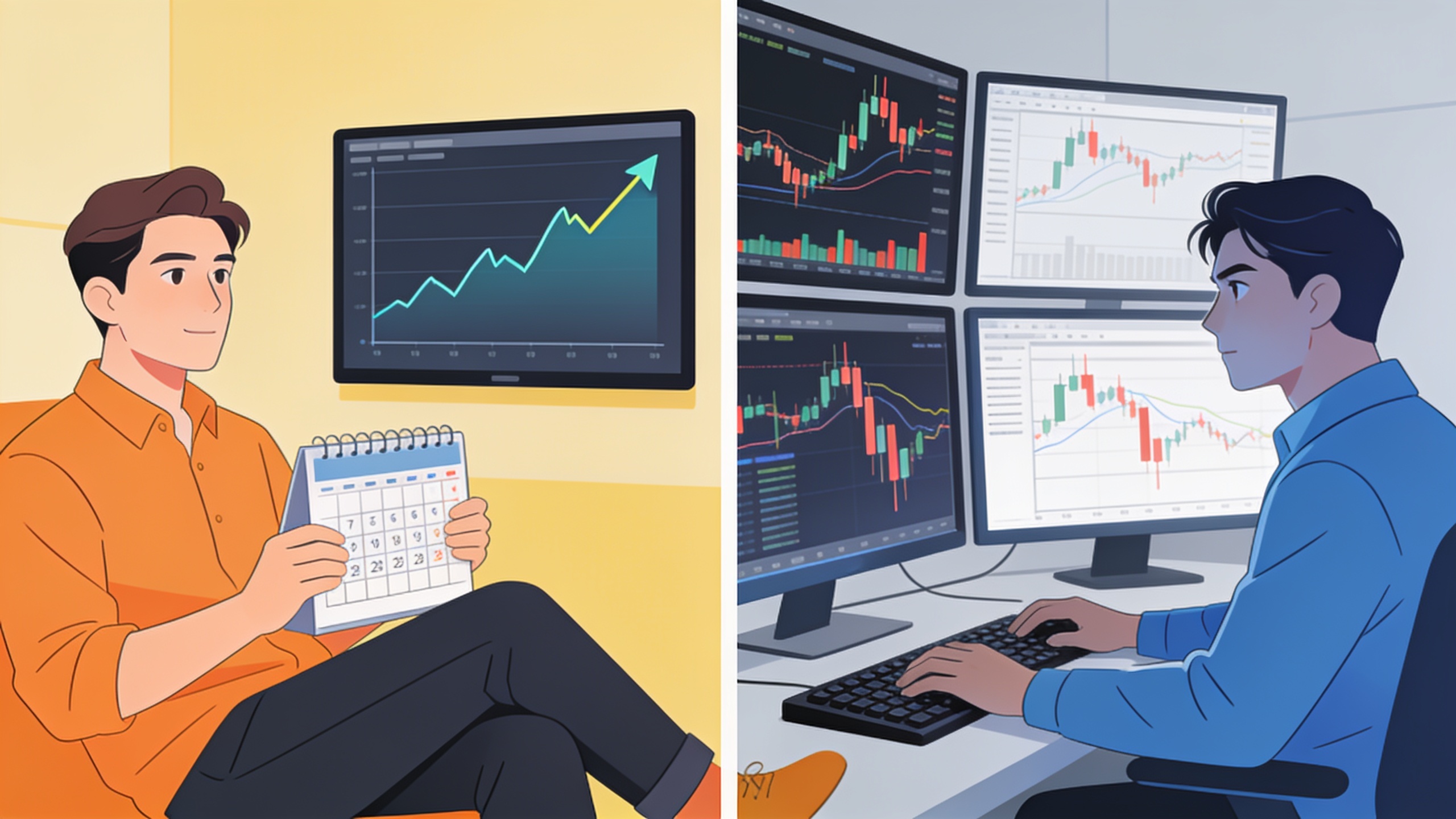
Start by figuring out how often you'll trade. If you're the occasional-buy, hold-for-years type, fees barely matter compared to security and ease of use. But if you're trading multiple times a week, even a 0.2% difference compounds into real money over a year. Do that math before you commit.
Next, check the regulatory situation where you live. Coinbase and Gemini both operate under strict US rules, including state licensing and, for Coinbase, full public-company reporting to the SEC. More oversight usually means more accountability, though the flip side is they can be slower to roll out new features than the looser competitors. Trade-offs everywhere.
Then, and I can't stress this enough, test the platform with a small deposit before you go all in. Poke around the interface, do a couple of tiny trades, try a withdrawal and see how long it takes. This kind of hands-on kicking-the-tires reveals stuff no comparison article (including this one) can fully capture.
And finally, think about spreading things out. Not just your coins, but your platforms. Dumping everything onto one exchange, no matter how solid, puts all your eggs in one basket. Plenty of experienced people split their holdings across two or three exchanges and shove a chunk into self-custody wallets for long-term storage. It's a bit more hassle, but it's how you sleep at night.
Frequently Asked Questions
Which exchange is actually the cheapest?
Binance and KuCoin usually win on standard spot fees, both starting at 0.10% for makers and takers. But your real cost depends on how you deposit, your trading volume tier, and whether you're using native token discounts. So do the math on your specific situation instead of trusting the advertised numbers.
Is Coinbase safer than Binance?
Both have strong security records these days, but they're structured differently. Coinbase is a publicly traded, US-regulated company with a ton of compliance reporting. Binance operates across a bunch of jurisdictions with varying regulatory relationships. Coinbase being open about its cold storage percentages and insurance gives a lot of US investors more comfort. That said, Binance has seriously beefed up its security since the 2019 hack, so it's not like they're careless.
Do I really need more than one exchange?
Not necessarily. But plenty of experienced traders use several to access different coins, spread out their risk, or take advantage of different fee structures. If you're a casual investor just buying and holding a few big coins, one reputable exchange is plenty.
What's the difference between a centralized and decentralized exchange?
Centralized exchanges (CEXs) like Binance, Coinbase, and Kraken hold your funds and match orders internally. Convenient, and there's actual customer support. Decentralized exchanges (DEXs) like Uniswap let you trade peer-to-peer straight from your own wallet, no middleman holding your money. More control, but also more responsibility, and you'd better know what you're doing.
How do I know an exchange is legit before I hand over money?
Check for regulatory licensing where you live, look up its history of security incidents, read independent reviews (not the sponsored fluff), and make sure it's open about cold storage and insurance. And again, throw in a small test deposit before you trust it with anything serious.
Final Thoughts
There's no magic "best" exchange that's perfect for everyone. The right one depends on how you trade, how much risk you can stomach, and where you live. What matters is treating this like any big money decision: compare the fees properly, dig into the security history, confirm you can buy what you want, and test the thing yourself before committing real cash. The crypto market keeps growing up, and staying on top of your research is honestly one of the simplest ways to protect what you've got and trade without that nagging feeling in the back of your head.