Bitcoin vs Ethereum: Which Crypto Should You Actually Buy?
If you've spent more than five minutes around crypto, you've bumped into this question. Bitcoin or Ethereum? It comes up constantly, from people who just opened their first Coinbase account and from...

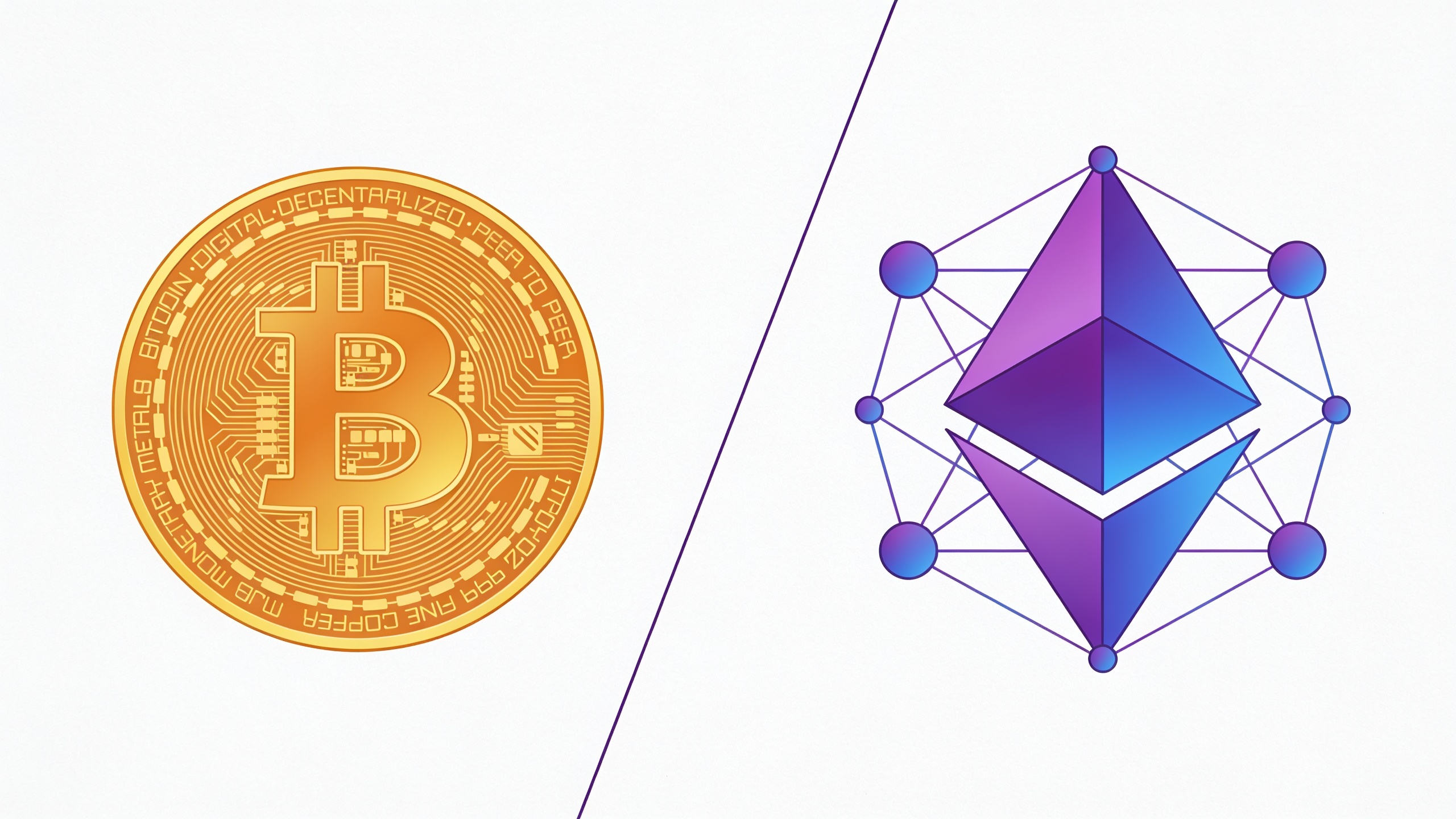
If you've spent more than five minutes around crypto, you've bumped into this question. Bitcoin or Ethereum? It comes up constantly, from people who just opened their first Coinbase account and from folks who've been in the game since 2016. And for good reason. These two basically run the show. Together they make up more than half of the entire crypto market's value.
But here's what trips people up: everyone lumps them together like they're two flavors of the same thing. They're not. They were built for wildly different reasons, run on different technology, and honestly attract pretty different kinds of investors. Before you throw money at either one (or both), it helps to actually understand what makes them tick.
So let's get into it.
Table of Contents
- Understanding Bitcoin: Digital Gold
- Understanding Ethereum: The Programmable Blockchain
- Bitcoin vs Ethereum: Technology and Architecture
- Scalability and Transaction Speed Compared
- Use Cases: Store of Value vs Utility Network
- Investment Potential and Market Performance
- Bitcoin vs Ethereum: Risk Factors to Consider
- Which Should You Choose—Or Should You Own Both?
- Frequently Asked Questions
Understanding Bitcoin: Digital Gold
Bitcoin showed up in January 2009, cooked up by someone (or some group) going by the name Satoshi Nakamoto. Nobody knows who that actually is, which is one of the more fun mysteries of the internet. The whole thing kicked off with a whitepaper called "Bitcoin: A Peer-to-Peer Electronic Cash System." The pitch was simple: digital money that doesn't need banks, governments, or middlemen poking their fingers in.
Funny thing though. The story changed over the years. Bitcoin started as "electronic cash," but almost nobody uses it to buy coffee anymore. Instead it turned into something closer to digital gold, a place to park value. A lot of that comes down to one thing baked right into the code: there will only ever be 21 million bitcoins. That's it. No printing more. That built-in scarcity is a big part of why people treat it like a hedge.
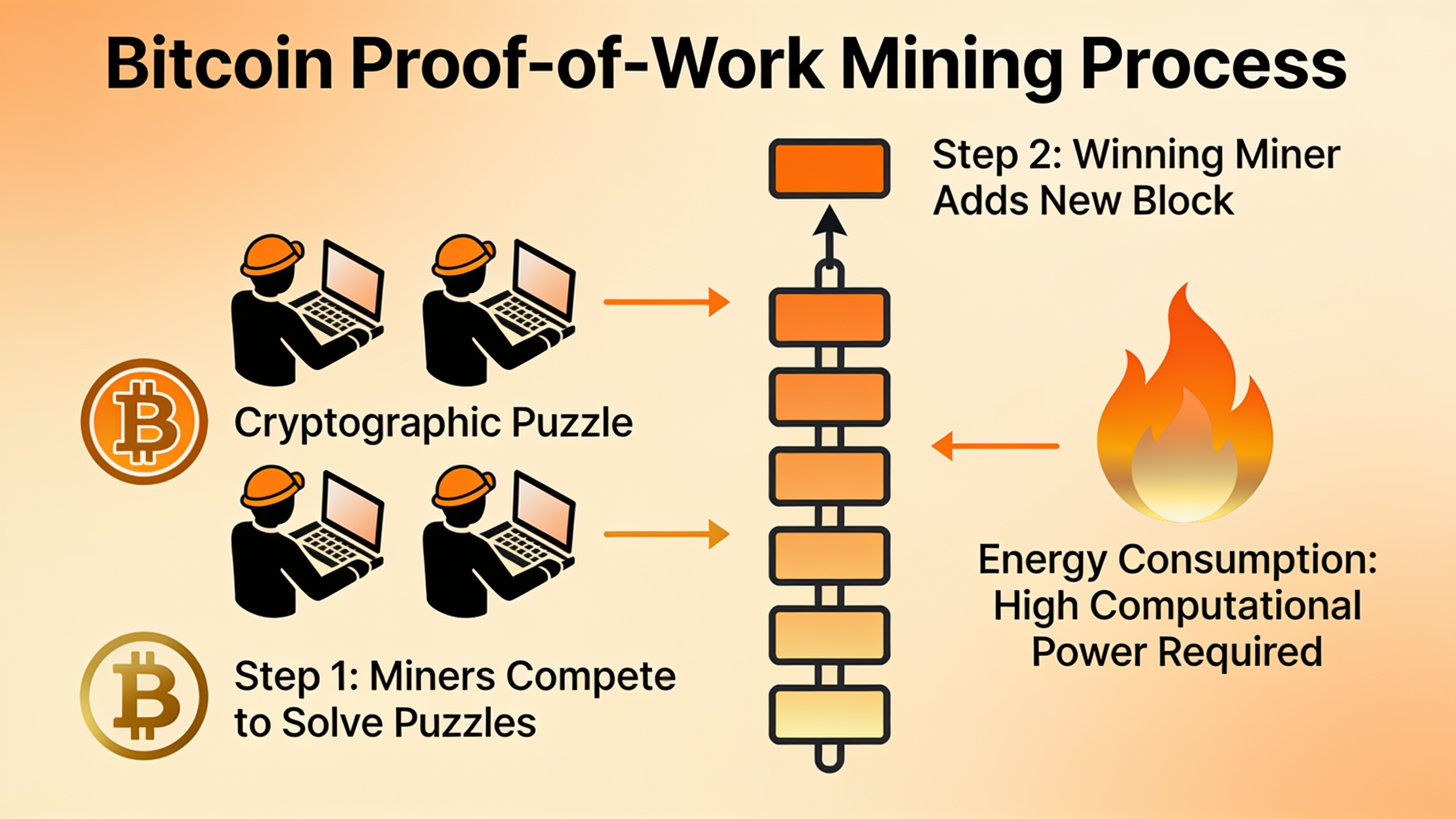
Under the hood, Bitcoin runs on Proof-of-Work. Miners burn through computing power racing to solve cryptographic puzzles, and whoever wins gets to add the next block and pocket some BTC. Yes, it eats a ton of energy. But it's also proven ridiculously secure. In fifteen-plus years, nobody has cracked the protocol itself.
And the big money finally showed up. When the US approved spot Bitcoin ETFs in January 2024, that was a genuine turning point. BlackRock's IBIT fund alone pulled in billions within months. Meanwhile companies like MicroStrategy have been hoarding Bitcoin on their balance sheets like it's their whole personality. Which, to be fair, it kind of is at this point.
Understanding Ethereum: The Programmable Blockchain
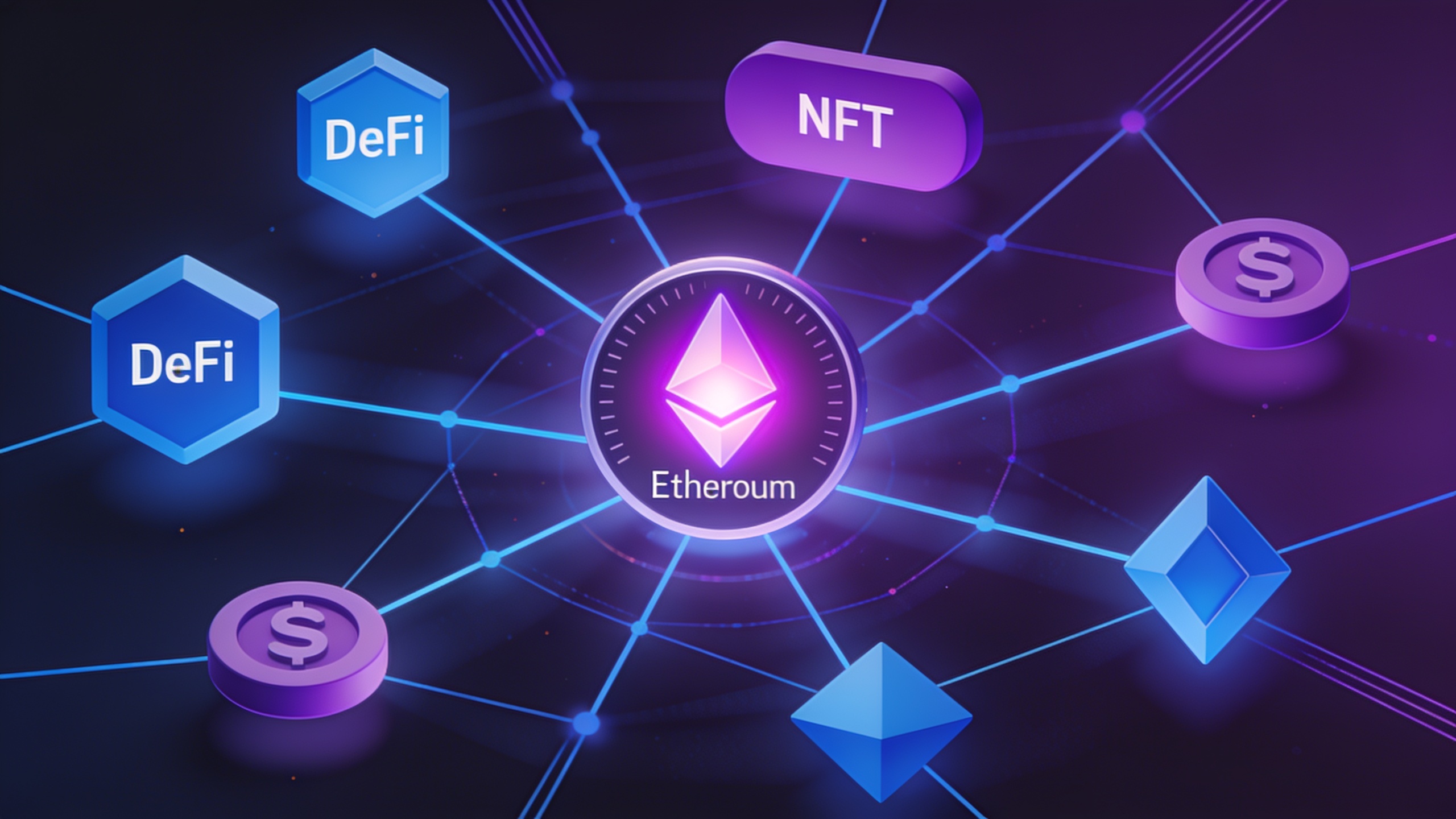
Ethereum went a completely different direction. Vitalik Buterin pitched it in 2013 and it launched in 2015, and the idea wasn't "let's make better digital cash." It was "let's build a world computer." Basically a decentralized platform you can run programs on. Those programs are called smart contracts, and they're the whole reason Ethereum matters.
That programmability opened up a universe Bitcoin was never designed to touch. DeFi, NFTs, DAOs, and thousands of other apps all live on top of Ethereum. Bitcoin's stripped-down design just can't do any of that, and it was never trying to.
The other huge moment for Ethereum came in September 2022 with "The Merge," when it ditched Proof-of-Work and switched to Proof-of-Stake. The energy savings were absurd. Roughly 99.95% less power, according to the Ethereum Foundation. That basically knocked out one of the loudest criticisms crypto had been catching for years.
One more thing worth knowing: Ethereum doesn't have a hard supply cap like Bitcoin's 21 million. Its monetary policy is more of a moving target. After an upgrade called EIP-1559 rolled out in 2021, a chunk of transaction fees actually get burned. So during busy periods, ETH can become deflationary. It's a weirder, more dynamic system than Bitcoin's set-it-and-forget-it approach.
Bitcoin vs Ethereum: Technology and Architecture
This is where the two really split apart, philosophically.
Bitcoin keeps things simple on purpose. Its scripting language is deliberately limited. It's not trying to be clever, it's trying to be bulletproof. And honestly, that minimalism is the point. Fewer moving parts means fewer things to attack. Bitcoin does one job, moving value securely, and it does it without drama.
Ethereum went the opposite way. Its Virtual Machine (the EVM) is Turing-complete, which is a fancy way of saying developers can build pretty much anything on it. That flexibility is exactly why most of DeFi lives there, why the majority of USDC and a big chunk of USDT run on it, and why tokenized assets keep landing on Ethereum first. More power, more possibilities. Also more ways for things to go sideways, but we'll get to that.
| Feature | Bitcoin | Ethereum |
|---|---|---|
| Launch Year | 2009 | 2015 |
| Consensus Mechanism | Proof-of-Work | Proof-of-Stake |
| Max Supply | 21 million BTC | No fixed cap (dynamic issuance) |
| Average Block Time | ~10 minutes | ~12 seconds |
| Primary Use Case | Store of value, digital gold | Smart contracts, DeFi, dApps |
| Programming Capability | Limited scripting | Turing-complete (EVM) |
| Energy Consumption | High (PoW mining) | Low (~99.95% less than PoW) |
| Transaction Fees | Variable, can spike during congestion | Variable, reduced with Layer 2 scaling |
| Annual Inflation Rate | Diminishing, halves every 4 years | Variable, can be net deflationary |
Scalability and Transaction Speed Compared
Okay, speed. This is one of the most argued-about parts of the whole comparison, and it actually matters if you care whether these things can be used day to day.
Bitcoin's base layer is slow. We're talking roughly 3 to 7 transactions per second, which sounds almost comically low. Blame the 1MB block size and the 10-minute block time. To get around that, developers built the Lightning Network, a Layer 2 system that handles most transactions off-chain and only settles up on the main blockchain periodically. It makes payments near-instant and dirt cheap. Not everyone uses it, but it exists and it works.
Ethereum had its own congestion nightmares, especially during the 2021 NFT frenzy and "DeFi summer." I remember gas fees blowing past $100 per transaction. For a $30 swap. It was miserable. But Ethereum leaned hard into a "rollup-centric" scaling plan, and now Layer 2 networks like Arbitrum, Optimism, and Base soak up most of the everyday volume. Fees on those are often under a dime, and they still borrow Ethereum's security.
Then the 2024 Dencun upgrade came along and introduced something called "blob" storage, which cut those Layer 2 fees by around 90% (per L2Fees.info). That was a genuinely big deal for anyone building consumer apps on Ethereum.
Neither of them touches Visa, which chews through thousands of transactions a second. But both made real progress by building scaling layers on top rather than tearing up their core design, which is probably the smarter long-term move anyway.
Use Cases: Store of Value vs Utility Network
Honestly, the cleanest way to think about Bitcoin vs Ethereum is just to ask what each one is for.
Bitcoin is a store of value. Full stop. It's censorship-resistant, decentralized, and increasingly treated like digital gold, an inflation hedge that doesn't move in lockstep with the traditional financial system. And in countries where the local currency is falling apart, this stops being theoretical. Places like Argentina and Nigeria have seen real grassroots Bitcoin adoption, people using it to protect their savings and send money across borders. That's the use case actually playing out.
Ethereum is infrastructure. It's the plumbing under a whole ecosystem. DeFi platforms like Aave, Uniswap, and Compound run on it, collectively holding tens of billions in locked value. Most of the circulating USDC and USDT lives there. NFT marketplaces, digital ownership stuff, and increasingly the tokenization of real-world assets (BlackRock and Franklin Templeton are already dabbling here) all sit on top of Ethereum.
So the investment decision really comes down to what you believe. Buying Bitcoin is a bet that digital scarcity and monetary independence keep gaining ground. Buying Ethereum is a bet that blockchain apps and decentralized finance become a real, permanent part of how the world moves money and builds software. Two very different wagers.
Investment Potential and Market Performance
Now the part everyone actually clicked for. How have they done, and what should you expect?
Ethereum has generally been the wilder ride. Since 2015 it's been more volatile than Bitcoin, which cuts both ways. Bigger gains when things are pumping, uglier crashes when they're not. During the 2021 bull run, ETH went bananas, up over 400% in certain stretches while Bitcoin managed maybe 60% over comparable periods. DeFi and NFT mania did a lot of that heavy lifting.
But Bitcoin tends to hold up better when the macro world gets scary. Its story is simpler, and the institutional stamp of approval keeps growing. Those 2024 ETF approvals pulled in over $30 billion in net inflows in the first year (data from Farside Investors), way outpacing the Ethereum ETFs that got approved later the same year. That gap tells you something about where the big money feels comfortable right now.
Market cap paints a similar picture. Bitcoin's has consistently run 2 to 3 times the size of Ethereum's, which reflects how broadly it's accepted as a serious macro asset. Ethereum's dominance has wobbled a bit too, partly because competitors like Solana keep peeling off developer attention and market share in certain cycles.
If you care about risk-adjusted returns, here's a rough mental model: Bitcoin's connection to traditional risk assets has been loosening in some analyses, while Ethereum's price still tends to swing with "risk-on" tech sentiment and its own catalysts, like protocol upgrades or regulatory news. Ethereum is just twitchier, basically.
Bitcoin vs Ethereum: Risk Factors to Consider
I'd be doing you a disservice if I skipped this part. Both of these are volatile as hell, and neither is a sure thing. Anyone who tells you otherwise is selling something.
On the Bitcoin side, there's regulatory uncertainty around mining in various countries, the far-off (but not zero) threat of quantum computing eventually breaking its cryptography, and the never-ending argument about energy use. Cambridge University's Bitcoin Electricity Consumption Index puts Bitcoin's power draw somewhere in the range of a mid-sized country. Make of that what you will.
Ethereum's got its own headaches. Competition is real, with Solana, Avalanche, and Cardano all fighting for developers and locked-up value. And there's a genuine question about whether Proof-of-Stake sneaks in some centralization, since a chunky portion of staked ETH sits with a handful of big staking providers and exchanges. That's the kind of thing that keeps some purists up at night.
Then there's the stuff they share. Regulatory fog (nobody's fully sorted out how securities laws apply to this stuff, and it varies wildly by country). Custody and security risks, because exchanges get hacked and people lose their keys. And the plain brutal volatility. We're talking drawdowns of 70 to 80% from the top during bear markets. If a number like that makes you queasy, size your position accordingly.
Which brings me to the boring-but-true advice financial advisors keep repeating: diversify, don't overallocate, and think in years, not weeks. Your situation is your own, so take that as a starting point, not gospel.
Which Should You Choose—Or Should You Own Both?
Here's my honest take. It really does come down to what you're actually trying to do with the money.
If you want a hedge against currencies losing value, you like a simple story, and you want the crypto asset that's gotten the most institutional buy-in, Bitcoin probably fits better. The fixed supply plus the growing pile of corporate (and increasingly sovereign) treasuries treating it as a reserve asset make it a solid "store of value" chunk of a portfolio.
If you're more of a believer in the future of decentralized apps, tokenized real-world assets, and blockchain becoming actual financial infrastructure, then Ethereum gives you direct skin in that game. Its Layer 2 ecosystem keeps expanding, and developer activity stays strong. Ethereum consistently ranks near the top for active developers in the Electric Capital Developer Report, which is a decent proxy for "people are still building here."
But you know what most experienced crypto folks actually do? They don't pick. They hold both. Bitcoin becomes the anchor, the steady macro play, while Ethereum is the bet on utility and everything getting built on-chain. Some people sprinkle in a bit of other Layer 1s and Layer 2s for extra diversification, but Bitcoin and Ethereum usually stay the foundation. They've got the liquidity, the track record, and the dominance to earn that spot.
Whatever you decide, do your own homework first. Think about dollar-cost averaging so you're not stressing about buying the exact top. And genuinely, only put in money you can afford to watch bounce around like crazy. Because it will.
Frequently Asked Questions
So is Ethereum actually a better investment than Bitcoin?
Neither one wins outright. They do different jobs. Bitcoin is the store-of-value play with lower relative volatility over long stretches. Ethereum gives you exposure to blockchain app growth, with more volatility and potentially bigger upside when the market's hot. Different tools for different jobs.
Could Ethereum ever pass Bitcoin's market cap (the "flippening")?
People have been debating "the flippening" since 2017. Ethereum's narrowed the gap during some bull runs, but Bitcoin has always stayed on top. Most analysts think a full flip is unlikely anytime soon, though crypto Twitter will never, ever stop arguing about it.
Which one is greener?
Ethereum, no contest. After it moved to Proof-of-Stake in 2022, its energy use dropped by about 99.95%. Bitcoin still runs on energy-hungry Proof-of-Work mining, so it's not close.
If I'm brand new, should I start with Bitcoin or Ethereum?
A lot of educators nudge beginners toward Bitcoin first, mostly because the story's simpler and the track record's longer. Then you branch into Ethereum and other stuff once you get your bearings. That said, it's not a rule. Go with whatever actually matches your goals and what you've researched.
Do Bitcoin and Ethereum move together?
Most of the time, yeah, they're pretty tightly correlated and ride the same market mood. But they can split when something specific hits, like an Ethereum network upgrade or Bitcoin-specific ETF news, and one temporarily outruns the other.
Both of these have survived multiple market cycles now, and each has carved out its own real role in the ecosystem. That's not nothing. I'd argue the smarter frame isn't "which one wins" but "how does each one fit what I'm trying to build." Either way, keep an eye on the fundamentals, the regulations, and the network upgrades. This stuff moves fast, and staying informed is basically the whole game.
You Might Also Find Useful
- Cryptocoinsjournal - A go-to resource for the latest crypto news, market analysis, and educational content to help you navigate the digital currency landscape.
- State6 - AI-powered promotion coaching designed specifically for UK police officers advancing their careers.
- Viviendalista - A comprehensive real estate platform helping users find properties for sale or rent with helpful search tools and resources.