Crypto Stock Market Correlation: What Recent Data Shows
Remember when Bitcoin was supposed to be "digital gold"? The thing that would hold steady while stocks tanked? Yeah, about that. These days Bitcoin, Ethereum, and pretty much everything else in...

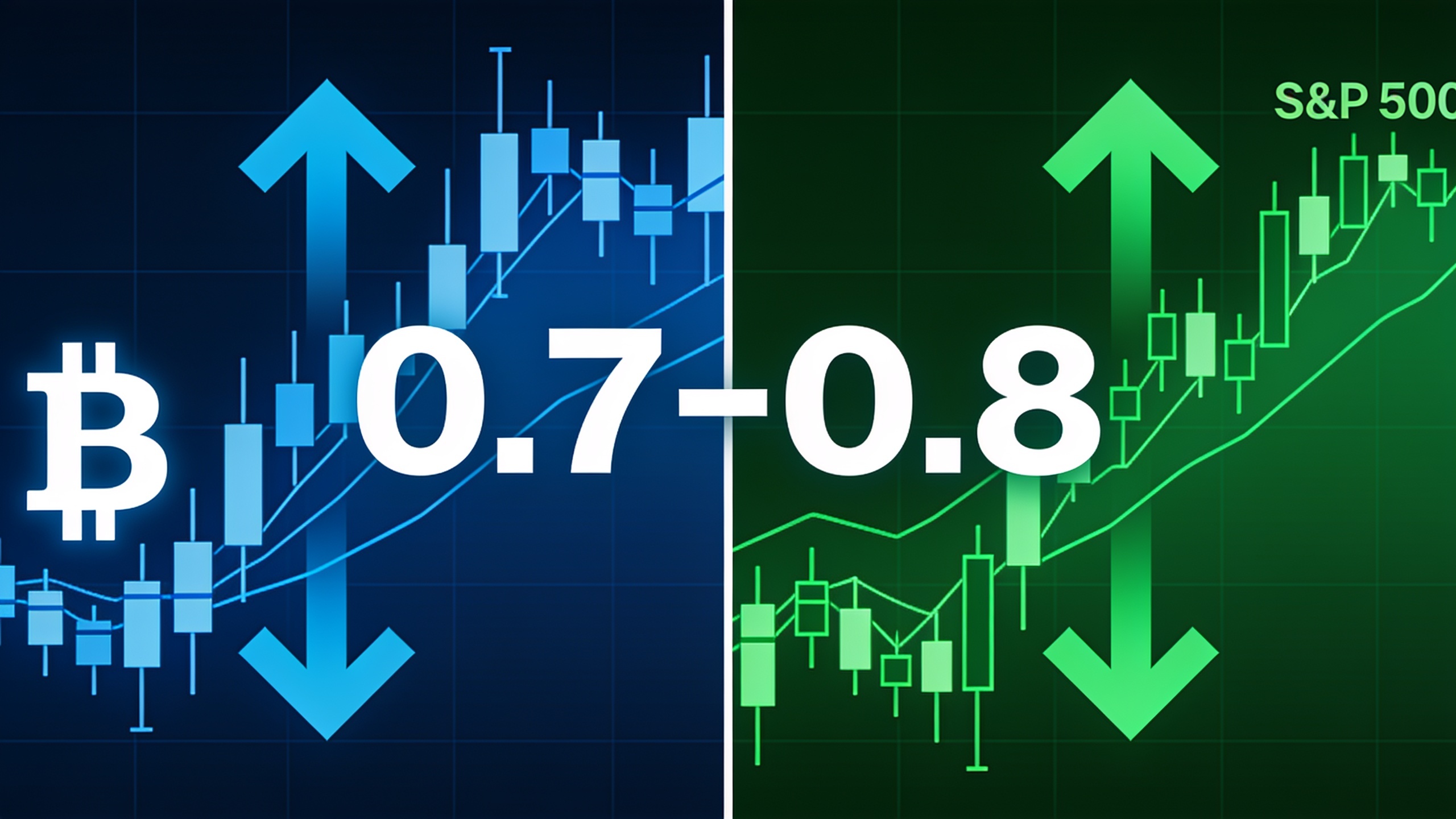
Remember when Bitcoin was supposed to be "digital gold"? The thing that would hold steady while stocks tanked? Yeah, about that. These days Bitcoin, Ethereum, and pretty much everything else in crypto tend to move right alongside the Nasdaq and S&P 500, and the whole uncorrelated-hedge story has gotten a lot more complicated. What makes it interesting is that this relationship isn't locked in place. It tightens and loosens depending on liquidity, what the Fed is up to, and how much risk investors feel like taking on any given week.
So if you've got money in both stocks and crypto, this actually matters. Knowing when crypto rides the equity wave and when it breaks off on its own is now part of the job. Let's get into what the numbers actually say, what's driving the whole thing, and how it should change the way you think about your portfolio.
Table of Contents
- What Is Crypto Stock Market Correlation?
- How Interest Rates Reshaped the Crypto-Equity Relationship
- Does Inflation Data Move Crypto and Stocks the Same Way?
- Bitcoin vs. Altcoins: Correlation Isn't Uniform
- Macro Crypto Trends Driving 2024-2025 Price Action
- Is Bitcoin Still a Hedge Against Stock Market Risk?
- What This Means for Portfolio Strategy
- Frequently Asked Questions
What Is Crypto Stock Market Correlation?
Crypto stock market correlation is just the tendency of crypto prices (usually Bitcoin's) to rise and fall in the same direction as stock indexes like the S&P 500 or the Nasdaq 100 over some period of time. Analysts measure it with a coefficient somewhere between -1 and 1. A 1 means the two assets move in perfect lockstep, 0 means no relationship at all, and -1 means they move in complete opposition.
For most of Bitcoin's early life, roughly 2013 through 2019, it did its own thing. It barely paid attention to what stocks were doing, which is exactly why the "digital gold" pitch worked so well back then. Buy some Bitcoin, the argument went, and you've got a slice of your portfolio that doesn't care about Wall Street. Then 2020 happened. The International Monetary Fund flagged this shift in a 2022 blog post, pointing out that crypto prices had become much more tied to major stock indexes, tech shares especially, once the pandemic-era flood of monetary and fiscal stimulus hit. Both crypto and stocks were basically drinking from the same firehose of cheap money and retail speculation.
Here's what I want you to take away, though: correlation is regime-dependent. It gets stronger during macro chaos, big central bank moves, or liquidity shocks. And it loosens up during quieter stretches when crypto-specific stuff (ETF approvals, halvings, protocol upgrades) takes over the driver's seat.
How Interest Rates Reshaped the Crypto-Equity Relationship
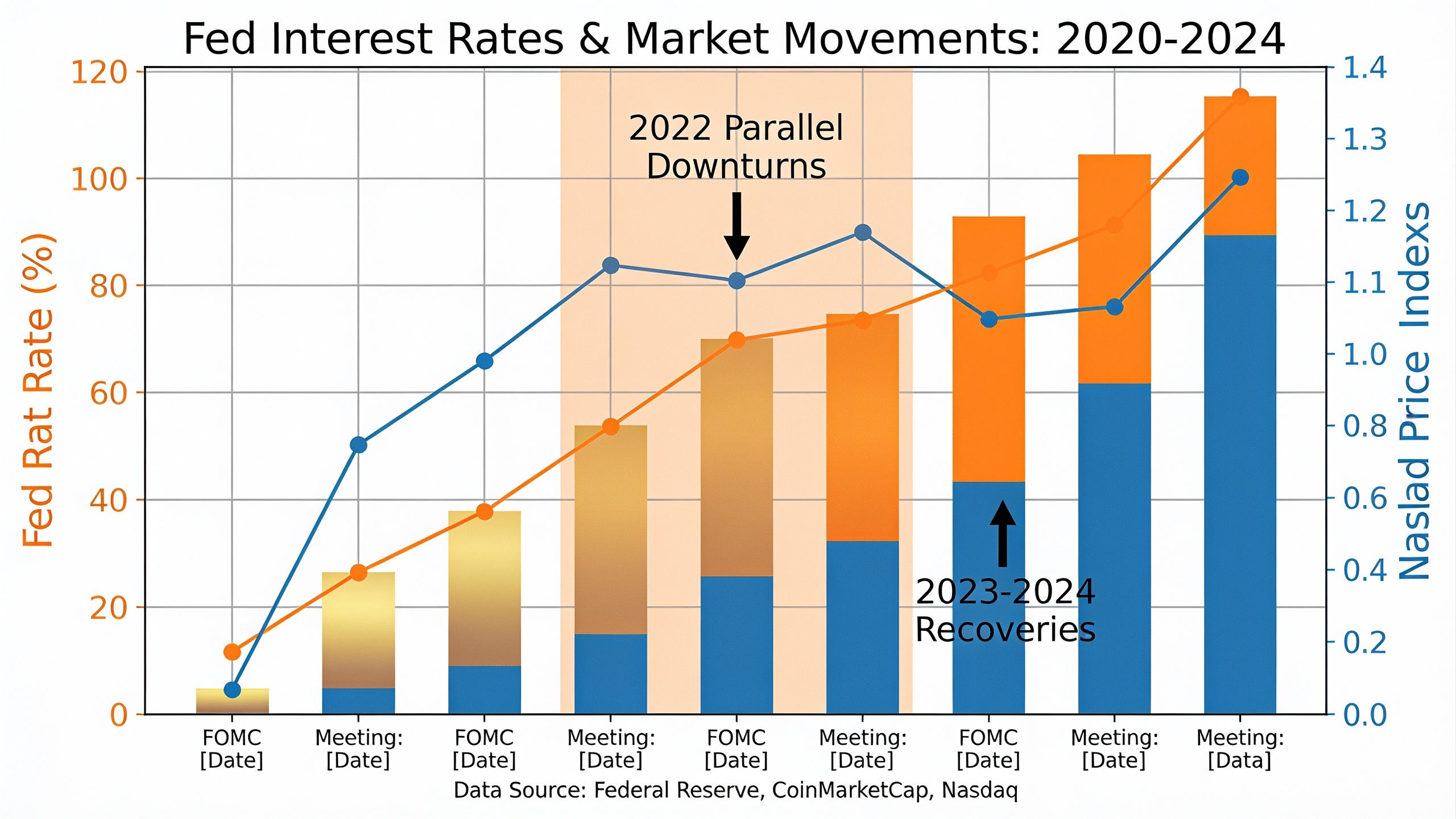
If you want one reason crypto and stocks started dancing together, it's the Fed and interest rates. When the Fed hikes the federal funds rate, both growth stocks and crypto tend to get dumped, because higher rates jack up the discount rate on future cash flows and make speculative, non-yielding assets a lot less appealing.
The textbook example is 2022. The Fed cranked its benchmark rate from near zero all the way up to a range of 4.25%–4.50% over the year to fight off runaway inflation. And over that same stretch? The Nasdaq Composite and Bitcoin both went through brutal, drawn-out drawdowns. That's when everybody started saying crypto was basically trading like a leveraged tech stock, not some independent hedge. Makes sense when you think about it. High-growth tech names and crypto have the same weak spot: they're both valued on future growth, which makes them way more sensitive to the cost of capital than, say, a boring utility stock or a can of soup company.
And it cuts both ways. The second the Fed hints at a pause or, better yet, rate cuts, both markets tend to rip higher together on the promise of cheaper money and looser conditions. Which is why crypto traders now stare at FOMC meeting outcomes and Fed Chair press conferences with the same intensity as any equity trader. Honestly, that habit barely existed in crypto circles before 2021. Nobody in a Discord server was live-tweeting Jerome Powell back then.
| Macro Trigger | Typical Equity Market Reaction | Typical Crypto Market Reaction | Correlation Effect |
|---|---|---|---|
| Fed rate hike | Growth/tech stocks decline | Bitcoin and altcoins decline | Strengthens |
| Fed rate cut or dovish pivot | Broad market rally, especially growth names | Bitcoin and altcoins rally | Strengthens |
| Hot CPI inflation print | Sell-off in rate-sensitive sectors | Sell-off, often amplified in altcoins | Strengthens |
| Bitcoin-specific catalyst (ETF approval, halving) | Limited direct effect | Sharp, isolated crypto rally | Weakens |
| Equity-specific earnings shock (single company) | Sector-isolated move | Minimal spillover | Weakens |
Does Inflation Data Move Crypto and Stocks the Same Way?
Short answer: yes. The monthly CPI report has turned into a shared volatility trigger for both crypto and stocks, and the reason is simple. Both are priced off what people expect the Fed to do next. A hotter-than-expected inflation number pushes investors to bet on fewer or later rate cuts, and that drags down both stock valuations and crypto prices on the very same day.
You saw this play out over and over in 2023 and 2024. A CPI release would drop and boom, same-day, correlated swings across the S&P 500, Nasdaq futures, and Bitcoin all at once. The mechanism isn't mysterious. Inflation surprises reset the market's guess about where rates are headed, and since crypto and growth stocks are both sensitive to that in the same way, they reprice in the same direction almost instantly. Compare that to Bitcoin's early years, when price action was all about exchange hacks, some regulatory headline, or pure community hype. Totally different animal now.
That said, matching direction doesn't mean matching size. Crypto trades 24/7 and has historically had thinner liquidity than big-cap stocks, so it tends to overshoot in both directions. A polite little dip in equities on a hot CPI print can turn into a nasty percentage drop in Bitcoin, and an even uglier one in the smaller altcoins.
Bitcoin vs. Altcoins: Correlation Isn't Uniform
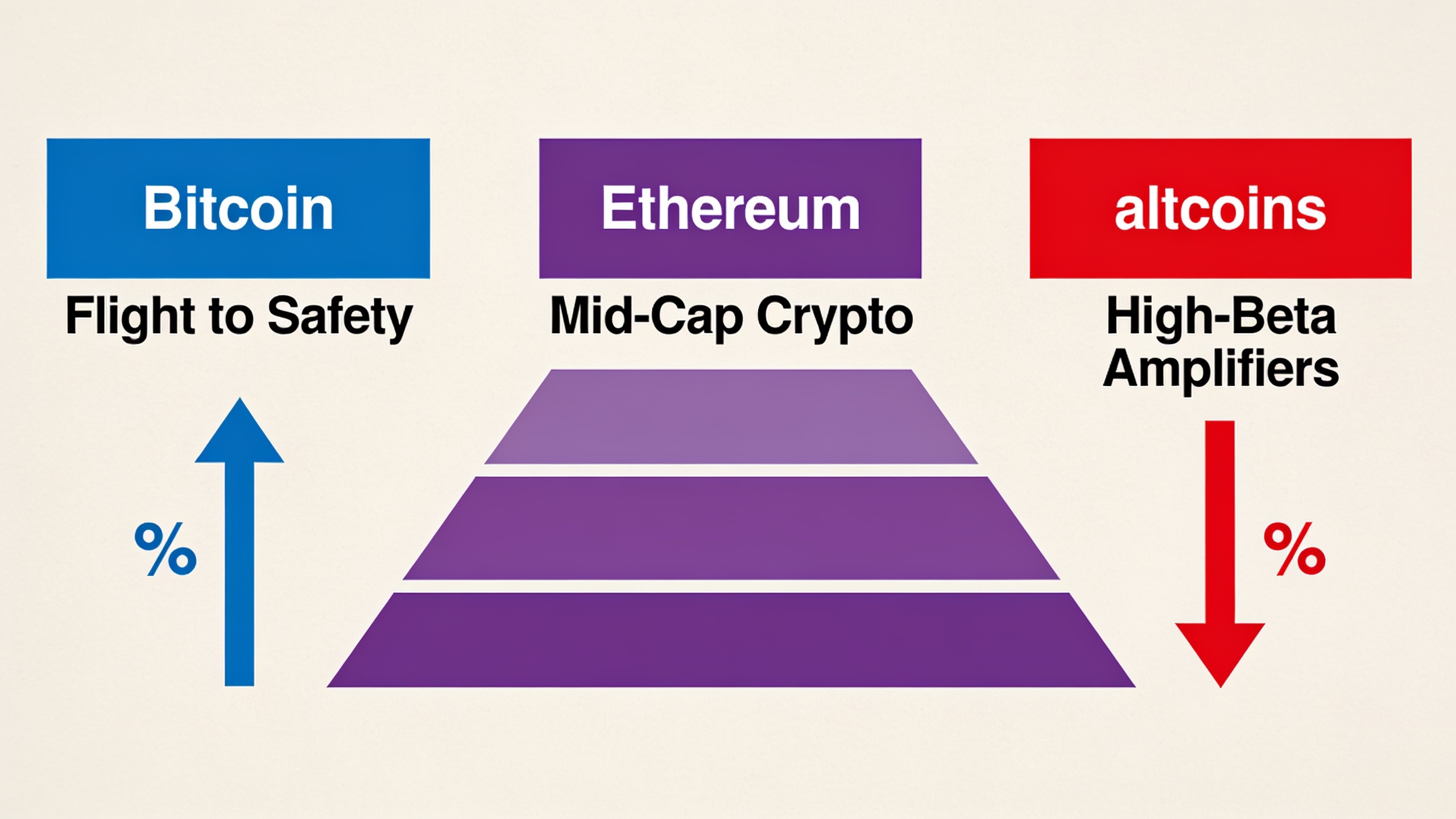
Here's something people gloss over: Bitcoin and altcoins don't have the same relationship with stocks. Bitcoin is more like the blue-chip, large-cap crypto, while altcoins act like high-beta small caps. In plain terms, altcoins tend to exaggerate whatever move Bitcoin and stocks are already making rather than starting their own trend.
During risk-on stretches, when stocks and Bitcoin are climbing together, altcoins have historically crushed both on the way up. But when things go risk-off (rate hikes, an inflation shock, tightening liquidity), altcoins fall harder and faster. Bitcoin, meanwhile, has increasingly become the "flight to safety" trade within crypto itself, which is kind of funny when you think about it. Safety is relative. This layered structure is exactly why it pays to know whether you're in early bull-market territory or a late-stage, overheated mess, because the signals are different depending on which slice of the market you're staring at. There's a solid rundown of that in this breakdown of 5 signs of a crypto bull market you shouldn't ignore.
The traders who actually see these shifts coming usually aren't looking at stock correlation alone. They're stacking on-chain data, funding rates, and the macro calendar together. That kind of forward-looking mindset gets unpacked in this guide on how to predict crypto bull run trends before everyone else catches on, which digs into how macro liquidity and crypto-native signals combine to tip you off earlier than the obvious stuff would.
Macro Crypto Trends Driving 2024-2025 Price Action
The big story dominating 2024 and 2025 has been a tug-of-war. On one side, expectations for Fed rate cuts. On the other, a growing tide of institutional money pouring into crypto through regulated products like spot Bitcoin ETFs. That combo has kept crypto's correlation with stocks running higher than its pre-2020 norm, even when the occasional crypto-specific catalyst lets it break away for a bit.
Institutional adoption is really the thread holding this together. As pension funds, asset managers, and other traditional-finance players get their crypto exposure through regulated vehicles instead of holding tokens directly, crypto starts behaving like it's part of the same machine, the same portfolio-allocation choices, the same risk models, the same rebalancing flows that already run the stock market. It's a big reason crypto ETF investing has taken off as an alternative to just buying coins outright. Exposure moves through the same brokerages, the same custodians, the same risk frameworks as stocks, which glues the two markets together even tighter whenever the mood turns to panic or euphoria.
And then there's liquidity in the broadest sense. The size of the Fed's balance sheet, Treasury issuance, central bank policy outside the U.S., all of it acts like a shared tide. When global liquidity expands, both crypto and stocks tend to float up. When it drains, they both sink. That's basically the whole post-2020 story in a sentence. It's not even limited to financial markets. Rate-sensitive, capital-heavy sectors like real estate ride the same cycle, which is why property-tracking platforms like Viviendalista have become useful reference points for investors trying to read how tightening or loosening credit conditions ripple out across everything, not just crypto and stocks.
Is Bitcoin Still a Hedge Against Stock Market Risk?
Bitcoin's job as a hedge against stock market risk has definitely faded compared to the original pitch, but it hasn't vanished. It just shows up during specific kinds of crises rather than every downturn. The old "uncorrelated hedge" story that carried Bitcoin through 2013-2019 assumed crypto would zig when stocks zagged, kind of like how gold has traditionally held up when equities crater.
The recent data throws some cold water on that. During the broad, liquidity-driven sell-offs of 2022, Bitcoin didn't act like a safe haven at all. It fell right along with stocks. So much for the hedge, at least for that flavor of downturn. But (and this is the interesting part) crypto has sometimes behaved differently during crises rooted in banking-sector stress or worries about fiat stability, the kind of moments where crypto's whole "alternative to the traditional financial system" appeal suddenly matters more than its correlation with tech valuations.
So the honest takeaway is that Bitcoin's hedge properties are conditional, not constant. It trades like a high-beta growth asset when the Fed is calling the shots, but it can peel away when the crisis is specifically about trust in banks or the plumbing of traditional finance. Calling it a universal hedge against "the stock market" just isn't backed up by how it's actually behaved lately, even if it still gives you some diversification against certain narrower risks.
What This Means for Portfolio Strategy
Bottom line: you can't just assume crypto will diversify an equity-heavy portfolio anymore. Those diversification benefits now depend a lot on timing and market regime instead of being a permanent feature of the asset. If you built your portfolio around crypto's old independence from stocks, it's worth taking another look, especially given how tightly the two have moved since 2020 when the Fed's tightening.
None of this means crypto's investment case is dead. It's just changed. Instead of being the uncorrelated diversifier it was sold as, crypto now looks more like a high-beta growth allocation, the kind of thing that amplifies both the rallies and the corrections in your stock holdings. If you want real ballast, the stuff that actually holds steady when equities wobble, you probably need to look at non-correlated real assets. Crypto isn't going to reliably play that role anymore.
Which means watching the macro calendar isn't optional now. Fed meeting dates, CPI and PCE releases, jobs reports, Treasury yields, they've all turned into leading indicators for crypto in a way that would've sounded ridiculous ten years ago. Anyone still analyzing crypto purely through on-chain metrics and crypto-native news, while ignoring all this, is honestly missing a huge chunk of what's actually moving prices.
Frequently Asked Questions
Does Bitcoin still act like "digital gold" when the stock market crashes?
Not reliably, no. In the broad, rate-driven sell-offs of 2022, Bitcoin dropped right alongside stocks instead of playing safe haven, which pretty much killed the digital gold comparison for that type of crash. It has behaved differently during banking-specific stress, though, so its hedge properties are situational rather than something you can count on across the board.
Why did crypto suddenly start tracking stocks after 2020?
The International Monetary Fund tied it to the pandemic-era flood of monetary and fiscal stimulus. They noted crypto became much more closely linked to major stock indexes, tech shares in particular, as both asset classes soaked up the same wave of liquidity and retail risk appetite during that stretch.
What macro indicators should I actually be watching?
Fed policy decisions and rate-path guidance, the monthly CPI report, and broader global liquidity conditions are the ones most consistently linked to correlated moves across crypto and stocks lately. Both markets live and die by expectations for the cost of capital, so those are your big three.
Are altcoins more correlated with stocks than Bitcoin is?
Sort of, but it's more that altcoins exaggerate whatever direction Bitcoin and stocks are already heading rather than setting their own course. They rally harder in risk-on periods and get hit worse in risk-off periods driven by rate hikes or tightening liquidity.
Can crypto ever fully decouple from stocks again?
Decoupling does happen, usually when there's a crypto-specific catalyst like an ETF approval, a halving, or a major protocol upgrade that drives demand no matter what the macro backdrop looks like. But with the sheer amount of institutional money now flowing through shared plumbing like ETFs, a full, lasting break from equity dynamics looks a lot less likely than it used to.
So where does that leave us? Crypto and stocks are way more tangled up than they were a decade ago, and the recent rate cycles have made that impossible to pretend otherwise. If you're moving between both markets, treat this correlation as a live condition to keep watching, not some fixed fact you can set and forget. And keep those macro data releases on your radar just as firmly as any crypto headline. Your portfolio will thank you.