How to Buy Cryptocurrency: A Step-by-Step Guide for First-Time Investors
So you want to buy some crypto. Good news: it's way easier than it was even a few years ago, and the whole thing is a lot less scary than the headlines make it seem. I get why people hesitate,...

So you want to buy some crypto. Good news: it's way easier than it was even a few years ago, and the whole thing is a lot less scary than the headlines make it seem.
I get why people hesitate, though. There are thousands of coins, dozens of exchanges all screaming for your attention, and every other week there's a story about some platform imploding or someone getting hacked. It's a lot. But buying your first bit of Bitcoin (or whatever) really comes down to a handful of steps, and once you've done it once, it's honestly kind of boring. In a good way.
Worth mentioning: there are over 560 million crypto users worldwide as of 2024, according to Crypto.com's research. That's a big number. The point being, this isn't some fringe thing anymore, and the tools for beginners have gotten genuinely good.
Whatever's got you curious, whether it's Bitcoin's long-term price story, the tech itself, or just wanting to spread your investments around a bit, I'll walk you through the whole process in plain English. No jargon dumps, I promise.
First, Some Stuff You Should Actually Understand
Before you go signing up for exchanges and downloading wallets, it helps to get a few basics straight. This'll make everything else click a lot faster.
What Even Is Cryptocurrency?
At its core, cryptocurrency is digital money that's secured by cryptography and recorded on a blockchain, which is basically a shared ledger that isn't controlled by any bank or government. That's the whole radical idea. Bitcoin kicked it off back in 2009 and is still the biggest by market value, but the ecosystem has exploded since. CoinMarketCap tracks something like 2.4 million tokens now, everything from Ethereum (which powers all those "smart contracts" you've heard about) to stablecoins that stay pegged to the dollar.
Do you need to understand all 2.4 million? God no. You'll probably care about two or three of them, tops.
Start Small. Seriously.
Most financial advisors suggest new crypto investors keep it to somewhere between 1% and 5% of their investable money. And there's a good reason for that number being so conservative: this stuff is volatile. Bitcoin has crashed more than 70% multiple times in its life, including in 2018 and again in 2022. Not "dipped." Crashed.
So put in an amount that, if it went to zero tomorrow, wouldn't ruin your week. That's the whole rule. Start small, learn how everything works, and scale up later if you feel like it.
What Should You Buy First?
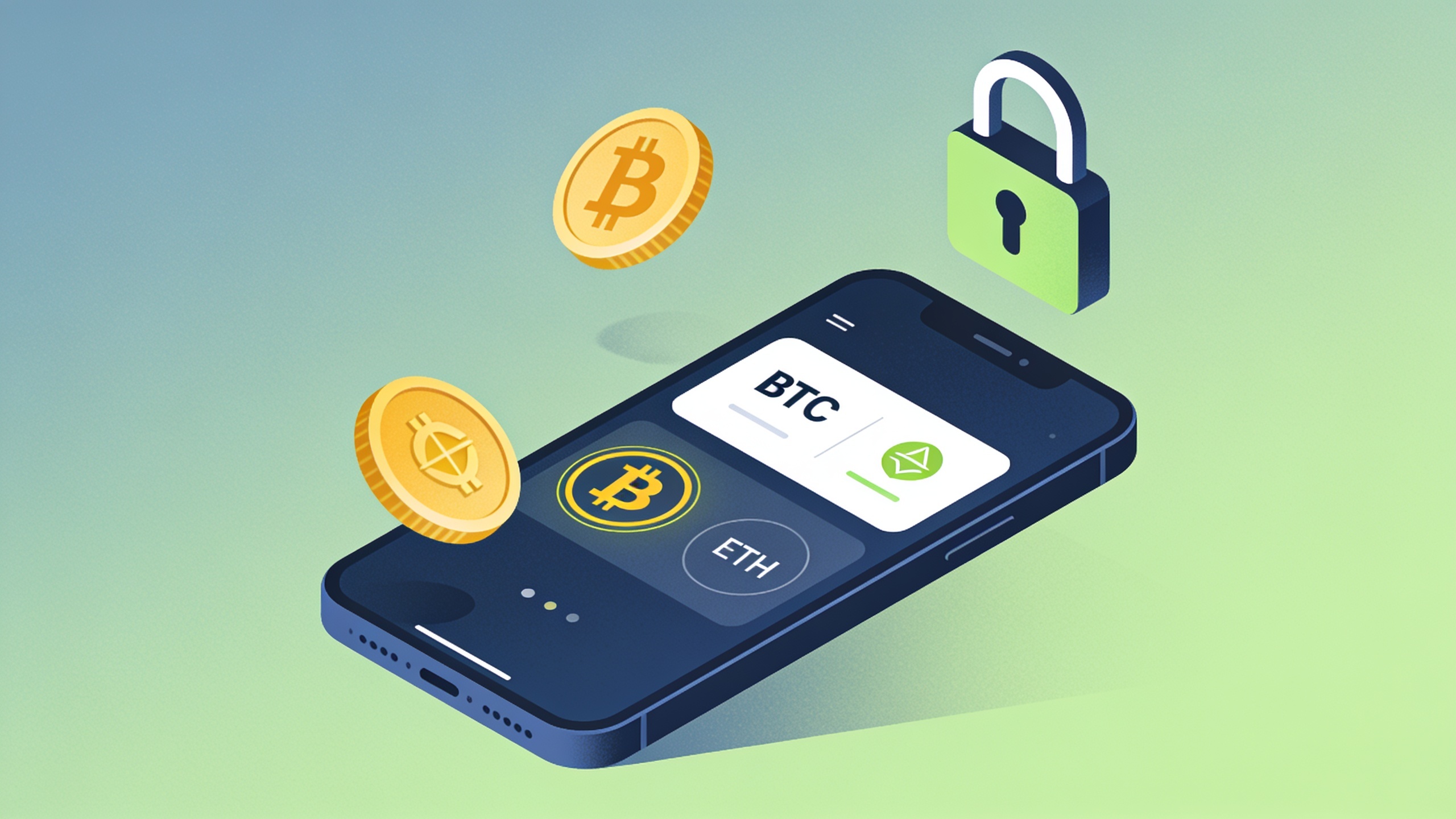
Honestly? Bitcoin or Ethereum. Together they make up roughly 60% of the entire crypto market, which means more liquidity, more history to look at, and a lot less chance of the whole thing evaporating overnight compared to some coin your cousin's friend won't shut up about. Once you're comfortable with the mechanics, sure, go explore. But for your first purchase, boring is your friend.
Picking an Exchange (This Matters More Than You'd Think)
The exchange you pick is probably the single most important decision here. It sets your fees, decides which coins you can even buy, and controls how painful it is to get money in and out. Choose poorly and you'll feel it in your wallet every single transaction.
Centralized vs. Decentralized (Skip the DEX for Now)
Centralized exchanges, the CEXs, are the ones you've heard of. Coinbase, Kraken, Binance. They sit in the middle, hold your funds, match buyers with sellers, and generally hold your hand through the process. They've got customer support, you can deposit regular money, and the apps don't require an engineering degree.
Decentralized exchanges like Uniswap let you trade peer-to-peer straight from your own wallet, no middleman involved. More privacy, more control, sounds great on paper. But they assume you already own crypto and know what you're doing, which kind of defeats the purpose for a first-timer. Come back to DEXs later. For now, stick with a CEX.
What Actually Matters When Comparing Platforms
Ignore the flashy marketing. Here's what to actually look at:
| Factor | What to Check | Why It Matters |
|---|---|---|
| Fees | Trading fees, deposit/withdrawal fees, spread | Fees can range from 0% to 4%, significantly affecting returns |
| Security History | Past breaches, insurance policies | Some exchanges hold cold storage insurance; others don't |
| Supported Payment Methods | Bank transfer, debit card, wire transfer | Card payments often carry higher fees than ACH/bank transfers |
| Regulatory Compliance | Licensing in your country/state | Regulated exchanges offer more legal recourse if issues arise |
| Available Coins | Bitcoin, Ethereum, altcoins, stablecoins | Not all platforms list the same assets |
| Customer Support | Live chat, response time, help center | Critical when transactions go wrong |
The Beginner-Friendly Ones
Coinbase is the go-to for most first-timers, and for good reason. The app is dead simple and they've got genuinely useful educational stuff built in. The catch? Their standard fees run up to 1.49% on basic buys, which is on the higher side. Kraken charges less and has a rock-solid security record, no major hack since they opened in 2011, which in crypto years is basically forever. Binance has the biggest coin selection on the planet, but depending on where you live, half of it might be off-limits thanks to regulatory stuff.
One more thing before you commit: make sure the exchange actually operates legally where you live and handles the KYC ("Know Your Customer") requirements. That usually means uploading a government ID and proof of address. Annoying, yes. Non-negotiable, also yes.
The Wallet Situation
Okay, so here's something a lot of beginners don't realize at first: buying crypto and storing crypto are two different things. Once you own a bit, you've got to think about where it actually lives.
Custodial vs. Non-Custodial (Or: "Not Your Keys, Not Your Coins")
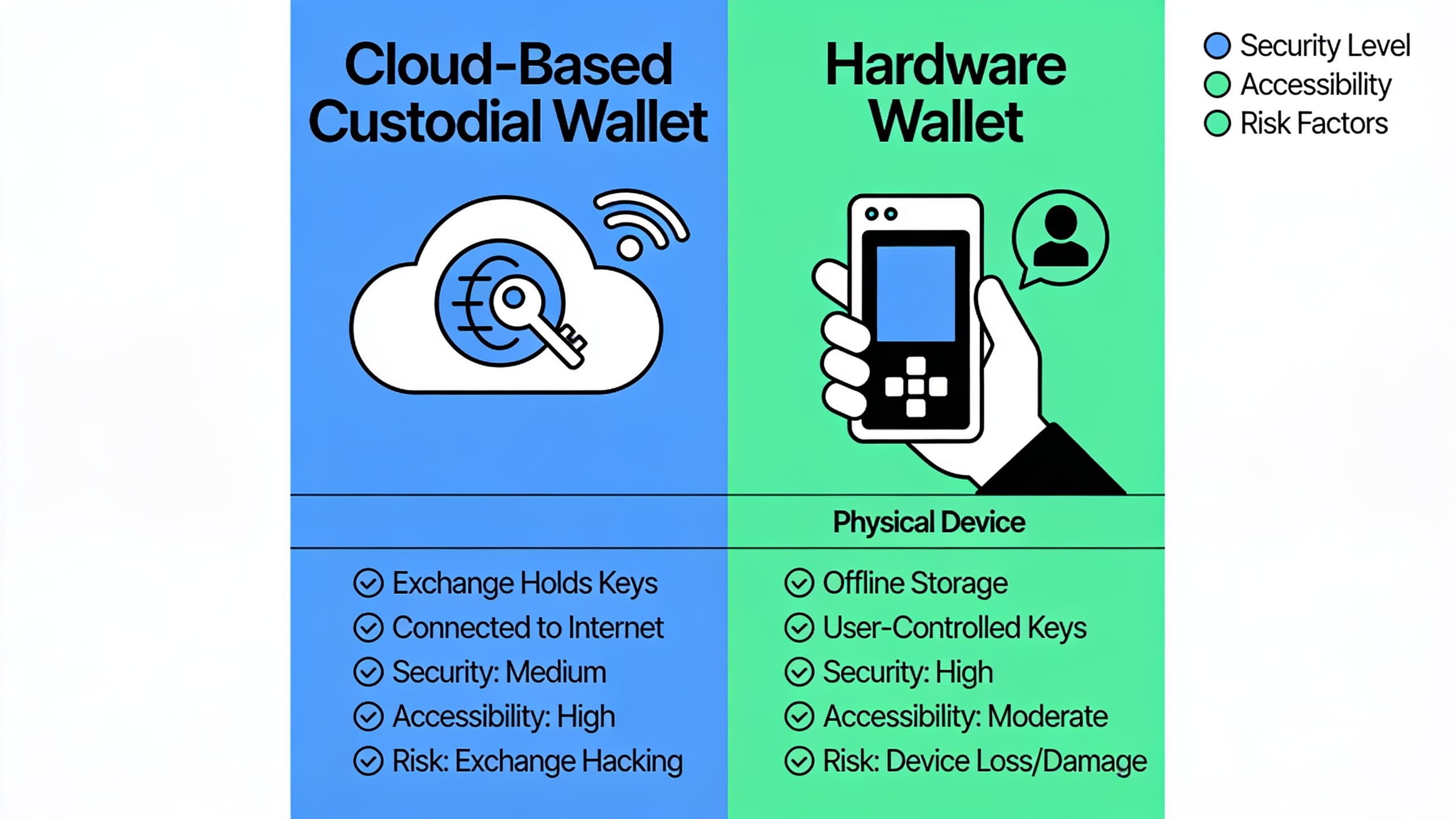
When you buy on an exchange, your crypto sits in what's called a custodial wallet. Basically, the exchange holds the keys for you. Super convenient. But it also means you're trusting them not to get hacked or go bankrupt. And if you think that's paranoid, remember FTX. When it collapsed in November 2022, over a million creditors got burned according to the bankruptcy filings. People lost everything. So yeah, the risk is real.
A non-custodial wallet flips that around and puts you in full control of your keys. These come in two flavors.
Hot wallets are software-based and always connected to the internet, like MetaMask or Trust Wallet. Great for frequent trading, but being online makes them more of a target. Cold wallets are physical hardware devices, think Ledger or Trezor, that keep your keys completely offline. They're the gold standard for anyone holding a meaningful amount, because you literally can't hack a device that's not connected to anything.
Setting One Up
The actual setup is pretty painless. Pick a reputable provider based on what you need (are you trading constantly or just parking money long-term?). Download the app from the official website and nowhere else. I mean it. Never a link someone emailed you, never a "totally official" third-party download. Then you'll generate the wallet, and it'll spit out a seed phrase, usually 12 or 24 words.
Write those words down. On paper. With a pen. Store them somewhere safe and offline, and never, ever share them or save them digitally. Then set a strong PIN and you're done.
I can't stress the seed phrase thing enough. Lose it with no backup and your crypto is gone forever. Not "call support and reset it" gone. Gone gone. Chainalysis figures roughly 20% of all Bitcoin in existence, worth well over $100 billion at various points, is just... stuck. Inaccessible. Lost keys, forgotten passwords, dead people who never told anyone. Don't be a statistic.
Alright, Let's Actually Buy Some
Account made, wallet ready. Now for the part you came here for.
Verify your identity. Most regulated exchanges make you do KYC before you can buy anything past tiny limits. Upload your ID, maybe snap a selfie for facial matching, and wait. This can take a few minutes or up to 48 hours depending on how backed up they are with new signups.
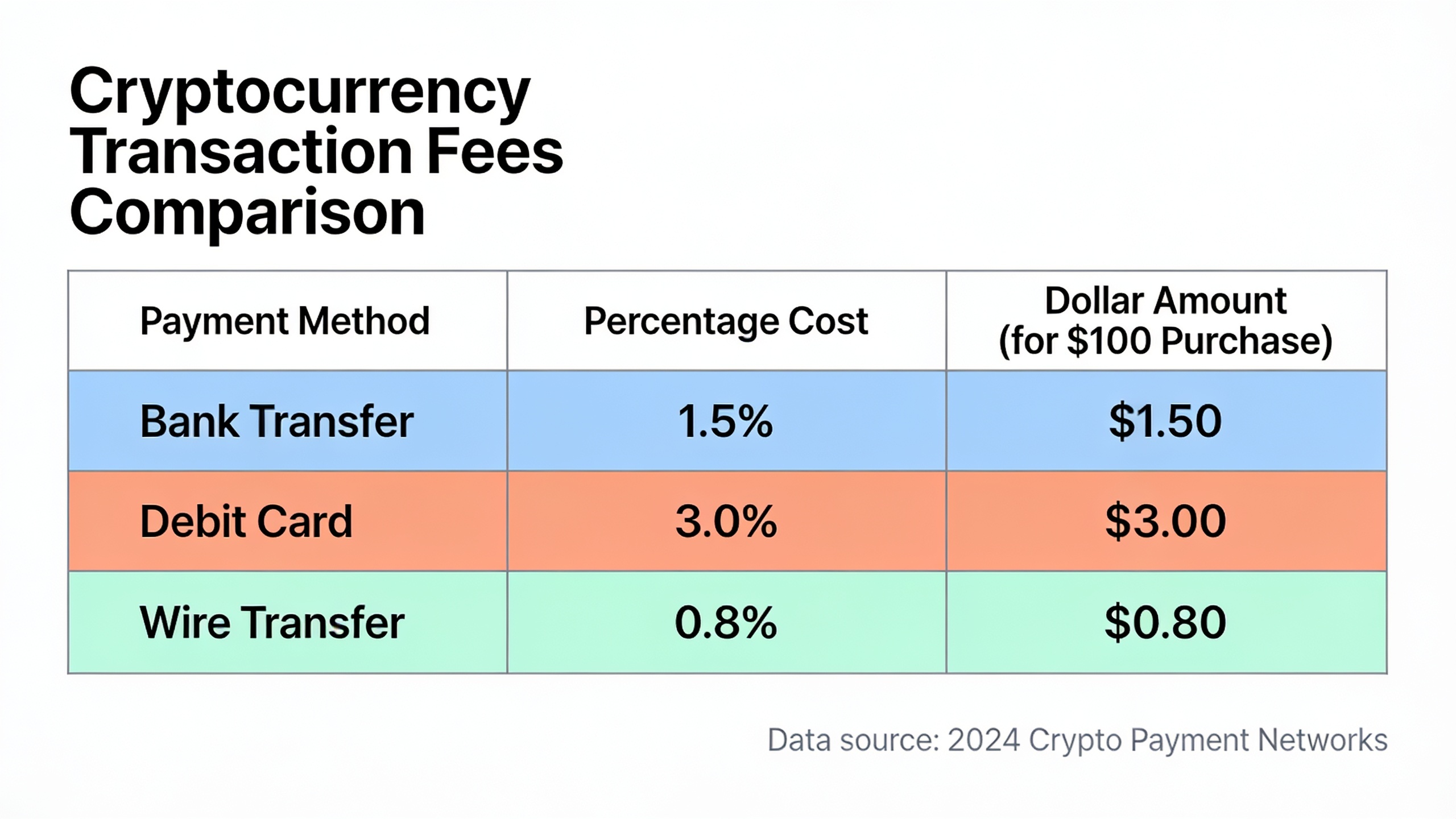
Fund your account. Link a bank account, debit card, or wire transfer. Bank transfers (ACH in the States, SEPA in Europe) are cheaper but slower, usually one to five business days to clear. Card purchases are instant but you'll pay more for the convenience. Your call.
Pick your coin and your order type. Choose what you're buying, then decide how. A market order buys right now at whatever the current price is, which is the simplest option and what I'd recommend for your first go. A limit order lets you set a target price and only executes if the market hits it. For a first buy, just do a market order for a small fixed dollar amount and keep it simple.
Check the fees before you hit confirm. Look at the total breakdown, including trading fees and the spread between buy and sell prices. This stuff adds up quietly. Buying $100 of Bitcoin with a 3-4% card fee versus a 0.5% bank transfer fee doesn't sound like much, but do that repeatedly and it starts to matter.
Move it to your own wallet (optional, but smart). If you're holding for the long haul, get it off the exchange and into your personal wallet. Less exposure to exchange drama. If you're planning to actively trade smaller amounts, leaving it on the exchange is fine and more practical.
Don't Get Robbed: Security Basics
I know, I know, security sections are boring. But the FTC reported people lost over $1.4 billion to crypto scams in a single recent 12-month stretch, with romance scams and fake investment platforms leading the pack. So bear with me for a minute.
Turn on two-factor authentication, and use an authenticator app like Google Authenticator or Authy instead of SMS. Text-based 2FA is vulnerable to SIM-swapping, where a scammer basically hijacks your phone number. Authenticator apps sidestep that whole problem.
Learn to smell a scam. Anyone promising guaranteed returns is lying. Anyone pressuring you to act right now is manipulating you. And anyone asking you to send crypto first to "unlock" a bigger payout is straight-up robbing you. Also: no legitimate exchange will ever ask for your seed phrase or password over email or chat. If someone does, it's a scammer. Full stop.
Use a password manager so every account gets a unique, complicated password. Reusing passwords is one of the most common ways people get their accounts drained, and it's so easily avoidable.
And here's a weird one people forget until it bites them: crypto transactions are irreversible. Always copy-paste wallet addresses instead of typing them, and double-check the first and last few characters before confirming. There's actual malware out there that swaps the address on your clipboard for a scammer's the second you copy it. Sounds like sci-fi. It's real, and it's cost people a fortune.
The Mistakes Everyone Makes (So You Don't Have To)
The most common one is putting in more than you can afford to lose. I said it earlier and I'll say it again because people ignore it constantly. Double-digit swings in a single day are normal here. If that would keep you up at night, put in less.
Then there's taxes, which nobody wants to think about. In a lot of places, including the US, crypto is treated as property. That means selling it, trading it, even spending it can trigger a taxable event. The IRS has been paying way more attention to crypto reporting lately, so this isn't something to wing.
FOMO gets a ton of people too. You see a coin rocket up 200% and your brain screams "buy before it's too late!" More often than not, you're buying right before a nasty correction. Chasing pumps is how you end up buying the top.
Skipping the research is another classic, especially with anything beyond Bitcoin or Ethereum. Read the whitepaper, look at who's building it, ask what it's actually for. Thousands of tokens have gone to literal zero after the hype died down. And finally, don't leave big sums sitting on exchanges forever. Between hacks and collapses, that's cost users billions collectively. For anything serious, self-custody is the way.
Okay, You Bought Some. Now What?
Buying your first coin isn't the finish line, it's more like day one. A few things worth doing next.
Track your portfolio somehow, whether that's an app or just a spreadsheet. You'll want to know your cost basis and overall allocation, and future-you will be very grateful for this come tax season.
Look into dollar-cost averaging. Instead of trying to perfectly time the market (which almost nobody can do consistently, including the pros), you just invest a fixed amount at regular intervals no matter the price. Backtesting shows DCA smooths out your entry prices over time and, maybe more importantly, spares you a lot of emotional agony when the market's throwing a tantrum.
Stay reasonably informed. You don't need to refresh crypto Twitter every ten minutes, but keeping an eye on major news, regulatory shifts, and big tech upgrades helps you understand why your holdings are doing what they're doing. Markets here react fast to basically everything.
And revisit your security setup as your stack grows. A lot of people start out leaving everything on an exchange, then eventually move the bulk of it to a hardware wallet once they've got real money on the line. Makes sense. What works for $50 doesn't necessarily work for $5,000.
Frequently Asked Questions
Is it actually safe for a total beginner to buy crypto?
Reasonably, yeah, as long as you stick to regulated, reputable exchanges and don't skip the basics like 2FA and protecting your seed phrase. Most of the real danger comes from volatility, scams, and sloppy security habits rather than the buying process itself.
How much money do I need to get started?
Way less than you'd think. Loads of exchanges let you buy fractional amounts starting at $1 to $10. There's no minimum you have to hit, so starting small and building up as you get comfortable is completely doable.
I already bought crypto on an exchange. Do I really need a separate wallet?
For small amounts, not really. But for larger holdings or anything you're planning to hold long-term, moving it to a personal wallet, ideally a hardware one, cuts down a lot of the risk tied to exchange hacks or bankruptcies.
Which coin should I buy first?
Bitcoin or Ethereum, pretty much every time. They've got the liquidity, the track record, and the widespread adoption that the smaller, sketchier stuff doesn't. Solid starting point before you go poking around riskier projects.
How does crypto get taxed?
In most places, including the US, it's taxed as property. Selling, trading, or spending it can create a capital gain or loss. It gets complicated fast, so talk to a tax pro who actually knows digital assets rather than guessing.
---
Look, learning to buy crypto isn't about finding some secret trick. It's just a methodical, slightly-paranoid process: pick a trustworthy exchange, understand your wallet options, start small, and stay sharp about scams. The tools keep getting better for beginners, but the fundamentals never really change. Do your research, manage your risk, and don't rush. Treat your first purchase as the start of something you're going to keep learning about, not a one-and-done transaction. You'll be fine.
You Might Also Find Useful
- Vivienda Lista - A comprehensive platform for finding your ideal home, offering curated listings, property comparisons, and expert real estate advice.
- Viviendalista - An online real estate platform with a comprehensive database of properties for sale or rent, plus tools to simplify your home search.
- Vidbox - A free social media portal for Indonesian users featuring games, movies, forums, blogs, and marketplace tools for learning online business.