What Is Cryptocurrency? A Beginner's Guide for 2025
So you keep seeing crypto in the headlines and you're wondering what all the fuss is about. Fair enough. As of early 2025, the whole crypto market is worth somewhere around $2.5 trillion, and there...

So you keep seeing crypto in the headlines and you're wondering what all the fuss is about. Fair enough. As of early 2025, the whole crypto market is worth somewhere around $2.5 trillion, and there are north of 580 million people worldwide holding some form of it (that's Crypto.com's research team's numbers, for what it's worth). That's a lot of people who've decided this thing is worth their attention.
Whether you're totally new or you've bought maybe fifty bucks of Bitcoin once and then forgot about it, this guide walks through what cryptocurrency actually is, how the thing works under the hood, and why so many people (including some very serious institutional money) are suddenly paying attention.
Table of Contents
- What Is Cryptocurrency? The Basics
- How Does Cryptocurrency Actually Work?
- Types of Cryptocurrencies You Should Know
- Why Cryptocurrency Matters for Beginners in 2025
- Crypto for Beginners: Getting Started Safely
- Risks and Challenges Every New Investor Should Understand
- Cryptocurrency vs. Traditional Currency
- Frequently Asked Questions
What Is Cryptocurrency? The Basics
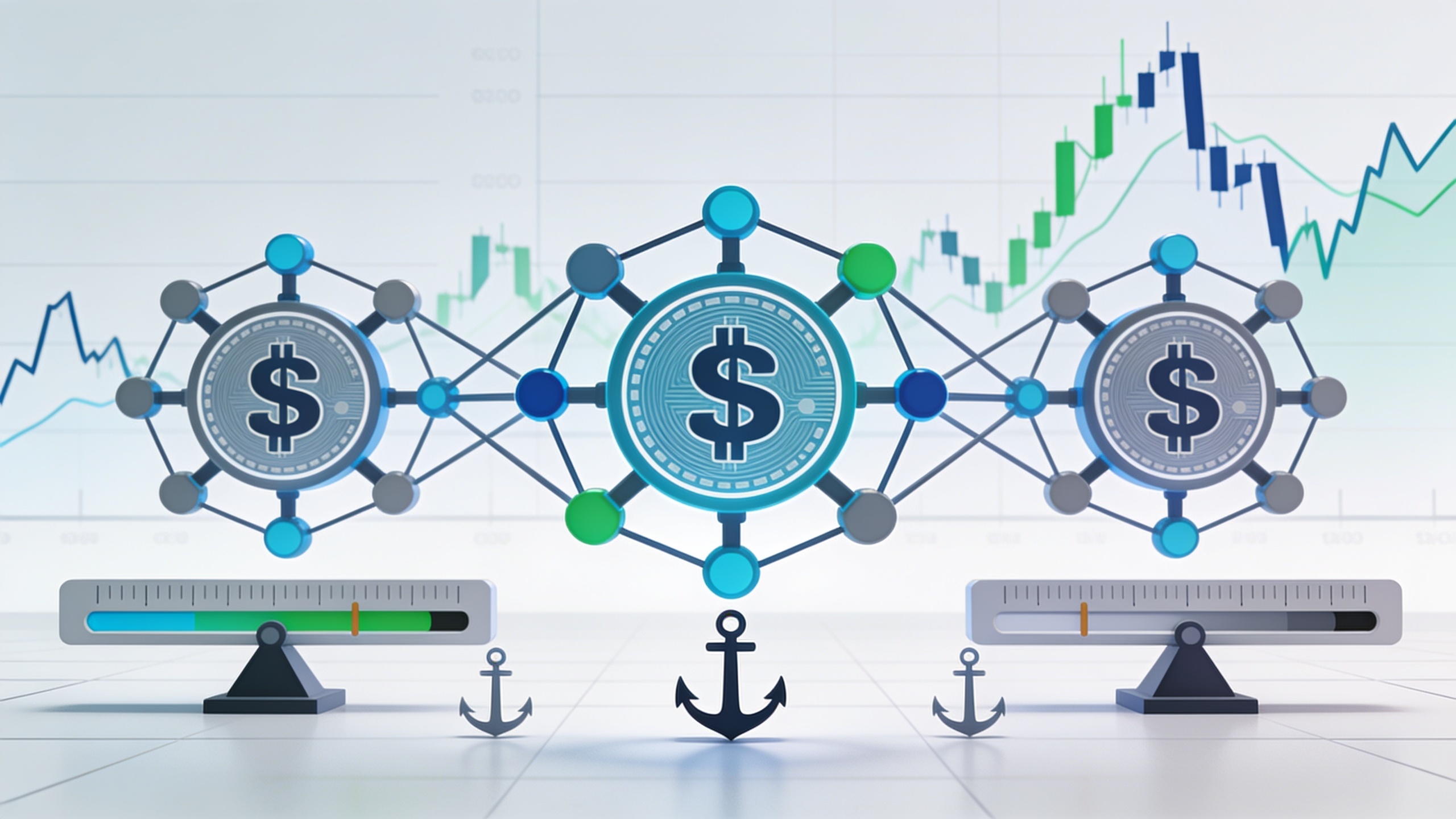
Strip away all the jargon and cryptocurrency is basically digital money that's locked down with some seriously heavy math. The math (cryptography, if you want the technical word) is what makes it nearly impossible to fake or spend twice.
But here's what actually makes it different from the dollars sitting in your checking account: nobody's in charge. No government prints it. No bank approves your transactions. Instead it all runs on something called a blockchain, which is a giant shared record of every transaction, copied across thousands of computers all over the planet at once. There's no head office to call.
The word itself is a mashup of "cryptography" and "currency," which honestly tells you most of what you need to know. Bitcoin kicked the whole thing off back in 2009, invented by someone (or some group) using the name Satoshi Nakamoto. Nobody knows who that actually is, which is one of the great mysteries of the internet. Bitcoin's still the biggest player, hogging roughly 54% of the entire crypto market as of 2025.
So why do people care? The big appeal is that it cuts out the middlemen. When you send someone Bitcoin, it goes straight from your digital wallet to theirs, verified by a network of computers instead of a bank that takes three business days and a chunk of fees to move your own money around. That "no middleman" thing is exactly why crypto has attracted such a weird, wonderful mix of tech nerds, anti-establishment types, and, increasingly, the same Wall Street suits who used to laugh at it.
The Origin Story Worth Knowing
Timing matters here. Bitcoin showed up right after the 2008 financial meltdown, which was not a coincidence. A big part of the pitch was distrust in the banking system that had just imploded. Nakamoto's original whitepaper basically argued: what if you didn't have to trust the banks at all, and instead just trusted math and a network agreeing with itself? That idea still runs through the whole industry today, even though crypto has sprawled way past anything Satoshi probably imagined.
How Does Cryptocurrency Actually Work?
Okay, this is where people's eyes tend to glaze over, so I'll keep it human. There are really three pieces to understand: the blockchain, how transactions get verified, and wallets.
Blockchain: The Digital Ledger
Think of a blockchain as a stack of pages, each page holding a bunch of verified transactions. Once a page fills up, it gets sealed and mathematically linked to the page before it. That's the "chain" part. And because each block is locked to the one behind it, you can't quietly go back and rewrite history. To fake something, you'd have to change that block and every single block after it, on the majority of computers running the network, all at the same time. On a network like Bitcoin, with tens of thousands of nodes worldwide, good luck.
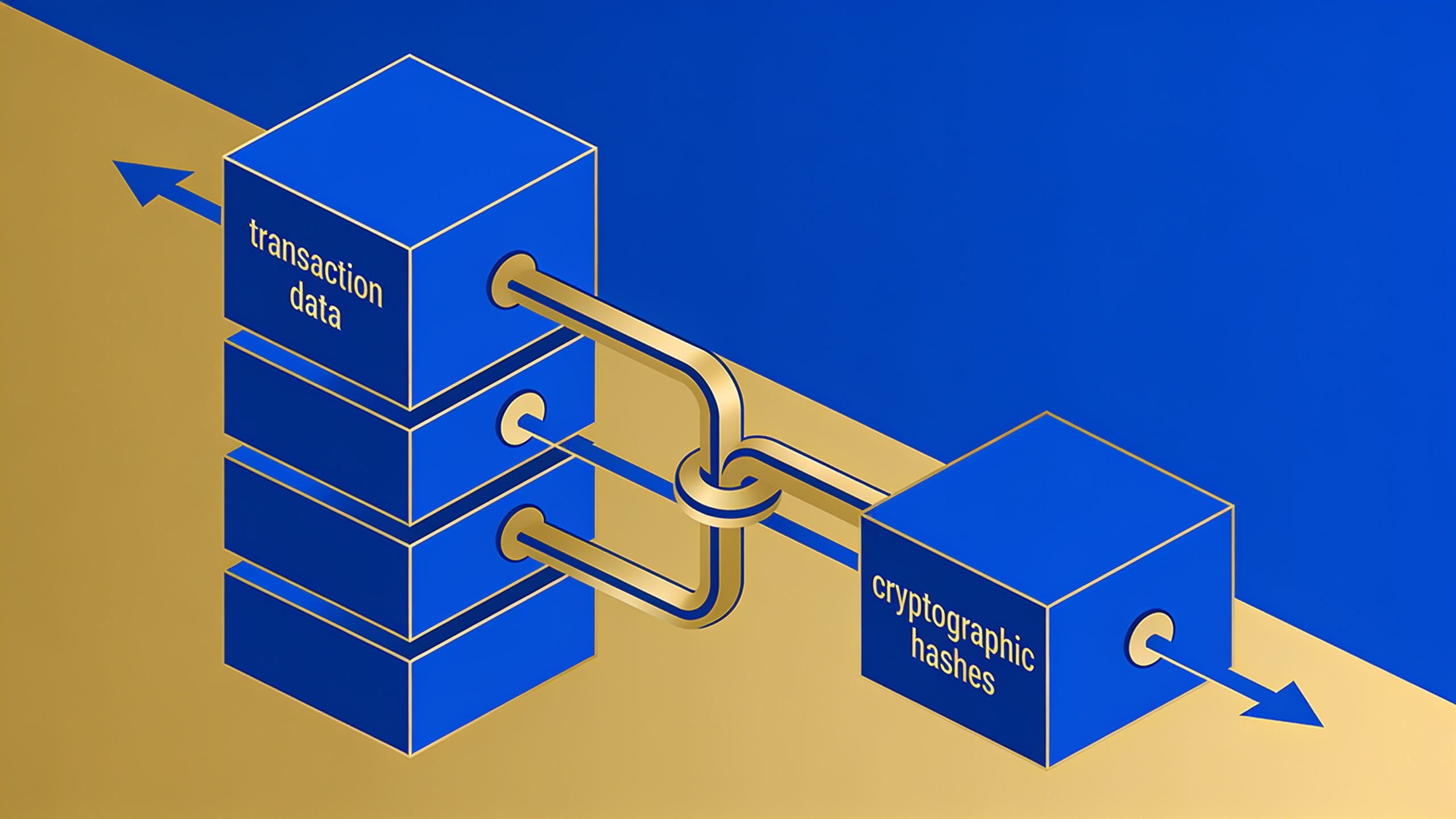
Every time someone makes a transaction, it gets broadcast out to the network, where those nodes check it's legit before it gets bundled into a new block. How exactly that checking happens depends on the network.
Mining and Staking: How Transactions Get Verified
There are two main systems that keep these networks honest, and they work pretty differently.
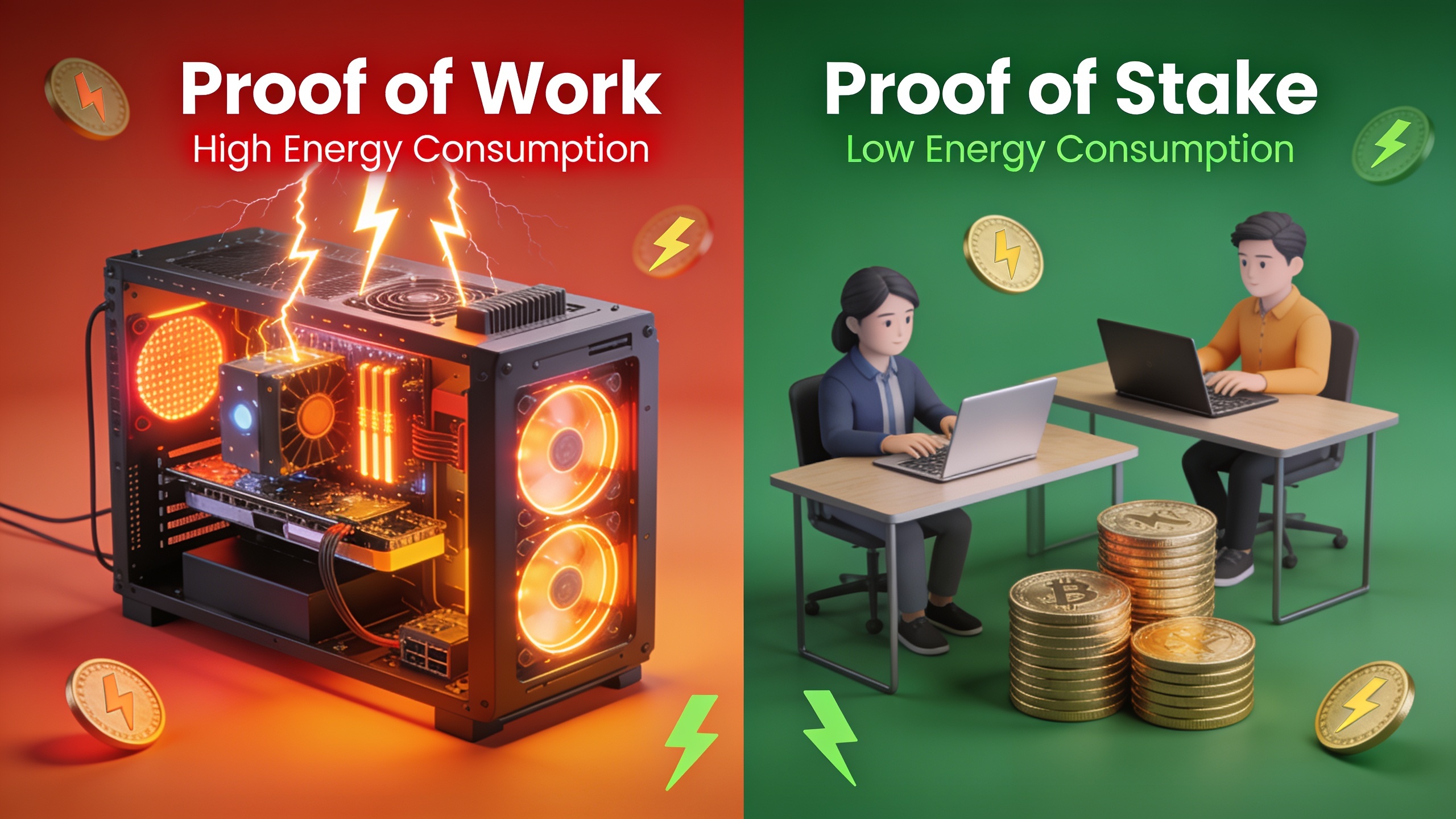
Bitcoin uses something called Proof of Work. Miners run powerful computers racing to solve absurdly hard math puzzles, and whoever cracks it first gets to confirm the block and pockets some freshly created Bitcoin as a reward. It works, but it's a power hog. Bitcoin mining eats up roughly 150 terawatt-hours a year, which is genuinely comparable to what some mid-sized countries burn through. That's not a great look, and critics love to hammer it (fairly, I'd say).
Ethereum used to do the same thing but switched to Proof of Stake in 2022 with an upgrade everyone called "the Merge." Instead of burning electricity, validators put up their own crypto as collateral, and the network randomly picks them to confirm transactions. Mess up or try to cheat and you lose your stake. The kicker? It uses something like 99.9% less energy. That's not a typo.
Digital Wallets: Your Crypto Bank Account
Here's a thing that trips up almost everyone at first: your wallet doesn't actually hold your coins. The coins live on the blockchain. What your wallet holds are the cryptographic keys that prove those coins are yours and let you move them.
Wallets basically come in two flavors. Hot wallets stay connected to the internet, like the app on your phone or your account on an exchange. Super convenient for buying and trading, but that connection is also a door hackers can try to walk through. Cold wallets are offline devices, way more secure, and better if you're planning to hold for the long haul and don't need to touch your funds every day.
Types of Cryptocurrencies You Should Know
There are somewhere over 10,000 cryptocurrencies floating around now, which is genuinely overwhelming. Most of them are junk, honestly. But sorting them into buckets helps a ton when you're starting out.
| Category | Purpose | Examples | Market Characteristics |
|---|---|---|---|
| Payment coins | Function as digital cash | Bitcoin, Litecoin | Store of value, medium of exchange |
| Smart contract platforms | Enable decentralized apps | Ethereum, Solana, Cardano | Power DeFi, NFTs, dApps |
| Stablecoins | Pegged to stable assets | USDT, USDC, DAI | Price stability, used for trading |
| Utility tokens | Access specific platform services | BNB, LINK | Tied to ecosystem functionality |
| Meme coins | Community-driven, speculative | Dogecoin, Shiba Inu | High volatility, social media-driven |
| Governance tokens | Voting rights in protocols | UNI, AAVE | Decentralized decision-making |
Each of these does something pretty different. Payment coins like Bitcoin get called "digital gold" a lot, meaning people treat them as a place to park value and maybe hedge against inflation. Smart contract platforms like Ethereum are more like infrastructure, the plumbing that thousands of other apps get built on top of. And meme coins? Look, some people have gotten rich off Dogecoin and most people have gotten burned. Treat them like lottery tickets and you'll set your expectations correctly.
Why Cryptocurrency Matters for Beginners in 2025
The vibe around crypto has shifted hard over the last couple years. This used to be a fringe experiment that your finance-bro cousin wouldn't shut up about. Now it's an actual asset class that big-name institutions treat seriously.
The turning point? In January 2024, the SEC finally approved spot Bitcoin ETFs. In plain English, that means you can now get Bitcoin exposure through a normal brokerage account, the same way you'd buy an S&P 500 fund. No wallets, no seed phrases, no sweating over exchange hacks. And people jumped on it, over $35 billion flowed into these things in the first year alone (per Bloomberg). That's not tourists dipping a toe. That's serious money.
BlackRock and Fidelity, the kind of firms that used to roll their eyes at all this, now offer crypto products. Why should you care as a beginner? Because that legitimacy tends to drag along better regulation, safer places to store your assets, and, over time, hopefully a little less of the stomach-churning volatility.
And it's not all just speculation and price charts anymore. Crypto's actually useful in ways that surprised me. Sending money across borders can settle in minutes instead of the days a bank wire takes, and for way lower fees. DeFi platforms let people lend, borrow, and earn interest without a bank involved at all. And in places dealing with brutal hyperinflation like Argentina and Venezuela, people genuinely use crypto to protect their savings from evaporating. That's not a tech demo. That's people solving real problems.
Then there's the whole innovation sprawl on top of it: NFTs, digital identity systems, supply chain tracking, tokenized real estate. Some of it will flame out, some of it won't. The point for a beginner is that crypto isn't one single trend you either believe in or don't. It's a whole messy ecosystem, and it's still pretty early.
Crypto for Beginners: Getting Started Safely
If you're actually ready to get in, please don't just YOLO your savings into whatever's trending on Twitter. A slower, more boring approach will serve you way better. Here's roughly how I'd do it.
First, learn before you spend a dime. I know, reading isn't as fun as buying. But understanding the basics, reading up on projects you're curious about, and following a few decent news sources will save you from a lot of dumb mistakes. The people who lose the most are almost always the ones who bought on hype without a clue what they owned.
When you're ready to actually buy, pick a reputable, well-regulated exchange with a solid security track record and fees that aren't a mystery. Two-factor authentication is a must, and it's a nice bonus if they insure customer funds.
Now the sizing. Most financial advisors say to keep crypto to maybe 5-10% of your overall portfolio, especially when you're new. And don't dump it all into one coin. Spreading things across the established names like Bitcoin and Ethereum, with maybe a smaller bet on some altcoins you actually believe in, is far smarter than going all-in on the coin your buddy swears is going to the moon.
Once you've got a meaningful amount, get it off the exchange and into your own wallet, ideally a cold one. There's an old saying in crypto: "not your keys, not your coins." It sounds like a slogan, but it's real. Exchanges get hacked, exchanges collapse (more on that later), and when they do, your funds can vanish.
Oh, and taxes. Boring but important. In the US and most places, crypto is taxable. Selling, trading, even buying a coffee with it can trigger capital gains. Keep records from day one, seriously, because reconstructing a year of transactions in April is a special kind of misery.
Risks and Challenges Every New Investor Should Understand
I'd be doing you a disservice if I only talked about the upside, so let's be honest about the ways this can go sideways.
The volatility is brutal. Prices can swing wildly in a single day. Bitcoin has crashed more than 50% multiple times in its life, including a roughly 65% nosedive in the 2022 bear market. If watching your investment lose half its value would make you panic-sell at the bottom, you need to know that about yourself before you buy, not after.
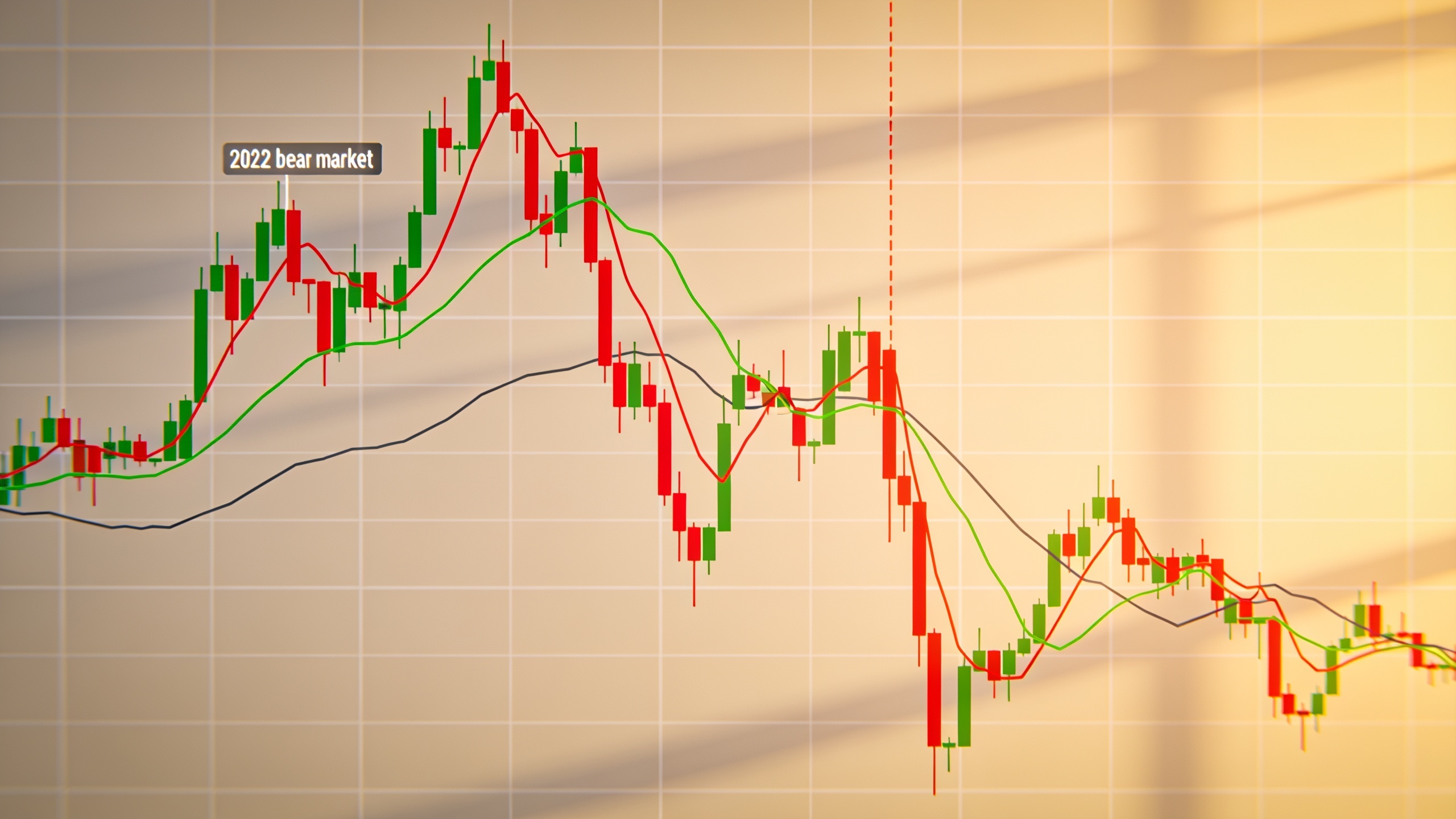
Regulation is still a moving target. Rules differ enormously from country to country and they keep changing. The US made progress with those ETF approvals, sure, but there's still ongoing fighting over whether certain tokens count as securities, and that uncertainty can whack prices around.
Scams and hacks are everywhere. Phishing, fake projects, sketchy exchanges, they're all out there hunting for newcomers. And if you want the ultimate cautionary tale, look at FTX blowing up in 2022 and taking billions of customer dollars down with it. A lot of people thought their money was safe. It wasn't.
And here's the one that really stings: crypto transactions usually can't be undone. Fat-finger a wallet address or fall for a scam, and that money is just gone. No fraud department to call, no chargeback, no "let me talk to a manager." Permanent. It makes you triple-check every address before hitting send, and honestly, you should.
Cryptocurrency vs. Traditional Currency
Sometimes the easiest way to get what crypto is really about is to line it up next to the money you already use.
| Feature | Cryptocurrency | Traditional (Fiat) Currency |
|---|---|---|
| Issuing authority | Decentralized network/protocol | Central bank/government |
| Supply control | Often fixed or algorithmically limited | Central bank policy, can be printed |
| Transaction speed | Minutes (varies by network) | Hours to days (especially international) |
| Transparency | Public ledger, viewable by anyone | Private, bank-controlled records |
| Physical form | Purely digital | Physical notes/coins plus digital |
| Regulatory oversight | Evolving, varies by jurisdiction | Established, comprehensive |
| Reversibility | Generally irreversible | Reversible via bank disputes |
Look at that list and you can basically see the whole argument in miniature. Crypto wins on autonomy, speed, and transparency. Fiat wins on consumer protection and the comfort of established rules. Neither is strictly "better." They're just built for different priorities, and which one you value more probably says a lot about you.
Frequently Asked Questions
Is crypto actually a good investment if I'm just starting out in 2025?
It can be, as long as you're comfortable with wild swings and willing to do your homework. Most experts suggest keeping it to a small slice of your total investments because it's genuinely speculative. And if you're new, stick to the established stuff like Bitcoin and Ethereum before you go chasing obscure coins nobody's heard of.
How much money do I actually need to start?
Way less than you'd think. Most exchanges let you buy in for as little as $10 or $25, and coins are divisible into tiny fractions (Bitcoin breaks down into units called satoshis). So budget isn't really the barrier. The real rule is just: only put in what you could stomach losing entirely.
Is cryptocurrency even legal?
Depends where you live. It's legal and increasingly regulated in the US, most of Europe, and a lot of Asia, though the specifics around trading and taxes vary. Some countries have gone the other way. China, for instance, has cracked down hard on both trading and mining. Check your local rules before diving in.
What makes Bitcoin different from all the other cryptos?
Bitcoin was first, and these days people mostly treat it as a store of value, the digital gold thing. Everything else gets lumped under "altcoins." Ethereum runs smart contracts and apps, stablecoins are built to hold steady for trading, and then there are thousands of others aimed at niches like gaming, privacy, or DeFi. Different tools for different jobs.
How do I keep my crypto from getting stolen?
A few habits go a long way. Use a hardware (cold) wallet for anything you're holding long-term, turn on two-factor authentication everywhere, and never, ever share your private keys or seed phrase with anyone. Ignore random investment offers and sketchy links, and only use established exchanges with a clean security record. Boring advice, but it's what keeps people's money safe.
Crypto is one of the more genuinely interesting financial developments of the last couple decades, this odd blend of bleeding-edge tech and a whole new way of moving value around the world. If you're just getting in now, in 2025, you've actually got it easier than the early folks did: more access, more institutional backing, more resources to learn from. But easier doesn't mean easy. It still rewards patience, research, and a level head about risk. Stay curious, stay skeptical, and don't bet the farm.
You Might Also Find Useful
- Cryptocoinsjournal - Your go-to source for the latest cryptocurrency news, market analysis, and educational insights to help you navigate the digital asset landscape.
- Vivienda Lista - A comprehensive platform for finding your ideal home, offering curated listings, property comparisons, and expert real estate advice.
- Vidbox - An Indonesian social media portal offering free access to games, movies, forums, blogs, and a marketplace for online learning and business opportunities.