Top 7 Crypto News Aggregators for Real-Time Market Alerts
Crypto doesn't wait for the morning news cycle. A single tweet, some random regulatory filing, or an exchange going dark can knock Bitcoin around by a few percent before you've even unlocked your...

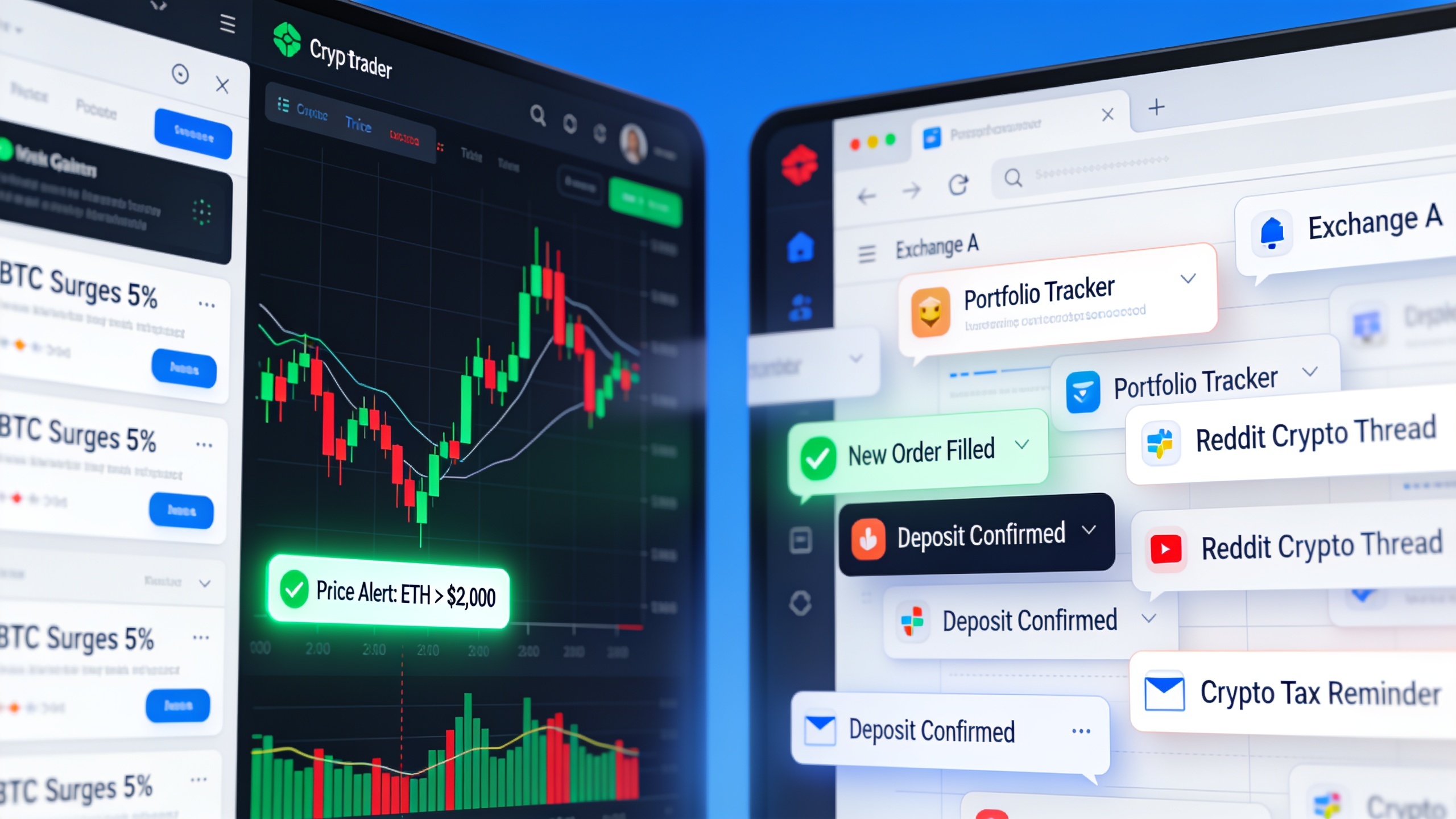
Crypto doesn't wait for the morning news cycle. A single tweet, some random regulatory filing, or an exchange going dark can knock Bitcoin around by a few percent before you've even unlocked your phone. Which is exactly why a decent news aggregator, basically a tool that scrapes headlines, price data, and social chatter from a bunch of places and dumps it all into one feed, has quietly become something you can't really trade without. Below I've broken down seven of the platforms people actually use for real-time alerts, what each one is genuinely good at, and how to figure out which one belongs in your setup.
So what even is one of these things? A crypto news aggregator is a service or app that automatically gathers up news articles, price swings, on-chain activity, and social media sentiment, then organizes it into a single searchable feed. The whole point is to shrink the gap between "something happened" and "you found out." And for traders, that gap is often the difference between catching a move and chasing it after it's already gone.
Table of Contents
- What Is a Crypto News Aggregator, and Why Bother?
- How I Sized These Up
- The Top 7 Crypto News Aggregators for Real-Time Market Alerts
- Crypto News Aggregator Comparison Table
- Do Real-Time Alerts Actually Make You a Better Trader?
- What to Look For Before You Commit
- Frequently Asked Questions
What Is a Crypto News Aggregator, and Why Bother?
A crypto news aggregator is a platform that pulls all the market-moving stuff (breaking news, exchange listings, whale transactions, regulatory updates, social sentiment) into one continuously updated stream so you're not manually babysitting a dozen sources. Without one, you'd basically have to check a handful of news sites, refresh a few social platforms, and poke around multiple blockchain explorers just to stay current. Which, when the market never sleeps, isn't a thing a human can realistically do.
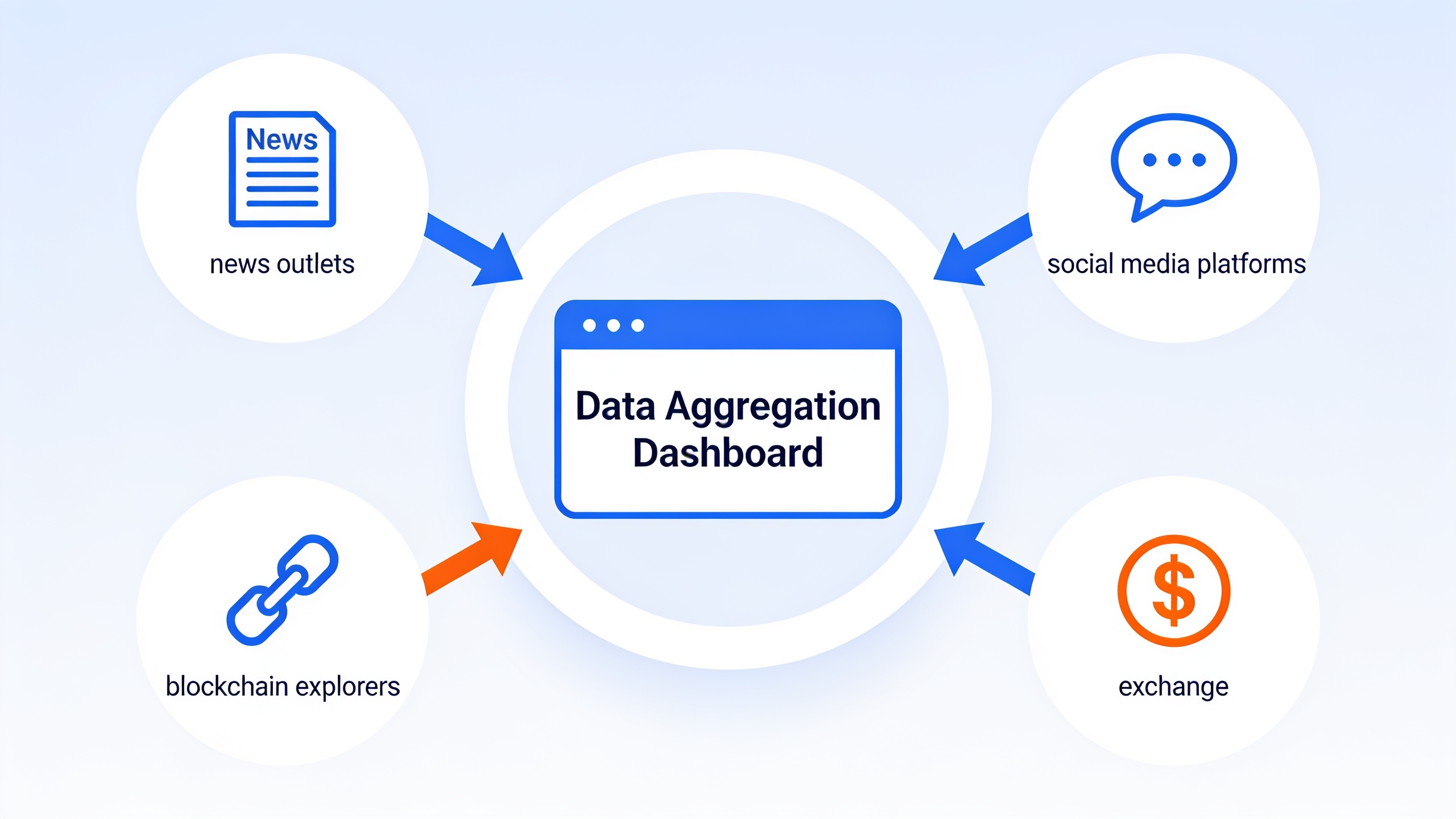
And that's the crux of it. Unlike the stock market, which politely opens and closes at set hours, crypto just runs. Forever. News breaks at 3 a.m. as often as 3 p.m., and prices react on the spot because there's no opening bell to let everyone calmly "digest" overnight developments. A good aggregator basically plays night watchman, pulling the few headlines or price moves that actually matter out of the thousands of data points spitting out every hour across exchanges, chains, and social feeds.
This matters even more now that crypto reacts to stuff happening way outside crypto. Macro announcements, rate decisions, equity swings, they all bleed into digital asset prices these days. There's a deeper look at that in Crypto Stock Market Correlation: What Recent Data Shows, and it's worth a read. When Bitcoin and Ethereum start moving in lockstep with the Nasdaq, a solid aggregator helps you spot the actual trigger, be it a Fed statement or something crypto-specific, instead of just staring at a candle dropping with zero context.
How I Sized These Up
I judged each platform on four pretty practical things: how many kinds of data it actually pulls together (news, prices, social sentiment, on-chain activity), how fast that info reaches you, how much you can customize the alerts, and whether real active traders use it or it's just a browsing toy. One heads-up though. Pricing, features, and API limits on these tools change constantly, so I'm focusing on what each one is fundamentally for rather than exact plan details. Always double-check current pricing and features on the provider's own site before you pay for anything.
Also, and I can't stress this enough, no aggregator replaces actually knowing what you're doing. If you're brand new to any of this, work through the fundamentals in How to Buy Cryptocurrency: A Step-by-Step Guide for First-Time Investors first, then bolt real-time alerts onto your strategy. An alert is only worth anything if you already know what to do when it fires.
The Top 7 Crypto News Aggregators for Real-Time Market Alerts
These seven cover the full spread, from generic price-and-news trackers to the more niche social sentiment and whale-watching tools.
1. CoinMarketCap
CoinMarketCap is probably the most recognized crypto data site there is, tracking prices across a huge number of exchanges while also surfacing news, community sentiment votes (that simple bullish/bearish poll on each coin's page), and portfolio tools. Its app does custom price alerts for specific coins, which makes it a totally reasonable starting point if you just want price notifications and headline coverage in one spot without running a separate news reader. That said, it's a data-and-price site at heart, so the news side of it feels more like a bonus feature than the main event.
2. CoinGecko
CoinGecko is basically CoinMarketCap's twin, a price and market-data aggregator covering a broad set of coins and exchanges, with its own news section and portfolio tracking baked in. Plenty of people run it alongside price alerts set through the app so they can watch market data and headline flow from one dashboard. Honestly, a lot of traders just use both. Having a second, independent source to cross-check a price or a headline against CoinMarketCap beats trusting one feed blindly, and picking a "winner" between the two kind of misses the point.
3. CryptoPanic
CryptoPanic was built to be a news aggregator, full stop, not a jack-of-all-trades data platform. It pulls headlines from a wide range of crypto outlets and blogs, and lets you filter by coin, source, or sentiment tag (the community votes on whether a headline is bullish, bearish, or important). That filtering is the killer feature. If you're only really tracking a couple of coins you actually hold, being able to strip out everything else instead of doom-scrolling a firehose is genuinely great. Of everything on this list, this is the one that leans hardest into being a real aggregator.
4. Messari
Messari pitches itself as a research and data platform for crypto pros, and its news timeline tags every headline and report by the specific assets and protocols it touches. Super handy if you're the kind of person who needs to trace a price move back to the exact announcement or governance vote that caused it. It skews toward deeper research and structured data rather than a rapid-fire social feed, so it's really for traders and analysts who want the why behind a headline, not just the headline blaring at them.
5. LunarCrush
LunarCrush is all about social analytics, tracking mentions, engagement, and sentiment for coins across Twitter/X and Reddit rather than obsessing over traditional news articles. Think of it as the perfect sidekick to a headline aggregator. CryptoPanic or CoinMarketCap tells you what got reported; LunarCrush shows you how the crowd is actually reacting in real time. For coins where social momentum basically is the price driver in the short term, that distinction matters a lot more than you'd think.
6. Santiment
Santiment mashes on-chain data together with social and development metrics, and it can turn behavioral signals (a weird spike in social volume, unusual on-chain activity, that kind of thing) into alerts. This one's for people who want to go past the headlines and watch the underlying blockchain and community behavior directly. Fair warning: it's more advanced. You need to be comfortable reading on-chain metrics rather than plain-English "X just happened" summaries. Not everyone wants that, and that's fine.
7. Whale Alert
Whale Alert is a narrow, specialized thing that fires off real-time notifications whenever a big chunk of crypto moves between wallets or lands on an exchange, what people call whale tracking because you're literally following the biggest holders' moves. It's not a general news aggregator and won't replace one. But it adds a layer nothing else does. A sudden transfer of a massive amount of some coin to an exchange wallet has historically come right before selling pressure, so traders love pairing Whale Alert with headline tools to get the full picture of what's about to hit.
Crypto News Aggregator Comparison Table
| Aggregator | Primary Focus | Alert Style | Best Suited For |
|---|---|---|---|
| CoinMarketCap | Price data + news + sentiment votes | App-based price alerts | Beginners wanting an all-in-one dashboard |
| CoinGecko | Price data + news + portfolio tools | App-based price alerts | Cross-checking data against another source |
| CryptoPanic | Curated, filterable news headlines | Feed filtering by coin/sentiment | Traders tracking specific coins closely |
| Messari | Research reports + tagged news | Not stated publicly as a push-alert feature | Analysts wanting context behind headlines |
| LunarCrush | Social sentiment and engagement metrics | Sentiment/engagement tracking | Traders watching social-driven momentum |
| Santiment | On-chain + social behavioral signals | Configurable behavioral alerts | Advanced users comfortable with on-chain data |
| Whale Alert | Large-transaction (whale) tracking | Real-time transaction notifications | Traders watching for large wallet movements |
Do Real-Time Alerts Actually Make You a Better Trader?
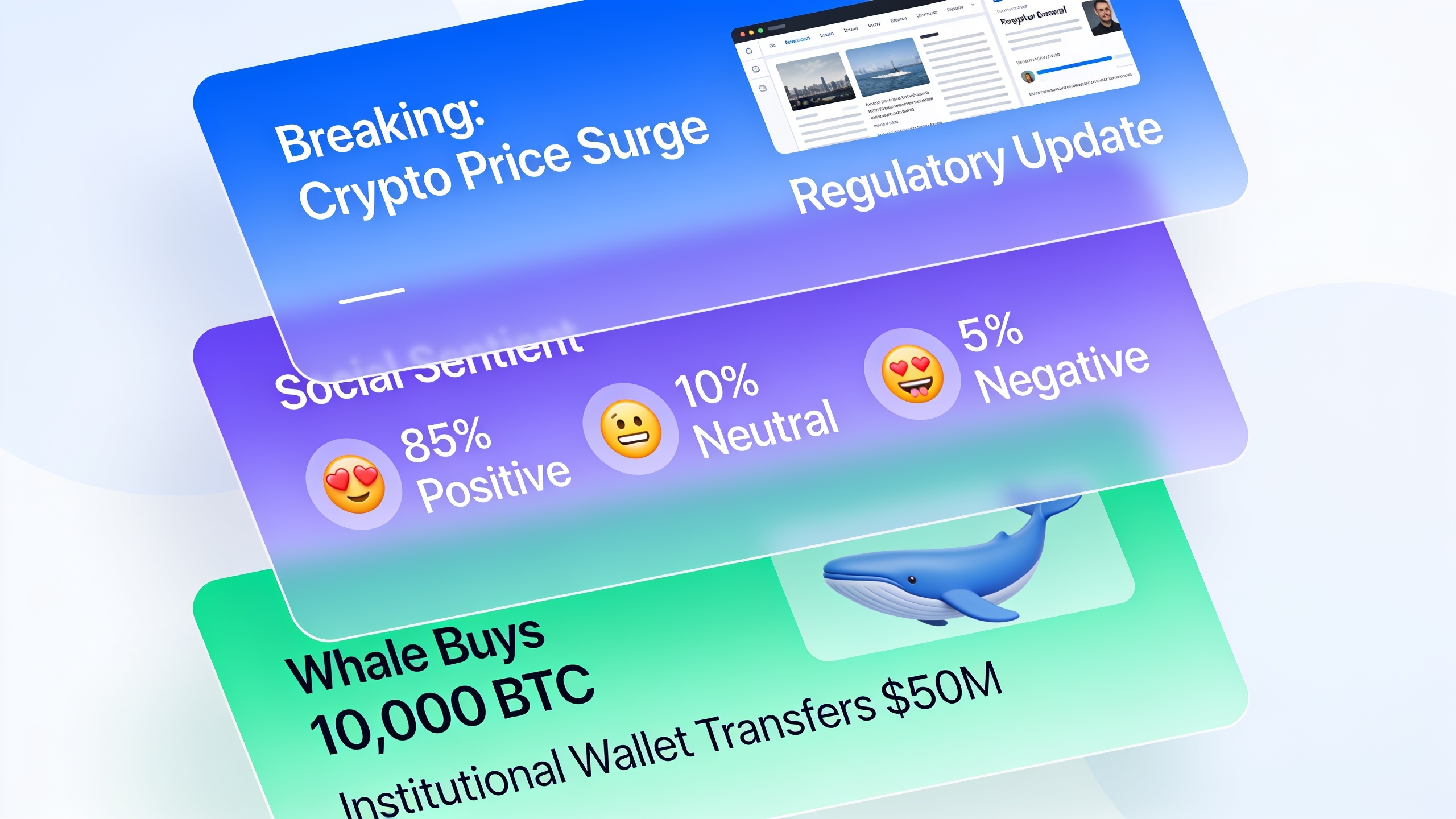
Real-time alerts shrink the gap between when market-moving news goes public and when you can actually act on it, which matters most in a market that runs nonstop and reacts within minutes. In plain terms: someone who gets an instant ping about an exchange hack, a regulatory ruling, or a sudden burst of large-wallet transfers gets a shot at adjusting position size or bailing on risk before the wider market fully prices it in. The person waiting for a tidy morning news roundup? Probably already late.
But speed on its own isn't a strategy. An alert only tells you something happened. It doesn't tell you what to do about it, and pretending otherwise is how people blow up accounts. This is exactly why combining tools beats relying on one. A headline aggregator like CryptoPanic tells you what got reported, a social tool like LunarCrush shows how the crowd's reacting, and a tracker like Whale Alert shows what the big holders are actually doing with their coins. Stack those signals and you get a way clearer read than any single feed gives you. It also helps you ignore the junk, because not every headline that trips an alert is worth acting on. Most aren't.
One more thing. Alerts are most useful when you read them against the bigger financial backdrop. Since crypto has gone through stretches of moving tightly with equities, a stock-market shock like a surprise rate decision can matter every bit as much as crypto-native news. Yet another reason to understand the wider dynamics laid out in Crypto Stock Market Correlation: What Recent Data Shows instead of treating crypto like it exists in its own little bubble. It doesn't anymore.
What to Look For Before You Commit
The right aggregator has way less to do with which one has the longest feature list and way more to do with which one fits how you actually trade. Someone holding a few large-caps for years has almost nothing in common, needs-wise, with a day trader juggling a dozen tiny altcoins. So before you lock into anything, chew on a few things.
Do you want broad market coverage or laser-focused filtering? A general dashboard like CoinMarketCap or CoinGecko is great if you want one place to glance at prices, headlines, and portfolio value all at once. But if you're obsessing over a short watchlist and want everything else gone, a filterable feed like CryptoPanic is the better call. Then there's social sentiment. If you trade coins that live and die by hype cycles, something like LunarCrush hands you insight a plain news feed just can't. And finally, be honest about how technical you're willing to get. On-chain and behavioral data from Santiment can be genuinely valuable, but it needs interpretation. It's not a "coin went up, here's why" notification, and if that's not your thing, don't force it.
Last thought, and it stretches way past crypto: pulling scattered info into one place is a universal win. The same way traders lean on aggregators so they're not refreshing ten news sites, homebuyers use platforms like Viviendalista to browse property listings from a bunch of sources in one searchable database instead of chasing individual agents or hopping site to site. Same logic underneath. When information's spread across a hundred corners, a good aggregator saves you time and, more importantly, keeps you from missing the one thing that mattered.
Frequently Asked Questions
What's the actual difference between a news aggregator and a crypto alert app?
A news aggregator is about collecting and organizing headlines, sentiment, and market data from lots of sources into one feed. An alert app is built specifically to push a notification to your phone or email when some condition you set gets met, like a price crossing a line or a big transaction going through. A lot of platforms, CoinMarketCap and CoinGecko included, do both. They aggregate the news and let you configure alerts in the app.
Are these things free?
Most of the ones I covered, including CoinMarketCap, CoinGecko, and CryptoPanic, have a free tier with core browsing and alert features. The more pro-research or advanced on-chain tools, like Messari and Santiment, tack on paid tiers for the deeper analytics. Pricing shifts around constantly though, so check current plans on each provider's own site rather than trusting numbers you read somewhere secondhand (including here).
Can an aggregator predict price movements?
Nope. It surfaces information faster than you manually checking a bunch of sources, but it doesn't forecast anything on its own. Tools like Whale Alert or Santiment can flag behavior that's historically come before price moves, like large transfers onto exchanges, but those are signals to feed into your own analysis. Not crystal balls. Anyone selling them as guarantees is selling you something.
How do I actually set up real-time alerts?
Most aggregators let you set them through their app or web dashboard by picking a coin and defining a trigger, say a price change percentage, a new headline mentioning that asset, or a large transaction involving that token. Exact steps vary platform to platform, so poke around the alert or notification settings menu in whichever app you're using to see what's on offer.
Is social sentiment data actually reliable for trading?
Sentiment data from tools like LunarCrush reflects how much and how positively a coin's being talked about online, and that can line up with short-term momentum for certain assets, especially the smaller, more speculative ones. But here's the catch: sentiment gets manipulated. Coordinated hype is a real thing. So treat it as one input among several, combined with news, price action, and on-chain data, rather than a standalone signal you'd bet the house on.
Staying ahead of crypto isn't about watching every single data point. It's about having the right mix of tools surface the handful of signals that actually matter, right when they happen. Whether that's a simple price-and-news dashboard, a sentiment tracker, or a whale feed, these seven cover the main categories worth poking at. Test a couple against your own style before you settle on the combo that fits how you really make decisions. You'll know pretty fast which ones you keep opening and which ones you never touch again.