How One Trader Turned Sentiment Analysis Into Consistent Gains: A Crypto Sentiment Analysis Case Study
Crypto sentiment analysis is basically the art of measuring the collective mood of the market, tweet by tweet, headline by headline, so you can figure out whether the crowd is leaning bullish or...

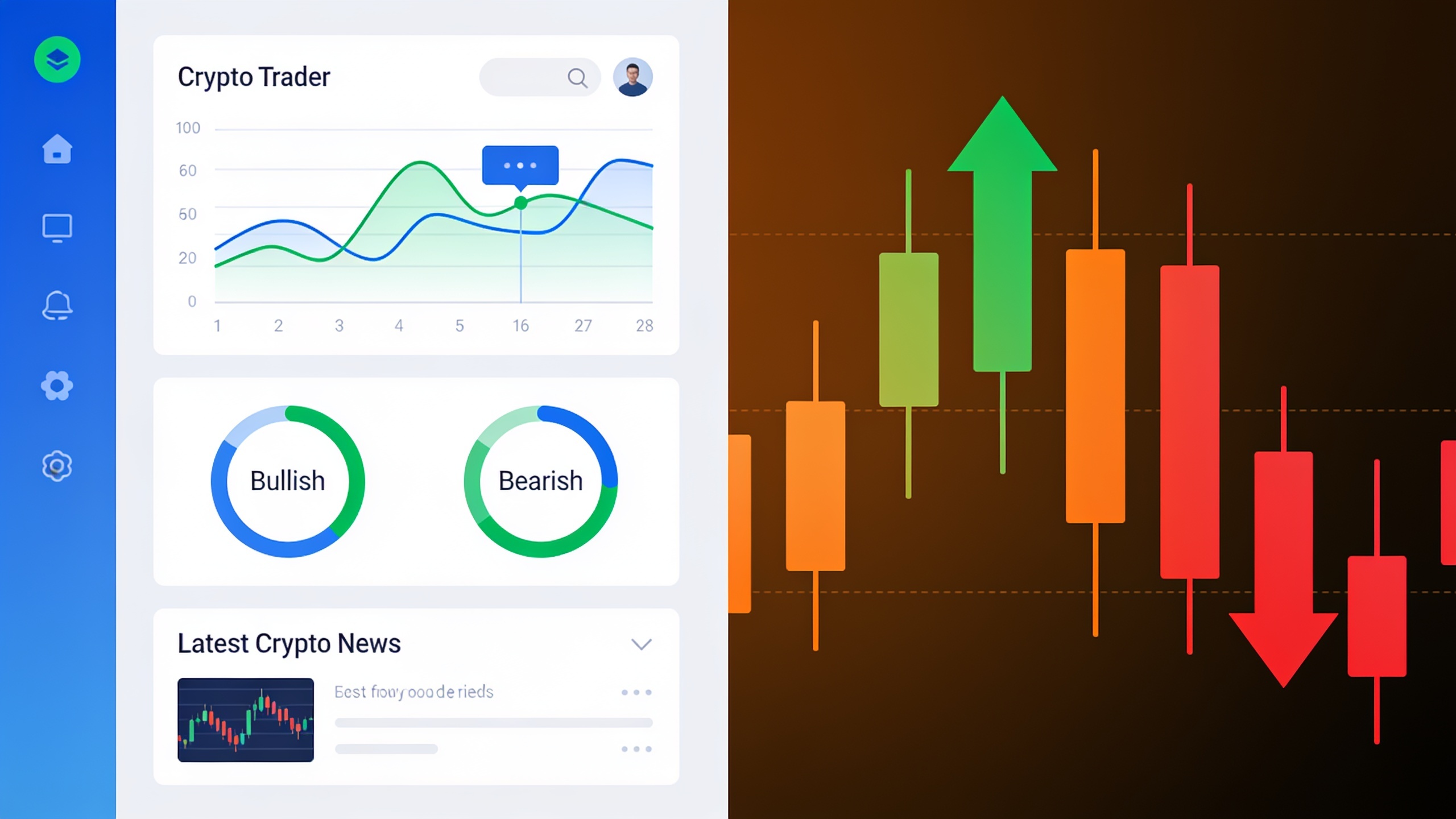
Crypto sentiment analysis is basically the art of measuring the collective mood of the market, tweet by tweet, headline by headline, so you can figure out whether the crowd is leaning bullish or bearish before the price catches up. For the trader we're going to walk through in this piece, that one habit became the spine of his entire routine. It replaced the old gut-feel guessing with something he could actually repeat. So that's what this article is about: how the shift happened, what he used, where it blew up in his face, and what you can steal from it. Doesn't matter if you're sitting on a five-figure portfolio or just trying to quit panic-selling every time Bitcoin sneezes.
One thing before we go further, because I don't want to sell you a fairy tale. The trader here is a composite. He's stitched together from patterns I've seen described over and over by active crypto traders in interviews, forum threads, and the usual trading communities. He's not one verified guy with a name. The tactics, though? Those are 100% real and available to anyone with an internet connection and some publicly accessible sentiment tools.
Table of Contents
- What Is Crypto Sentiment Analysis?
- The Trader's Setup: Tools and Data Behind the Strategy
- Trading With News Sentiment: How the Strategy Played Out
- What This Approach Reveals About Sentiment-Driven Trading
- Common Pitfalls When Trading With News Sentiment
- How to Build Your Own Crypto Sentiment Analysis Routine
- Sentiment Analysis vs. Other Crypto Research Methods
- FAQ
What Is Crypto Sentiment Analysis?
Crypto sentiment analysis is the process of scanning social posts, news articles, forum threads, and search trends to work out whether people feel optimistic, scared, or just bored about a coin, then using that read alongside price action to decide when to get in or out. Technical analysis only cares about price and volume on a chart. Sentiment analysis tries to poke at the layer underneath all that: the fear, the greed, the hype, the outright panic. Which, let's be honest, is what actually pushes the buy and sell buttons.
In real life this usually means mashing together a few things. How many times a coin is getting mentioned. Whether those mentions skew positive or negative. Sudden spikes in news coverage. And broader mood meters like the Crypto Fear & Greed Index from Alternative.me, which squishes a bunch of inputs (volatility, momentum, social media, surveys, dominance, and search trends) into one tidy number telling you if the market's in "extreme fear" or "extreme greed." No single one of these is worth much on its own, honestly. The magic is in stacking them and watching for the moments when sentiment goes one way and price goes another. That gap is usually where the interesting stuff lives.
For our guy, sentiment was never a replacement for real research. It was a filter. A way to decide when to actually pull the trigger on a setup his charts had already flagged, and when to sit on his hands even though the chart was practically begging him to buy.
The Trader's Setup: Tools and Data Behind the Strategy
His routine leaned on three buckets of input, and he checked each one on a fixed schedule instead of refreshing his phone every ninety seconds. That last part sounds boring but it turned out to be one of the most important disciplines in the whole thing.
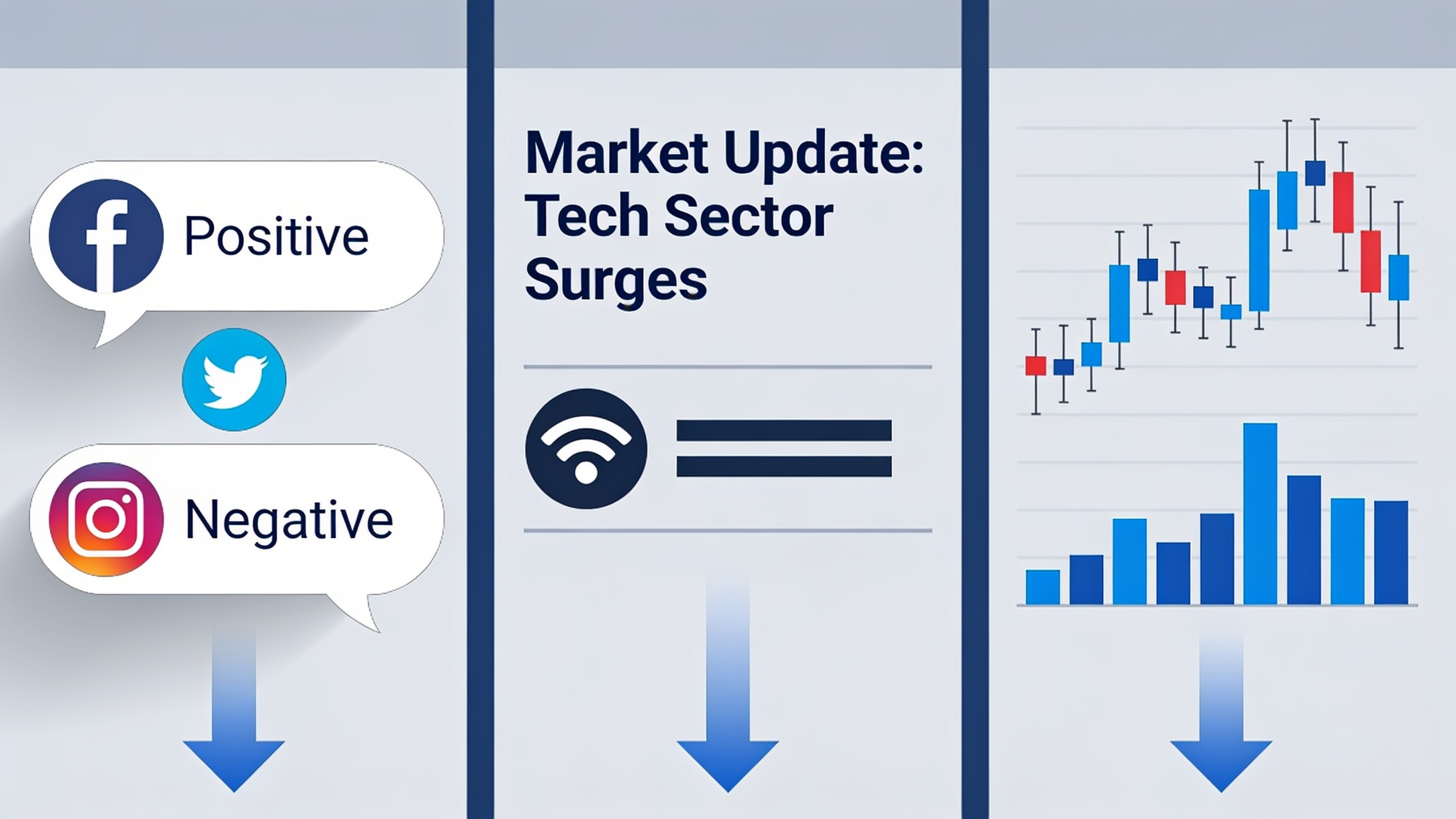
First, social listening. Instead of doom-scrolling crypto Twitter (fine, X) and Reddit for hours, he used aggregated sentiment scores that track mention volume and tone across the major coins more or less in real time. He wasn't trying to read every post. He was watching for the moment a coin's mention volume jumped way above its normal baseline, because weird spikes in attention, good or bad, tend to show up right before things get volatile.
Then there's news. Regulatory headlines, exchange announcements, macro stuff like rate decisions and ETF filings and the occasional exchange getting hacked, all of it moves crypto fast. Sometimes in minutes. A single leaked filing or one loud tweet can knock a big coin down several percent before most people have even unlocked their screens. So he ran a dashboard that pulled headlines from a bunch of crypto outlets into one feed instead of bouncing between sites like it's 2013. If you want to build something similar, it's worth skimming the roundup of the Top 7 Crypto News Aggregators for Real-Time Market Alerts, which covers exactly these kinds of tools.
Third, and this is the part people skip, price and volume confirmation. He never traded a sentiment signal naked. Before acting on a mood shift he'd cross-check it against actual price and volume, looking for proof that real money was moving and not just people talking. This one step killed off a huge chunk of the noise, all those moments where social volume exploded but the price barely twitched. Which basically means the hype never turned into anyone actually buying.
Is this setup low-tech compared to what an institutional desk runs? Absolutely. But that's the point. It's realistic for a normal person who doesn't have a Bloomberg terminal or a data science team on payroll. The tools are already out there. The hard part is having the discipline to use them on a schedule instead of reacting like a caffeinated squirrel.
Trading With News Sentiment: How the Strategy Played Out
Trading with news sentiment means using the tone and volume of breaking news, not just the headline by itself, to guess whether a price reaction is a quick overreaction or the start of something that sticks. His process for any notable event was dead simple: read the headline, check whether social sentiment was already moving ahead of it or scrambling to catch up, then wait out a short confirmation window (usually 15 to 45 minutes) before putting money down.
Here's a stripped-down look at how that played out across a few typical scenarios, the kind of setups this whole style is built around:
| Scenario | Sentiment Signal | News Trigger | Trader's Action | Rationale |
|---|---|---|---|---|
| Exchange lists a mid-cap altcoin | Sharp spike in mention volume, mostly positive | Official listing announcement | Small entry within first hour, exit within 24-48 hours | Listing hype tends to fade fast; short holding window limits exposure |
| Regulatory rumor circulates unconfirmed | Negative sentiment rising faster than news volume | Unverified report of a possible ban | No trade | Sentiment led the news rather than confirming it, high risk of a false signal |
| Major exchange collapse (e.g., the FTX failure in November 2022) | Extreme negative sentiment, sustained over days | Multiple confirmed news outlets reporting insolvency | Reduced exposure across the board, avoided new entries for days | Sustained negative sentiment across a well-documented, confirmed event signaled a structural risk, not a short-term dip |
| Coin trending after a public figure's social media post | Sentiment spike, high volume, mixed tone | Viral post referencing a token | No trade or very small speculative position | Historically, this type of hype-driven move (as seen repeatedly with Dogecoin-related posts) is unpredictable and often reverses quickly |
| Gradual sentiment improvement over multiple weeks | Slow, steady rise in positive mentions without a single news spike | Accumulating minor developments (partnerships, roadmap updates) | Gradual position building over several weeks | Sustained, low-volatility sentiment improvement is treated as a stronger signal than a one-day spike |
Notice the pattern? He treated sudden, spike-driven sentiment as a reason to be careful way more often than a reason to buy. The trades that actually made him money were the slow burns. The sentiment shifts that built over days and weeks instead of erupting in an hour.
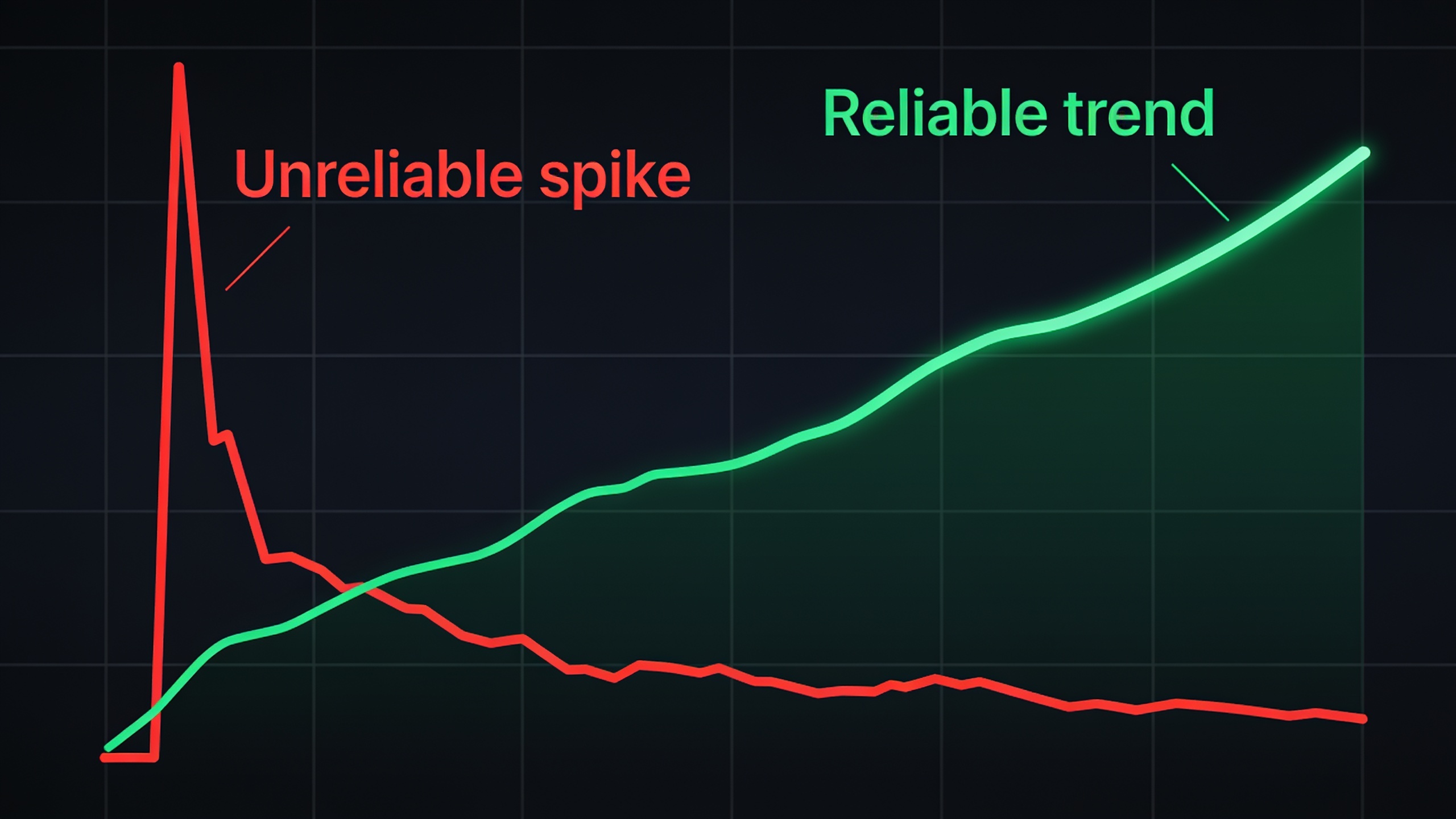
And this lines up with something worth tattooing on your brain: the loudest sentiment spikes are usually the least reliable. They pull in every short-term trader trying to front-run everyone else, which squeezes the profitable window down to basically nothing for anyone reacting after the headline's already public. By the time you saw it, so did a thousand faster people.
What This Approach Reveals About Sentiment-Driven Trading
Sentiment-driven trading works best as a timing overlay on top of your broader research, not as a standalone way to pick which coins to buy. That's the big one. It's the thing that jumps out when you actually break down where his wins and losses came from.
The cleanest wins showed up when sentiment and the on-chain or fundamental picture were pointing the same way at the same time. If you want to go deeper on that on-chain stuff, reading blockchain data directly, tracking whale wallet moves, transaction clustering, exchange inflows and outflows, is its own rabbit hole covered in a separate breakdown of on-chain analytics. And it pairs beautifully with sentiment monitoring, because big wallet activity often shows up before or alongside a social mood shift rather than trailing it.
The ugliest losses? Those came when crypto was basically holding hands with the stock market, a correlation that's gotten a lot tighter in recent years as institutional money poured into both at once. During those stretches, coin-specific sentiment turned nearly useless, because price was being yanked around by macro stuff like Fed announcements instead of anything happening inside crypto itself. Honestly, learning to recognize when sentiment analysis is about to underperform turned out to be just as valuable as knowing when to trust it. Maybe more.
This ties into a pattern from another case study on this site, Crypto Trading Case Study: How a Trader Turned $1,000 Into $50,000, where the real engine wasn't one heroic bet. It was compounding a bunch of small, disciplined wins over time. Sentiment analysis, used the way I'm describing, is just one more input feeding that kind of slow, repeatable edge. Not a shortcut to a single lucky moonshot.
Common Pitfalls When Trading With News Sentiment
The single biggest trap in news sentiment trading is confusing correlation with causation, assuming that because sentiment turned positive right before a price pop, the sentiment caused the pop. Most of the time both things were just reacting to the same underlying news within seconds of each other. Anyway, here are the mistakes that trip up almost everyone new to this.
Chasing spikes that already peaked. By the time a coin is trending loud enough for you, a casual observer, to notice, the good part is usually over. Sentiment tools shine at catching a shift early, not confirming what the whole world already sees.
Treating every source as equally trustworthy. A coordinated pump campaign on social media can throw off a sentiment spike that looks exactly like organic excitement on the surface. The only way to tell them apart is usually to check whether the accounts driving the noise are real, established users or a swarm of week-old profiles posting nearly identical copy-paste garbage.
Mixing up sentiment volume with sentiment direction. A coin can have absolutely enormous social volume while the mood is overwhelmingly negative, like during a hack or a collapse. Loads of attention isn't the same as bullish attention. Beginners conflate these constantly and it burns them.
Then there's overtrading during chaos. Big regulatory announcements or exchange failures generate a firehose of sentiment noise, and the itch to trade every little wobble gets intense. Our guy specifically capped himself at a fixed number of trades per week during these windows, because he'd already figured out that overtrading through crazy news cycles was one of his most reliable ways to lose money.
And don't forget execution risk, which nobody talks about enough. Sentiment might scream "buy now," but where and how that order actually fills matters a ton. Slippage, withdrawal delays, platforms falling over during a high-volume news event, any of it can chew up or completely erase your sentiment edge. Which is exactly why your choice of venue matters as much as the signal, something dug into in this comparison of P2P crypto trading vs. centralized exchanges, since execution speed and control over settlement can be wildly different between the two.
How to Build Your Own Crypto Sentiment Analysis Routine
Building a workable sentiment routine starts with picking a small, consistent set of data sources and checking them on a fixed schedule, instead of trying to watch everything at once, which almost always spirals into reactive, emotional trades. Here's a practical starting framework, more or less the shape of what this trader ran.
Start with one broad mood gauge, like the Crypto Fear & Greed Index, and check it once a day. Not continuously. Once. This gives you a baseline read on whether the whole market's tilting toward euphoria or full-blown panic, which then tells you how much weight to give any single coin's sentiment spike.
Next, grab a news aggregator that pulls headlines from a bunch of crypto outlets into one place, so you're not missing a regulatory bombshell just because you happened to be looking at the wrong site at the wrong minute.
Then, and this is the part people love to skip, write down specific rules for what counts as a confirmed signal versus noise. For him that meant demanding both a sentiment shift and a matching move in price and volume before acting, plus a mandatory waiting period after a headline dropped. Write these down before you're in a live trade, because I promise you, snap decisions under time pressure default straight to emotion every single time. Your calm self makes better rules than your panicking self.
Fourth, keep a log. Track every trade against the sentiment signal that triggered it. Over a few months this record quietly tells you which kinds of signals actually correlate with your profitable trades, since your risk tolerance and the market conditions you trade in both shape what's worth trusting.
Last thing: revisit the rules now and then. This is not a set-it-and-forget-it machine. The reliability of any given signal drifts as the market's structure changes, like it did when crypto and equities got more correlated and coin-specific sentiment lost a chunk of its predictive punch during macro-driven selloffs. What worked last year might quietly stop working. Pay attention.
Sentiment Analysis vs. Other Crypto Research Methods
Crypto sentiment analysis is one of several complementary research methods, not a stand-in for the rest, and knowing where it's strong versus where it flops next to technical, on-chain, and fundamental analysis is how you figure out how much to lean on it.
| Method | What It Measures | Best Used For | Key Limitation |
|---|---|---|---|
| Sentiment analysis | Crowd mood via social media, news tone, and mention volume | Timing entries/exits around news and hype cycles | Prone to manipulation and false spikes from coordinated promotion |
| Technical analysis | Price and volume patterns on a chart | Identifying trend direction and key support/resistance levels | Reactive by nature; doesn't explain why a move is happening |
| On-chain analytics | Wallet activity, transaction flows, exchange balances directly from blockchain data | Spotting large holder ("whale") behavior and real capital movement | Requires interpretation skill; data can be noisy for smaller-cap coins |
| Fundamental analysis | Project tokenomics, team, adoption metrics, use case | Long-term investment decisions and project selection | Slow to reflect short-term price swings; less useful for active trading |
None of these, used solo, comes close to the reliability of stacking two or three together. And in this case study, the trader's most consistent gains came exactly from the moments when sentiment and on-chain confirmation, or sentiment and a clean technical setup, all pointed the same direction at once. That overlap is where the money was.
Wrapping Up
The real lesson here isn't that sentiment analysis is some magic indicator. It's that treating crowd mood as one disciplined input among several, checked on a schedule and confirmed against price and other data before you act, turns a screaming emotional market into something you can actually handle. The tools for this (social listening dashboards, aggregated news feeds, mood meters like the Fear & Greed Index) are free and sitting right there for any retail trader. What separated this story from the far more common one, where somebody chases hype and gets absolutely torched, was everything wrapped around those tools. Fixed checking schedules. Written confirmation rules. And a clear-eyed sense of when sentiment signals are about to get drowned out by bigger macro forces. That's it. That's the whole edge.
FAQ
Can I just trade on sentiment analysis alone?
Nope, not really. Sentiment works best as a confirming or timing signal alongside technical or on-chain data, because those spikes can just as easily come from a coordinated pump or a two-day hype cycle as from real, sustained interest.
Okay, but how is this different from just reading crypto news?
Reading news gives you individual data points, one at a time. Sentiment analysis aggregates the tone and volume of a ton of sources (social posts, articles, forum threads) into one trend you can actually track over time. That makes it way easier to catch a shift before it's obvious from any single headline.
How fast does the market react to a sentiment shift?
Depends, and it varies a lot. But the big events, exchange collapses, regulatory announcements, major listings, have historically moved prices within minutes to hours. Which is exactly why the trader here built in a confirmation window instead of firing off a trade at the very first flicker.
Does sentiment analysis even help during a broader downturn?
It can, but it gets a lot weaker when crypto is mostly moving in lockstep with stocks or reacting to macro stuff like interest rate decisions. In those stretches, coin-specific sentiment carries way less weight than the mood of the broader financial markets.
What do I actually need to start tracking sentiment?
Bare minimum: a broad mood gauge like the Crypto Fear & Greed Index, one consolidated news feed so you're not manually checking five sites, and a dead-simple system for logging your trades against the signals that triggered them, so you can eventually see what's actually working for you rather than what works in theory.