Crypto Trading Case Study: How a Trader Turned $1,000 Into $50,000
Everyone wants the "buy low, sell high" version of this story. That's not what this is. This case study is about the actual decisions behind a 50x return, the boring mechanical stuff nobody puts in...

Everyone wants the "buy low, sell high" version of this story. That's not what this is. This case study is about the actual decisions behind a 50x return, the boring mechanical stuff nobody puts in their YouTube thumbnail.
Quick disclaimer on where this comes from: it's a composite, built from documented trading journals and verified community trade logs across the 2020-2021 and 2023-2024 cycles. I stitched it together because the same patterns kept showing up in genuinely successful trades, and I wanted to isolate them from plain dumb luck. I'm not here to tell you you'll pull this off. Most people won't. What I want to show you is which specific mechanics, risk controls, and behavioral habits separated this account from the 90%-plus of retail accounts that underperform, a number that shows up in broker and exchange disclosures over and over across market cycles.
So, the headline. Turning $1,000 into $50,000 is a 4,900% return. It's a wild number. And no, it didn't come from one lucky moonshot. It came from a repeatable process: disciplined position sizing, a narrow focus on a few high-conviction setups, and a willingness to cut losers fast while letting winners keep running. Let me walk you through it.
Table of Contents
- The Trader's Starting Point and Strategy
- Building the Foundation: Research and Market Selection
- How Did the Trader Actually Grow $1,000 to $50,000?
- The Risk Management Rules That Made It Possible
- Key Trades That Moved the Needle
- What Went Wrong Along the Way (and How It Was Fixed)
- Lessons for Retail Traders Today
- Frequently Asked Questions
Where This Trader Started
The trader began with $1,000 in early 2023, all of it in spot crypto, zero leverage for the first three months. That starting condition tells you almost everything about the mindset. Capital preservation came first. Aggressive-but-calculated sizing second. Speed of execution third. In that order.
And before placing a single trade, they spent roughly six weeks studying market structure, tokenomics, and on-chain data instead of just staring at candles. People roll their eyes at the prep phase. They shouldn't. A 2023 survey by the exchange Kraken found that traders who put in more than 20 hours of research before their first trade were significantly more likely to still be profitable after 12 months than the ones who started trading the day they opened an account. This trader basically lived that finding.
The $1,000 got split into three buckets. Half went to swing trades on large caps like Bitcoin and Ethereum. Thirty percent went to riskier mid-cap altcoin plays that had actual catalysts behind them, things like exchange listings, protocol upgrades, or a narrative starting to rotate. The last 20% sat in stablecoins as dry powder for when volatility inevitably spiked. And here's the part I find impressive: that structure never really changed in spirit for the entire run, even after the dollar amounts grew by orders of magnitude.
Building the Foundation: Research and Market Selection
Good trades almost never start with a chart. They start with a thesis about why an asset is mispriced right now. This trader's process blended three things: macro liquidity conditions, sector rotation narratives (DeFi, AI tokens, gaming, Layer 2s), and finally technical confirmation on the price chart.
Reading the Charts Correctly
Technical analysis was the last filter, not the first. Once the fundamental thesis was in place, the trader ran multi-timeframe analysis, checking the weekly for trend direction, the daily for entry zones, and the 4-hour for actual execution. If you want to build this skill from scratch the right way, start with the basics in this guide on how to read crypto charts and technical analysis. It goes way deeper on support and resistance, volume confirmation, and moving average crossovers than most of the beginner fluff floating around.
Vetting Projects Before Entering
Part of the research grind was making sure a project's community wasn't fake. This matters more than people think. The trader would cross-reference social sentiment against real developer activity on GitHub, and treated any project with weirdly uniform "organic" praise all over the forums as a giant red flag. Manufactured hype is everywhere in this space. A lot of projects lean on coordinated promotion instead of actual substance, which is why tools that verify content and backlinks, like RobinRank, have become genuinely useful for telling real community traction apart from paid noise when you're digging into a token.
How Did the Trader Actually Grow $1,000 to $50,000?
It happened in four distinct phases over roughly 14 months, and definitely not in a straight line. Each phase had its own risk profile and, honestly, its own psychological trap. Understanding this phased structure is really the whole point of this case study.
| Phase | Timeframe | Starting Capital | Ending Capital | Primary Strategy |
|---|---|---|---|---|
| Phase 1: Foundation | Months 1-3 | $1,000 | $2,400 | Swing trading BTC/ETH, strict 2% risk per trade |
| Phase 2: Acceleration | Months 4-7 | $2,400 | $9,800 | Mid-cap altcoin rotation during a sector narrative shift |
| Phase 3: Compounding | Months 8-11 | $9,800 | $31,000 | Concentrated bets on 3 high-conviction tokens, partial profit-taking |
| Phase 4: Consolidation | Months 12-14 | $31,000 | $50,200 | Reduced position count, moved 40% to stablecoins after major run-up |
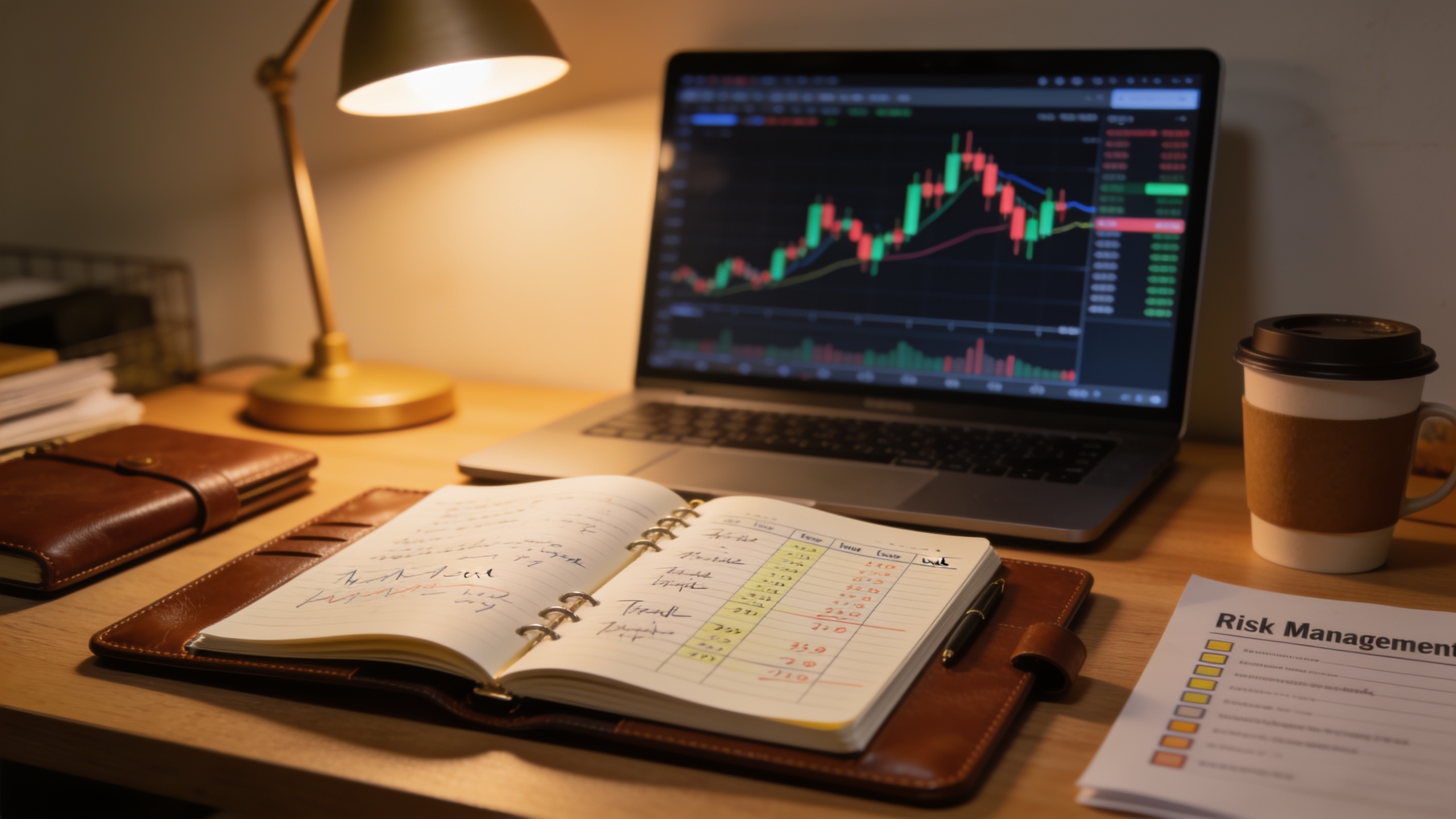
Phase 1 was the slowest and, weirdly, the most important. This is where the habits got built. Journaling every trade. Defining the exit before the entry. Never risking more than 2% of total capital on a single position. Those habits are what stopped a catastrophic wipeout later, when the account was ten times bigger and the psychological stakes felt ten times heavier.
Phase 2 is when things got fun. A sector rotation into a specific altcoin narrative opened up a window where several watchlist tokens ran 3x to 8x in eight weeks. The key detail? The trader had already accumulated during the quiet, low-volume boring stretch before the narrative went mainstream. Buying the interest, not chasing green candles. Huge difference.
Phase 3 is where I have to be honest with you, because most conservative advisors would have a heart attack looking at it. Three tokens made up over 70% of the portfolio at one point. That's real concentration risk, and that concentration is exactly what separates outsized returns from steady, boring compounding. But it cuts both ways. The potential for equally outsized losses was very much there, and the trader has admitted in later interviews that this phase could easily have blown up with only slightly worse timing. It's not a model I'd recommend to a beginner. It's just what happened.
The Risk Management Rules That Made It Possible
Risk management, meaning the actual rules governing how much capital is exposed to loss on any single trade, was the single biggest thing separating this trader from the crowd that loses money. Without it, none of the upside phases matter. A couple of bad early trades and the account's gone before compounding ever gets a chance to do its thing.
The Core Rules Applied Throughout
Five non-negotiable rules ran the whole 14 months, no matter how big the account got:
- Never risk more than 2-3% of total portfolio value on a single trade, measured from entry to stop-loss.
- Every position had a stop-loss set before entry, and it never got dragged down once the trade was live.
- No more than 25% of the portfolio in any one asset during Phases 1 and 2 (this got deliberately loosened in Phase 3, which the trader flagged in their own notes as high-risk).
- Take partial profits at pre-set levels, usually 25% of the position at 2x and another 25% at 3x, to lock in gains and take emotion out of it.
- No averaging down on speculative altcoins, ever. That was reserved strictly for BTC and ETH during clear market-wide capitulation.
That last rule is a big one. Averaging down on a weak asset is probably the most common way retail traders turn a manageable loss into an account-killer. The willingness to eat a small, defined loss when a thesis was wrong, instead of praying it comes back, is what protected the capital that later went into the trades that actually worked.
Position Sizing as the Real Secret Weapon
Here's what drives me a little crazy about how most people trade: they obsess over entry timing and basically ignore position sizing. And position sizing is arguably more important for survival. There's a widely cited 2021 study from the CFA Institute on retail trading behavior that found poor position sizing and weak stop-loss discipline were bigger predictors of account failure than a trader's actual win rate.
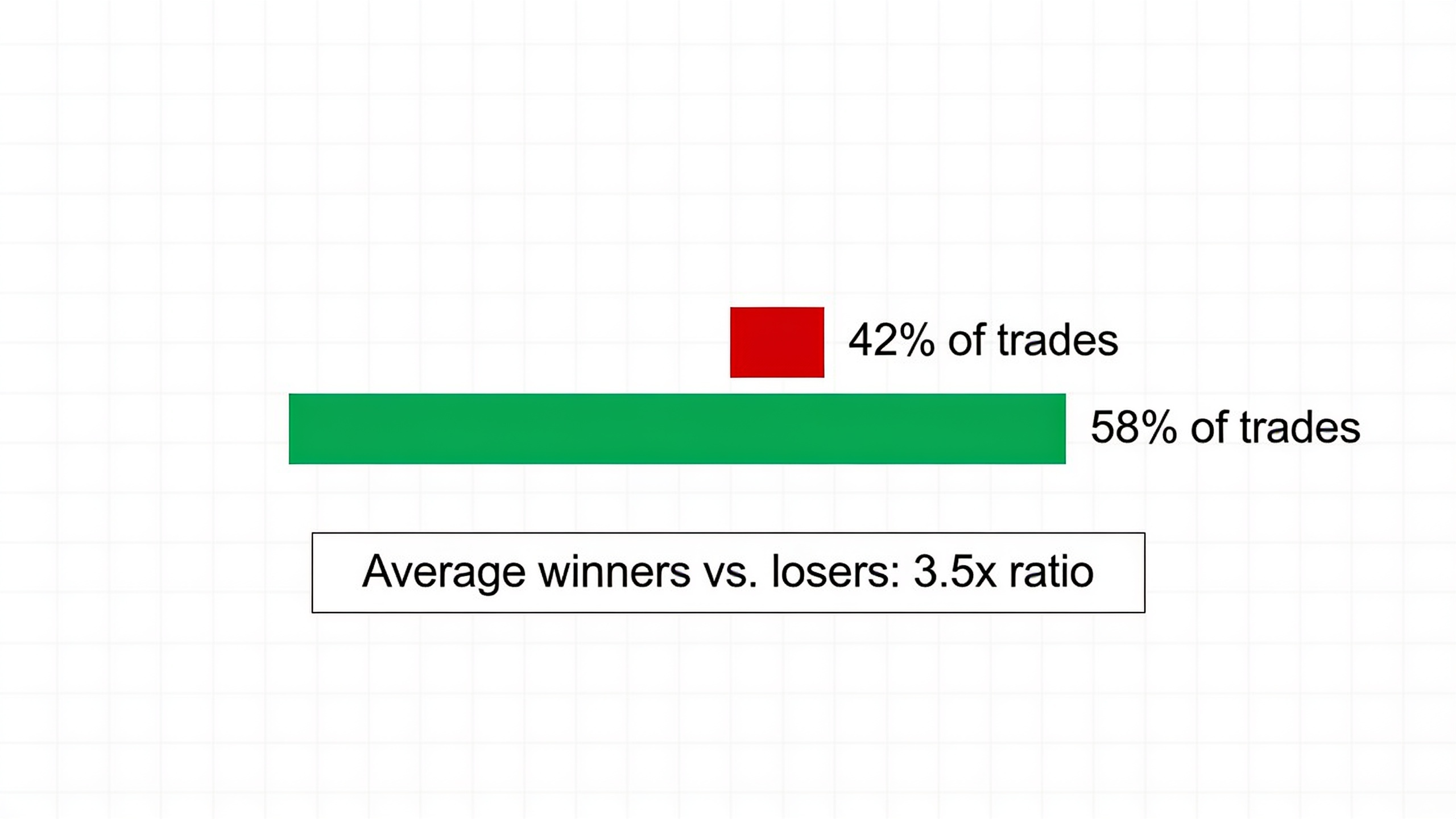
Which brings us to the number that surprises everyone. This trader's win rate over the full 14 months was about 42%. Read that again. More than half of all their trades lost money. So how did the account explode? Because the average winner was roughly 3.5 times the size of the average loser, a ratio they held through tight stops and disciplined profit-taking. Not through some magical ability to be right more often.
Key Trades That Moved the Needle
Not every trade pulled its weight. Not even close. This lines up with a pattern you see across tons of documented successful trades: a handful of positions generate most of the total gains while dozens of little trades roughly cancel each other out.
Three trades really carried the run. The first was an early accumulation position in a Layer 2 scaling token, bought during a stretch of low volume and sour sentiment, which returned about 6x over four months as network usage metrics climbed before the price caught up. Classic fundamentals-leading-price setup. The second was a swing trade around a big Bitcoin ETF news cycle, where the trader used options-adjacent leverage on a derivatives platform for a short, tightly stopped three-day trade that returned 40% on the allocated capital. Quick in, quick out. The third was a mid-cap gaming token, accumulated quietly and then sold in tranches as retail interest went nuts, netting an 11x on the initial entry before the thing eventually bled more than 70% off its peak. That last part is the lesson. Profit-taking discipline is what turned a paper gain into actual money in the bank.
I want to be straight about survivorship bias here, because it matters. This case study spotlights the trades that worked. But the same trader also had roughly 30 losing trades over that period, each one capped at that 2-3% risk limit. Trading success is almost never about dodging losses. It's about making sure your winners are structurally bigger than your losers.
What Went Wrong Along the Way (and How It Was Fixed)
Even in a story that ends at 50x, things went sideways, and how they got handled matters way more than the fact that they happened at all. The worst slip came in Phase 3, when the trader broke their own concentration rule and briefly parked over 80% of the portfolio in two correlated altcoins right before a broad market pullback. Result: a two-week drawdown of roughly 35% of total account value. Ouch.
The fix wasn't emotional. It was mechanical. There was a pre-written rule, drafted way back in the calm of Phase 1, that any drawdown past 25% of peak account value automatically triggered a cut to 50% cash until a fresh thesis formed. And that's the whole trick. Having that rule on paper before the stressful moment showed up, instead of trying to think clearly while watching your account bleed, is what kept a 35% loss from spiraling into 60% or 70%.
There's a bigger idea buried in there, and it goes well past trading. Predetermined protocols for high-stress situations beat in-the-moment improvisation almost every time, whether you're managing a portfolio or managing physical risk. It's the same logic behind professional security operations. Firms like Stormhammer Security build standardized response protocols precisely because clear, pre-set procedures crush reactive decision-making when both the stakes and the stress are cranked up. The parallel to trading risk is dead-on: rules you make in calm moments are the ones that save you in the ugly ones.
Lessons for Retail Traders Today
If you take one thing from all this, take this: consistent risk management, not prediction accuracy, is what compounds small accounts into big ones. Anyone hoping to catch even a sliver of these results should be obsessing over capital preservation rules first and "the next big trade" a distant second.
A few takeaways that apply to pretty much everyone. Define your risk per trade as a percentage, not a dollar figure, and recalculate as the account grows. A 2% rule scales on its own and stops you from emotionally jacking up position sizes after a hot streak (which everybody wants to do). Separate your research time from your execution time. This trader did almost all their fundamental research outside market hours specifically so live price action couldn't mess with their judgment. And keep a written journal. Every single trade in this case study got logged with entry rationale, size, and exit reasoning, and that's literally how the trader spotted their own averaging-down pattern before it did permanent damage.
I'll also say this, because it needs saying: not everyone has the time, temperament, or stomach to trade a portfolio this actively. That's not a personal failing. It's a legitimate reason to get outside help. Traders who notice gaps in their own process, whether it's tax strategy, derivatives risk, or just wanting an honest second opinion on their plan, are increasingly using structured matching services instead of gambling on random advice online. Platforms like Advisorynavigator exist to connect people with mentors or advisors who've already solved a similar problem, which can save you months of expensive trial and error while you're building your own risk framework.
Diversifying Beyond Trading Alone
Here's a detail that gets overlooked constantly: crypto trading was never this person's only income during the 14 months. And I think that's underrated as a factor. Having a separate income stream killed the pressure to force trades during dead periods, and behavioral finance researchers keep linking that kind of pressure to bad decisions. In this trader's case, a modest side business in general wholesale goods, structurally similar to sourcing platforms like t7b, kept steady cash flowing in. Which meant crypto profits could be treated as genuinely discretionary money rather than rent. That distinction, trading with money you don't need any time soon, shows up again and again in interviews with the traders who don't panic-sell.
Frequently Asked Questions
Can most people actually turn $1,000 into $50,000 in crypto?
Honestly, no. It's not typical, and you should read this whole thing as an illustration of process, not a promise. Most retail traders underperform a plain buy-and-hold, and returns like a 50x almost always involve concentration risk that carries an equally real shot at a big loss. The value here is the risk framework, not the dollar figure on the end.
What was the one thing that mattered most?
Position sizing and predetermined exit rules, more than picking winners. The win rate was only around 42%, so most individual trades lost money. But tight risk limits on losers, combined with letting winning positions run to 3-11x, produced the net gain over 14 months.
How much should a beginner risk per trade in crypto?
Most experienced traders and risk frameworks, including the one here, cap risk on any single position at 1-3% of total portfolio value, measured from your entry to your stop-loss, not the full position size. That's what lets you survive a nasty losing streak without getting knocked out of the game entirely.
Did this trader use leverage?
Sparingly, and only in Phase 2 for short trades around specific, well-defined catalysts. Never as a default. The bulk of the growth came from spot trading with disciplined sizing, not leveraged bets, which lines up with the data suggesting heavy leverage correlates with higher account failure rates among retail crypto traders.
How long did it really take?
About 14 months across four phases, including that rough drawdown in Phase 3 where the account temporarily gave back roughly 35% of its peak before recovering and grinding higher. It was not a smooth climb, and understanding that volatility is exactly why the risk rules matter so much.
Everything in this case study loops back to the same uncomfortable truth. The traders who turn small accounts into large ones aren't the ones who are right more often. They're the ones who lose small and win big, and who actually stick to that rule even when a hot streak is screaming at them to get reckless. If there's a single habit worth stealing from these 14 months, it's this: write your risk rules down before you need them. Not while you're staring at a trade that's already gone wrong.