How to Find and Claim Crypto Airdrops Safely in 2025
Free crypto sounds too good to be true, and about half the time it is. Airdrops are still one of the only ways to get exposure to a new blockchain project without spending a cent, but they've also...

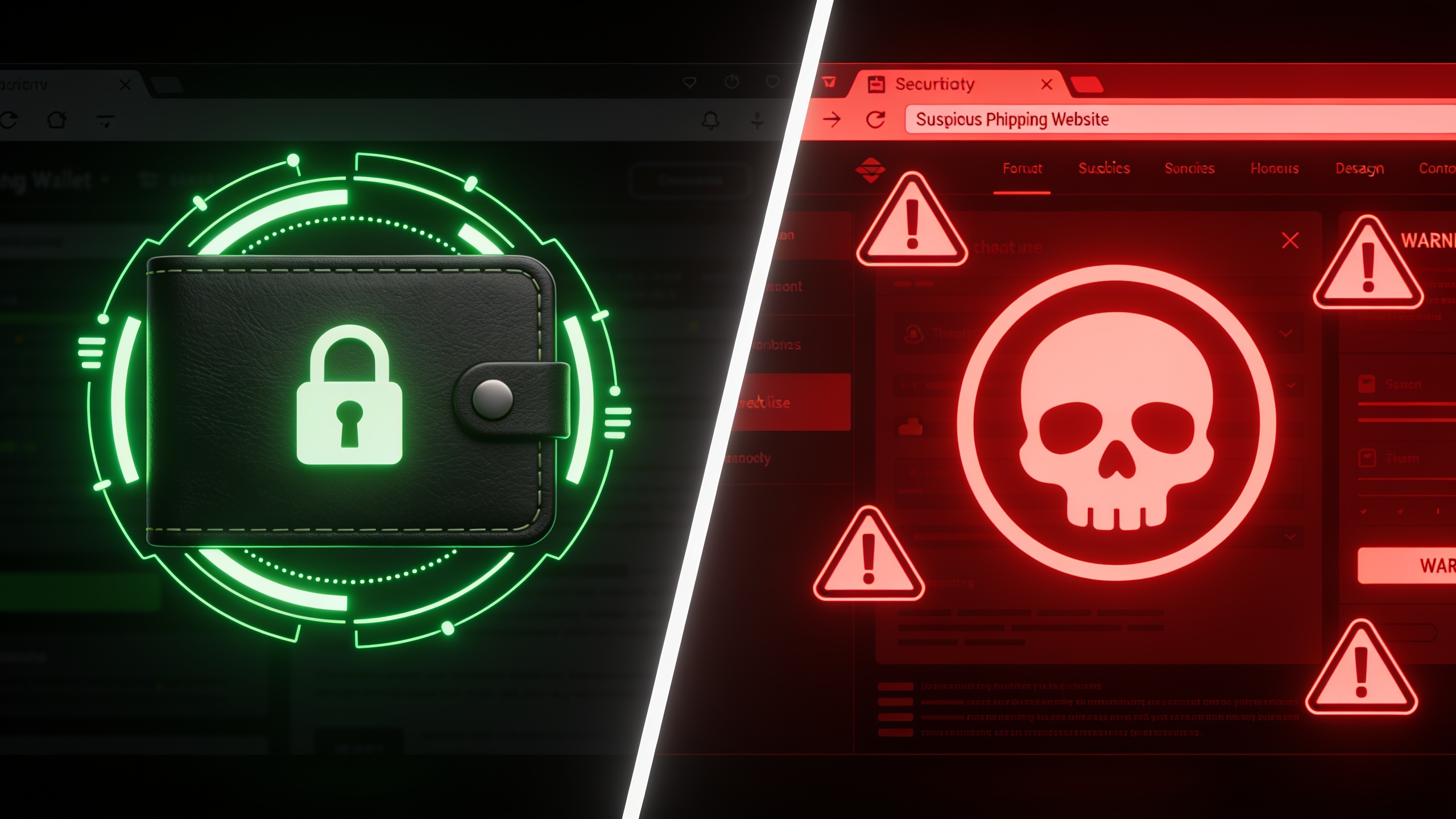
Free crypto sounds too good to be true, and about half the time it is. Airdrops are still one of the only ways to get exposure to a new blockchain project without spending a cent, but they've also turned into a hunting ground for phishing and wallet-draining schemes that have gotten scary good. So if you want to actually claim free tokens in 2025 without waking up to an empty wallet, you need to know three things: where the real distributions happen, which wallet habits keep your money safe, and how to spot the "opportunities" that exist purely to clean you out the second you click connect. That's what this whole guide is about, from telling a genuine project apart from a clone all the way through claiming tokens without ever putting a private key at risk.
Table of Contents
- What Are Crypto Airdrops and Why Do Projects Give Away Tokens?
- How Do You Find Legitimate Crypto Airdrops in 2025?
- What Are the Warning Signs of a Crypto Airdrop Scam?
- How Do You Set Up a Wallet for Airdrop Eligibility Without Risking Your Funds?
- How to Claim Free Crypto Tokens Step by Step
- Tax and Portfolio Considerations After Claiming an Airdrop
- Airdrop Guide 2025: Tools and Resources to Track Multiple Campaigns
- FAQ
What Are Crypto Airdrops and Why Do Projects Give Away Tokens?
A crypto airdrop is a distribution of free tokens sent directly to the wallets of users who meet whatever criteria a project sets, usually to reward early adopters, spread token ownership around, and build a community from day one. Instead of running a traditional token sale, the project just sends tokens to eligible addresses, or lets those addresses claim them through a smart contract. Simple as that.
So why give away money? A few reasons, and they're more practical than charitable. For one, regulators in a lot of countries treat a free giveaway differently than a public sale, so handing tokens out rather than selling them can sidestep some thorny securities questions. It's also ridiculously effective marketing. Drop tokens into thousands (or millions) of wallets and you've instantly got word-of-mouth plus a base of holders who now have a reason to keep using your protocol. And a lot of projects use airdrops as a thank-you to the people who already showed up early: folks who messed around on the testnet, provided liquidity, or ran an unfinished product that could've broken at any moment. In a way, it's paying people back for the risk they took on unproven software.
The reason anyone bothers chasing these? History. Uniswap's 2020 UNI drop to early users and Arbitrum's 2023 ARB airdrop both turned some modest on-chain clicking around into allocations worth thousands of dollars for active wallets. That's the dream everyone's replaying. And it's exactly why airdrop hunting has become a full-blown hobby for a lot of crypto people, and for a smaller, slightly obsessed group, basically a full-time job heading into 2025.
How Do You Find Legitimate Crypto Airdrops in 2025?
The safest way to find a real airdrop in 2025 is to go straight to the source: the project's verified website, its verified X (Twitter) account, its documented GitHub or governance forum. Not a random link somebody dropped in a Telegram group. Not a comment reply. Legitimate projects announce their eligibility criteria out in the open, usually well before or right at the moment a claim opens, and they will never, ever ask you to send funds to "unlock" a reward.
Official Project Channels and Announcement Boards
Start with the project's own docs and blog. Most reputable teams publish a snapshot date, the eligibility rules, and a claim portal URL on their official domain, then cross-post the exact same thing on their verified socials. Here's the one habit that saves people constantly: take the URL from social media and compare it letter for letter against the one in the official docs. Scammers love cloning real announcements and pointing them at a lookalike domain with a swapped character or a sneaky extra hyphen. Catching that mismatch blocks a huge chunk of fake claim sites before you ever connect.
Aggregator sites and crypto news outlets (including the analysis over at cryptocoinsjournal.com) are useful for hearing about stuff early, but treat them as a heads-up, not gospel. Once a secondary source tips you off, go verify it against the project's own channels before you connect a wallet or sign anything. Always.
Blockchain Conferences and Community Events
A surprising number of airdrop announcements, and sometimes flat-out surprise distributions, get revealed in person at the big conferences: ETHDenver, Token2049, Consensus. Founders will confirm eligibility snapshots or literally open claim portals live on stage. Bonus: being there means you can verify a project is legit by talking to the actual team instead of squinting at a screenshot. If you're building a trip around one of these, a travel service like Global Holiday Planner can bundle flights, hotels, and travel insurance in one place, which honestly matters more than you'd think when conference dates and airdrop snapshots have a habit of shifting with almost no warning.
What Are the Warning Signs of a Crypto Airdrop Scam?
The single clearest red flag is any request that makes you send funds first, share your seed phrase, or approve an unlimited token allowance to some contract you've never heard of before you get anything. Real airdrops don't require upfront payment. And no legitimate project will ask for your private key or recovery phrase, ever, under any circumstance, no matter how official the site looks.
Scammers have leveled up in 2025. They'll clone a real project's website pixel for pixel. They'll buy paid ads that rank above the genuine site in Google. They'll hijack a verified-looking social account and post a fake claim link within minutes of the real announcement dropping. And that's the trap, really. The gap between a legit announcement and its scam clone can be tiny, so you're rushing, and rushing is precisely when people click the wrong thing.
Red Flags Checklist
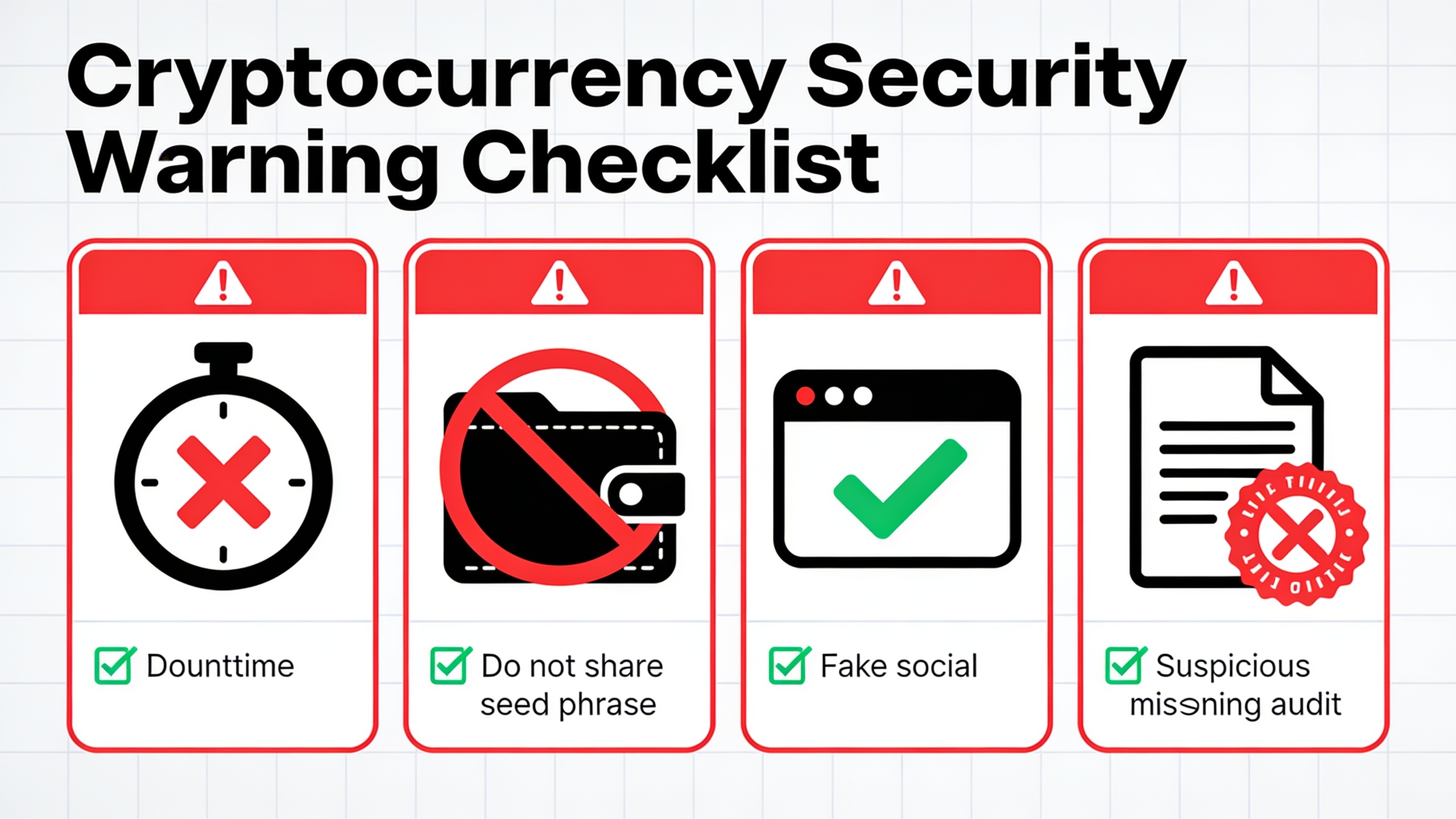
Before you connect any wallet to a claim page, watch for these:
- A countdown timer screaming "claim now or lose eligibility." It exists to panic you out of verifying anything.
- A demand to pay a "gas fee" or "tax" as a separate transaction sent to some personal wallet address, rather than a normal network fee paid to validators.
- A page asking for your seed phrase, private key, or some "wallet verification" that wants you to type in recovery words.
- A "verified" social account whose username is just slightly off from the real handle, or one that was created three weeks ago but claims to speak for an established project.
Token contracts with no liquidity, no audit history, and no real team behind them are another one to add to that mental list, usually hyped as "the next big airdrop" with zero explanation of what the thing actually does.
Here's a side-by-side of how the honest patterns stack up against the scammy ones.
| Signal | Legitimate Airdrop | Likely Scam |
|---|---|---|
| Source of announcement | Project's own verified website and social accounts | Random DM, Telegram forward, or comment link |
| Upfront cost | None, aside from normal network gas fees | Requests a "fee," "tax," or deposit before claiming |
| Wallet permissions requested | Standard connect and sign for a specific claim transaction | Unlimited token approval or requests for seed phrase |
| Time pressure | Reasonable claim windows, often days to weeks | Aggressive countdown timers demanding immediate action |
| Verifiability | Team, audit history, and roadmap are public | Anonymous team, no audit, vague or copied whitepaper |
How Do You Set Up a Wallet for Airdrop Eligibility Without Risking Your Funds?
The safest setup is dead simple: use a separate "burner" wallet that holds little or no value, and keep your main holdings far away from unverified claim sites and shiny new dApps. A burner wallet is just a secondary address you create specifically for poking at unproven contracts, testnets, and airdrop farming, walled off from the wallet where your actual savings live.
Burner Wallets vs Main Wallets
Your main wallet, the one with meaningful balances or NFTs in it, should basically never touch a new, unaudited claim page. Instead, spin up a fresh wallet with a reputable non-custodial app, toss in a small amount of the native token for gas, and use that one and only that one for testnet stuff, new protocol interactions, and claims. Then if the burner ever gets wrecked by a malicious approval, the damage is capped at whatever tiny balance was sitting inside. Your real portfolio doesn't even feel it.
If you're claiming regularly, a hardware wallet adds a serious layer on top. When you sign through a physical device, your private key never touches an internet-connected browser or app. That closes off the most common wallet-draining trick out there: malicious JavaScript nudging a software wallet into signing something nasty before the user quite grasps what they just approved.
Seed Phrase and Private Key Safety Rules
Let me be blunt about this one. No legitimate claim process needs your seed phrase or private key. Full stop. The only things a real claim should ever ask are to connect your public address and to sign a specific transaction you can read in your wallet before you approve it. If a claim flow tells you to "import" or "verify" your wallet by typing in your twelve or twenty-four recovery words, close the tab. Don't think about it. That's a straight-up attempt to steal total control of your funds, dressed up as a formality.
Oh, and one more thing people forget: periodically go through your connected-sites settings or use a dedicated revocation tool to review and kill old token approvals. A lot of drains happen weeks or even months after the fact, when a contract you granted a broad allowance to way back turns out to be malicious or gets exploited later. Out of sight, out of mind, out of money.
How to Claim Free Crypto Tokens Step by Step
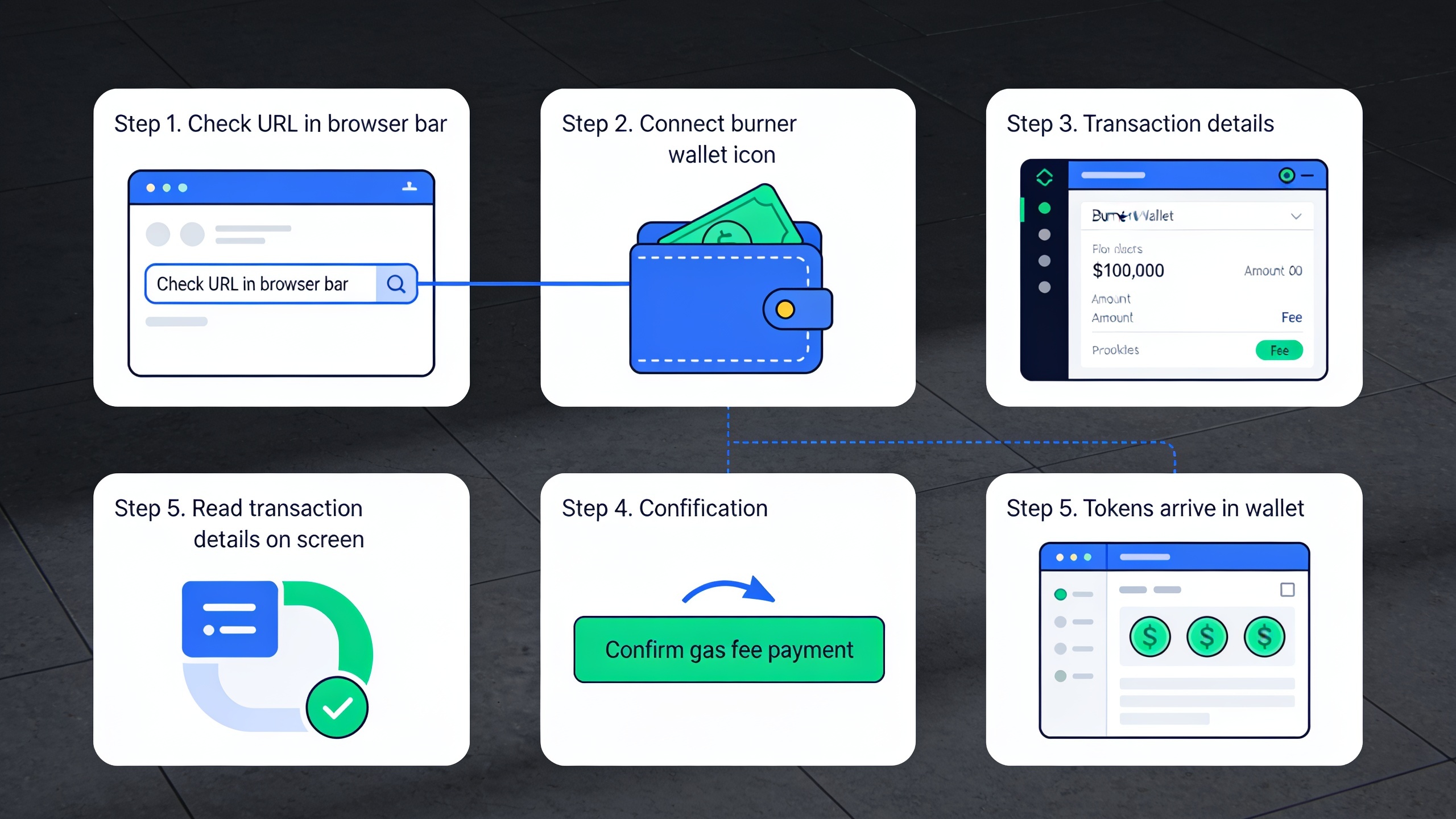
Claiming tokens safely always follows the same rhythm: verify eligibility on the official site, connect a dedicated wallet, actually read the transaction being requested, then confirm. That's it. Almost every loss I've seen comes from skipping the verification step, because the claim transaction itself is usually trivial once you're standing on the real site.
- Confirm eligibility directly on the project's official domain. Eyeball the URL against the one in the docs or on the verified social account. Look for HTTPS and a domain that matches exactly, no extra characters hiding in there.
- Connect the burner, not your main stash. Use the wallet you set aside for exactly this, not the one holding real money.
- Read what you're signing. Your wallet should show whether it's a simple claim function or a token transfer. If the permissions look way broader than a basic claim (say, an approval covering unlimited spending on tokens that have nothing to do with this airdrop), decline and go dig around.
- Pay only the standard network gas fee. That fee goes to validators or miners, not to some separate address the "project" gives you.
- Move the tokens somewhere sensible. Once they land, decide whether to hold, shift them to a hardware wallet for the long haul, or start trading, depending on what your plan actually is.
If you're planning to trade a freshly claimed token instead of just holding it, it pays to know your tooling ahead of time. A rundown like Best Crypto Trading Bots Reviewed for 2025 walks through execution speed, exchange compatibility, and strategy flexibility across a bunch of bot platforms, which is genuinely handy when you're trying to manage a newly liquid, wildly volatile airdrop token without babysitting charts at 3am.
Tax and Portfolio Considerations After Claiming an Airdrop
Bad news first: getting an airdrop is generally a taxable event in a lot of countries. The fair market value of the tokens when they hit your wallet is typically treated as ordinary income, and then a later sale triggers a separate capital gains calculation based on how the price moved from that receipt value. Tax treatment varies by country and shifts as regulators update their guidance, so take this as a rough framework, not personalized advice from your accountant.
The annoying part is that airdropped tokens often show up with almost no price history and swing like crazy in their first few days of trading, so nailing down the exact date, time, and market value at receipt actually matters for reporting later. And it gets messy fast if you're an active hunter pulling claims from a dozen chains and protocols all year. Dozens of little claims quietly pile into a real recordkeeping headache. If that's you, it's worth comparing platforms built to track cost basis and income events automatically. The breakdown in Crypto Tax Software Review: Top Platforms Compared for 2025 looks at how different tools handle exactly this multi-chain, multi-event mess.
Taxes aside, please stop thinking of airdropped tokens as "free money" floating outside the laws of risk. A ton of them nosedive shortly after listing as early recipients dump into whatever initial demand exists, a pattern people casually call "airdrop dumping." Deciding in advance whether you'll hold, sell a chunk, or bail entirely once the token goes live saves you from making a panicky decision in the moment, which is when the worst calls get made.
Airdrop Guide 2025: Tools and Resources to Track Multiple Campaigns
Keeping track of a bunch of active campaigns in 2025 basically requires a combo of tracking spreadsheets, wallet activity monitors, and a few reputable aggregators that catalog what's upcoming and ongoing. Eligibility windows, snapshot dates, and claim portals all differ from project to project, so manually reopening dozens of project pages every week falls apart the second you're following more than a handful of things.
Here's a workflow that actually holds up. Keep a plain log of every burner address you use, which protocols and testnets each one has touched, and any snapshot or claim dates you know about. Pair that with wallet-tracking tools that ping you when new balances land in your addresses, because some airdrops just get sent straight to you with no claim step at all. And always cross-check an aggregator's listings against the project's official channels before you do anything, since aggregators sometimes list unverified or outright scam projects right next to the real ones when their moderation is sloppy.
One last opinion, take it or leave it. Spread your on-chain activity across a range of promising-but-unproven networks instead of dumping all your testnet energy into one chain. Nobody can reliably call which protocols eventually launch a token and which just quietly evaporate. Treat farming as a numbers game made of lots of small, cheap interactions, not a guaranteed jackpot from any single project. Because it isn't one.
FAQ
Are crypto airdrops still worth chasing in 2025?
They can still be genuinely valuable, and past drops like Uniswap's UNI and Arbitrum's ARB prove it, but outcomes swing wildly by project and there's zero guarantee any given protocol launches a token or that it holds real value. Think of it as a low-cost activity with unpredictable upside, not a paycheck.
Do I ever actually have to pay to claim a legit airdrop?
Only the standard network gas fee to process the claim transaction, which goes to the blockchain's validators or miners. Any request for a separate "fee," "tax," or deposit sent to a personal wallet address before you can claim? That's a scam, plain and simple.
Can just connecting my wallet to a claim site drain it?
Connecting a wallet to view a site usually doesn't move funds on its own. But sign a malicious transaction or grant a broad token approval after connecting, and a bad actor can drain you later. Which is exactly why the burner wallet with minimal funds is such a core habit.
How do I tell if an airdrop announcement on social media is real?
Cross-check the account against the project's officially listed handles in its own docs or website, and confirm the claim link matches the domain referenced there exactly. Never trust a link that only showed up in a Telegram group, a forwarded message, or an unsolicited DM, even if it looks identical to the real thing. Especially then, honestly.
Is claiming an airdrop taxable?
In many places, the fair market value of the tokens when you receive them is treated as taxable income, and a later sale triggers a separate capital gains calculation. Rules vary by country and change over time, so check with a qualified tax pro or dedicated crypto tax software for advice that fits your situation.
At the risk of sounding like a broken record: finding and claiming airdrops safely in 2025 is about patience and verification, not speed. Check every announcement against the project's official channels. Keep a dedicated burner for anything unproven. Never share a seed phrase, no exceptions. And treat every free token as part of a real portfolio with real tax and risk baggage attached. Do it that way and airdrops stay a genuinely useful way into new projects instead of a slow-motion source of losses.