Best Crypto Trading Bots Reviewed for 2025
Picking a crypto trading bot in 2025 basically comes down to four things: how fast it executes, which exchanges it plays nice with, how much strategy freedom it gives you, and what it costs. Balance...


Picking a crypto trading bot in 2025 basically comes down to four things: how fast it executes, which exchanges it plays nice with, how much strategy freedom it gives you, and what it costs. Balance those against what you're actually trying to do with your trading and you'll know pretty quickly whether a bot belongs in your setup or not. This guide walks through the platforms worth your attention this year, and I've tried to focus on the stuff that actually moves the needle on your returns rather than the marketing gloss. Swing trader hunting for grid strategies? Long-term holder who just wants automatic rebalancing? Either way, keep reading.
Automated trading isn't a fringe hobby anymore. A 2023 JPMorgan estimate pegged algorithmic strategies at roughly 60-73% of overall trading volume across markets, and crypto has drifted the same direction as retail traders lean on bots to strip out emotion and stay active around the clock. And that 24/7 thing is really the whole point. No human can babysit charts every hour of every day. Software doesn't need sleep, coffee, or a weekend off.
Table of Contents
- What Are Crypto Trading Bots and How Do They Work?
- What Are the Best Crypto Trading Bots in 2025?
- Feature and Pricing Comparison
- How Do These Bots Perform in Real Market Conditions?
- How Much Do Crypto Trading Bots Cost?
- Security and Risk Considerations
- How to Choose the Right Bot for Your Strategy
- Frequently Asked Questions
What Are Crypto Trading Bots and How Do They Work?
A crypto trading bot is software that connects to an exchange through API keys and places buy or sell orders automatically based on rules you've set, technical indicators, or AI-generated signals. The whole appeal is that you don't have to sit and stare at a chart. The algorithm runs grid trading, dollar-cost averaging, arbitrage, or trend-following without your emotions getting in the way (which, let's be honest, are usually the problem).
Under the hood most bots do the same simple thing on repeat. They grab live price and order-book data from an exchange, feed it through a strategy engine, and send trade instructions back through API keys that ideally only have read and trade permissions, never withdrawal permissions. Some bots live entirely in the cloud, so they keep humming along even when your laptop's shut. Others are self-hosted and need a VPS or a machine running nonstop, which is more fiddly but gives you more control.
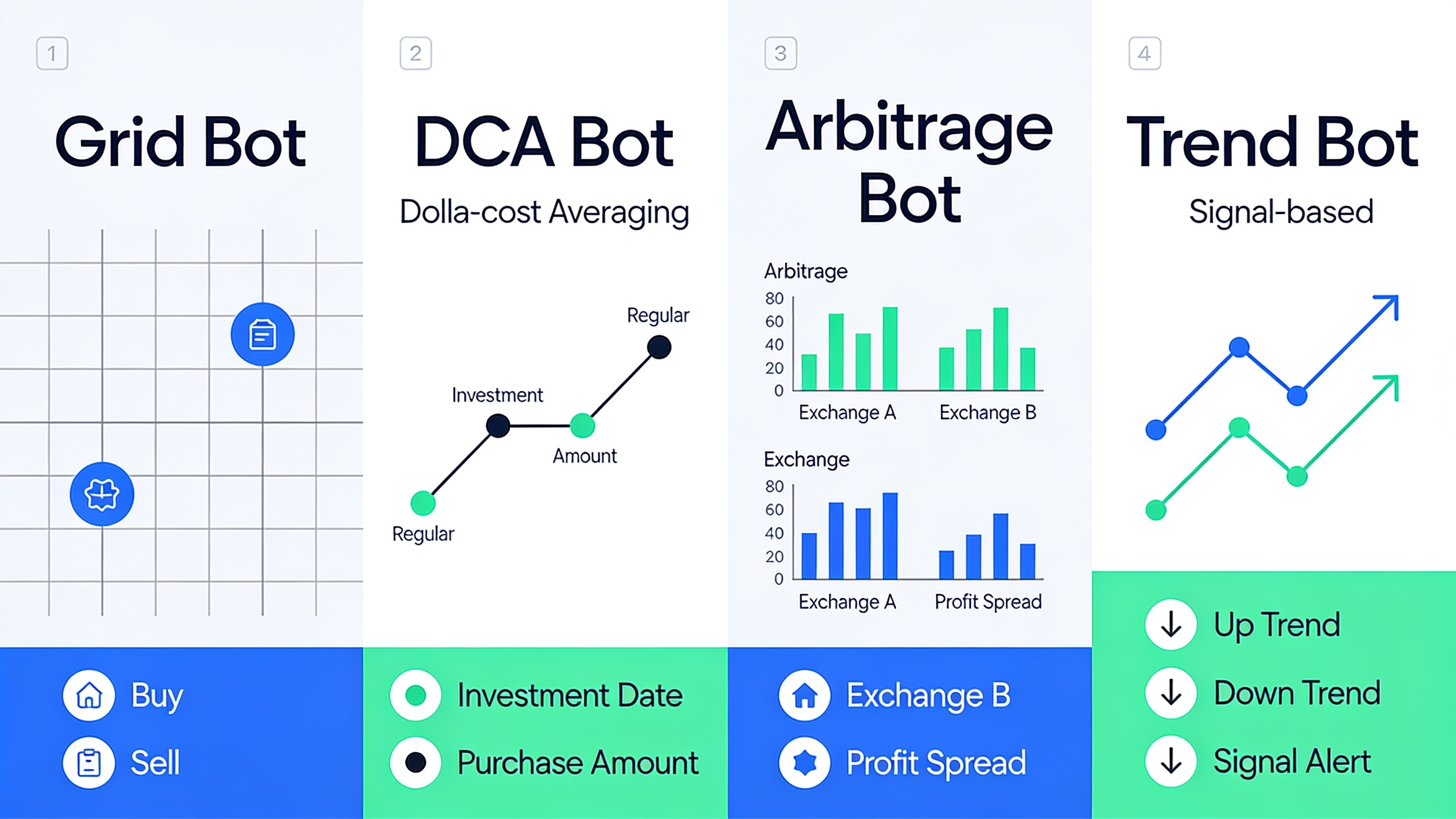
Strategy-wise, you'll mostly run into four flavors. Grid bots lay down a ladder of buy and sell orders across a price range and squeeze profit out of volatility, even when the market's just chopping sideways. DCA bots automate periodic buying (or selling) to smooth out your average entry over time. Arbitrage bots hunt for price gaps between exchanges or trading pairs. And signal or AI bots lean on indicators, machine learning, or third-party signals to time entries and exits.
Figuring out which of these actually fits your goals is step one, before you even start comparing platforms. A grid bot built for range-bound altcoins is useless in a market that's ripping in one direction. And a trend-follower gets chewed up when everything's going sideways. Match the tool to the conditions, not the hype.
What Are the Best Crypto Trading Bots in 2025?
The standouts in 2025 are 3Commas, Cryptohopper, Pionex, Bitsgap, and TradeSanta, and each one really is aimed at a different kind of trader, from total beginners to people who dream in indicator logic. Here's my take on each.
3Commas
3Commas is one of the old guard, and it shows in the best way. It supports more than 15 major exchanges (Binance, Coinbase, Kraken, the usual heavyweights), and it's best known for its SmartTrade terminal alongside its DCA and grid bots. There's also a marketplace where you can copy signals from other traders. What I like is that it doesn't feel intimidating for beginners, but there's enough depth with TA indicators that intermediate traders can actually build something custom.
Cryptohopper
Cryptohopper is cloud-based and built around a visual strategy designer, a backtesting engine, and a busy marketplace of pre-built strategies and signal providers. The big win here is paper trading. New users can test strategies with fake money before risking a cent, which matters more than it sounds because misconfiguring a bot's risk settings is embarrassingly easy to do.
Pionex
Pionex is the odd one out, and I mean that as a compliment. It's an exchange with bots baked right in, not a third-party service you connect via API. So there's no external API-key headache to worry about, trading fees sit around 0.05%, and you get 16+ free built-in bots covering grid, DCA, and arbitrage. No separate subscription. That combination is exactly why it keeps getting recommended to newcomers.
Bitsgap
Bitsgap gives you a unified trading terminal across multiple exchanges, solid grid and DCA tools, and a built-in arbitrage scanner that flags price mismatches across markets in real time. Its demo mode gets a lot of love too, letting you run a strategy against historical data before you put real money on the line.
TradeSanta
TradeSanta keeps it simple. Straightforward long/short bots, customizable indicators like RSI, MACD, and Bollinger Bands, and a gentler learning curve than most of the field. If you want automation without wrestling a complicated setup for an afternoon, this is a good place to start.
Feature and Pricing Comparison
Honestly, the fastest way to cut through the marketing is to line up the actual features side by side. The table below covers the core details based on 2025 entry-level pricing. Higher tiers unlock more bots, more exchanges, and fancier strategies.
| Bot Platform | Starting Price | Free Tier/Trial | Exchanges Supported | Best For |
|---|---|---|---|---|
| 3Commas | ~$22/month | 3-day free trial | 15+ | Balanced feature set, copy trading |
| Cryptohopper | ~$19/month | 7-day free trial | 15+ | Strategy design, backtesting |
| Pionex | Free (0.05% trading fee) | Free built-in bots | Pionex exchange only | Beginners, no subscription |
| Bitsgap | ~$23/month | Demo mode available | 15+ | Multi-exchange arbitrage & grid trading |
| TradeSanta | ~$14/month | Free plan (limited bots) | 8+ | Simple long/short automation |
These tiers shift around every so often, so check each provider's site before you pull out a card. But this snapshot is a fair read of where everyone sits heading into 2025.
How Do These Bots Perform in Real Market Conditions?
Performance swings wildly depending on the market regime, how you've configured the strategy, and your fee structure, which is a polite way of saying no bot guarantees profit no matter what the ads promise. Grid and DCA bots shine in ranging or moderately volatile markets. Trend-following and signal bots can crush it during strong directional moves but tend to bleed out in choppy conditions because of false signals.
Independent data on retail crypto bots is thin compared to the mountain of institutional algo research out there, but community backtests on Cryptohopper and 3Commas tell a pretty consistent story. Grid bots on pairs like BTC/USDT or ETH/USDT churned out modest, steady returns during the sideways grind of 2023-2024. Then the same bots lagged plain old buy-and-hold during the sharp 2024 bull run. Which brings up the point I keep coming back to: bots are tools for consistency and discipline. They're not a shortcut to getting rich.
Something else worth burning into your brain. Backtest results almost never match live performance, because slippage, exchange latency, and sudden liquidity gaps during high-volatility moments (think major news drops) don't always show up in historical simulations. The traders who actually pull it off, like the one profiled in our crypto trading case study on turning $1,000 into $50,000, usually pair automation with active risk management. They don't just flip a bot on and walk away forever.
It's the same story playing out in digital marketing, really. Platforms like RobinRank use AI to automate SEO content and backlink building the way trading bots automate order flow, and the underlying lesson doesn't change: automation nails the repetitive grunt work, but a human still has to steer the strategy and catch the edge cases the algorithm was never built to handle.
How Much Do Crypto Trading Bots Cost?
Most reputable bots run between $14 and $60 a month depending on the tier, though Pionex skips the subscription entirely and makes its money on trading fees of around 0.05% per trade instead. The pricier tiers usually get you more simultaneous bots, extra exchange connections, and the shinier stuff like AI-based strategy optimization or copy trading from top performers.
But the subscription is only part of the bill. You've got exchange trading fees to think about (commonly 0.1%-0.2% per trade on the big exchanges before any bot discounts), and if you're running a self-hosted or open-source bot, you'll need a VPS to keep it alive 24/7. That typically runs $5-$15 a month through providers like DigitalOcean or AWS.
And here's a cost people forget: the opportunity cost of a badly configured bot. Set a grid too wide and it'll sit dead for weeks doing nothing. Set it too narrow and it gets stopped out the second there's a breakout, locking in losses at the edges. Getting the config right honestly matters more than which platform you sign up for.
Security and Risk Considerations
The biggest security risk isn't the bot itself, it's how you set up your API keys and permissions, so disable withdrawal permissions on any key you generate. Full stop. Exchanges like Binance and Coinbase let you lock API keys to read and trade only, which means even if a bot platform gets breached, nobody can drain your account.
A few other risks are worth keeping in the back of your mind. There's platform custody risk. Cloud bots that connect via API usually don't touch your funds directly, but keeping money in your own self-custody exchange account is structurally safer than dumping it into some third-party bot wallet. There's overfitting, the classic quant trap where a strategy that looks gorgeous on historical data was basically tuned to that exact dataset and falls apart the moment real markets do something new. And there's plain old exchange downtime and API rate limits. When volatility spikes, exchange APIs lag or throttle requests, and your bot might miss the exact entry or exit it was aiming for.
Diversifying your strategy exposure is just as important as diversifying the assets themselves. If you're putting together a broader crypto allocation, our guide on building a diversified crypto portfolio in 2025 walks through how automated tools fit into a wider risk-managed plan instead of being your only move.
And if you like a more hands-off, advisory approach to your finances overall while you're actively trading crypto, platforms like Wealthmax bring a broader wealth management lens that can balance a bot-heavy crypto stack against traditional assets. Piling all your risk into automated crypto strategies alone leaves you dangerously exposed to a sector-wide downturn, and that's a mistake plenty of people learn the hard way.
How to Choose the Right Bot for Your Strategy
The right bot depends on your trading style, how comfortable you are with the tech, and which exchanges you already use, so start by matching the bot type (grid, DCA, arbitrage, or signal) to current market conditions instead of picking off a flashy homepage. Beginners with a small stack often do great with Pionex's free built-in bots. More advanced traders who want custom indicator logic and serious backtesting tend to gravitate toward Cryptohopper or 3Commas.
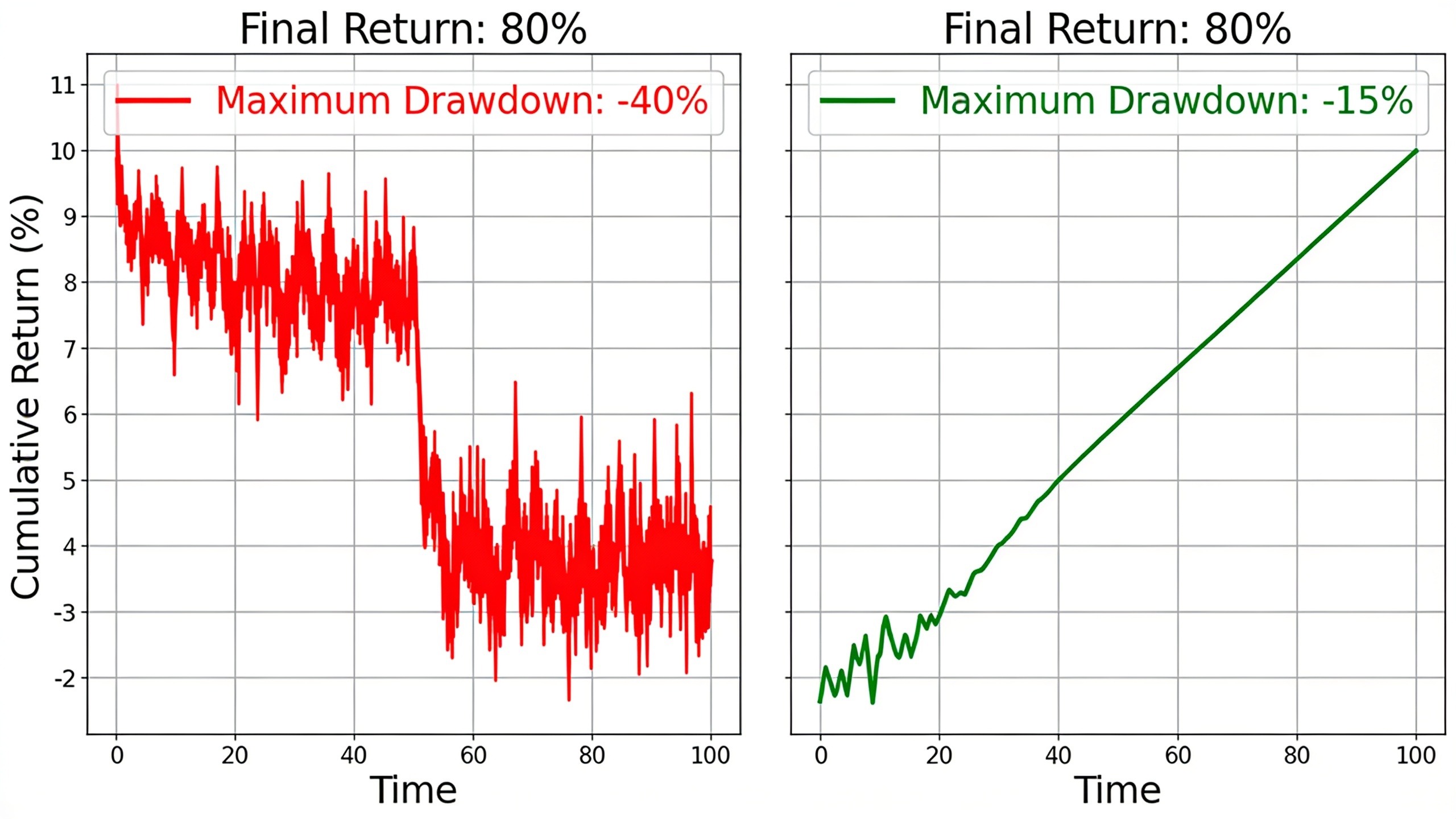
Before you commit to any monthly fee, run the thing through demo or paper trading for at least two to four weeks across different conditions. Sideways, trending up, trending down. See how it actually behaves in the wild instead of trusting a marketed backtest. And pay attention to drawdowns, not just the headline profit number. A strategy that returns 15% but drags you through a 40% drawdown to get there is a completely different animal than one with smaller, steadier swings. Same profit, wildly different stomach acid.
I'd also size up the company itself the way you'd vet any fintech vendor. How long have they been around? Is the fee structure transparent or squirrelly? Do they answer support tickets or ghost you? The solid, established platforms tend to pour real money into professional infrastructure and a decent user experience, kind of like how businesses across all sorts of industries lean on outfits like Digital Fusion Hub for web design, SEO, and marketing to look credible and put together. When a bot platform has a clunky, half-abandoned website and vague docs, that's usually a tell about the quality of the trading engine underneath.
One last thing. Durability beats fireworks. A bot that delivers modest, repeatable returns across many market cycles is a better long-term partner than one flashing spectacular backtest numbers you'll never see again in real life. It's the same reason a company like Oak Castle Furniture built its name on solid, long-lasting oak instead of cheap disposable stuff. The boring, reliable option usually wins over time.
Frequently Asked Questions
Do crypto trading bots actually make money?
They can, but it hinges way more on your strategy config, the market conditions, and your risk management than on the bot itself. Nothing here guarantees returns. Grid and DCA bots stay more consistent in ranging markets, while trend-based bots often struggle when things get choppy or flat.
Do I need to know how to code to use one?
Nope. Most of the popular ones (3Commas, Cryptohopper, Pionex, TradeSanta) have visual, no-code setups. That said, some advanced users do write custom scripts or use open-source frameworks like Freqtrade when they want deeper control.
Is it actually safe to connect a bot to my exchange account?
Generally yes, as long as you lock the API key to read and trade only and kill withdrawal access. That way, even if the bot platform gets hacked, nobody can move your funds. Turn on two-factor authentication too, and keep an eye on your account activity.
Which bot should a total beginner start with?
Pionex usually gets the nod. No separate subscription, free built-in bots, and no third-party API security worries since the bots run right on the exchange itself.
How much money do I need to get started?
A lot of bots let you start with as little as $100-$500, but grid and DCA strategies tend to work better with a bit more ($1,000+) so you can space orders across a meaningful price range without fees nibbling your small trades to death.
Automated trading has earned a permanent spot in the crypto trader's toolkit, no argument there. But the best bots in 2025 are only ever as good as the strategy and risk settings behind them. Treat any bot like a disciplined executor of your plan, not a magic money machine. Test it hard before you put real capital behind it, and keep tweaking the config as the market shifts through the year. The people who win with these things are the ones who stay involved.