Crypto Tax Software Review: Top Platforms Compared for 2025
Let's be honest: filing crypto taxes by hand just isn't a thing anymore for most people. If you've spent even one year swapping tokens on DeFi protocols, flipping the occasional NFT, collecting...


Let's be honest: filing crypto taxes by hand just isn't a thing anymore for most people. If you've spent even one year swapping tokens on DeFi protocols, flipping the occasional NFT, collecting staking rewards, and shuffling coins across half a dozen exchanges, you already know the pain. Trying to track cost basis in a spreadsheet is a special kind of misery.
That's really why this review exists. Good software takes thousands of messy transactions and spits out an IRS-ready report in a few minutes. Bad software leaves you with wrong numbers, missed deductions, and a support ticket that sits unanswered while the clock runs down. So below I'll walk you through the platforms actually worth your money, and which one fits your particular flavor of trading chaos.
Table of Contents
- Why You Need Crypto Tax Software in 2025
- What Should You Look for in the Best Crypto Tax Tools?
- Crypto Tax Software Review: Top Platforms Compared
- How Much Does Crypto Tax Software Cost?
- Which Crypto Tax Software Is Right for Different Types of Investors?
- Common Mistakes to Avoid When Filing Crypto Taxes
- Frequently Asked Questions
Why You Need Crypto Tax Software in 2025
Crypto tax software is basically an app that sucks in your transaction data from exchanges and wallets, figures out your capital gains and losses, and produces the forms you need to file with the IRS (or wherever you happen to pay taxes). And it matters more now than it did even two or three years ago, because the IRS has gotten serious about digital assets. Starting with the 2025 tax year, brokers and exchanges have to issue Form 1099-DA under the new digital asset broker reporting rules the Treasury Department finalized. Translation: the IRS is about to see a whole lot more of your activity than before. Report something that doesn't match what an exchange reported? Congratulations, you've probably just earned yourself an automated notice.
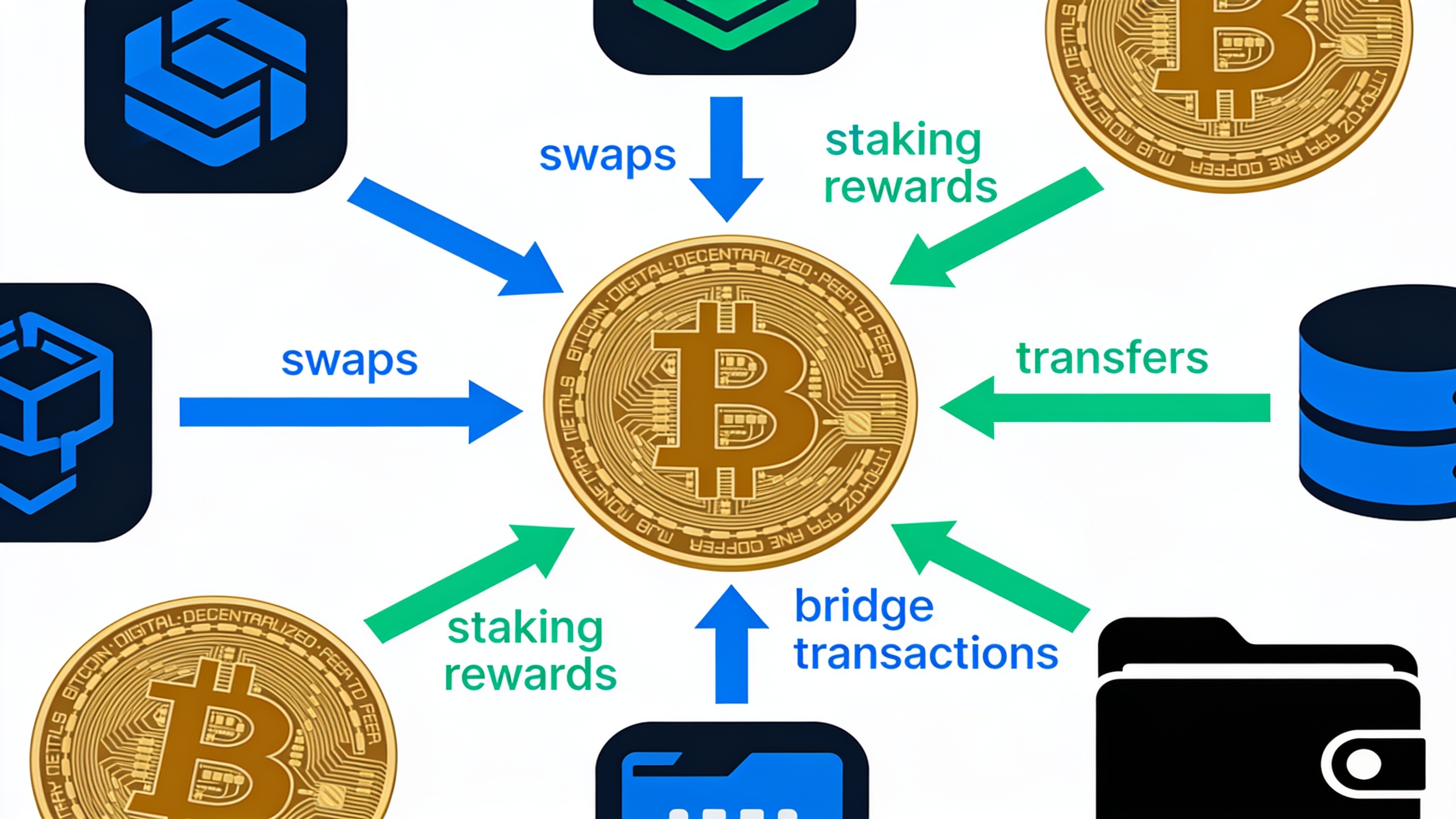
Spreadsheets can't keep up with how people actually trade now. One reasonably active trader might fire off hundreds of swaps on a DEX, bounce assets across three or four wallets, and pull staking rewards every single week. Every one of those is a taxable event under current IRS guidance (Notice 2014-21 and the rulings that followed). Software handles the boring, brutal part for you: it pulls transaction histories over API or CSV, applies whatever cost-basis method you pick (FIFO, LIFO, or HIFO), and flags the weird stuff that needs a human eye. Think wrapped tokens or bridge transfers that don't neatly fit into a "buy" or "sell" box.
What Should You Look for in the Best Crypto Tax Tools?
The best crypto tax tools nail three things: broad exchange coverage, accurate cost-basis logic, and reporting output that actually matches what your accountant or tax authority wants. Everything past that is detail work, and detail is where these platforms separate themselves. How does it handle a liquidity pool withdrawal? Does it support your country's specific forms? And does the support team vanish into the void once March rolls around and everybody's panicking at once?
Exchange and Wallet Integrations
How deep the integrations go decides how much manual cleanup you'll be stuck doing later. Sure, a platform might brag about API connections to 400+ exchanges, but that only helps if it correctly reads that exchange's specific transaction types. Margin trades, futures settlements, reward payouts. Those are the usual suspects for import errors. And if you spread your holdings across a hardware wallet, a mobile app, and an exchange wallet, do yourself a favor and read a proper crypto wallet comparison of hardware, software, and exchange storage first, because your storage setup directly affects how painlessly your history can be pulled and reconciled.
Accuracy of Cost-Basis Calculations
Cost-basis accuracy is the whole ballgame. It's the single most important factor, full stop, because it's what determines your reported gain or loss. Most platforms default to FIFO (first-in, first-out) but let you flip to HIFO (highest-in, first-out) to shrink your taxable gains where the tax code allows it. The good tools also correctly treat "transfers" between your own wallets so they don't get counted as taxable sales. This is a genuinely common bug in cheaper or less mature software, and it can quietly inflate your tax bill by a lot. Watch for it.
Ease of Use and Reporting
A tool is only as good as the report it hands you at the end. Look for something that generates Form 8949, Schedule D, and (this matters more every year) the international equivalents if you're filing outside the US, like the UK's Self Assessment Capital Gains summary or Canada's Schedule 3. Direct hooks into TurboTax, H&R Block, or your accountant's preferred setup (via TaxAct or a plain CSV) saves you a step, and that step matters a lot when the deadline is breathing down your neck.
Oh, and if you're running automated strategies, pair your tax review with a look at the best crypto trading bots reviewed for 2025. Bots pump out way more transactions than manual trading does, which means a much heavier reporting burden at year-end.
Crypto Tax Software Review: Top Platforms Compared
This review covers five platforms that reliably show up at the top of most retail and semi-pro traders' lists: Koinly, CoinLedger, TokenTax, CoinTracker, and ZenLedger. They each shine in different situations depending on how complicated your portfolio is, where you file, and whether you want an actual human helping you.
| Platform | Best For | Exchange/Wallet Integrations | Starting Price (Paid Tier) | Free Tier |
|---|---|---|---|---|
| Koinly | International traders, DeFi users | 800+ exchanges/wallets, 170+ countries | ~$49/year | View-only, no tax report download |
| CoinLedger | Beginners, US filers | 500+ integrations, TurboTax direct import | ~$49/year | Preview of gains, locked report |
| TokenTax | High-volume/margin traders, audit support | Full support for Binance, FTX historical data, margin | ~$65/year | None (paid plans only) |
| CoinTracker | Portfolio tracking + tax combo | 500+ exchanges, MetaMask, Coinbase native integration | ~$59/year | Up to 25 transactions free |
| ZenLedger | US filers wanting CPA add-on | 400+ exchanges, DeFi and NFT support | ~$49/year | Up to 25 transactions free |
Koinly
Koinly is the one I'd point international folks toward. It supports tax rules and forms for more than 170 countries, so if you moved between jurisdictions or hold accounts on exchanges outside the US, this is your pick. Its DeFi and NFT handling is also some of the most accurate out there, and it actually categorizes liquidity pool deposits and withdrawals correctly instead of dumbly lumping them in as plain trades. Clean interface, too. The free tier lets you fully test your import before spending a dime, though you'll need a paid plan (starting around $49 a year) to download the real documents.
CoinLedger
CoinLedger (you might remember it as CryptoTrader.Tax) is the one everybody recommends to beginners, and for good reason. The guided, step-by-step import wizard basically holds your hand, and the direct TurboTax integration is genuinely smooth. It supports over 500 exchanges and wallets and cranks out Form 8949 automatically. Where it stumbles a bit versus Koinly is heavy DeFi activity. If you're a serious liquidity provider, expect to manually reclassify a chunk of transactions.
TokenTax
TokenTax's whole angle is that you get actual tax professionals and CPAs, not just software. That makes it a solid call for high-volume traders, margin traders, or anyone who was active on a now-dead exchange like FTX and needs help reconstructing historical data to claim losses. It's pricier than the others, starting around $65 a year with the professional-assisted tiers climbing into the hundreds, but honestly, for a six- or seven-figure portfolio, having a human review your numbers can be worth every penny.
CoinTracker
CoinTracker pulls double duty as both a portfolio tracker and a tax tool, which is great if you like watching your performance in real time and not just scrambling at year-end. It's got an official partnership with Coinbase, so if Coinbase or Coinbase Pro is your main exchange, this thing is about as close to seamless as you'll find. The free tier caps out at 25 transactions, though, so active traders will hit the paywall fast and end up on a plan starting around $59 a year.
ZenLedger
ZenLedger leans hard into the US market and offers an optional CPA-prepared return add-on, kind of like TokenTax but usually cheaper. It handles NFT and DeFi transactions and plugs into TurboTax. One nice touch: it's historically offered a free tier for military members, which you don't see elsewhere.
How Much Does Crypto Tax Software Cost?
Most crypto tax software runs between $49 and $300 a year depending on your transaction volume and which features you need, with CPA-assisted filing pushing that into the $500 to $1,000+ range for genuinely complex portfolios. Almost every platform prices by the number of transactions rather than a flat annual fee, so a casual investor with under 100 trades pays a fraction of what a day trader logging tens of thousands of transactions will.
Entry-level tiers (usually $49 to $65 a year) cover a few hundred transactions and the basic integrations. Mid-tier plans, roughly $100 to $200 a year, bump the transaction limits into the thousands and throw in DeFi and NFT categorization. Top-tier or "unlimited" plans, which can run $200 to $300 a year and up, kill the transaction cap entirely and are aimed at people running bots or high-frequency strategies. And here's the good news: nearly every platform lets you connect your accounts and see your calculated gains for free. You only pay when you're ready to download the actual forms. So there's basically zero risk in test-driving two or three tools before you settle on one.
Which Crypto Tax Software Is Right for Different Types of Investors?
The right crypto tax software has less to do with which platform packs the most features and more to do with which features match how you actually trade. A buy-and-hold guy and a DeFi yield farmer live in completely different worlds.
If you're a casual investor who buys and holds a handful of coins on one or two big exchanges, CoinLedger or ZenLedger's entry-level plans will almost certainly do the job. Both have guided imports and cheap starting tiers built for exactly this. Active traders and anyone running automated strategies should lean toward Koinly or CoinTracker, since they've got higher transaction ceilings and broader integration lists that can actually swallow the flood of trades bots and frequent trading generate. DeFi-heavy people (yield farming, providing liquidity, bridging across chains) are usually best off with Koinly, whose labeling engine has the best track record with the weird, non-standard stuff. And the high-net-worth or high-volume crowd who want extra reassurance, especially if they're untangling a collapsed exchange or dealing with an IRS letter, tend to gravitate toward TokenTax or ZenLedger's CPA-assisted tiers.
It's also worth thinking past the filing itself. A lot of crypto investors put their gains toward big life stuff, and if a strong year has you eyeing a new house, something like Vivienda Lista can help you compare listings and figure out the buying process once your tax situation is settled and you know what you've actually got to work with. In the same vein, if you're supporting family visiting from overseas, it's worth looking into Super Visa Insurance Calgary, which offers coverage built for parents and grandparents visiting under Canada's Super Visa program. Easy thing to forget when you're buried in a year's worth of trade reconciliation.
Common Mistakes to Avoid When Filing Crypto Taxes
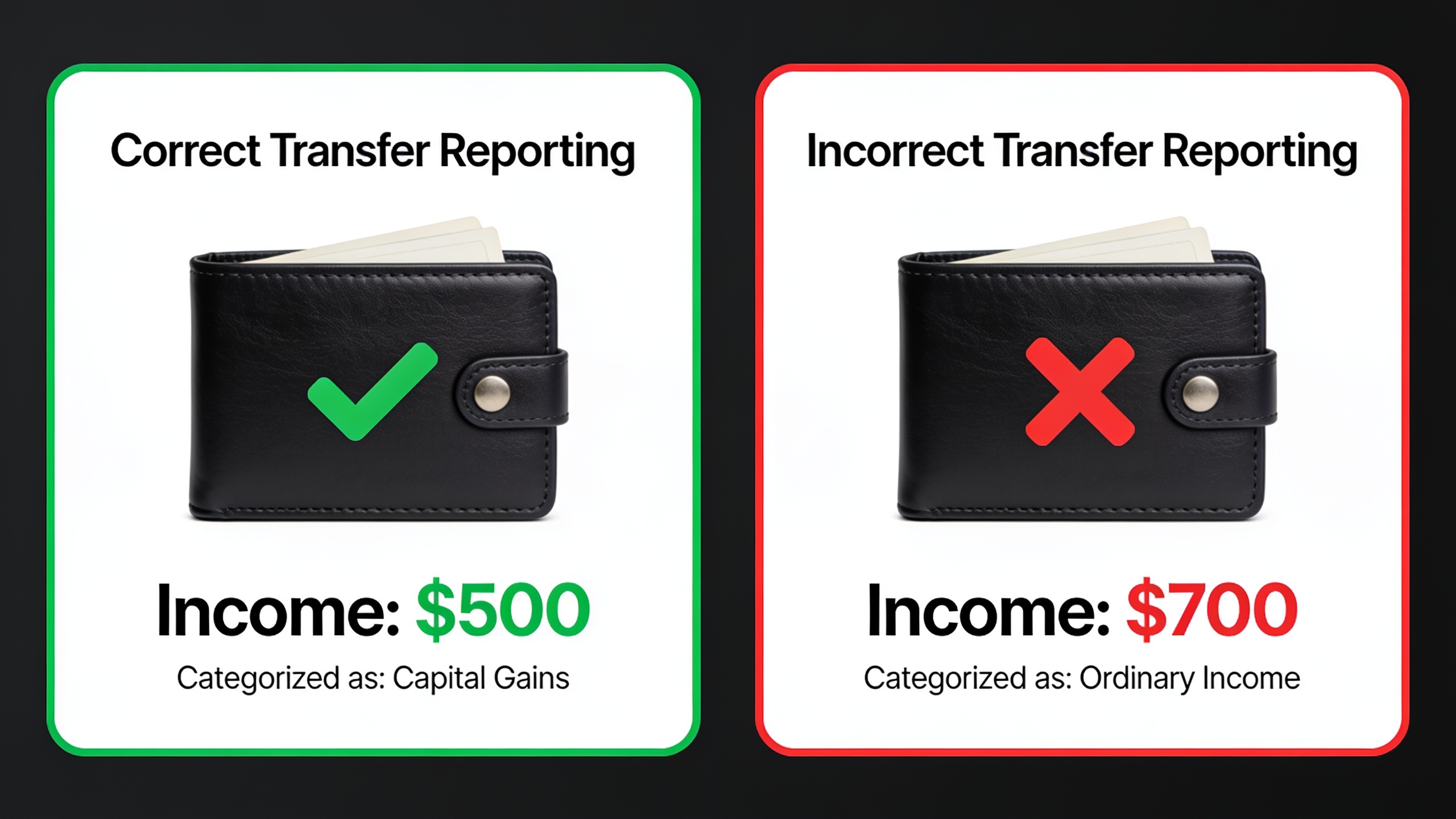
The most common crypto tax mistake is failing to report transfers between your own wallets as non-taxable, and most software only gets this right if you've correctly tagged wallet ownership during setup. Import a wallet without marking it "self-owned" and some platforms will read an internal transfer as a disposal, inflating your gains out of nowhere. So always, always double-check your wallet labels after import, especially if you're juggling multiple hardware devices alongside exchange accounts.
Another one people trip over constantly: ignoring the tiny transactions. Little airdrops, dust from failed swaps, that kind of thing, on the assumption they're too small to bother with. But the IRS treats airdrops and hard-fork receipts as ordinary income at fair market value on the date you got them, per Revenue Ruling 2019-24, so even the small stuff has to be recorded. And missing data from exchanges that have shut down (FTX being the obvious recent example) is a nasty trap. Most software lets you upload historical CSVs manually, but you have to grab that data before the exchange's records vanish for good.
Traders also love to apply cost-basis methods inconsistently from year to year, which can wave a red flag at the IRS, because the agency expects you to stick with one methodology unless you've got a legit reason and the documentation to back a switch. Last one, and it's the sneakiest: people wildly underestimate how long report generation and troubleshooting takes during peak season. Support response times at every major platform crawl to a halt in the two weeks before the April deadline. Start your import in February instead of April and you'll dodge a whole category of rushed, panicky mistakes.
Quick tangent for anyone eyeing a move into fintech or blockchain-adjacent work: tax season complexity is increasingly cited by hiring managers as a reason companies want in-house crypto accounting talent. You can see it on job boards like Jobwatch, where crypto-compliance and tax-analyst postings have climbed right alongside broader industry adoption. And on the software side, the same automation logic powering these tax tools is spreading everywhere. Platforms like RobinRank apply similar AI-driven automation to SEO content and publishing, which just goes to show how fast these tools are reshaping repetitive, data-heavy work across the board. Tax prep very much included.
Frequently Asked Questions
Is crypto tax software actually worth it, or should I just hire an accountant?
For most people with fewer than a few thousand transactions, the software is worth it, because it's dramatically cheaper than paying an accountant by the hour to do the bulk data crunching. That said, if you're a high-volume trader or you've got something unusual going on (like clawing back losses from a collapsed exchange), pairing software with a CPA review is often the smart move, and several platforms like TokenTax and ZenLedger now bundle that in as an add-on.
Can these tools really handle DeFi and NFT transactions accurately?
Most modern platforms support DeFi and NFT transactions, but accuracy varies a lot, and Koinly and ZenLedger are generally rated among the strongest for classifying liquidity pool activity and NFT mints and sales correctly. Even then, complex strategies like leveraged yield farming usually need some manual review, because no software perfectly automates every brand-new smart-contract interaction. It's just not there yet.
Do I even need software if I only made a few trades?
If you made fewer than roughly 25 to 50 transactions in a year, the free tiers on several platforms (CoinTracker and ZenLedger both offer free plans up to 25 transactions) may be plenty to calculate your gains without paying anything. Once you blow past that, or start trading across multiple exchanges, a paid tier saves you way more time than manual tracking ever could.
What happens if the exchange I used has shut down?
If your exchange went under, FTX being the poster child, most crypto tax software still lets you manually upload historical CSV data or use archived records to rebuild your cost basis for that platform. Grab this data as early as you possibly can, though, because access to a defunct exchange's historical records can disappear completely over time.
Which one plays nicest with TurboTax?
CoinLedger and ZenLedger both offer the most direct, streamlined TurboTax integrations, letting you pull your capital gains summary straight into your return without re-typing totals by hand. Koinly and CoinTracker support TurboTax export too, but the process sometimes makes you download a CSV first instead of a clean one-click import.
At the end of it all, picking the best crypto tax tool comes down to matching the software to how you actually trade, not to whoever's marketing is loudest. Test the free import on two or three platforms using your real transaction history, see which one categorizes your DeFi and exchange activity most cleanly, and go with whichever produces the most accurate, least annoying report. Just do it well before the deadline, not the night before. Trust me on that one.