Crypto Wallet Comparison: Hardware vs Software vs Exchange Storage
Where you keep your crypto is probably the most important decision you'll make as an investor, and it's the one people spend the least time thinking about. They obsess over which coin to buy, then...

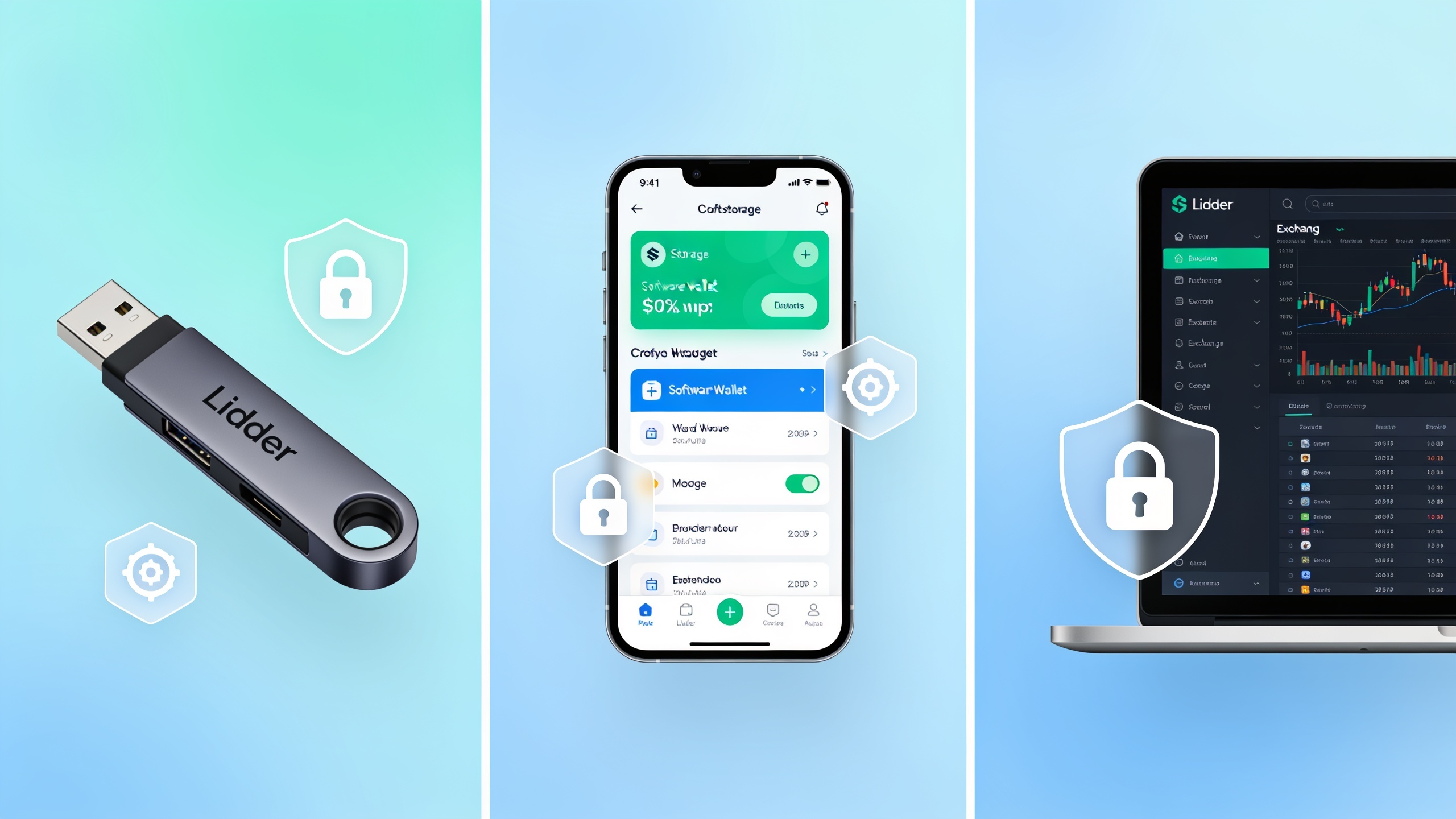
Where you keep your crypto is probably the most important decision you'll make as an investor, and it's the one people spend the least time thinking about. They obsess over which coin to buy, then leave the whole stack sitting in a Coinbase account like it's a checking account at Chase. It isn't. And the three main ways to store crypto (hardware wallets, software wallets, and exchange accounts) each hand you a very different mix of security, convenience, and control.
There's no single "best" option. Anyone who tells you otherwise is selling something. What's right for you depends on how much you're holding, how often you trade, and frankly how much responsibility you actually want on your own shoulders. This guide walks through each method so you can match your setup to how you really invest, not how you imagine you invest.
One number to sit with first: Chainalysis reported in its 2023 Crypto Crime Report that more than $3.8 billion in cryptocurrency got stolen through hacks in 2022 alone. That's not a rounding error. Storage isn't some boring technical footnote you can skip. It's the whole ballgame. So whether you're a long-term holder, a degen day-trader, or somewhere in between, you need to understand the hardware vs software wallet debate (and the risks of just leaving everything on an exchange) before you buy anything else.
Table of Contents
- What Is a Crypto Wallet and Why Does Storage Type Matter?
- Hardware Wallets: Maximum Security, Less Convenience
- Software Wallets: Flexibility with Trade-Offs
- Exchange Storage: Convenient but Custodial
- Crypto Wallet Comparison: Hardware vs Software Wallet vs Exchange
- Which Wallet Type Is Best for Your Investor Profile?
- How Much Does Wallet Security Actually Cost?
- Frequently Asked Questions
What Is a Crypto Wallet and Why Does Storage Type Matter?
A crypto wallet is a tool that stores the private keys you need to access and control your cryptocurrency on a blockchain. Here's the part that trips people up: it doesn't actually "hold" your coins the way your leather wallet holds twenties. It manages the cryptographic credentials that prove the coins are yours. And the type of storage you pick decides who really controls those keys. You, a dedicated device, or some company.
That distinction is everything, because blockchain transactions can't be undone. There's no bank to call, no fraud department, no "reset password" that gets your money back. If someone gets your private keys (through malware, a phishing site, a hacked exchange login, whatever), your funds are gone. Instantly. Permanently. This is exactly why the old crypto saying "not your keys, not your coins" refuses to die. It's annoying, and it's also completely true.

So really, this whole comparison comes down to one question: how much control and responsibility are you willing to carry in exchange for a little convenience? You've got three broad options. Hardware wallets (physical devices), software wallets (apps and browser extensions), and exchange storage (custodial accounts a platform holds for you). Each sits at a different spot on the security-versus-convenience scale, and honestly, most people who've been at this a while end up using all three at once for different jobs.
Hardware Wallets: Maximum Security, Less Convenience
A hardware wallet is a physical device, usually about the size of a USB stick, that keeps your private keys offline and signs transactions without ever letting those keys touch an internet-connected computer. This is what people mean by "cold storage," and it's widely treated as the gold standard for anyone holding real money in crypto. The logic is simple. If the keys never go online, the malware and remote hackers that cause most disasters have basically nothing to attack.
The big names here are Ledger Nano X, Trezor Model One, and Trezor Safe 3, and they'll run you somewhere between $60 and $250 depending on stuff like Bluetooth and secure element chips. When you want to send crypto, the device confirms and signs the transaction internally. Only the signed transaction gets broadcast out to your computer or phone and then to the network. The key itself never leaves.
Why They're Worth the Hassle
The whole point of a hardware wallet is isolation. Since your private key never touches an online device, keyloggers, remote hacks, and most malware just don't work. Even if your laptop is riddled with viruses, an attacker can't pull your keys without physically holding the device and, usually, knowing your PIN. Most models also generate a recovery seed phrase during setup (12 or 24 words), so if the thing gets lost or dies in a washing machine, you can restore everything onto a new one.
The Annoying Parts
The catch is convenience, and it's a real one. You have to physically plug the thing in and manually approve every single transaction, which makes hardware wallets a pain for active trading or fast markets. There's also the very human risk of just... losing it. Or losing the seed phrase. And unlike your bank, there's no support line that can bail you out if both are gone. Then there's the cost. Software wallets are free, these aren't. But look, if you're holding more than a few thousand dollars, most careful investors treat that $60 to $250 as cheap insurance. I'd agree with them.
Software Wallets: Flexibility with Trade-Offs
A software wallet is an app (mobile, desktop, or browser extension) that stores your private keys on an internet-connected device and gives you direct control of your funds without any physical hardware. Think MetaMask, Trust Wallet, Exodus, Phantom. Each one has carved out its own corner of the crypto world.
People call these "hot wallets" because they stay connected to the internet. That connection is what makes them so handy for everyday spending, DeFi, and NFT stuff, but it's also exactly why they're more exposed than a hardware wallet sitting in a drawer.
The Different Flavors
There are a few sub-types worth knowing. Mobile wallets like Trust Wallet are built for paying on the go and usually have QR scanning baked in. Desktop wallets like Exodus give you a nicer interface for tracking a portfolio across a bunch of assets. And browser-extension wallets like MetaMask have basically become the front door to Ethereum DeFi, letting you plug straight into decentralized apps. The thread connecting all of them: you still hold your own keys. That's the line that separates a software wallet from just leaving money on an exchange.
How Safe Are They, Really?
Software wallets are generally safer than leaving your crypto on an exchange, because you actually control the keys. But they're more vulnerable than hardware wallets, because those keys live on a device that's online. The attacks blockchain security firms see most often are phishing sites that clone real wallet interfaces, sketchy browser extensions, and SIM-swap attacks that hijack your two-factor codes. The baseline defenses aren't complicated: use a dedicated device just for crypto, turn on biometric locks, and never, ever type your seed phrase into a website. That last one has burned more people than I can count.
Where software wallets genuinely shine is for active traders and DeFi users who are signing transactions all day. And if you're still torn between spreading your money around or going all-in on one asset, it's worth reading our breakdown of Bitcoin vs Ethereum: Which Crypto Should You Actually Buy? before you commit to a wallet ecosystem, since the chains you use most should drive that choice.
Exchange Storage: Convenient but Custodial
Exchange storage just means keeping your crypto in an account on a trading platform like Coinbase, Binance, or Kraken, where the exchange (not you) holds and manages the private keys. This is "custodial" storage, and it's the default for basically everyone. You buy some crypto, you don't move it, and boom, it's sitting on the exchange.
The appeal is obvious and I won't pretend otherwise. There's no technical setup, it slots right into buying and selling, and there's usually some way to recover your account through email or support if you get locked out. For beginners or people flipping positions every day, that convenience can genuinely outweigh the security trade-off, at least while the amounts are small.
The Part That Should Scare You a Little
The core risk is that you don't control your keys. The exchange does. Which means your money is only as safe as that company's security, its regulators, and its balance sheet. And we've all watched what happens when one of those cracks. FTX collapsed in November 2022 and left roughly $8 billion in customer funds unaccounted for according to court filings. That single event is why "not your keys, not your coins" jumped from a niche crypto slogan to something your uncle mentions at Thanksgiving. Even solid exchanges get targeted. Go back to the 2014 Mt. Gox collapse, which lost around 850,000 bitcoins, and you see this isn't new. Exchange storage carries a systemic risk you personally can't control, no matter how strong your password is.

That said, not every exchange is FTX. Reputable platforms have seriously upgraded their custody practices, cold storage reserves, and insurance since the wild-west days. If you're trying to figure out where to trade or park funds temporarily, our guide to the best crypto exchanges compared on fees, security, and features lays out which platforms have the strongest custody protections right now.
Crypto Wallet Comparison: Hardware vs Software Wallet vs Exchange
Sometimes you just need to see the three side by side. This table sums up the differences across security, cost, and everyday usability.
| Feature | Hardware Wallet | Software Wallet | Exchange Storage |
|---|---|---|---|
| Private key control | User (fully self-custodied) | User (fully self-custodied) | Exchange (custodial) |
| Internet exposure | Offline ("cold") | Online ("hot") | Online ("hot") |
| Typical cost | $60–$250 one-time | Free | Free |
| Best for | Long-term holding, large balances | Active trading, DeFi, NFTs | Frequent buying/selling, beginners |
| Recovery method | Seed phrase backup | Seed phrase backup | Customer support/account recovery |
| Vulnerability to hacking | Very low (requires physical access) | Moderate (malware, phishing) | Depends entirely on exchange security |
| Convenience for daily use | Low | High | Very high |
| Risk if company fails | None (self-custodied) | None (self-custodied) | High (funds may be frozen or lost) |
What jumps out is that the hardware vs software wallet decision is really just security versus convenience. But exchange storage drags in a whole third thing: counterparty risk. That's the risk that somebody else's failure or bad behavior wipes you out, regardless of how careful you personally were. It's the variable most beginners never even think about until it's too late.
Which Wallet Type Is Best for Your Investor Profile?
The best wallet for you comes down to how much you're storing and how often you move it, not to whichever option looks "safest" on paper. And the answer most seasoned investors land on isn't one wallet at all. It's a layered setup where different storage handles different jobs.
Long-Term Holders ("HODLers")
If you're buying crypto to sit on it for years, a hardware wallet is almost always the move, because it slashes your exposure to online threats over those long stretches. A lot of long-term holders treat the device like a safe deposit box. They check the balance now and then, but they rarely plug it in. It's the same instinct behind traditional wealth management, honestly. Platforms like Wealthmax, which build structured, long-horizon strategies, push the exact same principle of keeping your actively managed money separate from your long-term reserves. That mindset maps perfectly onto how thoughtful crypto investors carve up their holdings.
Active Traders
If you're trading a few times a week or living in DeFi protocols, a software wallet plus a modest exchange balance for liquidity is usually the sane setup. Speed matters when the market's whipping around, and fumbling with a hardware device can genuinely cost you an entry or an exit. But do yourself a favor: don't let profits pile up forever on a hot wallet or exchange. Sweep the money above your working capital into cold storage every so often. It's boring discipline that saves accounts.
Beginners
New investors almost always start on an exchange, because it's the easiest way to buy that first bit of crypto. And that's fine for small amounts you're using to learn the ropes. But once your stack grows past what you'd be genuinely gutted to lose, it's time to move a chunk into self-custody. It's a bit like how a business upgrades its systems as it grows. Firms like SamaiSolutions, which help companies build sturdier tech infrastructure as they scale, follow the same logic: your security should grow with the value you're protecting, not lag years behind it.
Institutional and High-Net-Worth Investors
Bigger holders often reach for multi-signature wallets, which need several private keys (usually spread across different people or devices) to approve a single transaction. That kills the single-point-of-failure problem. Plenty also use custody services from regulated institutional platforms that bundle professional-grade security with insurance that regular retail folks basically never get access to. It's the same layered instinct you see everywhere risk is high. Just as travelers using logistics providers like Ricaritranslombok for coordinated, secure transportation in Lombok cut their risk by leaning on a system built for reliability, crypto investors cut theirs by using storage actually engineered for the value at stake instead of just defaulting to whatever's easiest.
How Much Does Wallet Security Actually Cost?
Securing your crypto usually costs somewhere between $0 and $250 up front, depending on whether you go with free software or an exchange versus buying a hardware device. But focusing on the dollars kind of misses the point. The real cost you should be weighing is your risk exposure. Software wallets and exchange accounts are free. Hardware wallets are a one-time purchase that most investors think of as insurance against a much bigger loss.
There are quieter costs too. Exchange storage doesn't usually charge you to hold assets, but withdrawal fees, trading spreads, and that lurking counterparty risk all belong in an honest comparison. Software wallets are free but you'll pay small network fees ("gas") when you interact with chains like Ethereum. Hardware wallets cost the device up front plus those same network fees, but generally no ongoing subscription.
The smarter way to think about it is proportional. A $150 hardware wallet is a rounding error if you're holding $50,000 in crypto. It's probably pointless overhead if you're just poking at the market with $200. There's a rule of thumb that floats around crypto security circles: once your holdings clear the cost of a hardware wallet by a meaningful multiple (people often toss out 10x or more), the device basically pays for itself in risk reduction. Roughly right, in my experience.
Insurance and Recovery Options
One thing worth being blunt about: self-custodied wallets, hardware or software, come with zero built-in insurance. Lose your seed phrase or fat-finger a wrong address, and recovery is entirely on you and your backups. Exchange accounts sometimes offer limited insurance on custodial holdings (kind of like FDIC coverage in spirit, though the rules vary wildly by platform and country) plus account recovery through support. Neither is flat-out "safer" across every situation. They just move where the risk lives, and you should know which trade you're making.
Frequently Asked Questions
Is a hardware wallet actually better than a software wallet?
For sitting on a big chunk of crypto long-term, yes, a hardware wallet is generally more secure because your keys stay offline, away from internet threats. But for frequent trading, DeFi, or smaller balances, a software wallet often just makes more sense thanks to its speed. The hardware vs software wallet question really depends on how you use your crypto, not some fixed ranking.
Can I lose my crypto if I use a software wallet?
Yep. Software wallets can get compromised through phishing, malicious apps, malware, or if you lose your seed phrase without a backup. Since you hold your own keys, there's no company that can restore access when that phrase is gone. Which is exactly why backing it up securely (offline, in more than one physical spot) is non-negotiable.
Is it safe to keep crypto on an exchange?
For smaller, actively traded amounts on a reputable, well-regulated exchange, it's reasonably safe. But it carries custodial risk, because the exchange holds the keys, not you. FTX in 2022 proved even huge platforms can implode, so most experts push you to move long-term holdings off exchanges into self-custody.
What happens if I lose my hardware wallet?
If you lose the device but still have your recovery seed phrase, you're fine. Just restore your funds onto a new device of the same type, because the seed phrase (not the physical gadget) is what actually controls your crypto. Lose both, though, and the funds are almost always gone for good. Hence the endless nagging about secure, redundant backups.
Should I bother with more than one type of wallet?
Honestly, most experienced people do exactly this: a small exchange balance for trading, a software wallet for DeFi and NFTs, and a hardware wallet for long-term savings. Spreading it out means no single failure can take everything at once. That's the whole idea behind serious crypto security.
Final Thoughts
Every way of storing crypto involves a genuine trade-off between security, convenience, and control, and there's no one-size-fits-all answer no matter how much you'd like there to be. For most people the smart play isn't crowning a single "winner" from this comparison. It's matching each storage type to a job: cold storage for savings, a software wallet for active use, and an exchange balance for the liquidity you're actually trading. The tools will keep getting better as the market matures, but the fundamental doesn't budge. Knowing who controls your private keys is still the single most important thing standing between you and losing everything.