Real-World Asset Tokenization: Why Wall Street Is Watching
Real-world asset tokenization is the process of turning ownership rights in physical or traditional financial assets, stuff like real estate, government bonds, private credit, or gold, into digital...


Real-world asset tokenization is the process of turning ownership rights in physical or traditional financial assets, stuff like real estate, government bonds, private credit, or gold, into digital tokens that live on a blockchain. For years this was a fringe experiment run by DeFi kids in Discord servers. Then BlackRock, Franklin Templeton, JPMorgan, and Goldman Sachs showed up. And that's exactly why crypto people and buttoned-up traditional finance analysts are suddenly throwing around the same three letters: RWA.
So let me walk you through what this actually means. What it is, why the big banks care all of a sudden, how the plumbing works underneath, which assets are furthest along, what analysts think the whole thing could be worth by the early 2030s, and, importantly, where the cracks are before anyone treats this as a done deal.
Table of Contents
- What Is Real-World Asset Tokenization?
- Why Wall Street Is Suddenly Paying Attention
- How Does Real-World Asset Tokenization Actually Work?
- Tokenized Real Estate, Bonds, and Commodities: Current Examples
- How Big Could the RWA Crypto Trend Get?
- Risks and Regulatory Hurdles Facing Tokenized Assets on Blockchain
- What This Means for Everyday Crypto Investors
- FAQ
What Is Real-World Asset Tokenization?
Real-world asset tokenization means taking an off-chain asset, a building, a Treasury bond, a bar of gold, a private loan, and issuing a blockchain token that represents legal or economic rights to it. The key thing people get wrong: the token isn't the asset. It's a digital claim, usually backed by some legal structure like a trust, a special purpose vehicle, or a fund share, that gets recorded and moved around on a distributed ledger instead of (or sometimes alongside) the old paper-and-database way.
Why does that distinction matter? Because tokenization changes how ownership gets tracked and traded, not what the underlying thing actually is. A tokenized office building is still a building. It's still got tenants and a mortgage and a roof that needs fixing. What's different is that you can slice ownership into tokens, ping them between wallets almost instantly, and settle in minutes instead of the multi-day slog we're used to. "RWA" has basically become crypto shorthand for any project or fund pulling traditional value onto the chain, and the whole "RWA crypto trend" now covers everything from tokenized T-bills to, yes, tokenized carbon credits.
Why Wall Street Is Suddenly Paying Attention
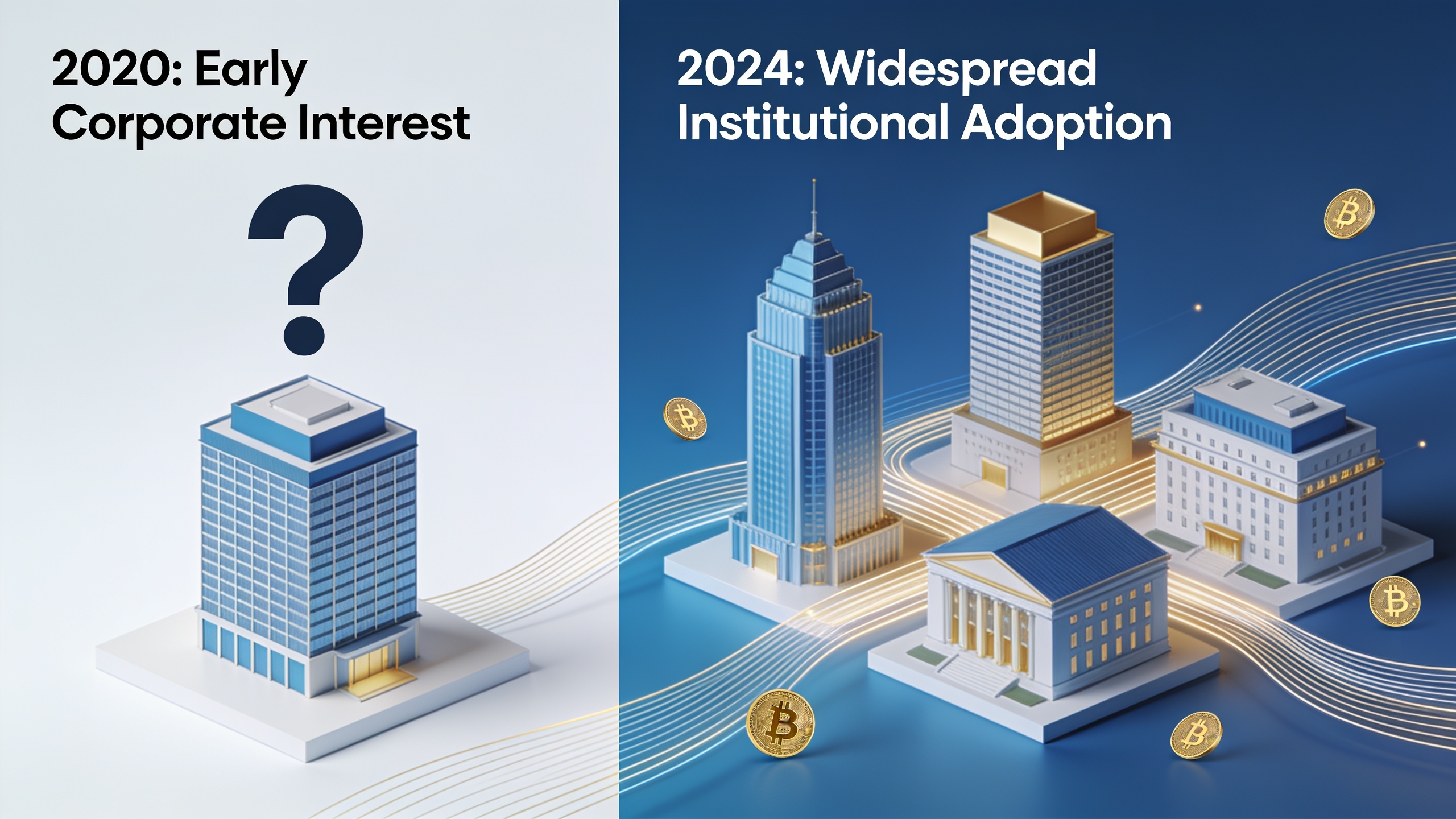
Wall Street cares about tokenization for a pretty unromantic reason: faster settlement, lower operating costs, and a fresh pool of crypto-native money that's already sitting on trillions in stablecoins and digital assets, all of it hunting for something that pays a yield.
BlackRock, the biggest asset manager on the planet, launched its BUIDL fund (officially the BlackRock USD Institutional Digital Liquidity Fund) on Ethereum back in March 2024, teaming up with a tokenization outfit called Securitize. The fund holds cash, U.S. Treasury bills, and repurchase agreements, and it issues tokens that stand in for shares. Within months it was holding hundreds of millions of dollars. Larry Fink, BlackRock's CEO, has flat-out called tokenization the "next generation for markets," and his pitch is simple: if every stock and bond lived on-chain, trades could clear instantly instead of dragging through those multi-day cycles.
Franklin Templeton has actually been at this longer, since 2021, with its Franklin OnChain U.S. Government Money Fund. It records share transactions on a public blockchain and issues a token you'll often see referred to by the ticker BENJI. That makes it one of the first SEC-registered mutual funds to treat blockchain as its official record of who owns what.
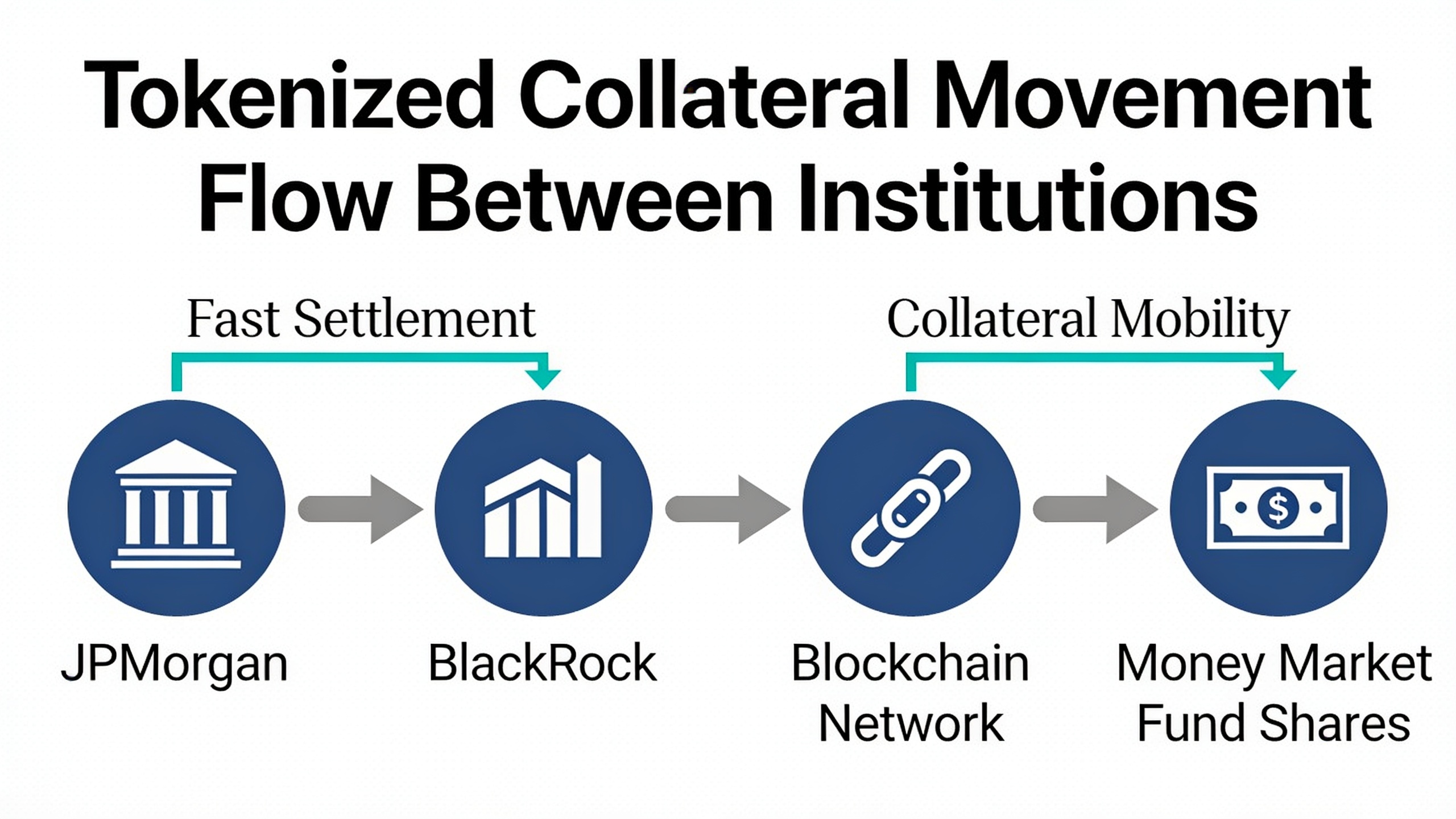
JPMorgan went a slightly different direction with its Onyx digital assets unit. In 2023 it pulled off a tokenized collateral deal with (of course) BlackRock, moving money market fund shares around as collateral through its Tokenized Collateral Network without having to sell the underlying holdings. And honestly, that's the proof point that got a lot of institutional heads nodding. It wasn't a press release stunt. It solved an actual back-office headache, freeing up collateral fast.
Goldman Sachs has been busy on the bond side. Its Digital Asset Platform (GS DAP) helped the European Investment Bank issue digital bonds, one piece of a bigger wave of institutions kicking the tires on blockchain bond issuance across Europe. Governments have jumped in too. Hong Kong's government issued tokenized green bonds through arrangers including HSBC, and Germany's Siemens issued a digital bond under the country's electronic securities law using a public blockchain in 2023. None of this is crypto-bro speculation. It's regulated institutions quietly testing whether blockchain rails can replace chunks of the traditional bond pipeline.
How Does Real-World Asset Tokenization Actually Work?
Tokenization works by wrapping an off-chain asset in a legal structure, then issuing a blockchain token that represents ownership of (or economic exposure to) that wrapper, with smart contracts handling transfers, compliance checks, and sometimes income payouts automatically.
In practice it usually goes something like this. First, the legal structuring: the asset, say a commercial property or a pile of Treasury bills, gets parked inside a legal entity like a trust, fund, or special purpose vehicle. That entity is what actually owns the thing and gives token holders their legal rights. Not the blockchain. The blockchain is just the ledger.
Then comes token issuance. A platform, whether a public network like Ethereum or Solana or a permissioned enterprise ledger, mints tokens representing shares or units in that entity. Companies like Securitize, Ondo Finance, and Figure Technologies basically make a living building this bridge between "legally compliant" and "on-chain."
After that, the tokens get sold to eligible investors. And here's a big difference from your average crypto token: these often bake KYC and accreditation checks right into the smart contract, so transfers only work between approved wallets. Regular crypto trades freely to anyone. These don't. Finally there's the boring-but-important servicing part, where smart contracts can automate coupon payments, dividends, or redemptions, cutting out a lot of the manual reconciliation that transfer agents and custodians normally slog through.
What you end up with is a hybrid. You get the legal enforceability of traditional finance stapled to the settlement speed and programmability of blockchain. It's not trying to torch regulation or replace custodians. It's trying to digitize the pipes underneath all of it.
Tokenized Real Estate, Bonds, and Commodities: Current Examples
Tokenized real estate, bonds, and commodities are the three asset classes furthest along right now, and each one is chasing a different problem. Real estate is going after illiquidity and those brutal minimum investments, bonds are chasing settlement speed, and commodities are all about custody and provable ownership.
Real Estate
Tokenized real estate platforms chop up ownership of physical properties, so instead of buying an entire rental home you buy a token worth a sliver of one. Platforms like RealT and Propy have played around with tokenizing single-family rentals in the U.S., issuing tokens tied to LLCs that hold the actual title, with rental income paid out to holders in stablecoins. Figure Technologies has used blockchain infrastructure too, though more for originating and tracking home equity lines of credit, which is really about streamlining loan servicing rather than letting retail investors buy fractions.
On paper, real estate tokenization is a no-brainer, because property is famously hard to sell fast. A single building can sit on the market for months. But in practice? It's messy. Property law changes from state to state and country to country, and a token is only as liquid as the number of people actually willing to buy it. So this corner stays smaller and more experimental than the tokenized cash stuff.
Bonds
Tokenized bonds are debt instruments issued or recorded on a blockchain instead of, or on top of, the usual clearing systems. The European Investment Bank has done several digital bonds on platforms including Goldman Sachs' GS DAP, and Siemens issued a €60 million digital bond in Germany in 2023 under the country's electronic securities framework, settling straight with investors, no paper certificate, no central clearing middleman in the way. Hong Kong's government has issued tokenized green bonds through bank-led syndicates including HSBC, and they've been openly upfront that the whole point is testing whether blockchain settlement can shrink a multi-day issuance process down to nearly real time.
Commodities
Tokenized commodities represent physical goods, mostly gold, as blockchain tokens backed by allocated, audited reserves. Paxos issues PAX Gold, where every token is backed by one fine troy ounce of gold sitting in professional vault storage, and Tether runs a similar gold-backed token. The appeal is dead simple. Instead of paying storage and insurance fees through some traditional bullion dealer, you hold a digital token you can redeem for actual metal, with the blockchain keeping a transparent, timestamped record of who's holding what.
| Asset Class | Example Initiative | What's Tokenized | Primary Driver |
|---|---|---|---|
| Money market funds / Treasuries | BlackRock BUIDL, Franklin OnChain (BENJI) | Fund shares backed by cash, T-bills, repos | Faster settlement, 24/7 transfer, institutional demand for on-chain yield |
| Bonds | EIB digital bonds (Goldman Sachs GS DAP), Siemens digital bond (Germany) | Debt securities | Reduced settlement time, lower issuance costs |
| Real estate | RealT, Propy, Figure Technologies | Fractional property ownership, home equity lines | Access to illiquid assets, fractional investment minimums |
| Commodities | Paxos PAX Gold, Tether Gold | Allocated physical gold | Transparent custody, easier transfer than physical bullion |
| Collateral management | JPMorgan Onyx Tokenized Collateral Network | Money market fund shares used as collateral | Faster collateral mobility without liquidation |
How Big Could the RWA Crypto Trend Get?
Estimates are all over the map, but multiple big financial institutions expect the tokenized asset market to balloon from tens of billions today into the trillions by the early 2030s, which is why RWA has become one of the most watched spots where traditional finance and blockchain collide. Nobody agrees on the exact number, mostly because it hinges on how fast regulators clear the runway and how much of the multi-hundred-trillion-dollar global asset base actually migrates on-chain.
Boston Consulting Group, in a 2022 report done with digital exchange ADDX, projected tokenized assets could hit roughly $16 trillion by 2030, calling tokenization a structural shift in market plumbing rather than a passing crypto fad. Citi's Global Perspectives & Solutions team, in its 2023 "Money, Tokens, and Games" report, put tokenized digital securities at $4 to $5 trillion by 2030 in its base case, while waving a flag that regulatory clarity is the single biggest wildcard. McKinsey, in its 2024 "From ripples to waves" research, was more restrained, landing on roughly $2 trillion in tokenized market cap by 2030 (not counting cryptocurrencies and stablecoins) in its base case, with a bull case pushing closer to $4 trillion if adoption speeds up.
| Source | Report Year | Projected Market Size | Target Year |
|---|---|---|---|
| Boston Consulting Group / ADDX | 2022 | ~$16 trillion | 2030 |
| Citi GPS | 2023 | $4–5 trillion (base case) | 2030 |
| McKinsey & Company | 2024 | ~$2 trillion (base case), up to ~$4 trillion (bull case) | 2030 |
That huge gap between the numbers actually tells you something. This is still an emerging market where even the people building the rails don't really know how fast adoption scales. But notice what all three agree on. Not the size, the direction. Everyone expects this to grow meaningfully rather than fizzle out as a niche experiment.
If you're a crypto investor trying to figure out how to actually get a piece of this, it's worth thinking about the different ways into digital assets more broadly. Deciding between buying tokenized products directly versus getting exposure through a regulated wrapper comes down to the same tradeoffs laid out in this comparison of crypto ETF investing versus direct coin ownership, where custody, control, and regulatory oversight end up being what tips the decision either way.
Risks and Regulatory Hurdles Facing Tokenized Assets on Blockchain
The biggest risks with tokenized assets are legal enforceability gaps, a patchwork of global regulation, and the plain fact that a token is only as trustworthy as the legal structure and custodian behind it. Tokenization doesn't make counterparty risk disappear. It just dresses it up differently.
Start with legal enforceability. Your rights as a token holder are only as strong as the trust, SPV, or fund agreement underneath the token. If that structure is sloppily drafted, or the jurisdiction doesn't clearly recognize blockchain records as legit ownership, you could have a real fight on your hands enforcing your claim, especially in a bankruptcy or a dispute. That's not a hypothetical worry, it's the whole ballgame.
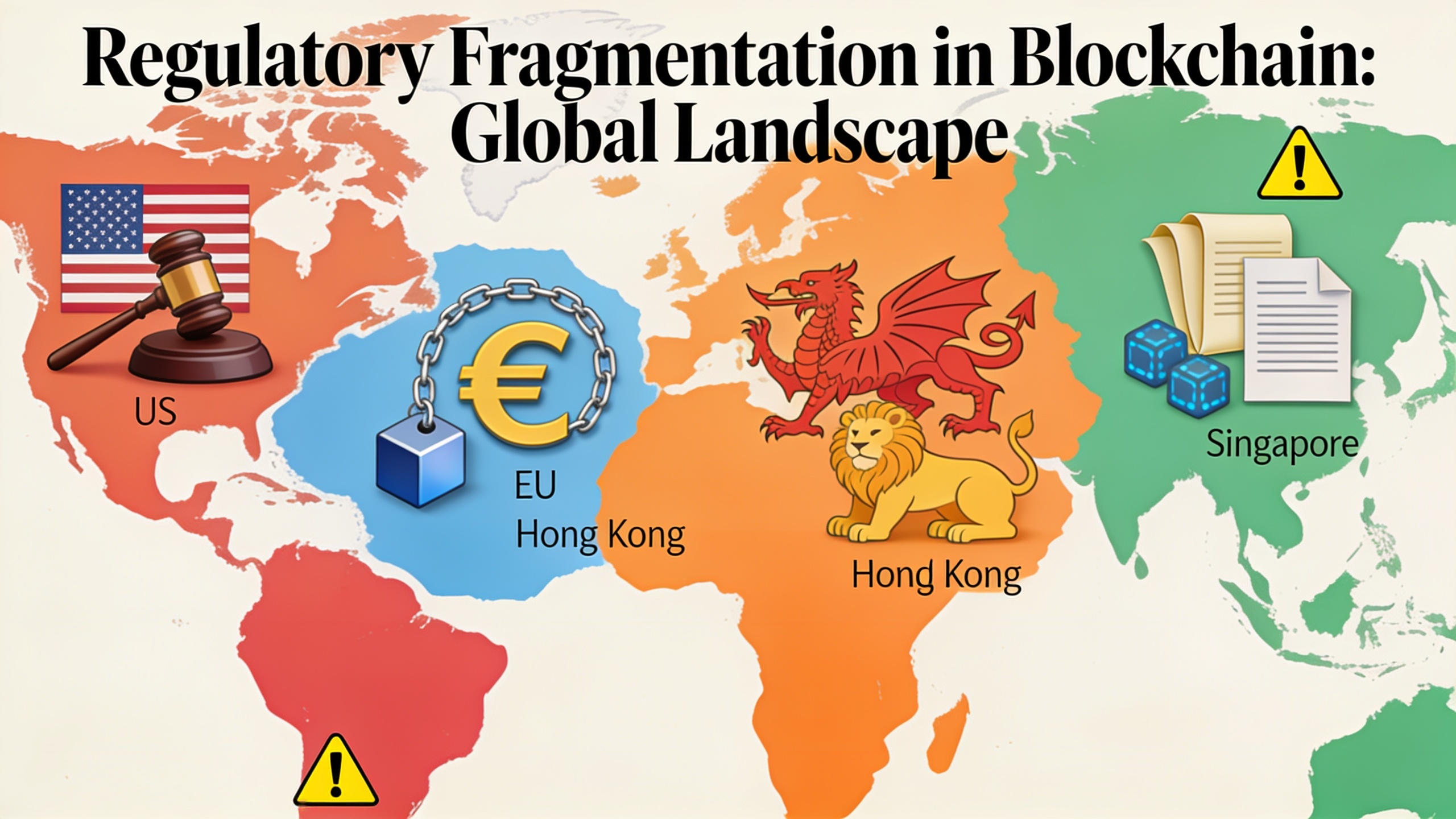
Then there's regulatory fragmentation, which is a genuine mess. Securities regulators in the U.S., EU, Hong Kong, and Singapore are all doing their own thing. The U.S. SEC generally treats tokenized securities as, well, securities, subject to the usual registration and disclosure rules, which is exactly why a platform like Securitize registers with regulators instead of trying to sneak around them. Singapore, through the Monetary Authority of Singapore's Project Guardian, has run structured pilots with banks like JPMorgan and DBS specifically to test these frameworks under supervision. The catch is there's no single global standard, so a tokenized bond that's perfectly compliant in one country might not be freely tradeable in another.
A few more worth chewing on:
- Liquidity isn't automatic. One of tokenization's big promises is better liquidity, but a token trading on a blockchain isn't magically liquid. No buyers means no liquidity. A tokenized real estate share can be exactly as stuck as the building it represents, just with a slicker interface.
- Custody and keys. Institutional platforms usually lean on regulated custodians, but if you're holding tokenized assets in your own wallet, you're on the hook for private-key security like any other crypto. Lose the key, lose the asset.
- Smart contract risk. Any bug or exploit in the contracts governing issuance, transfer rules, or income distribution could wreck a supposedly "safe," Treasury-backed token, and that would have nothing to do with the safety of the actual T-bill underneath it.
What This Means for Everyday Crypto Investors
For regular crypto investors, the RWA trend is really a signal: traditional finance has stopped treating blockchain as a toy and started testing it as core infrastructure. That could pull more regulated, yield-bearing products into the same wallets and exchanges you already use for Bitcoin and Ethereum. And even if you never touch a single tokenized bond, that's a real credibility boost for the whole asset class.
It's already leaking into DeFi, too. MakerDAO has parked billions of its reserves into tokenized U.S. Treasuries through RWA vaults, using the yield to back its stablecoin. That's DeFi and traditional finance yields literally merging in real time. Ondo Finance's OUSG token gives on-chain investors exposure to short-term U.S. Treasuries, basically wrapping BlackRock's BUIDL fund into something usable across DeFi. Honestly, this blurring, where a stablecoin's backing partly comes from tokenized Treasuries, might be a bigger near-term deal for crypto than any splashy retail real estate token sale.
And it's worth remembering blockchain's usefulness as a ledger for real-world value doesn't stop at finance. The same tokenization logic showing up in bonds and property is part of a wider pattern of blockchain creeping into asset ownership and digital rights generally, something you can also see in how blockchain rails track in-game ownership in some of the Web3 gaming titles merging blockchain and gameplay in 2025, where a digital item's ownership gets tokenized in a way that's conceptually pretty close to a fractional real estate share.
Here's an angle nobody talks about enough. As more of your net worth becomes tokenized, digital wallets, property shares, on-chain bonds, the whole question of how that stuff passes to your heirs turns into an estate-planning problem, not just a crypto problem. Traditional wills usually don't account for private keys, exchange logins, or token custody, and families can lose access completely if none of it's written down. Platforms like Evaheld exist for exactly this gap, helping people organize estate documents, store advance care directives, and record instructions for how their digital and financial assets should be handled, with an AI assistant named Charli walking you through it. The more of your wealth lives on-chain, the less optional this kind of planning gets.
FAQ
Wait, is this the same thing as crypto?
Nope. Cryptocurrencies like Bitcoin are native digital assets, there's nothing physical or financial sitting behind them. Real-world asset tokenization uses blockchain as infrastructure to represent something that already exists off-chain, a bond, a property, a bar of gold. So the token's value is tied to that external asset, not to the network itself.
Which companies are actually leading this right now?
BlackRock (with BUIDL), Franklin Templeton (with its OnChain U.S. Government Money Fund), JPMorgan (with the Onyx Tokenized Collateral Network), and Goldman Sachs (with its Digital Asset Platform for digital bonds) are the big traditional names in the space, along with tokenization specialists like Securitize and Ondo Finance.
Can regular people actually buy tokenized real estate or bonds?
Depends on the platform and where you live. Some tokenized real estate platforms open up to a wider range of investors, while institutional products like BlackRock's BUIDL are generally locked to qualified or institutional buyers under securities rules. Access varies a lot by product and country, so you really have to check eligibility platform by platform.
What's the difference between tokenized assets and asset-backed stablecoins?
Asset-backed stablecoins, like a dollar-pegged token backed by cash and short-term Treasuries, are built to hold a steady price so you can use them as money. Tokenized real-world assets, like a tokenized bond or fund share, are built to represent ownership or investment exposure, and they can rise, fall, or pay yield just like the traditional asset underneath.
If crypto's had so much regulatory grief, why do banks even want this?
Because banks care about the operational stuff, faster settlement, automated compliance, easier collateral movement, which is mostly separate from the speculative trading that gives crypto its reputation. JPMorgan used tokenization specifically to fix a back-office pain point, moving collateral around without liquidating positions. That's a completely different use case than someone day-trading meme coins.
Real-world asset tokenization is still early, still fragmented across jurisdictions, and nowhere near proven at scale. But look at the roster now testing it, BlackRock, Franklin Templeton, JPMorgan, Goldman Sachs, plus government-backed pilots in Hong Kong, Singapore, and the EU. That's not the guest list for a passing fad. Whether the market ends up closer to McKinsey's $2 trillion or BCG's $16 trillion by 2030, the direction is clear enough: more of the traditional financial system is going to run, at least partly, on blockchain rails.