Top 8 Web3 Gaming Titles Merging Blockchain and Gameplay in 2025
Remember 2021? When every "crypto game" was basically a token faucet with a thin coat of gameplay slapped on top, and people were grinding hamster-tier tasks purely to flip rewards on an exchange?...

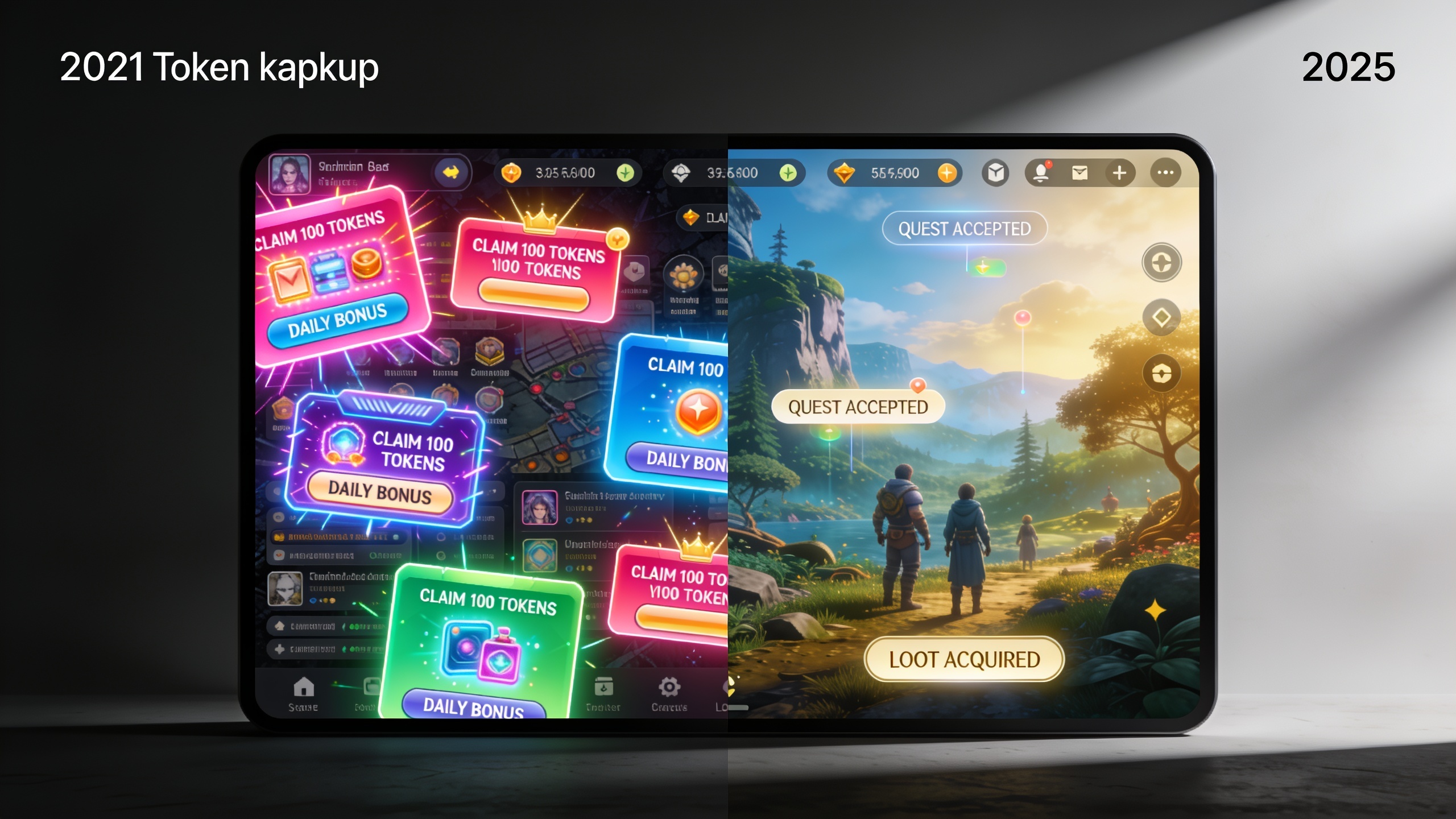
Remember 2021? When every "crypto game" was basically a token faucet with a thin coat of gameplay slapped on top, and people were grinding hamster-tier tasks purely to flip rewards on an exchange? Yeah. That version of web3 gaming mostly imploded, and honestly, good riddance.
Things look different now. Studios are actually shipping games you might want to play even if the token went to zero, NFT ownership has started to mean something inside the game instead of being a marketing sticker, and a smaller batch of titles has survived long enough to define what this stuff can realistically do. Below are eight of them, what makes each one worth a look, and the things I'd want to know before putting any money in.
Table of Contents
- What Is Web3 Gaming, and Why Does It Matter in 2025?
- How Do Play-to-Earn Crypto Games Actually Work?
- The Top 8 Web3 Gaming Titles to Watch in 2025
- Web3 Games Comparison Table
- NFT Integration: What Makes In-Game Assets Different From Traditional Skins?
- What Are the Risks of Investing in Blockchain Games in 2025?
- How to Get Started With Web3 Gaming Safely
- FAQ
What Is Web3 Gaming, and Why Does It Matter in 2025?
Web3 gaming just means games built on blockchain infrastructure, where the items, currencies, or virtual land you collect exist as tokens you actually own and can trade outside the game. That's the whole difference, really. In a normal game, that rare sword or that skin you dropped $20 on lives inside a publisher's database. Server shuts down, account gets banned, whatever, and poof, it's gone. In a web3 game, the same item is usually minted as an NFT (non-fungible token) or a fungible in-game token on a public chain, and it sits in your wallet whether the studio likes it or not.
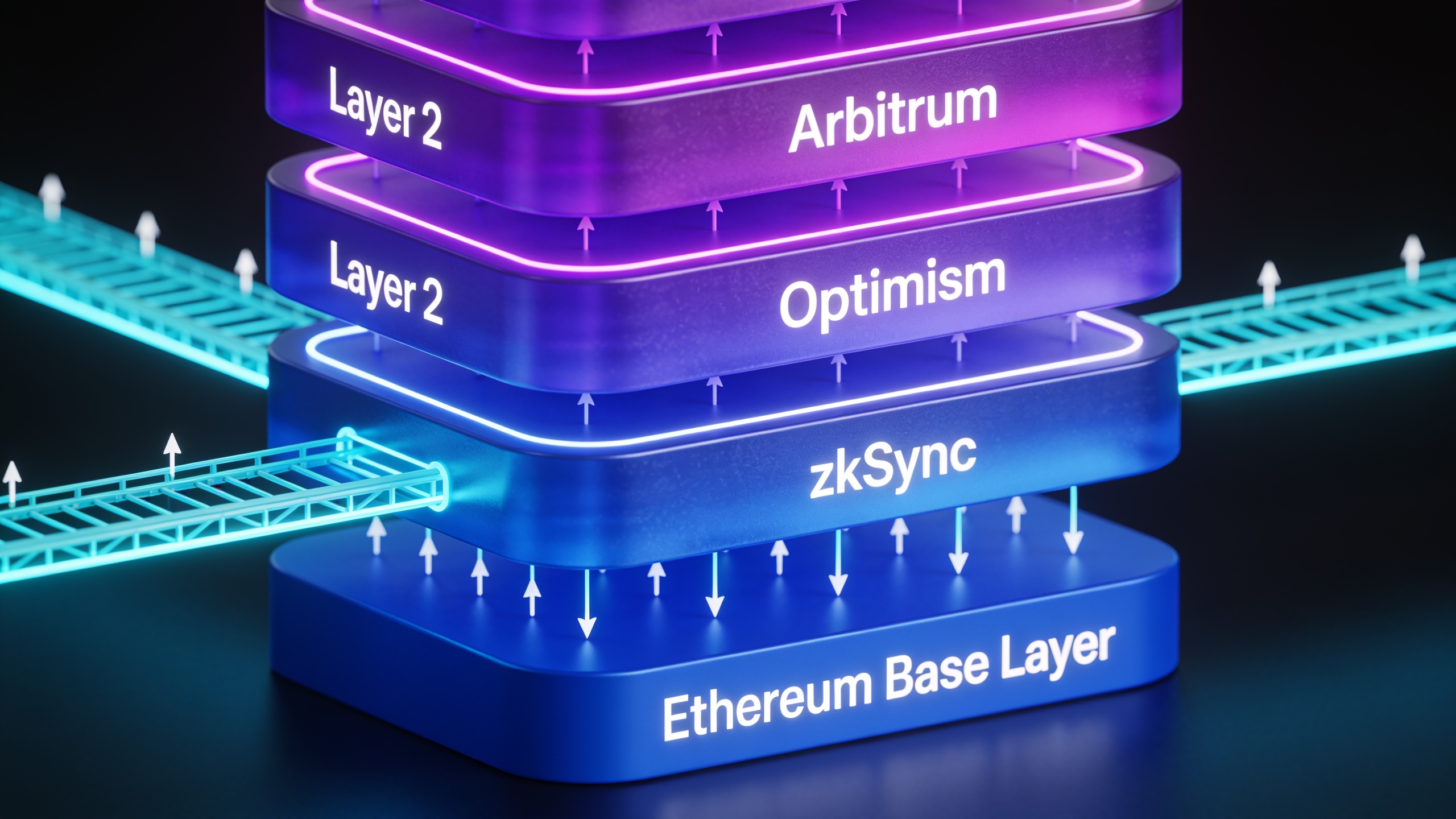
So why does any of this matter now, in 2025, when it seemed to blow up so spectacularly a few years ago? Mostly because the plumbing finally works. Those brutal gas fees that once made a $2 in-game purchase cost $40 in transaction costs have dropped hard thanks to Layer 2 networks and gaming-specific chains like Immutable X and Ronin. And studios learned some painful lessons. A lot of the first wave of play-to-earn games ran on tokenomics that were basically doomed from the start, printing rewards faster than new players could ever soak them up. What we've got now is a second generation that leans on actual gameplay loops, with the token and NFT stuff layered on top instead of being the entire reason the game exists.
How Do Play-to-Earn Crypto Games Actually Work?
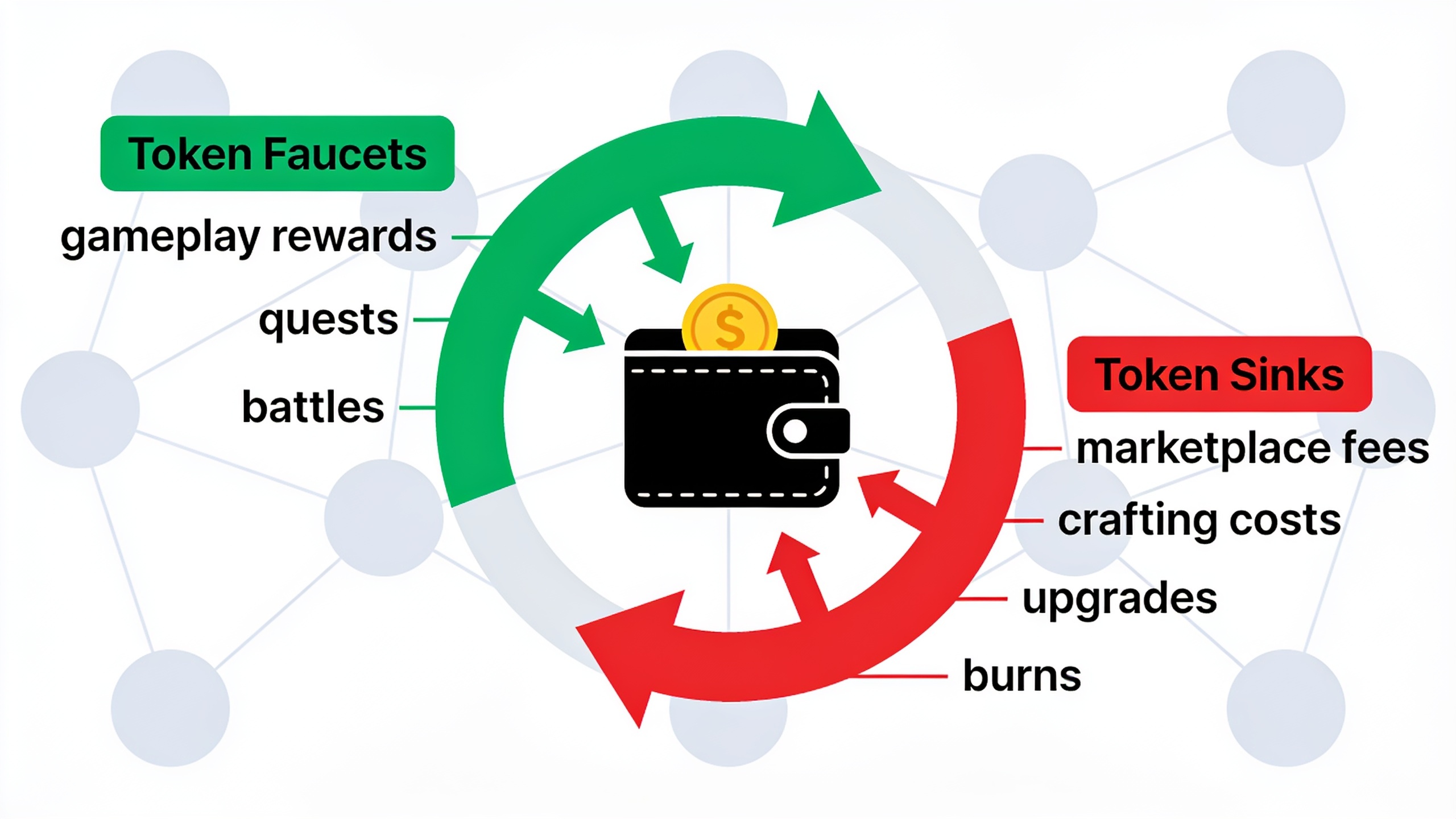
Play-to-earn crypto games let you earn tokens or NFTs with real trading value by doing in-game stuff: winning battles, harvesting resources, breeding characters, finishing quests. Those rewards get issued on a blockchain, and you can sell them on secondary marketplaces or shovel them onto a centralized exchange. Effort in, tradable digital assets out.
The mechanics tend to fall into a handful of patterns. A lot of games use a dual-token setup, splitting a governance or premium token (capped supply, harder to get) from a utility token you earn more freely and spend on breeding, crafting, and upgrades. Others are mostly about NFT trading, where the "earning" comes from finding, crafting, or leveling up assets that get more valuable based on rarity and use, then flipping them. And then you've got the card games and strategy titles, where earnings are tied to how good you actually are. Rank up, get better drops. Casual players earn less. Skill matters.
Whatever model a game picks, the whole thing lives or dies on the balance between token sinks (ways to spend) and token faucets (ways to earn). Get that wrong and the reward token craters the moment new player growth stalls, which is exactly the wall a bunch of first-gen play-to-earn games slammed into. That's why I'd treat a game's token distribution with the same suspicion I'd bring to any random new token, including checking whether a project hands out free tokens through legit official channels. The same caution we laid out in our guide on how to find and claim crypto airdrops safely applies word-for-word to in-game token drops and reward claims. Scammers love a game launch.
The Top 8 Web3 Gaming Titles to Watch in 2025
These eight cover a decent spread of the current landscape: RPGs, trading card games, virtual worlds, and one very chill farming sim. Each one uses blockchain and NFTs in its own way.
1. Axie Infinity
Axie Infinity, from Vietnamese studio Sky Mavis on its own Ronin blockchain, is basically the granddaddy of play-to-earn. You collect, breed, and battle little creatures called Axies, each one an NFT with genetic traits that decide what it can do in combat. Sky Mavis literally built Ronin to fix the ugly transaction costs that made the original Ethereum version too expensive to bother with, and they've kept bolting on new game modes since the big early boom. Axie stays a reference point mostly because its spectacular pump-and-crash cycle became the cautionary tale every later dev studied. A masterclass in what not to do with token emissions.
2. Illuvium
Illuvium is an open-world auto-battler RPG where you capture creatures called Illuvials and throw them into strategic team battles. It's built on Ethereum using Immutable's infrastructure to scale the NFT side. What I like here is that the character NFTs aren't just for looks. Each Illuvial's stats and abilities directly change how battles go, so a rare one genuinely matters. The whole project has been swinging for AAA quality, trying to prove a web3 game can actually hold its own graphically and mechanically against normal PC and console releases. Ambitious. We'll see.
3. The Sandbox
The Sandbox is a voxel virtual world on Ethereum where you buy, build on, and monetize parcels of virtual real estate called LAND, each one an NFT. Its token, SAND, handles transactions across the ecosystem, buying LAND, assets, avatars, plus governance votes through the project's DAO. Creators use the building tools to make games and experiences other people visit or buy, so it's honestly as much a creator economy as it is a game. And just like homeowners hunt down vetted pros such as those you'd find through Call Painting Pros when they want to bump the resale value of a physical house, Sandbox landowners pour money into custom builds to make their virtual plots more appealing to visitors and buyers.
4. Decentraland
Decentraland is one of the oldest Ethereum virtual worlds around. You buy LAND NFTs, build experiences, and wander around with a customizable avatar, with the whole economy running on the MANA token. It's leaned hard into events, virtual conferences, and branded activations from real companies dabbling in metaverse stuff. And because LAND parcels are finite and pinned to a specific coordinate grid, where your parcel sits on the map has always mattered to what it's worth. Digital location, location, location.
5. Gods Unchained
Gods Unchained is a free-to-play trading card game on Immutable X where every card you own is minted as an NFT you can trade, sell, or use across supported marketplaces. The whole pitch is that you actually own your collection, which you never do in a traditional digital card game where the publisher can nerf or straight-up delete a card whenever they feel like it. Immutable X's zero-gas-fee trading is doing a lot of heavy lifting here. Without it, constant card trading and crafting would only make sense for whales, not the average player messing around after work.
6. Big Time
Big Time is a free-to-play action RPG that mixes dungeon-crawling combat with a time-travel story, built on Ethereum Layer 2 to keep costs down. The customization items, called Time Warps and cosmetic wearables, are NFTs, but the smart part is that they let you try the core game before touching anything blockchain-related. That "play first, mint later" approach is a big shift in blockchain games this year, and frankly it's overdue. Nobody wants to set up a wallet before they even know if the game is fun.
7. Parallel
Parallel is a sci-fi strategy card game on Ethereum with genuinely gorgeous, cinematic card art and some real depth across multiple playable factions. Cards are NFTs, and the studio has built out lore and even an animated series to stretch the IP well past the card game itself. It's a good example of studios treating NFT card ownership as one layer of a bigger transmedia franchise rather than the whole product. Cards, story, show. The card game is just the entry point.
8. Pixels
Pixels is a social farming and life-sim on the Ronin network where you tend farms, craft goods, and poke around a bigger in-game economy, picking up tokens and NFT items as you go. It's light, casual, very cozy-browser-farming-game energy, which has made it a way friendlier on-ramp for people who find combat-heavy stuff like Illuvium or Axie a bit much. Plus, being on Ronin means it piggybacks on the transaction infrastructure Sky Mavis already built for Axie, which nicely shows a gaming chain can carry more than one flagship at a time.
Web3 Games Comparison Table
Quick side-by-side of the blockchain, genre, and token details for all eight, if you just want the cheat sheet.
| Game | Blockchain | Genre | Native Token | Core NFT Asset |
|---|---|---|---|---|
| Axie Infinity | Ronin | Creature battler/breeding | AXS | Axie creatures |
| Illuvium | Ethereum (Immutable) | Auto-battler RPG | ILV | Illuvial creatures |
| The Sandbox | Ethereum | Virtual world/creator platform | SAND | LAND parcels, assets |
| Decentraland | Ethereum | Virtual world | MANA | LAND parcels |
| Gods Unchained | Immutable X | Trading card game | GODS | Playable cards |
| Big Time | Ethereum L2 | Action RPG | BIGTIME | Cosmetics, Time Warps |
| Parallel | Ethereum | Sci-fi strategy card game | PRIME | Playable cards |
| Pixels | Ronin | Social farming sim | PIXEL | Farm items, land |
NFT Integration: What Makes In-Game Assets Different From Traditional Skins?
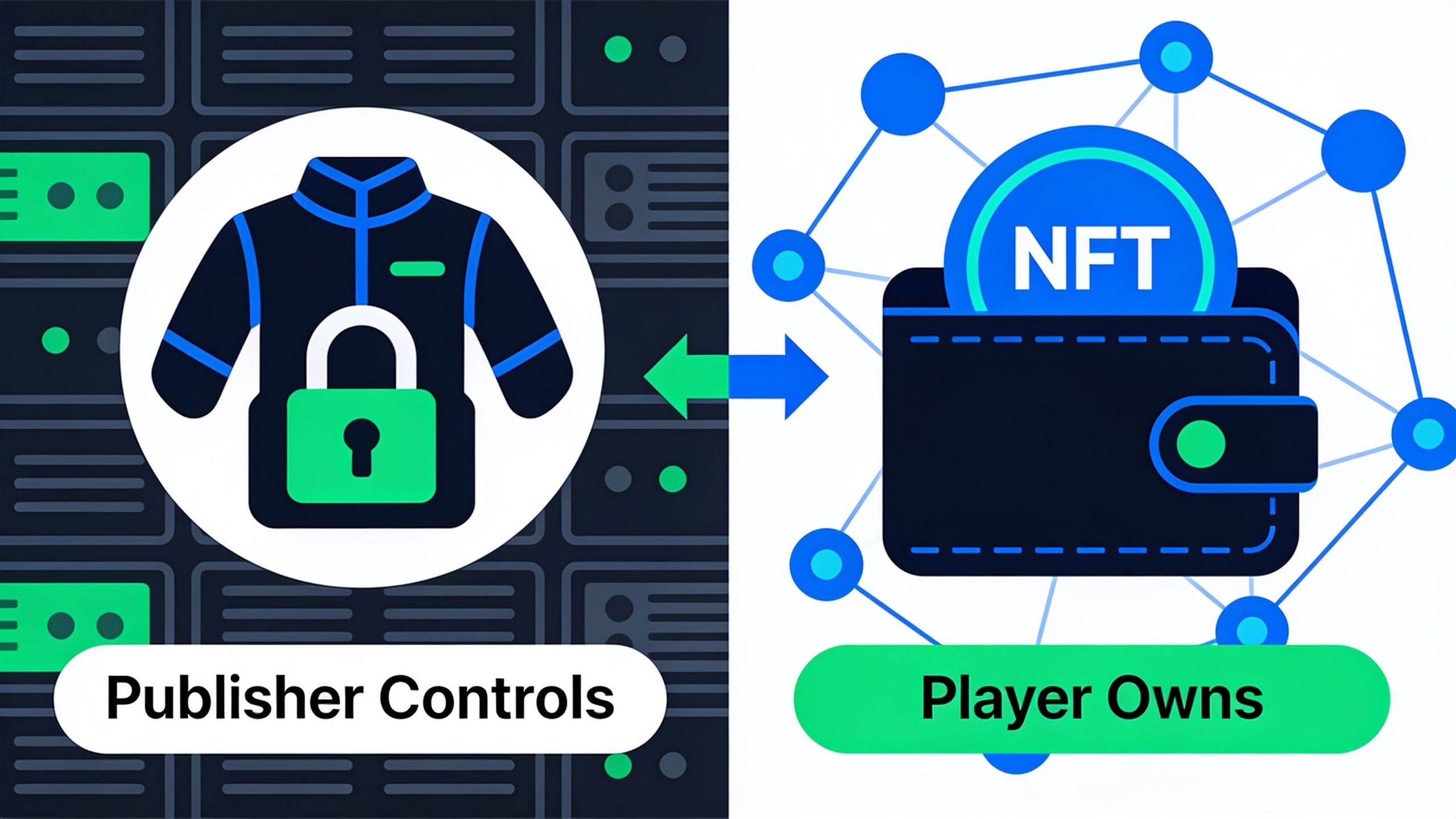
NFT-based in-game assets differ from regular skins because ownership and transfer rights live on a public blockchain instead of a publisher's private server. That means you can sell, trade, or use the asset across any compatible platform without the studio being involved in every single transaction. A cosmetic skin in a normal game license is usually non-transferable and exists purely at the publisher's mercy. An NFT sword, card, or plot of land in something like Gods Unchained or The Sandbox is a token your wallet holds directly. Different animal.
And this actually changes how games get designed. In Illuvium and Axie, the NFT creatures carry functional stats that swing battle outcomes, so rarity and traits aren't just for bragging rights, they change how you play. In Gods Unchained, because your cards are NFTs, you can quit the game entirely and still liquidate your collection on a secondary market. Try doing that with a closed-database card game. Not happening. And in worlds like Decentraland and The Sandbox, LAND NFTs act more like digital property deeds, giving you development rights over a fixed spot on the map.
One thing people underestimate: NFT ownership drags real financial exposure along with it. Money you make selling in-game NFTs or tokens can trigger tax reporting depending on where you live, and if you're active across several games, tracking every trade by hand becomes a genuine headache fast. If you're pulling meaningful income from play-to-earn, treat it like any other crypto activity. Our comparison of crypto tax software platforms for 2025 is a solid place to start for figuring out how these tools handle NFT sales and gaming token income.
What Are the Risks of Investing in Blockchain Games in 2025?
The big risks are token price volatility, unsustainable reward economics, smart contract bugs, and the plain old chance that a studio can't keep enough players around to keep its economy breathing. When you buy a regular game, the worst case is you're out the price of the game. When you buy into a web3 game's token or NFTs, you're exposed to the same market chaos that whips around any other crypto asset. Big difference in downside.
Token volatility is the obvious one. Reward tokens in these games can swing wildly based on new player inflows, exchange listings, or just the general mood of the crypto market, completely independent of whether the game itself is any good. Reward sustainability is related but sneakier: if the tokens flowing out of gameplay rewards keep outpacing the sinks (marketplace fees, crafting costs, upgrades) meant to pull tokens out of circulation, the token bleeds value over time no matter how many people are playing.
Smart contract risk is real too. Since these tokens and NFTs run on code deployed to a blockchain, a bug or exploit in that code can mean stolen assets or drained liquidity pools, the same nightmare that haunts the broader DeFi world. And then there's execution risk at the studio level. Building a good game and a working token economy at the same time is a genuinely harder problem than building either one on its own, and a lot of early play-to-earn titles fell apart precisely because their economic design ran way ahead of their actual gameplay.
How to Get Started With Web3 Gaming Safely
Getting into web3 gaming safely comes down to three things: set up a dedicated crypto wallet, actually research a game's tokenomics before buying anything, and start small before you commit real money. Most of these games want you to connect a browser wallet like MetaMask, or for Ronin titles like Axie and Pixels, a wallet that plays nice with that network specifically.
Before you buy any NFTs or tokens tied to a game, dig into the published token distribution and emission schedule. That's usually where you find out whether early investors and the founding team are sitting on a fat chunk of supply compared to what's actually set aside for player rewards. It's also worth checking if a game has any planned token distributions or airdrop campaigns, since some studios reward early or active players with allocations tied to on-chain activity. Handle those the way our guide on claiming crypto airdrops safely suggests, because phishing scams love to latch onto legit game launches.
Last thing. Treat any in-game NFT purchase like any other speculative crypto buy. Only spend what you can genuinely afford to lose, verify contract addresses through official game channels instead of some link a stranger DMs you, and be deeply suspicious of secondary marketplaces offering prices that look way off from a game's official one. If it seems too good to be true, it's a scam. It's basically always a scam.
FAQ
Can you actually still make money with web3 gaming in 2025?
Depends heavily on the game and, honestly, on token price, which is tied to the broader crypto market way more than to whether the game is fun. Some people earn modest income grinding away at titles like Axie or Pixels, but volatility means nothing's guaranteed, and the wild profitability of the 2021 boom hasn't really come back in any consistent way since.
Do I have to buy an NFT just to start playing?
Not always. A few titles, Gods Unchained and Big Time among them, give you free-to-play entry points so you can try the core game before minting or buying anything. Studios did that on purpose to stop scaring off people who aren't already crypto-native.
What blockchain do most of these games run on?
Ethereum is still the most common base layer, usually paired with a Layer 2 or sidechain like Immutable X or Ronin to keep fees down. Ronin, built by Sky Mavis, now supports multiple games including Axie and Pixels, while Immutable X handles the NFT trading for Gods Unchained and Illuvium.
Are play-to-earn crypto games taxable?
In most places, yes. Income from selling in-game tokens or NFTs is generally taxable, whether as ordinary income, capital gains, or both, depending on how you got and sold the assets. And because gaming can spit out a ton of tiny transactions, a lot of active players end up using dedicated crypto tax software just to keep cost basis and reporting straight.
How can I tell if a game's token economy is actually sustainable?
Look at the balance between how tokens enter circulation (gameplay rewards) and how they leave (marketplace fees, crafting, upgrades, burns). If rewards keep outrunning those sinks, the token's probably going to lose value over time no matter how packed the servers are. That ratio tells you more than any hype thread ever will.
The sector in 2025 feels a lot more grounded than it did during that first speculative frenzy. Studios behind titles like Illuvium, Gods Unchained, and Big Time are putting actual weight behind gameplay instead of treating token rewards as the whole point. If you're a gamer or an investor sizing up whether to jump in, the basics haven't budged: understand the tokenomics, verify the tech, and size your position based on how much volatility you can genuinely stomach. Not how much you wish you could.