Crypto ETF Investing vs Direct Coin Ownership: Which Suits You?
Crypto ETF investing lets you get price exposure to Bitcoin, Ethereum, or a whole basket of digital assets through a regulated fund that trades in your brokerage account, without ever touching a...

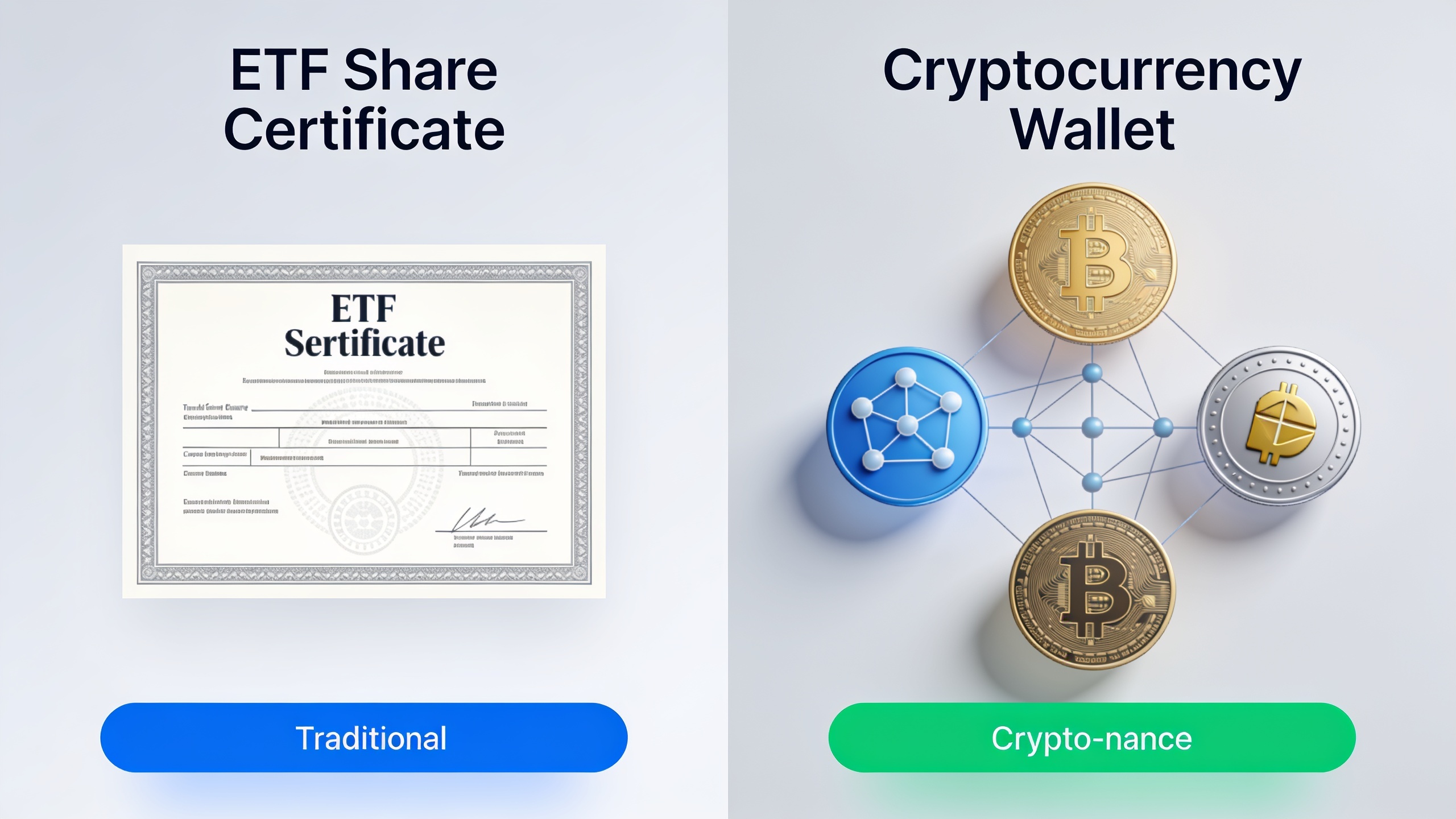
Crypto ETF investing lets you get price exposure to Bitcoin, Ethereum, or a whole basket of digital assets through a regulated fund that trades in your brokerage account, without ever touching a wallet, a seed phrase, or an exchange login. Direct coin ownership is the opposite deal. You buy the actual asset and you hold it yourself (or park it with a custodian), which gives you total control and, yeah, total responsibility. Both routes land you in the same underlying market. But the mechanics, the fees, the taxes, and the risks split off from each other hard enough that the "right" answer really comes down to who you are as an investor.
So that's what I want to sort out here. We'll put fees, custody risk, tax treatment, liquidity, and regulation side by side, and then figure out which type of investor tends to gravitate toward each one. No universal winner. Just trade-offs, and which ones you can live with.
Table of Contents
- What Is Crypto ETF Investing, and How Does It Differ From Direct Ownership?
- Bitcoin ETF vs Direct Ownership: How Do the Costs Compare?
- Who Actually Holds Your Crypto? Custody Risk Explained
- How Are Crypto ETFs and Direct Coin Holdings Taxed?
- Liquidity and Trading: Which Is Easier to Buy and Sell?
- Regulatory Oversight: What Protections Do You Actually Get?
- Crypto ETF Comparison: Matching the Vehicle to Your Investor Profile
- Frequently Asked Questions
What Is Crypto ETF Investing, and How Does It Differ From Direct Ownership? {#what-is-crypto-etf-investing}
Crypto ETF investing means buying shares of an exchange-traded fund that tracks the price of a cryptocurrency, or a group of them, instead of buying the coin itself. The fund is a security. It trades on a regular stock exchange like the NYSE Arca or Nasdaq, you buy it through a normal brokerage account, and its share price is built to move roughly in step with whatever it's holding underneath.
Two structures matter here, and the difference is bigger than most people realize. A "spot" crypto ETF actually holds the coins in custody, so its performance sticks pretty close to the real market price. A futures-based ETF doesn't hold any coins at all. It uses futures contracts to fake the exposure, and because those contracts get rolled month to month, you can pick up tracking differences over time that quietly eat into your returns. If you want the nuts-and-bolts version of how those instruments work on their own, our guide on crypto derivatives explained: futures, options, and perpetual swaps goes deep on the mechanics, and the same logic explains exactly why futures-based ETFs don't behave like spot ones.
Direct coin ownership is a different animal. You buy actual Bitcoin, Ethereum, or some other token on an exchange, and then you either leave it there, ship it to a custodian, or pull it into a wallet you control. No fund wrapper. No fund manager. Nobody standing between you and the asset. You hold the private keys (or you hand that job to somebody), and the coin lives on its native blockchain instead of inside a tidy financial product.
The whole thing boils down to indirection versus direct exposure. An ETF turns crypto into a familiar stock-market product. Direct ownership keeps you inside the crypto-native world, with all its flexibility and all its 2 a.m. headaches.
Bitcoin ETF vs Direct Ownership: How Do the Costs Compare? {#costs}
The cost structures differ in kind, not just in amount. An ETF charges an ongoing annual management fee (the expense ratio) that's baked right into the share price, while direct ownership costs mostly show up as one-time transaction and network fees, plus custody charges if you go that route.
With a spot Bitcoin ETF, the issuer skims a management fee off the fund's holdings every year, expressed as a percentage of assets under management. You never get a bill. The fee just quietly erodes the fund's net asset value, which is why, if you're planning to hold for years and not months, comparing expense ratios across the competing Bitcoin ETFs is worth your time. Your brokerage might tack on a trading commission too, though honestly most big US brokerages have killed commissions on ETF trades by now.
Direct ownership looks totally different on the cost front. Buying on a centralized exchange usually means a percentage-based trading fee, and the second you move coins off the exchange to your own wallet, you're paying a network fee that swings with blockchain congestion. (Bitcoin and Ethereum network fees can absolutely spike when on-chain activity gets crazy.) Use a third-party custodian instead of holding it yourself, and there's often an ongoing storage fee. There's no recurring expense ratio in the ETF sense, but here's the catch: if you're an active trader constantly buying and selling, those cumulative trading fees can match or blow past what a long-term ETF holder pays in annual expenses.
So the practical read is this. Buy-and-hold folks with a long horizon often find ETF expense ratios cheaper than a pile of repeated on-chain transactions. But someone who buys once and basically never touches their coins again may find direct ownership's one-time fees end up cheaper than an ETF's compounding annual bite. There's no universal winner. It hinges on how often you trade and how long you're staying in. And if you're still torn between Bitcoin and Ethereum exposure either way, read our take on Bitcoin vs Ethereum: which crypto should you actually buy before you commit real money to either one.
Who Actually Holds Your Crypto? Custody Risk Explained {#custody}
Custody risk is the risk that whoever's physically holding your crypto (or your ETF shares) fails, gets hacked, or fumbles the assets in a way that costs you money. With a crypto ETF, a regulated custodian picked by the fund manager holds the coins, and your brokerage keeps a book-entry record of your shares. With direct ownership, it all depends on where and how you store the coins, and unless you deliberately hand that off to somebody, the responsibility is squarely on you.
Inside an ETF, the coins usually sit with an institutional custodian that has security setups, insurance, and audit requirements no individual investor could ever match. You're trusting the custodian and the fund manager, sure. But you're not personally on the hook for guarding a private key. If the custodian screws up or gets breached, that's a fund-level problem handled through the ETF's structure and disclosures. It's not something you're troubleshooting alone in the dark.
Direct ownership dumps all of that onto you. If you self-custody, you (and only you) protect your private keys or seed phrase. Lose them and the coins are gone. Permanently. No customer service line, no reset button. And if you just leave your coins parked on an exchange instead, you're now exposed to that exchange's solvency and security, and we've all watched enough exchange blowups and hacks wipe out customer balances to know how that story can end. This is exactly why security hygiene is such a big deal for direct holders, and it's the ground we cover in our 5 tips for securing your crypto assets from hackers style content, and more specifically why serious long-term holders lean on hardware wallets, multi-sig setups, or reputable custodians instead of leaving fat balances sitting on an exchange.
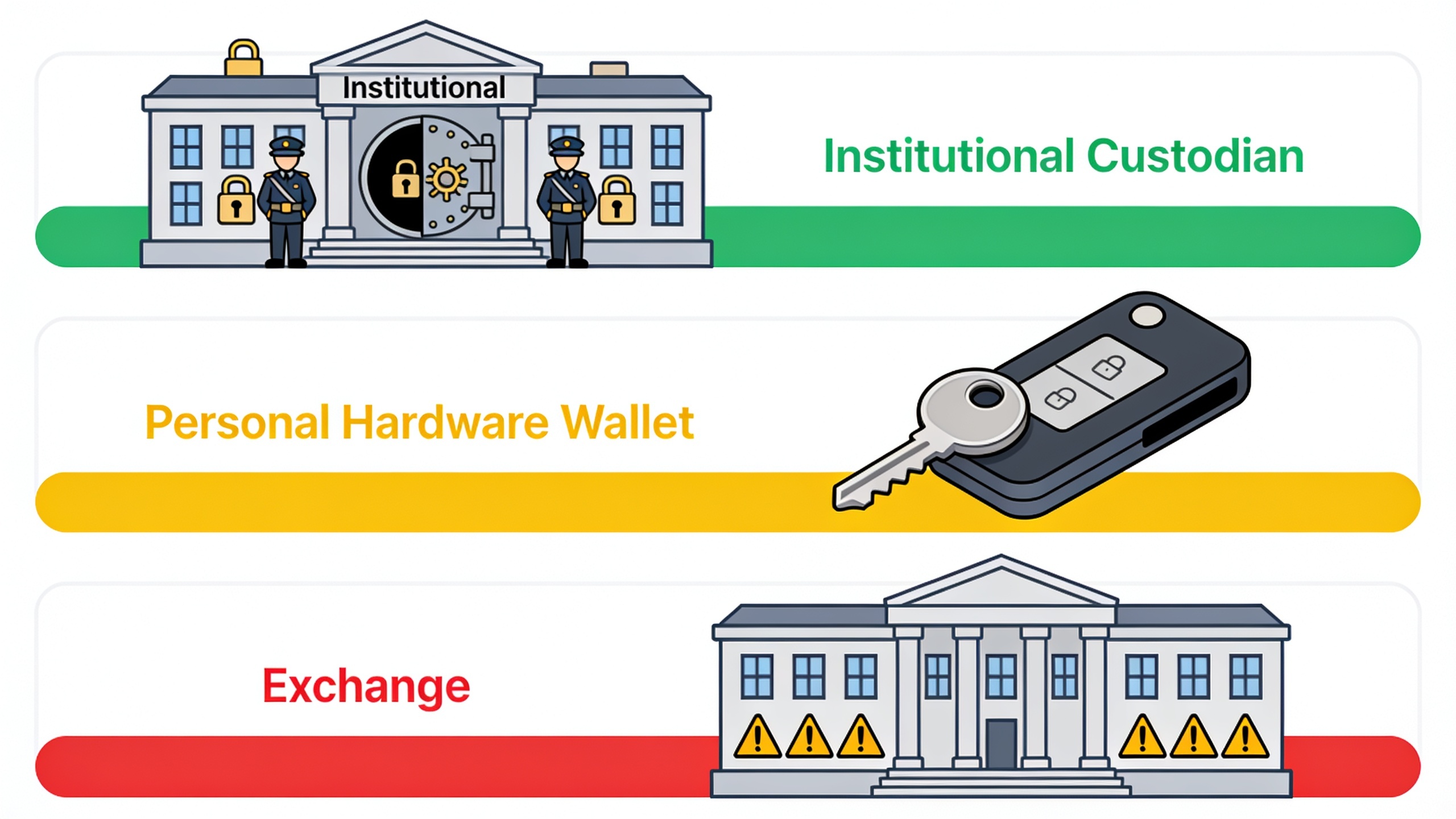
Neither model makes custody risk disappear. It just moves it around. ETF investors outsource the whole thing to a regulated institution and accept fund-level risk. Direct owners either shoulder the personal operational risk themselves or pick a custodian and accept the counterparty risk that comes with that specific outfit.
How Are Crypto ETFs and Direct Coin Holdings Taxed? {#taxes}
In the US, both crypto ETFs and directly held coins generally get hit with capital gains tax when you sell at a profit, but the tracking and reporting mechanics are a different story. Quick disclaimer: this is a general description of a genuinely messy area, not personalized tax advice. Your actual treatment depends on your broker, the fund structure, your filing situation, and whatever new IRS guidance drops next.
Crypto ETF shares live in a standard brokerage account, and your broker usually hands you a consolidated tax form (something in the 1099 family) every year summarizing your sales, same as it would for a stock or bond ETF. That familiar paper trail is one of the genuinely nice things about ETF investing, especially if you already file taxes through a mainstream brokerage and have zero interest in reconstructing a year of on-chain moves by hand.
Direct ownership? Different beast. Every sale, every swap, and in some cases even certain transfers can be a taxable event that you (or your software) have to track, and it gets ugly fast once you're moving assets across multiple exchanges and wallets. Anybody who's swapped tokens across DeFi protocols, flipped an NFT, or racked up staking rewards over a full year knows exactly how quickly that record-keeping spirals out of control. Which is why crypto-specific tax software has gone from "nice to have" to basically mandatory for active on-chain users. Our crypto tax guide category digs deeper into how trading and reporting obligations actually shake out for direct holders.
The general pattern: ETF investors inherit a tax workflow that feels like ordinary securities investing, while direct owners take on more manual tracking but keep more flexibility. They get to choose which specific coins (tax lots) to sell and when, plus access to certain crypto-native strategies that simply don't exist inside a fund wrapper.
Liquidity and Trading: Which Is Easier to Buy and Sell? {#liquidity}
Crypto ETFs trade during standard stock-market hours through any brokerage account, while directly held coins trade nearly 24/7 across global exchanges. So the "more liquid" answer actually depends on when and how you want to transact.
Take a Bitcoin ETF. You can only buy or sell it while its listing exchange is open, which basically means weekdays during regular US market hours. If Bitcoin rips or dumps over a weekend or overnight, ETF holders are stuck watching until the market reopens, even though the actual coin never stops trading somewhere on the planet. That's a real structural limitation, and you should weigh it seriously if reacting fast to round-the-clock volatility matters to you.
Direct ownership just doesn't have that problem. Centralized and decentralized exchanges run nonstop, so you can buy, sell, or move coins at 3 a.m. on a Sunday as easily as a Tuesday afternoon. That always-on liquidity is a huge part of why active traders lean toward direct ownership or derivatives instead of an ETF, since a lot of volatility-based strategies live or die on being able to act immediately rather than waiting for a bell.
But there's another meaning of "liquidity" worth flagging: how easily you can convert your position to cash without shoving the price around. And on that front, a well-established spot Bitcoin ETF trading with big daily volume can be dead simple to move in size. Arguably easier than trying to push a large chunk of some thinly traded altcoin through a smaller exchange. So the honest answer splits by use case. Want round-the-clock reaction speed? Direct ownership wins. Want frictionless in-and-out trading during market hours through a brokerage interface you already know? A liquid ETF is just as good, sometimes better for the really big trades.
Regulatory Oversight: What Protections Do You Actually Get? {#regulation}
Crypto ETFs sit inside the established US securities framework overseen by the SEC, while direct coin ownership lives in a separate, still-half-built regulatory landscape that changes depending on your exchange, custodian, and jurisdiction. The SEC approved the first spot Bitcoin ETFs for US listing in January 2024, with spot Ethereum ETFs following later that same year, which pulled those specific products under the same disclosure, custody, and listing-standard rules that apply to other exchange-traded products.
That regulatory wrapper hands ETF investors some structural protections that direct ownership doesn't hand you automatically. You get standardized disclosure documents, an authorized-participant and creation/redemption mechanism designed to keep the share price glued to the underlying value, and oversight of the exchange doing the listing. It's a materially different environment than the one the crypto exchanges themselves operate in.
Direct ownership, meanwhile, is only as protected as whatever exchange or custodian you happen to use and wherever they're licensed. Some platforms run under money-transmitter licenses or state-level frameworks, others under more crypto-specific regimes depending on where they are, but there's still no single unified federal framework in the US covering crypto exchanges the way SEC rules cover listed ETFs. Which means the actual investor protection you get as a direct holder can swing wildly based on which platform you pick. That's precisely why doing your homework on an exchange's licensing and security track record matters so much before you deposit a dime.
Neither path is regulation-free. But crypto ETF investing plugs into a system that's decades old and well understood by compliance teams and courts, while direct-ownership regulation is still being actively written, revised, and fought over in court.
Crypto ETF Comparison: Matching the Vehicle to Your Investor Profile {#comparison}
The right vehicle here isn't about which one is objectively "better." It's about which pile of trade-offs matches your habits, your tax situation, and how comfortable you are getting your hands dirty with crypto. Here's everything above, side by side.
| Dimension | Crypto ETF | Direct Coin Ownership |
|---|---|---|
| Custody | Held by institutional custodian appointed by the fund | You self-custody or choose your own third-party custodian/exchange |
| Fees | Ongoing annual expense ratio, deducted from fund NAV | One-time trading and network fees; optional custody fees |
| Tax reporting | Brokerage-issued consolidated tax forms, similar to stock ETFs | Manual or software-assisted tracking of each taxable transaction |
| Trading hours | Standard stock exchange hours (weekdays) | Nearly 24/7 across global exchanges |
| Regulatory framework | SEC-regulated exchange-traded product | Varies by exchange/custodian and jurisdiction; framework still evolving |
| Access to crypto-native features (staking, DeFi, on-chain use) | Not available through the fund wrapper | Fully available if self-custodied |
| Ease of entry | Standard brokerage account, no wallet needed | Requires a crypto exchange account and, for self-custody, a wallet |
If you're a buy-and-hold type who already has a brokerage account, wants simple tax reporting, and has no desire to babysit private keys, then a spot Bitcoin or Ethereum ETF is probably your easier on-ramp. It acts like any other security you already own. The trade-off is that ongoing management fee and the fact that you get zero access to crypto-native stuff like staking rewards or DeFi.
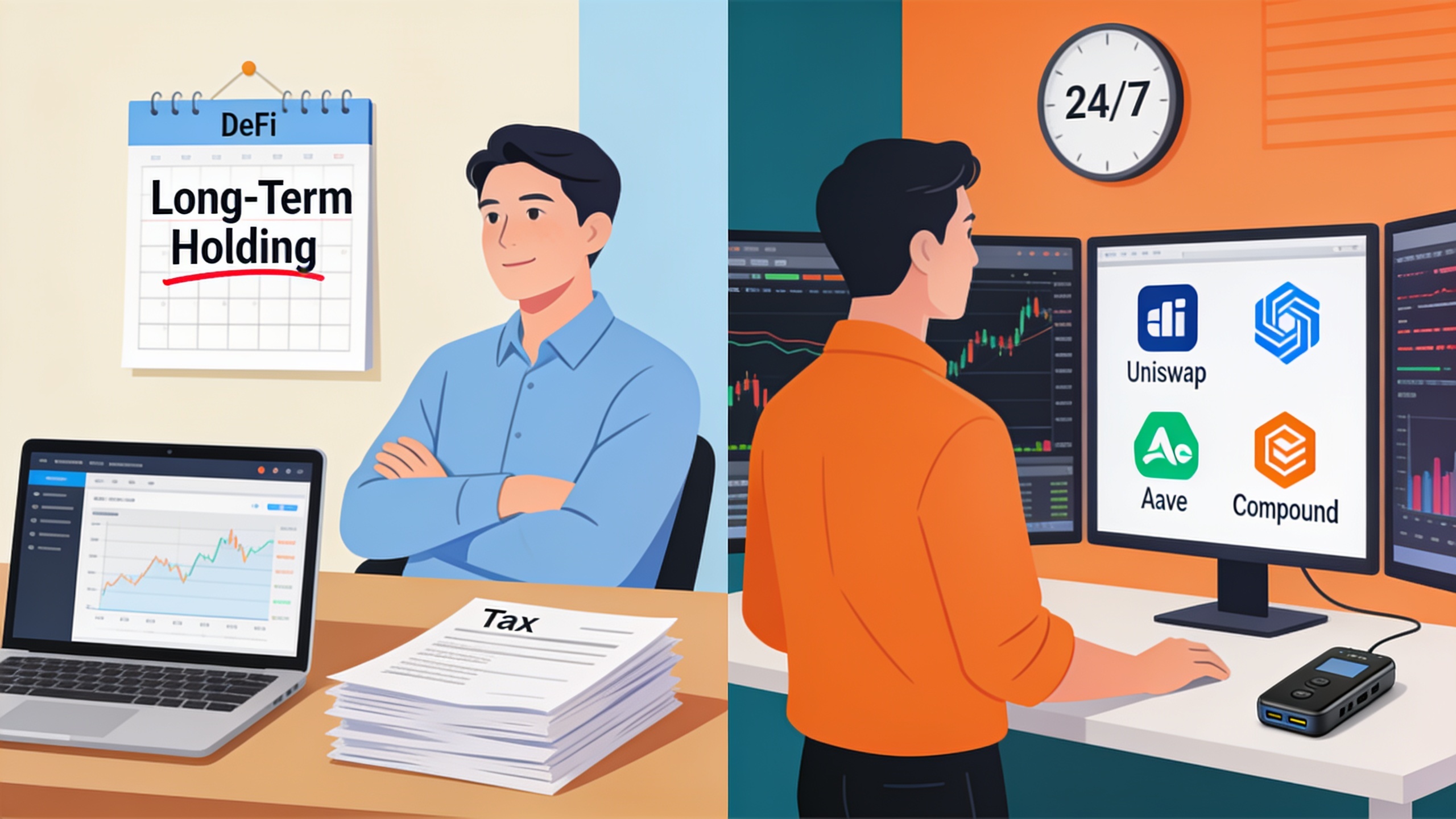
If you're more active and technically comfortable, and you want 24/7 access, the ability to actually use your coins in staking, lending, or on-chain apps, plus full control over custody, then direct ownership gives you flexibility an ETF structurally can't. The price of admission is more responsibility: securing your own keys or vetting your own custodian, tracking your own tax lots, and accepting that self-custody mistakes are usually forever.
Honestly, plenty of people just split the difference. They'll run an ETF as a core long-term position inside a retirement or brokerage account, then hold a smaller stack of coins directly for active trading or hands-on use. Firms trying to understand how investors actually make this call sometimes lean on structured investor research, and platforms like Curio Surveys are built for exactly that: teams that need customizable survey logic to poll traders on things like custody comfort, fee sensitivity, and risk tolerance without getting boxed in by a rigid template. Which is a decent reminder that "which suits you" really is a personal question, not a one-size-fits-all answer.
Frequently Asked Questions {#faq}
Is a Bitcoin ETF the same thing as owning Bitcoin?
Nope. A spot Bitcoin ETF holds real Bitcoin in custody and issues shares that track its price, but what you own is shares of the fund, not the actual Bitcoin. You can't withdraw the coins from an ETF, drop them in a wallet, or send them on-chain. You can only buy and sell fund shares through a brokerage account. That's the whole ballgame in any Bitcoin ETF vs direct ownership decision.
Which is cheaper over the long run, a crypto ETF or buying coins directly?
Depends on your holding period and how much you trade. ETFs charge an ongoing annual expense ratio that compounds over time, while direct ownership is mostly one-time trading and network fees plus optional custody costs. Long-term holders who rarely touch their coins often come out cheaper with direct ownership, while active ETF traders benefit from commission-free brokerage trading and one predictable annual fee instead of piling up on-chain transaction costs.
Can I stake or earn yield on crypto held inside an ETF?
Generally, no. Because the fund's coins are locked up with an institutional custodian for the fund's purposes, ETF shareholders don't get direct access to crypto-native stuff like staking, lending, or DeFi. Those doors only open if you hold the coins directly, either through self-custody or a custodial account that specifically offers those services.
Do I need a crypto wallet to invest in a Bitcoin ETF?
No, and that's honestly one of the biggest selling points. You buy and sell shares through an ordinary brokerage account, exactly like a stock or a regular ETF. No wallet, no private key, no exchange account. It knocks down a real technical barrier for people who want price exposure without having to learn a bunch of crypto custody tools first.
Is direct coin ownership riskier than a crypto ETF?
It carries different risks, not necessarily higher ones across the board. Direct ownership exposes you to self-custody or exchange counterparty risk, which an ETF's institutional custodian setup is designed to reduce. But the ETF brings its own fund-level risks: tracking differences in futures-based products, plus your dependence on the fund manager and custodian actually operating the way they say they will. Choosing between the two really means choosing which risks you'd rather be responsible for managing.
Crypto ETF investing and direct coin ownership aren't really rival answers to the same question. They're two different tools built for two different kinds of people. If you want crypto exposure that slots neatly into a retirement account and a familiar tax form, an ETF nails that. If you want round-the-clock control, on-chain utility, and no fund fee nibbling at your returns every single year, direct ownership was built for exactly that. And a lot of investors end up running both. So the more useful question probably isn't "which one wins." It's "which parts of my portfolio actually need each one."