Crypto Derivatives Explained: Futures, Options, and Perpetual Swaps
A crypto derivative is basically a contract that tracks the price of some coin, Bitcoin, Ethereum, whatever, without you ever actually owning the coin. You're not buying and holding a token. You're...

A crypto derivative is basically a contract that tracks the price of some coin, Bitcoin, Ethereum, whatever, without you ever actually owning the coin. You're not buying and holding a token. You're agreeing to a contract that pays out (or loses) based on where the price goes. That one little shift, trading a bet on the price instead of the asset itself, is the whole ballgame here. And it's why anyone getting serious about digital asset markets eventually has to wrap their head around this stuff.
Here's something that surprises people: on a lot of the big exchanges, derivatives see way more daily volume than spot trading does. This isn't some niche corner of crypto anymore. If you want to hedge risk, use leverage, or run strategies more sophisticated than "buy and pray," then futures, options, and perpetual swaps aren't optional knowledge. They're the foundation. So let's go through each one, how they actually differ, and how people who know what they're doing put them to work.
Table of Contents
- Crypto Derivatives Explained: What They Are and Why They Matter
- What Is Crypto Futures Trading and How Does It Work?
- Crypto Options: Calls, Puts, and Premiums
- Perpetual Swaps: The Crypto Market's Favorite Derivative
- Futures vs. Options vs. Perpetual Swaps: A Side-by-Side Comparison
- How Traders Use Derivatives in Advanced Strategies
- What Are the Risks of Crypto Derivatives Trading?
- How to Get Started Trading Crypto Derivatives Safely
- FAQ
Crypto Derivatives Explained: What They Are and Why They Matter
A crypto derivative is a contract whose value comes from an underlying coin's price rather than the coin itself, which lets you speculate on or hedge against price moves without ever holding the asset. That distinction sounds nitpicky until you realize it unlocks stuff spot trading just can't do. Profiting when a price drops. Locking in a future purchase price. Reducing risk on a position you already have without having to sell it.
The three big ones are futures, options, and perpetual swaps. Each does something different and carries its own risk profile. Futures and options have been around in traditional finance for decades (people use them to trade oil, stock indexes, all sorts of things), but crypto adopted them fast and then went a step further, inventing the perpetual swap, which doesn't really exist in the same form in traditional markets.
So why should a regular crypto investor care about any of this and not just leave it to the institutional desks? Because derivatives let you say something more specific about the market than just "up, please." Instead of buy-and-hope, you can hedge a long-term bag during a scary news cycle, earn a little income off coins you're holding anyway, or short a token you think is way overpriced. It's the natural next step once you've got spot trading down, and it plays nicely with the wider game plan stuff in 5 Crypto Trading Strategies for Volatile Markets.
What Is Crypto Futures Trading and How Does It Work?
Crypto futures trading means buying or selling a contract that locks two parties into exchanging a coin at a preset price on a specific future date. The difference from spot trading is simple: on spot, you own the coin right now. With a futures contract, you're holding a promise about a future transaction, and that promise itself can be bought, sold, and flipped long before it ever settles.
Quick example. Say Bitcoin's at $60,000 today. You think it's going up, so you buy a futures contract expiring in three months at an agreed $62,000. If Bitcoin's trading above $62,000 when that contract expires, you pocket the difference. If it's below, you eat the loss. And because futures usually involve leverage (borrowed capital that amplifies your gains and your losses), a fairly small deposit, called margin, can control a much bigger position than your account balance would suggest.
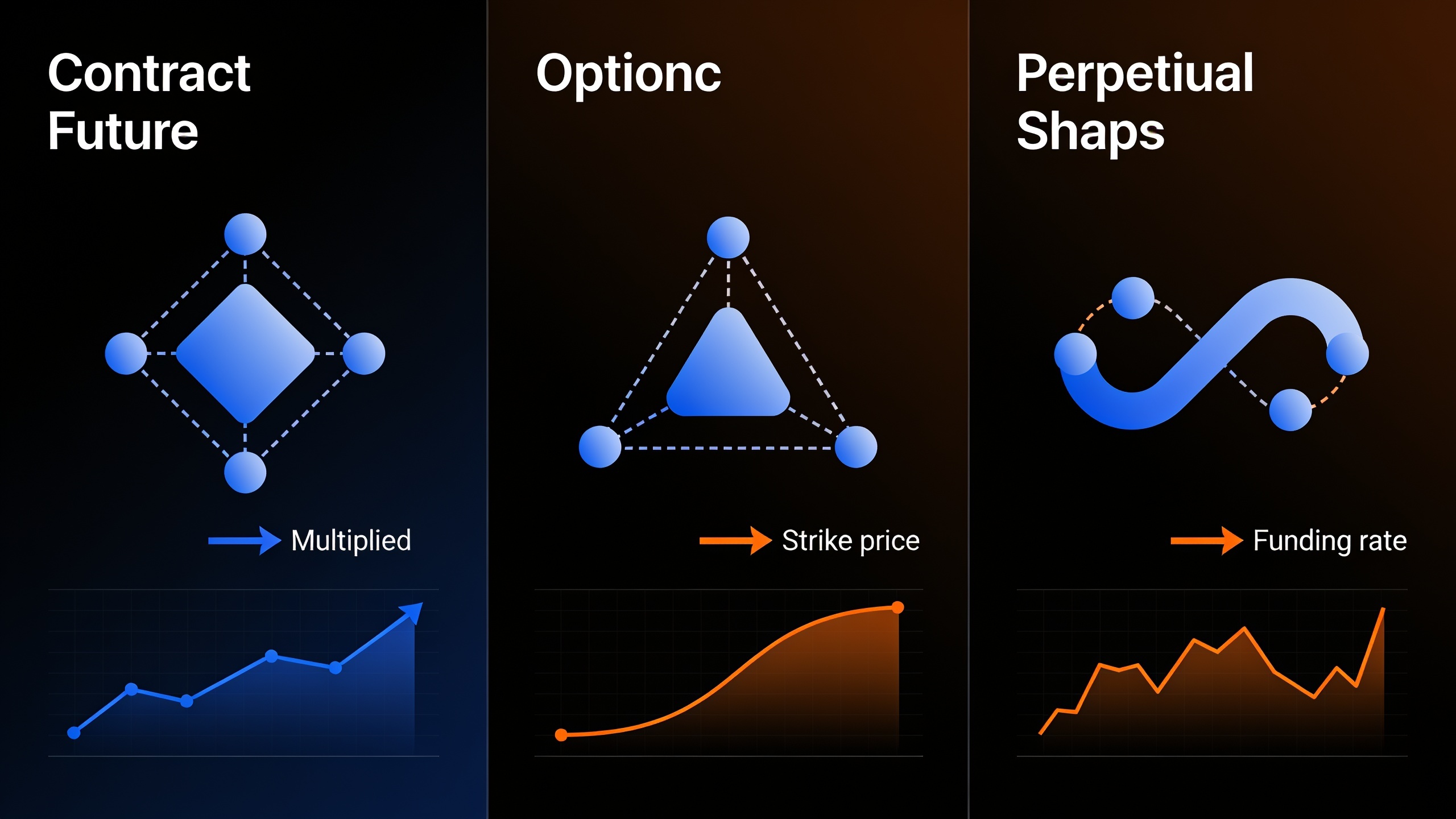
On the major exchanges, you'll mostly run into two flavors. There are fixed-date, or expiry, futures that settle on a specific calendar date, just like traditional commodity futures. And then there are perpetual futures, which never expire at all. We'll get deep into those in a minute.
Why do people love futures? A few reasons. You can short (bet on a decline) just as easily as you go long, the leverage makes your capital go further, and they're a workhorse for miners, funds, and long-term holders who need to hedge. A Bitcoin miner, for instance, might sell futures to lock in a decent price on coins they haven't even mined yet, protecting their revenue if the market tanks before those coins hit their wallet.

But here's the catch, and it's a big one: leverage cuts both ways. A 10x position that moves 10% against you can vaporize your entire margin. That's called liquidation, and it happens fast. Which is exactly why futures are a tool for people who already know what they're doing, not a starting point for beginners.
Crypto Options: Calls, Puts, and Premiums
A crypto option gives the buyer the right, but not the obligation, to buy or sell a coin at a set price before a certain expiration date. That "right, not obligation" bit is the whole point, and it's what separates options from futures, where both sides are locked in no matter what.
There are two basic types. A call option gives you the right to buy the asset at a set price (the strike). You buy calls when you think the price is heading up. A put option gives you the right to sell at a set price, so you buy puts when you think the price is dropping, or when you want to protect a bag you already own.
To get that right, the buyer pays a premium to the seller (who's often called the "writer"). If the market never moves your way before expiration, the option just expires worthless and you're out the premium, and nothing more. That's the beauty of it. A long option has a hard floor on your losses, while a futures position can lose you way more than your initial margin if the market lurches hard the wrong way.
Options aren't just for directional bets, though. A big Bitcoin holder who's nervous about a short-term dip can buy a put as portfolio insurance, paying a small premium to protect a much larger position. It's not so different from how a family buys a defined insurance policy to cover a specific risk. Honestly, the logic tracks pretty closely with how Super Visa Insurance Calgary structures coverage for parents and grandparents visiting Canada: you pay a known upfront cost to guard against one specific downside scenario instead of just leaving yourself exposed.
The sellers, on the other hand, collect that juicy premium income but take on open-ended risk if the market runs against them. This is what makes options genuinely tricky to master. It's not just about calling direction right. Timing matters, volatility matters, and there's this thing called time decay where the option's value bleeds away as expiration creeps closer. Get all three wrong at once and you can be "right" about the market and still lose.
Perpetual Swaps: The Crypto Market's Favorite Derivative
A perpetual swap is a futures contract with no expiration date, so you can hold a leveraged position basically forever as long as you keep enough margin in the account. Perps, as everyone calls them, were popularized by crypto exchanges and are now the single most actively traded derivative in the entire digital asset market. By a mile.
Now, if a contract never settles, the exchange needs some way to keep its price glued to the actual spot price of the coin. That's where the funding rate comes in. It's a periodic payment swapped between longs and shorts, usually every eight hours on the big platforms. When the perp trades above spot, longs pay shorts. When it trades below, shorts pay longs. That constant tug keeps the contract price hugging the real market price, no expiration date required to force things back in line.
People love perps because they mash together the best parts of futures (leverage, easy shorting) with the convenience of never having to roll your position into a fresh contract before it expires. You can open a leveraged long on Ethereum and just... hold it. A day, a month, a year. As long as you manage the funding payments and keep your margin healthy.
But that flexibility has a cost that's really easy to sleep on. Funding rates can go strongly positive during frothy bull runs, which means longs are bleeding a steady ongoing fee just to keep the position open, and I've seen this quietly chew through profits on trades that were otherwise dead right. Before you throw money at any exchange, compare their funding rates and fees. It's the same instinct that makes people cross-check prices across retailers on a site like Waterproof Sole before buying a pair of hiking boots. Same idea, higher stakes.
Futures vs. Options vs. Perpetual Swaps: A Side-by-Side Comparison
Each of these three solves a slightly different problem, and which one's right for you comes down to your goals, your time horizon, and how much risk you can stomach. Here's the quick version.
| Feature | Fixed-Date Futures | Options | Perpetual Swaps |
|---|---|---|---|
| Expiration date | Yes, fixed | Yes, fixed | None |
| Obligation to trade | Yes, for both parties | No, buyer has a right, not an obligation | Yes, for both parties |
| Maximum loss for buyer | Can exceed initial margin | Limited to premium paid | Can exceed initial margin |
| Leverage typically available | Often high | Effectively built into premium/strike structure | Often high |
| Primary use case | Hedging, directional bets with a defined timeframe | Hedging with capped risk, income generation, volatility bets | Continuous leveraged exposure without rolling contracts |
| Ongoing holding cost | None beyond margin/fees | Time decay erodes value | Funding rate payments |
| Complexity for beginners | Moderate | Higher | Moderate to high |
The table makes one thing obvious: there's no single "best" derivative, and anyone who tells you otherwise is selling something. Fixed-date futures fit traders with a time-bound thesis. Options fit people who want defined risk or income plays. Perps fit those who want continuous, flexible leverage without messing around with contract rollovers.
How Traders Use Derivatives in Advanced Strategies
Derivatives are used for way more than simple up-or-down bets. They're building blocks for hedging, income, and arbitrage strategies that experienced traders layer on top of a core portfolio. And honestly, understanding the why behind each strategy will serve you better than memorizing the mechanics.
Hedging Existing Positions
Say you're a long-term Bitcoin or Ethereum holder and you don't want to sell (maybe for tax reasons, maybe pure conviction). You can short futures or buy puts to offset downside during a stretch you expect to be volatile, like a big regulatory announcement or some macro event. This is a defensive move. It's not trying to make you money on its own. It's just trying to smooth out the portfolio's swings so you can sleep at night.
Basis Trading and Funding Rate Arbitrage
Some traders make a living off the price gap between perps and spot, or between a fixed-date future and spot, by holding opposite positions in each at the same time. When funding rates are running hot, for example, you might go long spot and short the perp, collecting funding payments while staying more or less neutral to price direction. These plays tend to be lower-risk than outright directional bets, but don't kid yourself, they demand constant attention to fees, funding, and execution costs. Sloppy execution eats the whole edge.
Volatility and Income Strategies with Options
Options let you run strategies that don't require calling direction at all. You only need a view on how much (or how little) the asset is going to move. Selling covered calls against a bag you're holding, for instance, generates premium income in exchange for capping your upside, a favorite move for people who plan to hold regardless and want to squeeze a little extra yield out of the position. It's conceptually cousin to the yield stuff covered elsewhere, and if you want to broaden your toolkit past derivatives, the tactics in 5 Crypto Trading Strategies for Volatile Markets walk through managing risk when prices are whipping around in both directions.
Advanced strategy work also leans harder on tech and research automation than it used to. Just as traders lean on charting and data tools to sharpen their approach, the content and research side is evolving too. AI-driven platforms like RobinRank are increasingly used to automate research, content publishing, and knowledge-sharing in fast-moving industries like crypto, which is honestly part of why solid educational material on gnarly products like derivatives is so much easier to find now than it was even a few years back.
What Are the Risks of Crypto Derivatives Trading?
The biggest risks in crypto derivatives are leverage-driven liquidation, brutal volatility, counterparty and exchange risk, and the plain difficulty of pricing something like an option correctly. And these don't sit in neat little boxes. They feed each other, which is exactly why derivatives are really only recommended for people who already understand how spot markets tick.
Leverage risk is the one that'll get you fastest. A leveraged futures or perp position can be liquidated, meaning the exchange forcibly closes it, if the market moves enough against you to erode your margin. During a real volatility spike, that can wipe out your entire deposit in minutes. Not hours. Minutes.
Funding and holding-cost risk hits perp traders specifically. You can be completely right about direction and still lose money over time if funding payments keep grinding against your position, especially in a strongly trending market where everyone's piled onto one side.
Then there's complexity and mispricing risk, which shows up most in options. Implied volatility, time decay, strike selection, they all interact in ways that just aren't intuitive when you're new. And selling options in particular can expose you to losses that are, technically, unlimited if the market makes a giant unexpected move. That's not a hypothetical. People have blown up accounts that way.
Don't forget counterparty and platform risk either. Every derivatives trade settles through some exchange or clearing mechanism, and that platform's security, solvency, and regulatory standing matter every bit as much as the trade itself. Ask anyone who had money on a failed exchange.
Oh, and there's a tax angle that's easy to ignore when you're deep in strategy mode. Profits and losses from derivatives generally have to be tracked and reported, and the rules can differ from plain spot trading. If you're building an active derivatives strategy, get comfortable with the reporting side too. It's laid out in detail in the Crypto Tax Guide: What You Need to Know About Trading and Reporting.
How to Get Started Trading Crypto Derivatives Safely
The safest way to start is small position sizes, low leverage, and one product type until the mechanics feel like second nature, then expand slowly as you build experience. Diving straight into high-leverage perps or complicated options spreads is one of the most reliable ways to lose money fast. I'd bet most blown-up beginner accounts started exactly there.
A sensible order looks something like this. First, get comfortable with how margin, liquidation, and funding rates actually behave, using tiny leverage (2x or less) on a fixed-date futures contract, since the expiration date forces you to stay disciplined about managing the position. Next, once that all clicks, start buying options (not selling them), because your risk as a buyer is capped at the premium, which is a much gentler way to learn options pricing than writing uncovered contracts and hoping. Only after both of those feel natural should you touch perps with real leverage or fancier options plays like spreads and straddles.
And before you ever place a single leveraged trade, build your habits around position sizing and risk limits. Decide in advance how much of your portfolio you'll risk on any one position, and then stick to it no matter how good a particular trade feels in the moment. That discipline is usually what separates the traders who survive ugly cycles from the ones who don't, and it runs through pretty much every serious conversation about crypto strategy, including the wider tactics in 5 Crypto Trading Strategies for Volatile Markets.
One last thing, and it doesn't get said enough: trading doesn't have to eat every waking hour of your life. A lot of experienced traders deliberately walk away after they close a session, whether that means grabbing a game with friends somewhere with a proper sports bar atmosphere like Palate Garden in Saginaw, Texas, or just logging off for the night entirely. These markets run 24/7, and burnout is a genuine risk factor that basically never gets mentioned alongside liquidation prices and funding rates. Take the break.
FAQ
So what's the actual difference between a crypto future and a perpetual swap?
A fixed-date future has a set expiration date when the contract settles. A perpetual swap has no expiration at all and instead uses periodic funding rate payments between longs and shorts to keep its price glued to spot.
Are crypto options riskier than futures?
Depends which side you're on. Buying an option caps your max loss at the premium, which is generally safer than a leveraged futures position. Selling (writing) an option, though, can expose you to effectively open-ended losses, which often makes it riskier than a comparable futures trade.
Do I need a big pile of capital to trade crypto derivatives?
Nope. Leverage means you can open a position with less capital than the spot market would require, and that's exactly what makes futures appealing to smaller accounts. But that same leverage magnifies losses just as hard as gains, so trading with more than you can afford to lose is a classic and expensive mistake.
Why do perpetual swaps even have funding rates?
Because a perp has no expiration date to naturally drag its price back toward spot. The periodic payment between longs and shorts works as an ongoing correction, keeping the contract price tethered to the real-time spot price.
Can I lose more than I deposit?
On leveraged products like futures and perps, yes, rapid moves can occasionally leave you owing more than your initial margin, though most major exchanges have liquidation systems built to close positions before it gets that far. With long options, though, your max loss is capped at the premium you paid, which is one of the key structural differences we hit earlier.
Look, crypto derivatives aren't a cheat code for faster profits. They're a set of tools that, used with discipline, let you manage risk and express a much more precise view of the market than spot trading ever could. Whether you're hedging a Bitcoin position, earning income through options, or just trying to finally understand why funding rates move the way they do, putting in the time to learn how futures, options, and perpetual swaps actually work is the thing that separates informed players from the folks who are just along for the ride.