Crypto Staking Guide: How to Earn Passive Income with Digital Assets
If you've got crypto just sitting in a wallet doing nothing, staking is probably the first thing you should look into. It's become the go-to way for holders to squeeze some yield out of coins they...


If you've got crypto just sitting in a wallet doing nothing, staking is probably the first thing you should look into. It's become the go-to way for holders to squeeze some yield out of coins they were going to hang onto anyway. In this guide I'll walk through what staking actually is, how the machinery works under the hood, what kind of returns you can honestly expect (and the risks nobody puts in the flashy ads), plus the exact steps to get started. Whether you're sitting on Ethereum, Cardano, or Solana, once you understand how staking works you can turn a dead portfolio into one that pays you.
And it's gone properly mainstream. A 2024 report from Staking Rewards put the total value staked across proof-of-stake networks north of $60 billion. That's not just crypto nerds anymore. That's institutions, funds, regular people. As more blockchains ditch the energy-guzzling mining model, staking is quietly becoming the default way networks stay secure and pay their participants.
Table of Contents
- What Is Crypto Staking?
- How Does Staking Work?
- Why People Actually Stake Their Crypto
- The Risks Nobody Advertises
- How to Start Staking, Step by Step
- Exchange vs. Wallet vs. Pool: Which Should You Use?
- What Can You Really Earn?
- Taxes, Regulation, and Not Getting in Trouble
- Questions People Actually Ask
What Is Crypto Staking?
Crypto staking is the process of locking up digital assets in a blockchain network to help validate transactions and keep the network secure, and getting paid in crypto for doing it. Think of it as the proof-of-stake version of mining. But instead of burning through electricity to solve pointless math puzzles like Bitcoin does, you're putting up coins as collateral to earn the right to validate blocks.
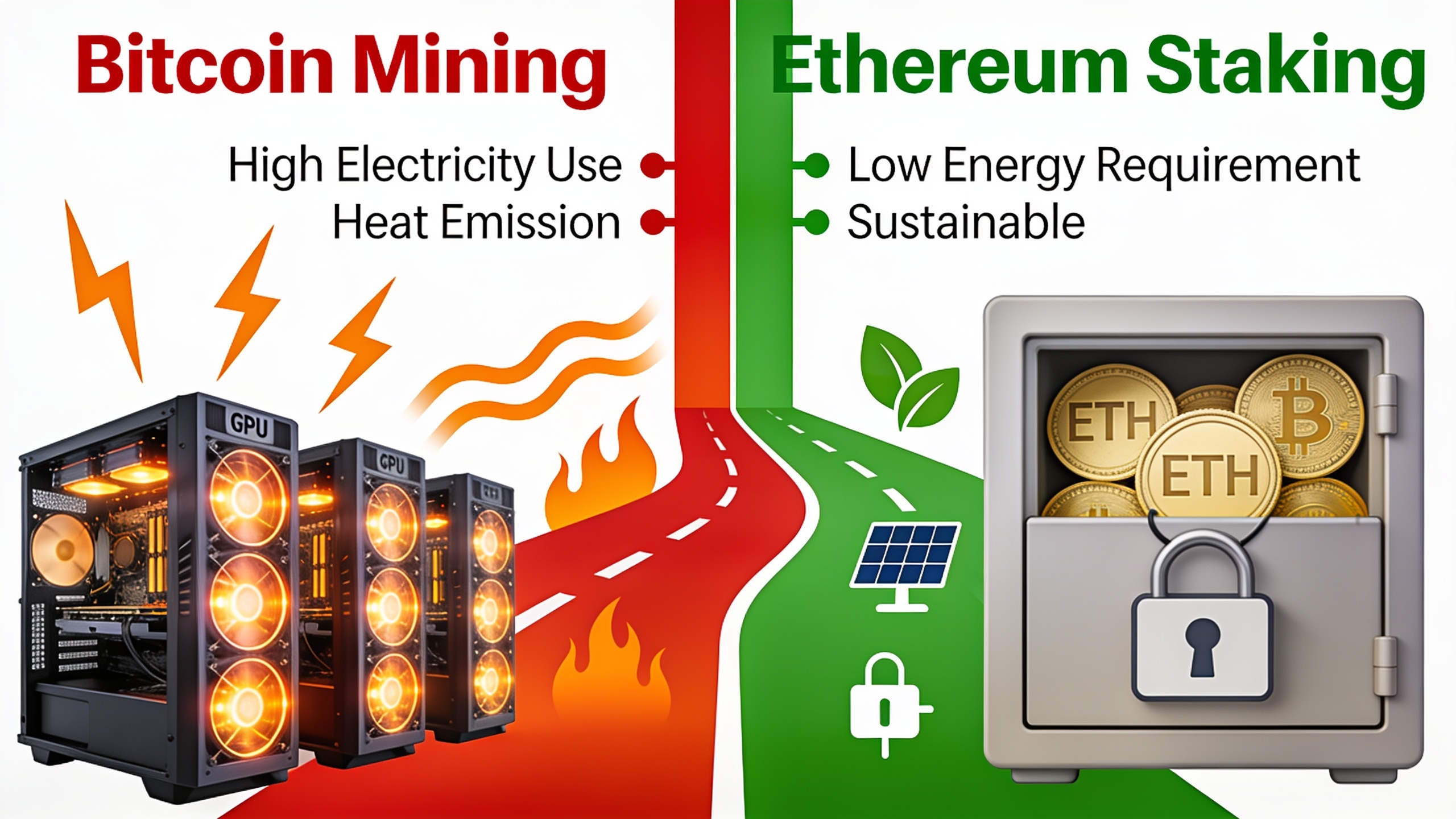
So when you stake something like Ether (ETH), Cardano (ADA), or Solana (SOL), you're basically pledging capital to help secure the network. In return, the protocol hands you freshly minted coins or a cut of the transaction fees. Ethereum's big switch to proof-of-stake back in September 2022 (the event everyone called "The Merge") slashed the network's energy consumption by an estimated 99.95%, according to the Ethereum Foundation. And it opened up staking rewards to millions of ETH holders overnight.
The difference between this and just letting your coins sit there? When you stake, your assets are actually doing something. They're part of how the network runs. That's why people call it passive income, and honestly, for once the buzzword fits.
How Does Staking Work?
Staking works by having validators lock up a minimum amount of crypto as collateral, then using that stake to propose and confirm new blocks on a proof-of-stake chain, earning rewards based on how much and how long they've staked. Bigger stake, longer commitment, better odds of getting picked to validate and collect rewards. Simple enough on the surface.
Validators vs. Delegators (And Why This Matters to You)
There are basically two roles here, and you'll almost certainly be the second one. Validators run the actual node infrastructure. That takes real technical chops, and on Ethereum it takes a minimum stake of 32 ETH, which at most price points is a serious chunk of change. Delegators don't run any hardware at all. You just delegate your tokens to an existing validator or a staking pool, and you get a proportional slice of the rewards minus a small commission.
That delegated setup is the whole reason regular people can stake without owning a server rack or six figures worth of coins. Most of us are delegators, and that's completely fine.
Lock-Up Periods and Slashing
Here's where you need to pay attention. Most PoS networks have an "unbonding" or lock-up period, meaning you can't yank your staked coins out instantly. It varies a lot. Cardano has no lock-up at all, which is nice, while Ethereum's exit queue can take anywhere from a few hours to several days depending on how busy the network is.
Then there's slashing. That's the penalty that chews off a chunk of a validator's stake if they misbehave or go offline for too long. It's a real risk, and it's one you absolutely want to understand before you commit a dollar.
Why People Actually Stake Their Crypto
The main draw is obvious: you earn yield on coins you already own, which turns boring old buy-and-hold into something that actually pays you. Annual percentage yields swing quite a bit depending on the coin. You're looking at roughly 3-5% on Ethereum, 6-8% on Cardano, and sometimes a lot higher on newer or riskier networks, according to data Staking Rewards pulled together in 2024.
But it's not just about the yield. Every coin you stake makes the network a little harder to attack. To pull off a 51% attack, someone would need to control a majority of the total staked supply, and as networks grow that gets absurdly expensive. So more staking means more security, which attracts more users and developers, which... you get the idea. It feeds itself.
There's also a psychological angle I kind of like. Because your coins are locked up, you're way less likely to panic-sell the second the market dips 15% on a Tuesday. It forces a bit of patience on you. For anyone who wants to earn passive income without babysitting charts all day, staking is about as hands-off as crypto gets. Not fully hands-off, mind you, you still need to pick decent validators and platforms. But close.
If you're trying to figure out which coins are worth staking versus just holding, the risk profiles matter a ton. Our guide on altcoins vs Bitcoin risk and reward digs into how wildly volatility differs across asset types, which is exactly the kind of thing you want to weigh before deciding where your staked money goes.
The Risks Nobody Advertises
The big ones: price volatility, being locked in when you'd rather not be, slashing penalties, and platforms or smart contracts blowing up. Any of these can eat your rewards or worse. This isn't a savings account. Your rewards get paid in a volatile asset, so a shiny 5% APY means nothing if the token drops 20% the same month.
Liquidity is the risk that bites people hardest. Locked staking means you often can't touch your funds during a downturn, so you get to sit there watching your portfolio bleed with no way to bail. Some platforms now offer "liquid staking" derivatives, tokens like stETH or rETH that stand in for your staked assets and can be traded or thrown into DeFi. Handy, sure, but they pile on their own smart contract and de-pegging risks. There's no free lunch here.
Validator risk is real too, and it's a bit unfair honestly. If you delegate to a validator that gets slashed for downtime or shady behavior, you can lose part of your stake even though you had zero control over what they did. That's why you actually have to do your homework on a validator's uptime, reputation, and commission rate. It matters as much as picking the right coin.
And then there's the regulators. In 2023 the U.S. Securities and Exchange Commission came after major exchanges over their staking-as-a-service products, arguing some of them looked an awful lot like unregistered securities. If you want a fuller picture of how the rules are shifting, check out our coverage of crypto regulation news and what new laws mean for investors, which lays out how staking products are getting more scrutiny worldwide.
Given all this, financial planning matters in crypto just like it does everywhere else. Talking to a broader wealth resource like Wealthmax can help you figure out where staking rewards fit into your overall picture, instead of treating crypto yield like it's your whole retirement plan. (It shouldn't be.)
How to Start Staking, Step by Step
Getting started is actually pretty painless: pick a proof-of-stake coin, choose how you want to stake it, deposit your tokens, and start earning, usually within a few days. Here's the order I'd go in.
Step 1: Pick your coin. The usual suspects are Ethereum (ETH), Cardano (ADA), Solana (SOL), Polkadot (DOT), and Cosmos (ATOM). They all have different minimums, lock-up rules, and reward rates, so read up on the specific tokenomics before you throw money in.
Step 2: Decide where to stake. Three options basically. A centralized exchange (dead simple, but you give up control), a non-custodial wallet with staking built in (more control, a bit more fiddly), or a staking pool or liquid staking protocol (good middle ground between accessibility and decentralization).
Step 3: Set up a wallet if you need one. Skipping the exchange route? You'll want something like Ledger, MetaMask, or a chain-specific wallet (Daedalus for Cardano, for example) that supports staking.
Step 4: Transfer and delegate. Move your crypto over, then pick a validator or pool. Look for ones with solid uptime (ideally above 99%), fair commission (usually somewhere in the 1-10% range), and no history of getting slashed.
Step 5: Watch it and compound. Rewards usually drip in daily or per epoch (a fixed time chunk on the blockchain, often 1-10 days depending on the network). Plenty of platforms let you auto-restake so your rewards start earning rewards. Compounding is your friend.
Step 6: Track everything for tax time. Keep records of when you got rewards and what they were worth at that moment, because most places treat staking rewards as taxable income. Future you will be grateful.
Staying on top of validator performance and network updates is just part of doing this responsibly. The same way content teams lean on tools like RobinRank to automate their research and publishing grind, crypto investors do better with dashboards and alerts tracking validator uptime and rewards, rather than manually checking everything every single morning. Automate the boring stuff.
Exchange vs. Wallet vs. Pool: Which Should You Use?
It comes down to what you care about most: convenience, control, or squeezing out the highest yield. Here's how the three main approaches stack up.
| Staking Method | Ease of Use | Control Over Keys | Typical Fees | Best For |
|---|---|---|---|---|
| Centralized Exchange (e.g., Coinbase, Kraken) | Very easy — a few clicks | Low (custodial) | Exchange takes 15-25% of rewards as commission | Beginners who prioritize simplicity |
| Non-Custodial Wallet Staking | Moderate — requires wallet setup | High (self-custody) | Validator commission, usually 1-10% | Intermediate users who value security |
| Staking Pools / Liquid Staking Protocols | Moderate — requires research | Medium (pooled custody) | Protocol fee, often 5-10%, plus potential DeFi risks | Users seeking liquidity via derivative tokens like stETH |
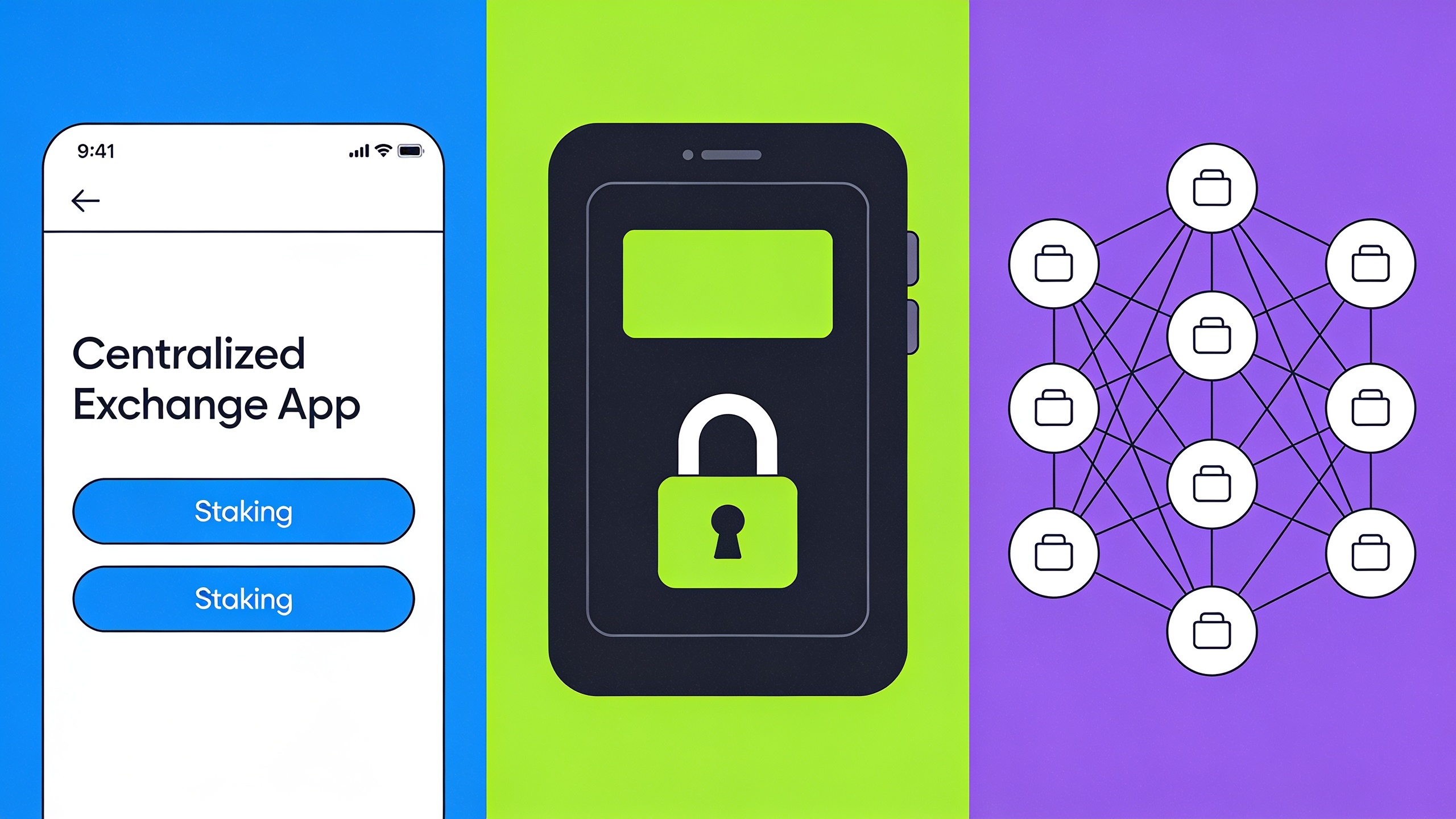
Exchanges are where most people start, and I get why. No private key headaches, no setup, just a few taps. But you're handing custody to a third party, and if 2022 taught us anything it's that "trust me" can go very wrong very fast. Non-custodial wallet staking flips that. You own your assets outright, but the flip side is that if you lose your seed phrase, those coins are gone forever with nobody to call. Liquid staking protocols like Lido or Rocket Pool land somewhere in the middle, giving you tradeable receipt tokens so you stay liquid while still earning, but layering smart contract risk on top of the usual staking risk. Pick your poison.
What Can You Really Earn?
Realistically you're looking at 3% to 10% a year on most networks, with some newer or higher-risk chains flashing rates above 15-20%. Just know those big numbers usually come with more volatility or heavy token inflation. As of 2024 data from Staking Rewards, Ethereum sits around 3-4%, Cardano around 3-4%, Polkadot near 10-14%, and Cosmos anywhere from 8-15%. And these numbers move. The more validators pile in, the more the rewards get diluted per person.
Now here's a distinction most people miss, and it's important. Nominal yield isn't real yield. If a network advertises 10% APY but pumps out 8% new supply every year, then people who don't stake are getting quietly diluted, while stakers just about hold onto their share of the network. So a lot of the time, staking isn't really printing you free money. It's protecting your slice of the pie. Not as sexy, but true.
Compounding, though, genuinely helps over the long haul. Reinvest your rewards instead of cashing them out and it snowballs, same as compound interest at a bank. The catch, of course, is that unlike a bank account your principal is still fully exposed to crypto's mood swings.
Taxes, Regulation, and Not Getting in Trouble
In most countries, the U.S. included, staking rewards count as ordinary income the moment you receive them, valued at fair market price, and then get hit with capital gains tax again when you eventually sell. The IRS spelled this out in Revenue Ruling 2023-14, confirming that rewards have to be reported as income in the year you gain "dominion and control" over them. Basically, the second you can freely move or sell those tokens, the clock starts.
So keep good records. Seriously. A lot of platforms give you downloadable transaction histories, but if you're staking across a few wallets or validators, you'll need to track reward dates, amounts, and USD values yourself or with crypto tax software. Mess this up and you're looking at audits or penalties, which is why talking to a tax pro who actually gets digital assets is worth it, especially if you're staking meaningful amounts.
Outside the U.S. things are moving fast too. The EU's Markets in Crypto-Assets regulation (MiCA), fully in effect in 2024, brings in licensing requirements for crypto service providers, staking services included, all in the name of consumer protection across member states. Worth keeping an eye on. Our breakdown of what new crypto regulations mean for investors has more on how these compliance rules are reshaping the whole industry.
Questions People Actually Ask
Is staking crypto safe?
Safer than day-trading, but definitely not risk-free. The main things to worry about are the price of your staked asset tanking, slashing penalties if your validator screws up, and custodial risk if you're staking through a centralized exchange. Pick reputable validators and actually read the lock-up terms and you cut your exposure way down.
Can I lose money staking crypto?
Yep. Even though staking piles more tokens onto your balance, the total value can still drop if the coin's price falls faster than your rewards add up. And slashing events or a platform going under can hit your principal directly. More tokens doesn't always mean more money.
How is staking different from crypto mining?
Mining (the proof-of-work model Bitcoin uses) needs specialized hardware crunching math puzzles and gulps down electricity. Staking (proof-of-stake, like Ethereum and Cardano) just needs you to lock up capital instead of raw computing power. Way more energy-efficient, and way more accessible if you don't feel like buying a rack of GPUs.
What's the minimum I need to start staking?
Depends on the network and method. Running your own Ethereum validator takes 32 ETH, which is a lot. But delegating through an exchange or pool often has no minimum or a tiny one. Some platforms let you stake with as little as $1-10 worth of a supported token, so you can dip a toe in.
Do I have to use an exchange, or can I do it myself?
You can absolutely do it yourself with a non-custodial wallet or by running your own validator node, which gives you full control of your keys but takes more technical effort. Exchanges and pools make it way easier but charge higher commissions and require you to trust them with custody. Trade-offs all the way down.
Staking has grown up. It went from a niche thing only technical folks messed with into one of the most accessible ways to earn passive income straight from a wallet or exchange app. But like anything that pays you over time, it rewards patience and diligence and diversification, not chasing whatever coin is flashing the biggest APY that week. The same way people in totally unrelated fields (say, officers using platforms like State6 to methodically prep for career moves) do better with a structured, informed approach than with shortcuts, crypto investors who treat staking as a long-term, research-driven play tend to come out ahead of the yield-chasers. And hey, after a solid week of watching validators and stacking compounded rewards, there's nothing wrong with celebrating over a good meal somewhere like Palate Garden, where sports-bar energy meets Nepali-Indian dining. Smart investing should still leave room to enjoy the returns.