Altcoins vs Bitcoin: Understanding Risk and Reward
Sooner or later, every crypto investor hits the same fork in the road. Do you stick with Bitcoin and its (relative) calm, or do you go chasing the wild upside of altcoins, knowing full well the...

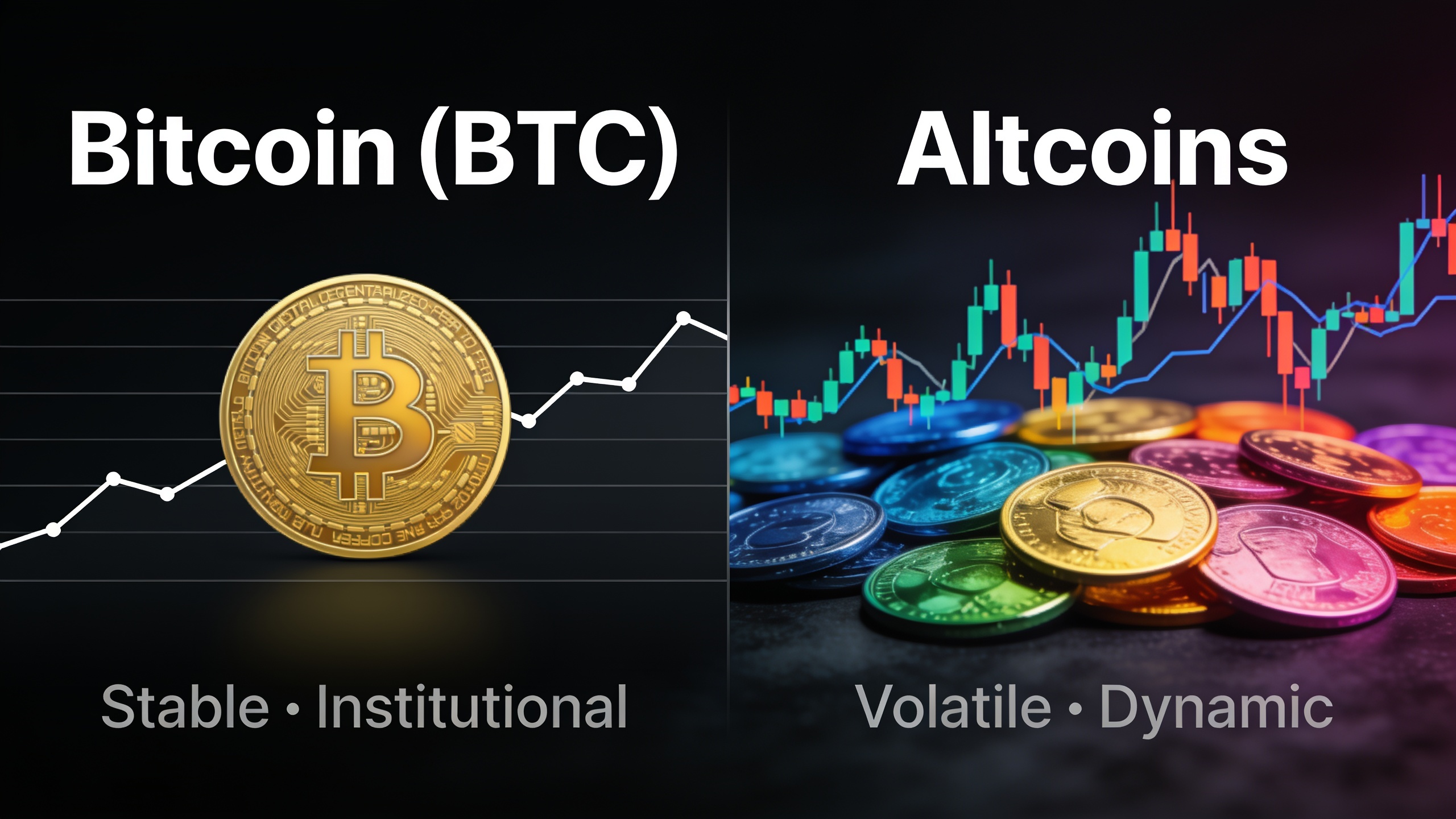
Sooner or later, every crypto investor hits the same fork in the road. Do you stick with Bitcoin and its (relative) calm, or do you go chasing the wild upside of altcoins, knowing full well the downside can be just as wild? And it's not really a taste thing. It's structural. Market cap, liquidity, adoption curves, how much pain you can stomach when the chart bleeds red. Bitcoin, the oldest and biggest coin out there, just doesn't move the way the thousands of alternatives that came after it do. If you're putting money into either one, you'd better know why they behave differently.
So that's what I want to unpack here. How Bitcoin and altcoins actually stack up on volatility, size, growth, and risk, and how you might think about splitting your money between them without losing your shirt.
Table of Contents
- Altcoins vs Bitcoin: What's the Core Difference?
- How Volatile Are Altcoins Compared to Bitcoin?
- Market Capitalization: Why Size Shapes Crypto Investment Risk
- Growth Potential: Can Altcoins Outperform Bitcoin?
- What Are the Biggest Risks of Altcoins vs Bitcoin?
- How Should You Balance Bitcoin and Altcoins in a Portfolio?
- Regulatory and Institutional Forces Reshaping the Landscape
- Frequently Asked Questions
Altcoins vs Bitcoin: What's the Core Difference?
Bitcoin is a decentralized digital currency with a hard cap of 21 million coins, built mainly to be a store of value and a way to move money, while altcoins are basically everything else. Ethereum, Solana, Cardano, and thousands of smaller tokens that showed up after Bitcoin and usually do something different technically. The word "altcoin" is just short for "alternative coin," and honestly it's a ridiculously broad bucket. Smart-contract platforms, stablecoins, meme coins, weird little utility tokens that maybe forty people use. All lumped together.
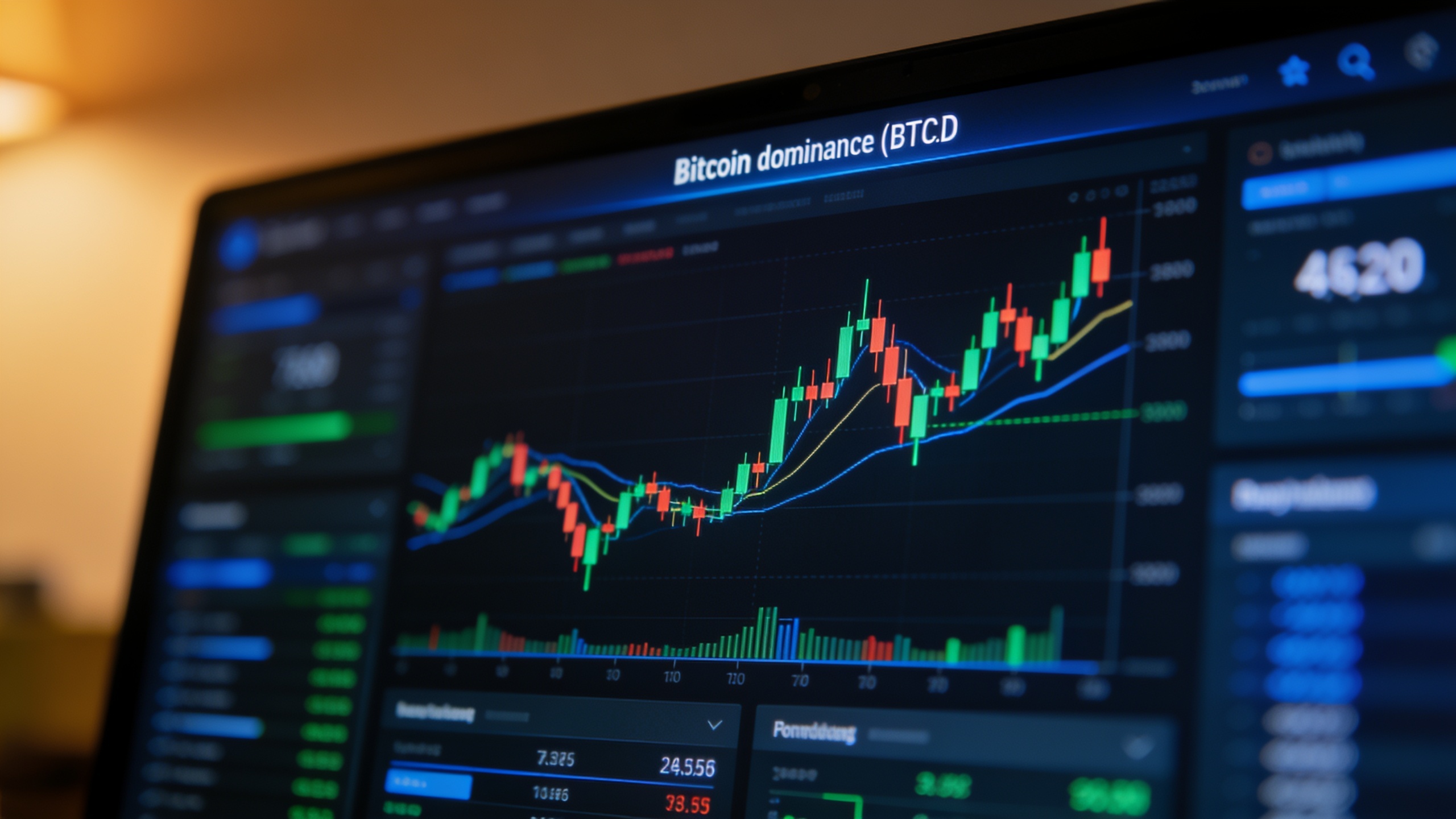
There's this metric people watch called "Bitcoin dominance," which is just Bitcoin's slice of the total crypto market cap. It's historically bounced around between 40% and 60%, according to CoinMarketCap. And that one number tells you more than you'd think. When dominance climbs, money's piling into Bitcoin and abandoning the smaller stuff, usually because people are scared. When it drops, folks are rotating into altcoins hunting for bigger returns. That's the classic "altcoin season" everyone gets excited about.
Here's how I'd sum it up. Bitcoin is starting to act like a macro asset with a serious institutional crowd behind it. Most altcoins? They're closer to early-stage tech bets, with all the venture-capital-style feast-or-famine that implies. That single difference in temperament basically explains everything else in this article.
How Volatile Are Altcoins Compared to Bitcoin?
Altcoins are, on average, way more volatile than Bitcoin, with smaller-cap tokens routinely swinging two to five times harder than Bitcoin on any given day. Volatility just means how much and how often the price bounces around, and it's probably the cleanest way to actually measure crypto risk in numbers.
Bitcoin's annualized volatility has generally sat between 40% and 80% in recent years, depending on the mood of the market, according to CoinGecko and various crypto volatility indexes. Now, that's still enormous next to traditional stuff. The S&P 500 usually runs around 15-20%. But compared to a lot of altcoins? Bitcoin looks downright sleepy. Mid- and small-cap altcoins can blow past 100-150% annualized volatility, and it's not remotely shocking for a token to shed 30% of its value in a single day after some bad headline, a delisting, or a liquidity crunch that nobody saw coming.
And this cuts both ways, which people forget when they're only staring at the upside. It's exactly why altcoins can hand you insane gains in a short window. Solana went from under $1 in early 2021 to over $250 by that November, which is the kind of run that makes people quit their jobs. But it's also why the crashes are brutal. Even Ethereum, the second-biggest coin out there, dumped more than 75% from its 2021 peak in the bear market that followed. Proportionally worse than Bitcoin over the same stretch.
Why Smaller Coins Swing Harder
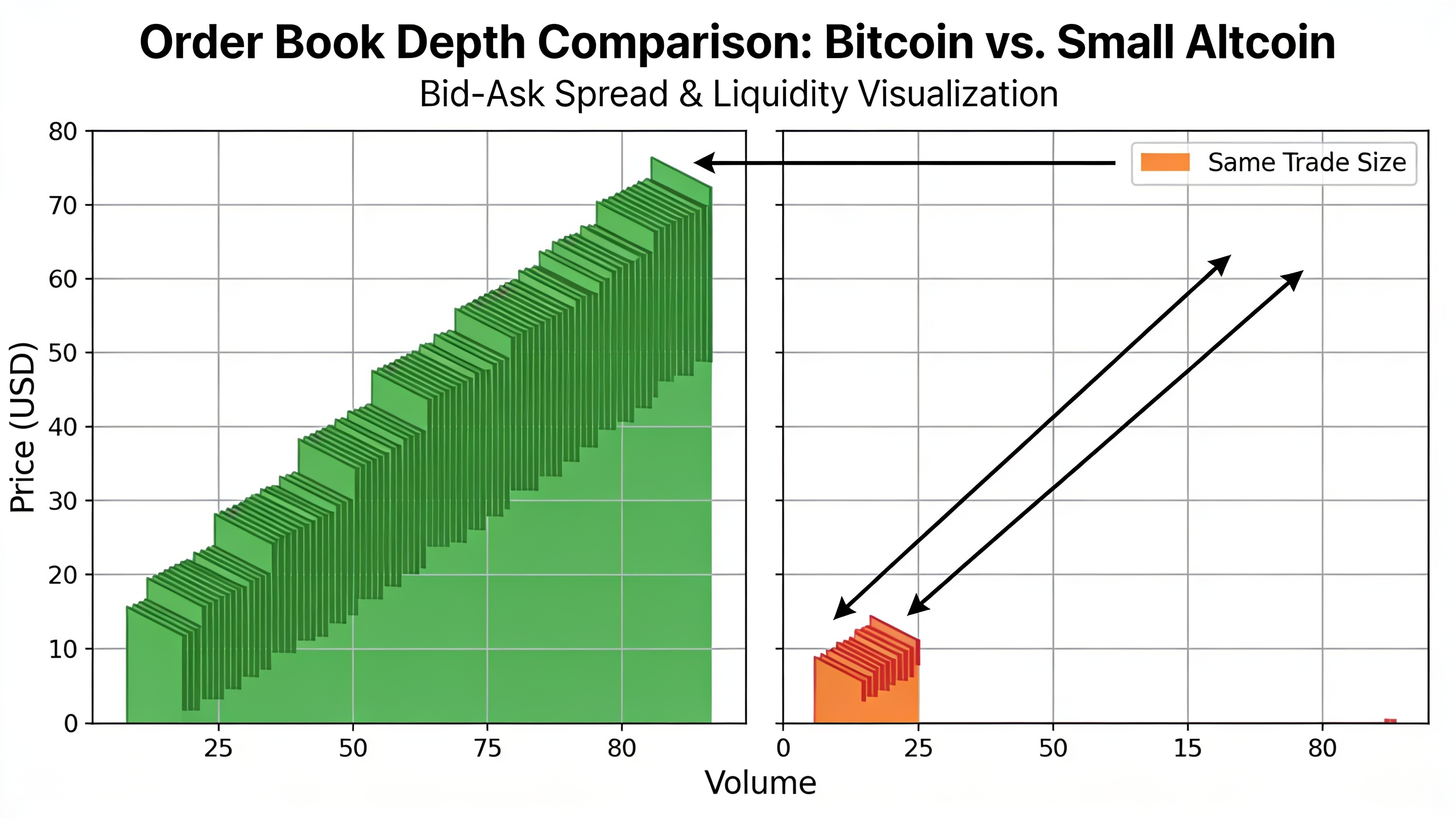
Thin liquidity is the main culprit. When a token has a shallow order book and not many active traders, even a medium-sized buy or sell can shove the price around. Bitcoin's the opposite. Its liquidity is deep and spread across hundreds of exchanges, and now propped up further by spot Bitcoin ETFs in places like the US, so it can absorb big trades without flinching nearly as much.
Market Capitalization: Why Size Shapes Crypto Investment Risk
Market cap (price times circulating supply) is one of the best predictors of how risky a coin is, and it's really the thing that separates Bitcoin's behavior from the rest of the pack. Bitcoin's market cap has generally stayed north of $1 trillion during bull cycles, which dwarfs every altcoin, Ethereum included. Ethereum usually sits second at roughly a third to a half of Bitcoin's value, depending on where we are in the cycle.
Bigger market caps tend to mean lower volatility and deeper liquidity, simply because it takes a lot more money to move the price, and there are enough holders that no single whale can tank things by dumping. That's why analysts sort crypto into large-cap (Bitcoin, Ethereum), mid-cap (the established alts like Chainlink, Avalanche, Polkadot), and small- or micro-cap tokens. Same idea as how stock markets get sliced up.
| Metric | Bitcoin (BTC) | Large-Cap Altcoins (e.g., ETH, SOL) | Small/Micro-Cap Altcoins |
|---|---|---|---|
| Typical market cap | $1T+ | $20B–$400B | Under $1B |
| Annualized volatility | ~40%–80% | ~60%–100% | 100%+ |
| Liquidity depth | Very high, global | High, but exchange-dependent | Often thin, fragmented |
| Institutional adoption | Strong (ETFs, corporate treasuries) | Growing steadily | Minimal to none |
| Growth ceiling per cycle | Moderate, more predictable | High but uneven | Highest potential, highest failure rate |
| Historical drawdowns | 50%–80% in bear markets | 70%–90%+ in bear markets | Frequently 90%+ or total loss |
That table is basically the whole altcoins vs Bitcoin trade-off in one grid. As market cap shrinks, both the potential upside and the potential to lose everything get bigger. A $500 million token can 10x a lot faster than Bitcoin ever will, sure. But it can also go straight to zero if the project fails, gets hacked, or just quietly loses its developers. Which happens more than you'd think. That's a fate that's statistically way less likely for Bitcoin, given its 15-plus years and its network effect.
Growth Potential: Can Altcoins Outperform Bitcoin?
Altcoins have absolutely crushed Bitcoin during certain bull phases, but they also tend to fall harder in downturns, so their long-term risk-adjusted returns are a much bumpier ride. During the 2020-2021 run, coins like Solana, Avalanche, and Dogecoin posted percentage gains that made Bitcoin look boring. Small market caps just grow faster proportionally when money starts flooding in.
But "growth potential" needs some context, because a raw percentage gain doesn't tell you much about risk. Bitcoin's compound annual growth rate since 2013 has still beaten pretty much every traditional asset class over rolling multi-year periods, even after you account for those gut-wrenching drawdowns, according to long-term performance data from Messari and CoinMetrics. Meanwhile, a ton of the altcoins that mooned in 2021 never got anywhere near those highs again. There's even a name for it, "permanent altcoin underperformance," where a coin's all-time high just becomes a ceiling it never touches again thanks to token unlocks, dilution, or the use case going stale.
Ethereum is the big exception, and it's worth calling out. Its switch to proof-of-stake in September 2022, plus its lock on DeFi and tokenization, has kept it as the clear number-two even though its price hasn't recovered as sharply as Bitcoin's in the latest cycle. Which really drives home the point that growth potential in altcoins is a coin-by-coin thing, not a blanket trait. Some altcoins are genuine infrastructure. Others are just casino chips with a nice website.
If you're digging into growth potential, it helps to borrow the same diversification habits you'd use anywhere else. The way someone scrolling through property listings on a platform like Viviendalista would weigh a few neighborhoods, price trends, and property types before dropping serious money, crypto investors ought to compare a token's use case, developer activity, tokenomics, and competition before assuming last cycle's rocket ride will happen again.
What Are the Biggest Risks of Altcoins vs Bitcoin?
The biggest things that separate altcoin risk from Bitcoin risk are project failure, liquidity, regulation, and concentration, and all four hit altcoins harder. Bitcoin's risks are mostly the big-picture kind (interest rates, some ugly piece of restrictive legislation), while altcoins carry all of those plus a whole extra layer tied to the dev team, smart contract security, and whether anyone actually ends up using the thing.
Project and Technology Risk
Most altcoins are backed by a specific company, foundation, or team, which means their value lives and dies by whether that team ships, stays secure, and keeps users around. Smart contract exploits, bridge hacks, projects that just get abandoned. That stuff has vaporized billions across the altcoin space. Chainalysis has documented hundreds of millions of dollars lost annually to DeFi hacks and exploits in various years, and that whole category basically doesn't apply to Bitcoin's simpler, more battle-tested protocol.
Liquidity and Exit Risk
Thin order books mean some altcoin holders find out the hard way, usually mid-crash, that they can't actually sell without cratering the price on themselves. This "exit risk" is a huge chunk of crypto risk, and it's the one newer investors chasing big percentages almost never check. Go look at the daily trading volume before you buy. Seriously.
Regulatory Classification Risk
Regulators, the SEC especially, have gone after various altcoin issuers over whether certain tokens are actually unregistered securities. That's a legal gray zone that mostly leaves Bitcoin alone, since US regulators have been pretty consistent about treating it as a commodity. This kind of uncertainty is unique to altcoins, and it can trigger exchange delistings or trading restrictions with barely any warning.
Concentration and Team Risk
A lot of altcoins have their supply bunched up among the founding team, early investors, or VC funds, which sets up the risk of huge token unlocks dumping onto the market and crushing the price. People call it "sell pressure." Bitcoin sidesteps this entirely, because its mining-based issuance is distributed and nobody controls some big contractually scheduled release of new coins.
How Should You Balance Bitcoin and Altcoins in a Portfolio?
Most analysts covering digital assets say to anchor your crypto portfolio with a heavier Bitcoin position and treat altcoins as a smaller, riskier satellite, sized to your own tolerance and time horizon. There's no magic formula, but a framework a lot of crypto advisors lean on puts 50-70% in Bitcoin, 15-30% in large-cap altcoins like Ethereum, and a smaller 5-15% "speculative sleeve" for the small-cap and emerging stuff. It's basically core-satellite portfolio construction dressed up in crypto clothing.
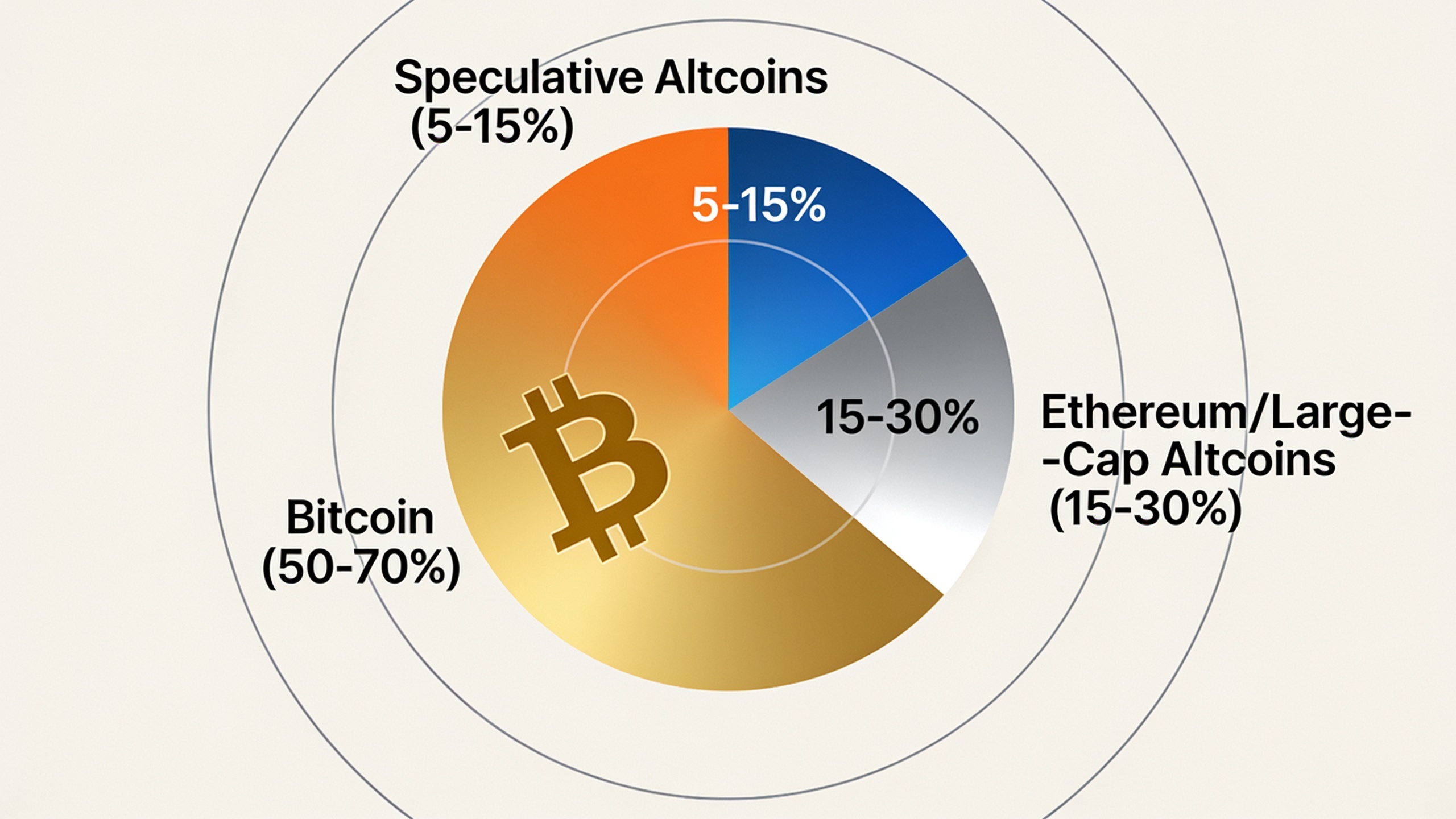
The logic is pretty simple. Bitcoin's steadiness and deep liquidity keep the whole thing from imploding, while a controlled altcoin allocation gives you a shot at the big upside without betting the farm on some project that might not exist next year. If you want a proper deep dive on building this out, including specific weightings across DeFi, Layer-2 networks, and infrastructure tokens, check the guide on how to build a diversified crypto portfolio in 2025. It walks through real allocation models for different risk profiles.
Rebalancing and Behavioral Discipline
Crypto moves fast, so keeping a target allocation means rebalancing every so often. Trimming the stuff that's ballooned and topping up the stuff that's shrunk relative to your targets. Sounds easy. It is not. Especially during a euphoric rally when selling a winning altcoin feels like the dumbest thing you could possibly do. Some people use tracking tools to keep themselves honest here. General-purpose goal and habit apps like Xenith can work for logging your investment rules, your rebalancing schedule, and a decision journal, basically applying the same discipline you'd use for personal productivity to your portfolio. The whole point is to get emotion out of the driver's seat, because this market is practically engineered to trigger both FOMO and panic.
Time Horizon Matters
If you've got a multi-year horizon, you can generally stomach more altcoin volatility than someone looking for a quick flip, because a lot of altcoin theses (layer-1 scaling, tokenized real-world assets, decentralized AI infrastructure) need years to actually play out. Shorter horizon? Then leaning heavier on Bitcoin makes sense, given its lower volatility and better track record of clawing back after crashes.
Regulatory and Institutional Forces Reshaping the Landscape
Institutional money has leaned toward Bitcoin over altcoins lately, mostly because the regulatory picture cleared up for Bitcoin way faster than for the alternatives. When spot Bitcoin ETFs got approved in the US in January 2024, it swung the door open for pension funds, wealth managers, and corporate treasuries to buy Bitcoin exposure through regulated, familiar products. That pulled billions into Bitcoin in its first year of trading, according to data from issuers and trackers like BlackRock and Farside Investors.
Ethereum got its own spot ETFs later in 2024, which closed the access gap a bit, but the broader altcoin market still doesn't have comparable regulated products. So most altcoin exposure still runs through plain old exchange buys instead of institutional-grade vehicles. This tilt toward Bitcoin, and to a lesser degree Ethereum, has reinforced that dominance metric from earlier and changed how capital sloshes around during cycles. For a wider look at how the big institutional players are messing with price discovery, liquidity, and volatility, there's solid coverage on how institutional investors are reshaping the crypto market that digs into the downstream effects on altcoin trading.
This doesn't kill altcoin opportunity, to be clear. It just changes who's providing the liquidity and price support. Retail, VC funds, and crypto-native trading firms still dominate most altcoin markets, which is exactly why volatility stays cranked up compared to Bitcoin's increasingly institutional order flow. Some altcoin projects have leaned hard into marketing and content to build retail awareness and community demand, because in a market where attention tends to show up before the money does, crypto projects increasingly use AI-driven content and SEO platforms like RobinRank to scale visibility, publish research, and grow the kind of organic community that can actually help hold liquidity together when things get choppy.
Sector Diversification Beyond Crypto
Experienced investors often compare altcoin sector diversification to spreading bets across totally unrelated industries. Think about a specialized software platform like Medinex, which serves the NDIS and disability support sector in Australia. It shows the value of going deep in a narrow but genuinely essential niche. Some altcoins do the same thing, carving out durable value by solving one specific technical problem really, really well. Decentralized storage, oracle networks, cross-chain interoperability, whatever it is, rather than trying to be a general-purpose money like Bitcoin. Figuring out which altcoins own a defensible niche versus which are just surfing a narrative is honestly one of the more reliable ways to tell real growth potential from short-term hype.
Frequently Asked Questions
Is Bitcoin actually less risky than altcoins?
Generally, yeah. Bitcoin's bigger market cap, deeper liquidity, longer history, and growing institutional backing make it less volatile and less likely to just fail outright than most altcoins. That said, Bitcoin still carries real crypto risk next to traditional assets, including regulatory curveballs and some serious drawdowns in bear markets. It's "less risky," not "safe."
Do altcoins ever beat Bitcoin over the long run?
Some do, mostly the established large-caps like Ethereum that have actually built lasting infrastructure and network effects. But the majority of altcoins that spike hard fail to hold onto those gains over multi-year stretches. Historical data shows a big share of tokens that hit all-time highs during a bull cycle never get back there, so consistently beating Bitcoin over the long haul is rare, not the norm.
How much of my crypto should be Bitcoin versus altcoins?
No single right answer, but a lot of crypto-focused analysts land somewhere around 50-70% Bitcoin, with the rest split between established large-cap altcoins and a smaller speculative bet on emerging tokens. Adjust it to your own risk tolerance and how long you're planning to hold.
Why are altcoins so much more volatile than Bitcoin?
Smaller market caps and thinner liquidity, mostly. Smaller trades move their prices way more dramatically. On top of that they carry extra risk layers, like depending on one specific dev team, smart contract bugs, and getting caught up in regulatory classification fights, all of which crank up the swings.
Should a beginner start with Bitcoin or altcoins?
Most educators say start with Bitcoin, maybe Ethereum too, before touching the smaller stuff. These two have the deepest liquidity, the longest track records, and the most educational material out there. Getting a feel for market cycles using large-caps first usually saves beginners from expensive mistakes before they wander into the higher-risk, higher-reward altcoin territory.
At the end of it, Bitcoin and altcoins aren't really competing for the same job. Bitcoin is crypto's foundational store-of-value asset with comparatively measured volatility, and altcoins span a whole spectrum, from legit infrastructure all the way down to speculative science experiments. So the altcoins vs Bitcoin decision really just comes down to being honest with yourself. How long can you hold, how much of a drawdown can you actually stand, and how much homework are you genuinely willing to do on individual projects before you put money on the line.