Memecoin Investing in 2025: Are Dogecoin & Shiba Inu Still Worth It?
Memecoins are the crypto version of an inside joke that somehow became a financial asset. Their value doesn't come from a product, a revenue model, or some clever bit of engineering. It comes from...


Memecoins are the crypto version of an inside joke that somehow became a financial asset. Their value doesn't come from a product, a revenue model, or some clever bit of engineering. It comes from internet culture, a loud and loyal community, and whatever happens to be trending that week. Dogecoin and Shiba Inu are still the two names most people picture when they hear the word, and in 2025 they're still cranking out headlines, viral posts, and endless arguments about whether they belong in a real portfolio or should just be treated as fun money you can afford to lose.
So let's actually talk about it. What's driving these coins this year, how do they stack up against altcoins that have real tech behind them, and how do you tell the difference between hype that fizzles in three weeks and something with genuine legs?
Table of Contents
- What Is Memecoin Investing, and Why Does It Keep Making Headlines?
- Dogecoin in 2025: From Internet Joke to Crypto Mainstay
- Shiba Inu in 2025: Can the "Dogecoin Killer" Sustain Its Ecosystem?
- What's Driving Meme Cryptocurrency Trends This Cycle?
- Memecoins vs. Fundamentally-Backed Altcoins: How Do They Compare?
- What Are the Biggest Risks in Memecoin Investing?
- How to Spot Hype vs. Long-Term Potential
- Is Memecoin Investing Worth It in 2025? Practical Takeaways
- FAQ
What Is Memecoin Investing, and Why Does It Keep Making Headlines?
Memecoin investing means putting money into tokens whose value comes mostly from cultural relevance, humor, and coordinated online communities rather than from technology, cash flow, or any defined use case. A token built to power a lending protocol or a payments network has an actual job. A memecoin's "product" is attention. That's it. The whole game is spreading fast across X, Reddit, TikTok, and Telegram, and turning all those eyeballs into buying pressure.
And that's exactly why these coins keep grabbing headlines. They just don't behave like the rest of the market. Regular altcoins get judged on developer activity, transaction volume, partnerships, the boring stuff. Memecoins get judged on trending hashtags, celebrity shoutouts, and how fast a Discord server can organize a coordinated buy. The volatility swings both ways, obviously. It produces those insane rallies you read about, and it produces equally brutal collapses the second the crowd wanders off to the next shiny thing. If you're somewhere in the 25 to 45 crowd and already used to crypto's mood swings, memecoins are about the purest example of a sentiment-driven market you'll find. Which is exactly why nobody can stop talking about them.
Dogecoin in 2025: From Internet Joke to Crypto Mainstay
Dogecoin is the original memecoin, full stop. Two software developers, Billy Markus and Jackson Palmer, cooked it up in 2013 as a joke, a parody of the whole crypto frenzy happening at the time, and slapped the Shiba Inu dog from the "Doge" meme on it as a mascot. Here's the funny part: it was never supposed to last. And yet it's outlived thousands of tokens that launched with dead-serious ambitions and a whitepaper full of buzzwords. That alone tells you something about how far community loyalty can carry an asset, tech be damned.
In 2025, Dogecoin's relevance still comes down to brand recognition and its status as one of the most talked-about digital assets on the planet. It's probably the easiest crypto for a newcomer to recognize by name, and it's survived multiple full market cycles, booms and busts and all, without vanishing. Supporters love pointing that out. To them, Dogecoin has quietly built something closer to a durable cultural brand than your typical here-today-gone-tomorrow meme token.
But let's be honest about the tech, because that hasn't evolved nearly as fast as the hype has. Dogecoin is still a proof-of-work blockchain built on Litecoin's old codebase, and it doesn't have the smart-contract programmability that powers most of the newer altcoin ecosystems. So its 2025 pitch rests almost entirely on brand strength, the size of its community, a handful of merchants accepting it, and its role as the low-friction "gateway" coin that a lot of new retail investors buy first before they know any better. Is that enough to justify buying it? Depends on you. Your risk tolerance, your time horizon. There's no new technical breakthrough tipping the scales here.
Shiba Inu in 2025: Can the "Dogecoin Killer" Sustain Its Ecosystem?
Shiba Inu showed up in 2020, created by an anonymous developer (or group) going by "Ryoshi," and it was marketed straight-up as a "Dogecoin killer." The idea was to copy Dogecoin's viral magic but bolt an actual ecosystem onto it. Unlike Doge, Shiba Inu was built as an ERC-20 token on Ethereum, which meant the team could keep stacking features on top over time. A decentralized exchange called ShibaSwap. Then later, its own layer-2 network, Shibarium, meant to give the project some independent infrastructure to stand on.
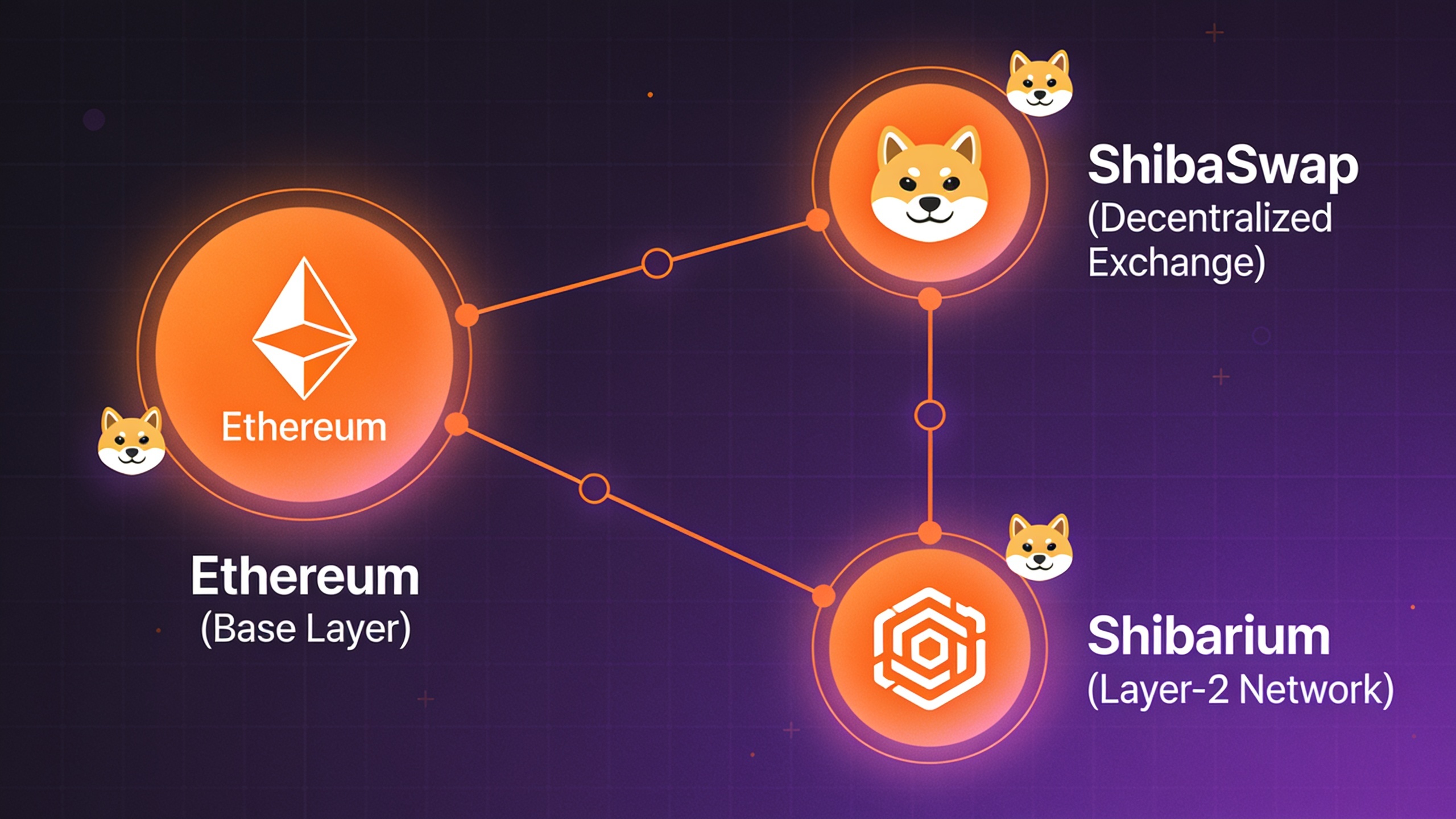
The big question hanging over Shiba Inu right now is whether all that, the Shibarium stuff, ShibaSwap, the token burns, has actually pushed it past its meme roots into something real. Fans see the ecosystem-building as proof that Shiba Inu is trying to earn genuine utility instead of coasting on vibes. Skeptics shrug and point out that the project's public face is still overwhelmingly about meme branding and community marketing, not enterprise adoption or measurable transaction demand you could stack up against a real smart-contract platform.
That tension makes Shiba Inu a weird hybrid. Part meme asset, part wannabe infrastructure project. If you're researching how Dogecoin and Shiba Inu are positioned in 2025, do yourself a favor and treat them as two totally different bets, not interchangeable ones. Dogecoin's story is basically all brand and community persistence. Shiba Inu's story also hinges on whether its side projects ever get real, sustained use. Different animals. (Pun sort of intended.)
What's Driving Meme Cryptocurrency Trends This Cycle?
Meme cryptocurrency trends in 2025 are being shaped mostly by three things: social media virality, community coordination tools, and the general retail hunger for high-risk, high-reward trades that always flares up whenever crypto grabs mainstream attention again. And these forces feed each other.
Social Media as Price Infrastructure
Platforms like X, Reddit, and TikTok basically work like real-time order books for sentiment. One viral post, one influencer mention, one hashtag catching fire, and a memecoin can move within hours, way before any actual news outlet bothers to cover it. That's the opposite of how information flows into stock markets, where earnings reports and regulatory filings set the tempo. With memecoins, attention is the catalyst. And attention can show up or evaporate in an afternoon.
Community as a Value Driver
Community-driven value is the idea that a token's price can be propped up mostly by a coordinated, engaged holder base. People who market the asset, defend it in every online argument, and push everybody to keep holding instead of selling. The whole "diamond hands" thing. Dogecoin surviving for over a decade and Shiba Inu's explosive early growth both show how a rowdy, active community can keep interest alive way past what a token's roadmap alone would ever predict.
Liquidity and Exchange Access
Whether you can actually buy and sell a memecoin easily on the big exchanges matters more than most people realize. Tokens with deep listings on major platforms tend to have steadier price discovery. Smaller ones that only live on decentralized exchanges can whipsaw violently, because there just aren't enough buyers and sellers to soak up a big trade. Honestly, liquidity might be the single most overlooked factor in all of this, and I'll dig into why below.
Memecoins vs. Fundamentally-Backed Altcoins: How Do They Compare?
The core difference between memecoins and fundamentally-backed altcoins is what's actually holding up the price. For memecoins it's community sentiment and cultural relevance. For fundamentally-backed altcoins it's a defined technical use case, developer activity, and often real network fees or revenue. Neither one is automatically "better." They just carry different flavors of risk and different sources of potential upside.
| Factor | Memecoins (e.g., Dogecoin, Shiba Inu) | Fundamentally-Backed Altcoins |
|---|---|---|
| Primary value driver | Community sentiment, social media virality, brand recognition | Technical utility, network usage, developer activity |
| Typical volatility | Very high; price can move sharply on social media trends alone | High, but often more closely tied to protocol adoption or sector news |
| Roadmap/development | Often minimal or secondary to marketing (Dogecoin); some add ecosystem features over time (Shiba Inu's Shibarium) | Usually structured around a published technical roadmap and ongoing protocol upgrades |
| Liquidity depth | Varies widely; major memecoins are widely listed, smaller ones can be thin | Generally more consistent for established projects with long-standing exchange listings |
| Main appeal | Cultural relevance, low entry price per token, community identity | Perceived long-term utility, integration into broader blockchain applications |
| Main risk | Sentiment can shift quickly,价值 can rest on hype rather than usage | Execution risk, competition, and adoption can still fail to materialize |
Here's how I'd sum it up. Memecoins pile all their risk into one question: can the community and the attention keep going? Fundamentally-backed altcoins pile it into a different question: can the tech actually get adopted? Both are real risks. Neither category makes uncertainty disappear. It just moves it somewhere else.
What Are the Biggest Risks in Memecoin Investing?
The three biggest risks in memecoin investing are liquidity risk, ownership concentrated in a handful of huge wallets, and a total dependence on sentiment that can flip on you fast. You really want to understand each of these before you put a dime into Dogecoin, Shiba Inu, or any newer meme token.
Liquidity Risk
Liquidity risk is the danger that you can't buy or sell at a stable price because there just aren't enough active traders in the market. For a big, established coin like Dogecoin, liquidity on the major exchanges is generally deep enough that this isn't a huge worry. For smaller or newer meme tokens trading mostly on decentralized exchanges with thin order books? Different story. Thin liquidity means even a moderately sized sell order can crater the price, and getting out quickly during a downturn can be a nightmare.
Concentration Risk
Concentration risk is when a small number of wallets hold a giant chunk of the total supply. When that happens, those big holders (the "whales") can swing the price around just by deciding to buy or sell. And a coordinated dump can trigger a rapid crash that smaller holders never see coming and can't do anything about.
Sentiment Reversal Risk
Because memecoin value is glued to social media attention, sentiment can turn way faster than it would for an asset with actual revenue or usage numbers behind it. A meme that owns everyone's timeline this month can be forgotten in a couple of weeks. And price tends to follow attention rather than lag behind it, which makes timing brutal. Jumping in late in a hype cycle is meaningfully riskier than getting in early. Obvious in hindsight, painful in real time.
Regulatory and Market-Structure Uncertainty
Crypto as a whole is still dealing with evolving regulatory scrutiny, and memecoins have drawn extra attention because their marketing-heavy, utility-light nature raises eyebrows about investor protection. This isn't a Dogecoin-specific or Shiba-specific thing, it's a background risk hanging over the entire category. Worth keeping in the back of your mind.
How to Spot Hype vs. Long-Term Potential
Telling short-term hype apart from actual staying power comes down to three things: how durable the community is, how deep the liquidity runs, and whether there's any real ecosystem activity beyond people just gambling on the price. No single signal settles it. But stack a few together and you get a far clearer picture than staring at a candlestick chart ever will.
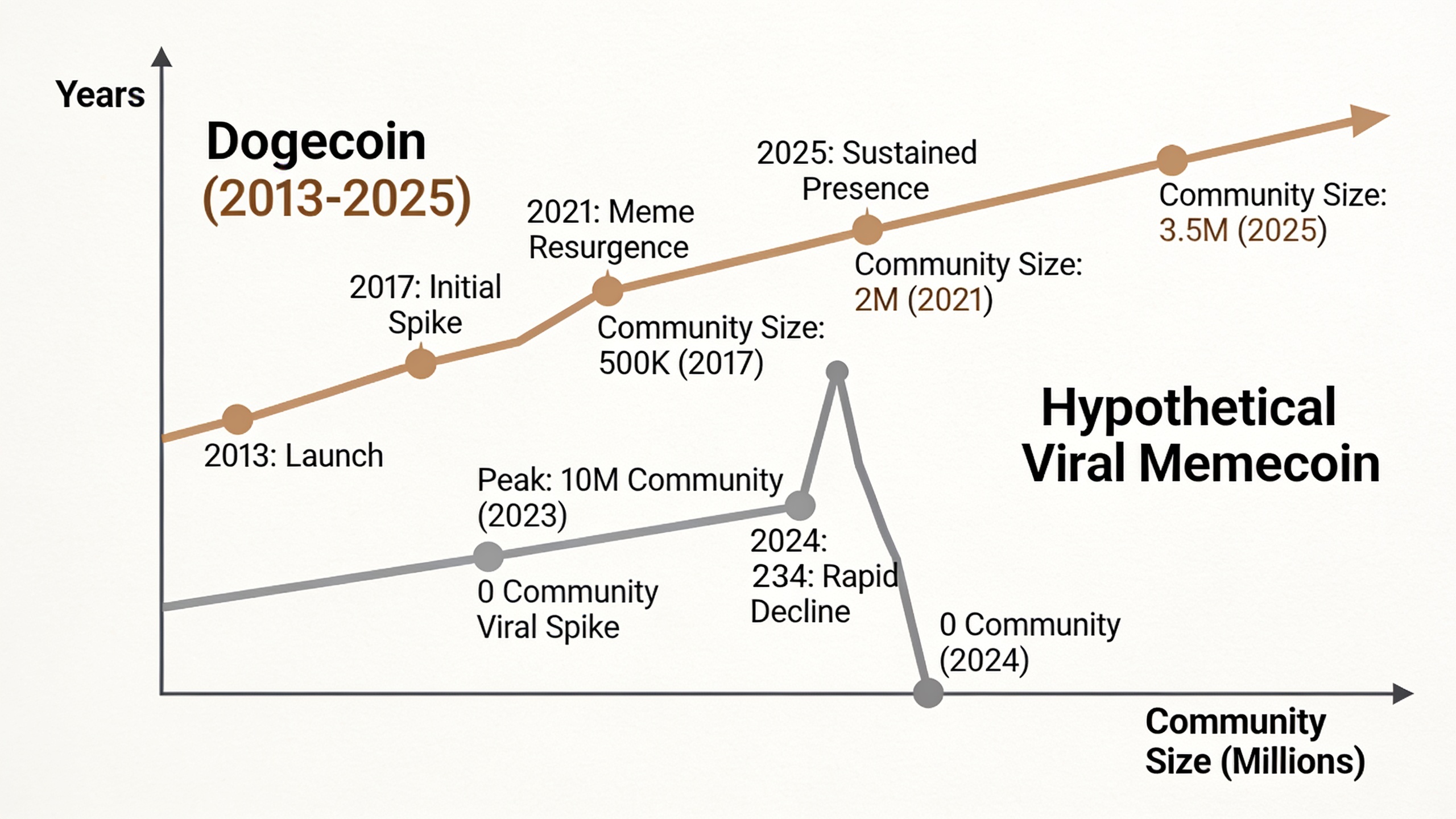
Look at community longevity, not just size. A massive but brand-new community that formed around one viral moment is a completely different creature from one that's stuck around through multiple market cycles. Dogecoin staying culturally relevant for over ten years gets cited constantly as a sign of durable attachment. That's not the same as a token that spikes once and never gets mentioned again a few months later.
Check liquidity depth across multiple exchanges. A token that only lives on a couple of decentralized exchanges with shallow trading pairs carries way more exit risk than one with broad, established listings. Actually looking at where and how a token trades is a concrete, unsexy way to gauge risk before you buy, instead of just riding whatever the timeline is feeling that day.
Assess whether "utility" claims are backed by actual activity. Shiba Inu's Shibarium and ShibaSwap are examples of a meme project trying to build real infrastructure. Fine. But look for actual ongoing transaction activity and developer updates. Don't just swallow the utility claims because the marketing sounds good.
Watch supply concentration and token distribution. Public blockchain data will show you how many wallets hold the bulk of a token's supply. Heavily concentrated ownership is a red flag for potential dump-and-crash scenarios. Broader distribution usually means less risk of one player yanking the whole market around.
Separate short-term catalysts from structural trends. A celebrity tweet or a trending hashtag is a short-term catalyst. It can move price for days or weeks and tell you basically nothing about whether the token will matter a year from now. A structural trend looks different: steady growth in wallet addresses, consistent exchange listings, continued merchant or payment adoption stretched over a long period.
Is Memecoin Investing Worth It in 2025? Practical Takeaways
Whether memecoin investing is "worth it" in 2025 comes down entirely to your own risk tolerance, your time horizon, and how much of your portfolio you're willing to hand over to wildly volatile, sentiment-driven assets. There's no universal answer here. But there is a sane way to think it through.
If you're comfortable carving off a small chunk of your portfolio as pure speculative money, Dogecoin and Shiba Inu are still among the most recognizable and heavily traded names in the space, which makes them a little easier to get in and out of than some brand-new token nobody's heard of. That name recognition doesn't erase the liquidity, concentration, and sentiment risks I've been hammering on. It just means these two are more of a known quantity than a fresh meme coin with zero trading history and a Telegram full of promises.
The smartest habit I've seen crypto-savvy people use is dead simple: position sizing. Treat your memecoin allocation as a clearly bounded, smaller slice of a portfolio that also holds assets with real utility, rather than making a meme coin your core, long-term bet. Set a firm cap on how much goes into the speculative stuff, and genuinely be willing to lose all of it. That's honestly one of the most useful risk-management moves available in this whole corner of the market.
Oh, and think practically about what happens if a trade actually works out. A lot of people who see gains want an easy way to actually use that money in real life instead of leaving it parked in a wallet forever. That's where things like the options in Best Crypto Debit Cards for Everyday Spending in 2025 come in handy, letting you turn crypto gains into everyday spending without waiting around on some drawn-out bank transfer.
At the end of it all, memecoin investing in 2025 sits right on the line between genuine cultural phenomenon and high-risk speculation. Dogecoin surviving a decade and Shiba Inu trying to build out an ecosystem both prove that meme-driven assets can have more staying power than the early critics ever gave them credit for. But staying power hasn't wiped out the fundamental volatility, liquidity, and concentration risks that come with any token whose value runs on attention instead of usage. Never has, probably never will.
FAQ
Is Dogecoin still a memecoin in 2025, or has it become a "real" cryptocurrency?
Still a memecoin. Its core value proposition is tied to brand recognition, community loyalty, and cultural relevance rather than a distinct technical use case. Yes, its long track record has bought it more mainstream familiarity than most meme tokens ever get. But that recognition doesn't change what actually drives the price.
What's the main difference between Dogecoin and Shiba Inu as investments?
Dogecoin's value is almost entirely about brand strength and community persistence built over more than a decade. Shiba Inu, on the other hand, has tried to bolt on ecosystem infrastructure, including the Shibarium layer-2 network and the ShibaSwap exchange, on top of its meme origins. So Shiba Inu carries an extra layer of "does that added utility actually get used" risk that Dogecoin largely dodges, since Doge never really tried to position itself around a broader ecosystem in the first place.
How can I tell if a memecoin's liquidity is risky before I buy?
Check how many exchanges list it, whether those are big centralized platforms or smaller decentralized ones, and how deep the order books or trading pairs actually are. Thin liquidity on just a handful of venues is a signal for higher slippage risk and real trouble getting out when things get choppy.
Should memecoins be a large part of a crypto portfolio?
Most risk-conscious folks keep memecoins as a small, clearly bounded portion of a broader portfolio, not a core holding, precisely because they lean so hard on sentiment and swing so violently. The exact amount depends on your own risk tolerance, but capping speculative positions to money you're fully prepared to lose is the common-sense guideline.
Do celebrity endorsements or viral posts reliably predict long-term memecoin value?
Nope. Viral moments and endorsements usually work as short-term catalysts that can move price fast, but they tell you almost nothing about whether a token will still have an engaged community or any trading activity months or years down the road. Slower signals, like sustained community activity and consistent exchange liquidity, are far more telling than any single viral blip.
Memecoin investing in 2025 is still one of the fastest-moving corners of the crypto market, where community energy and social momentum can spin up real opportunity and real, well-documented risk in the same breath. Dogecoin and Shiba Inu show two different paths a meme-driven token can walk. Understanding those paths, plus the liquidity and concentration traps that come with them, is what separates chasing hype from actually making an informed call.