10 Common Crypto Scams and How to Avoid Them
Crypto scams pull in billions of dollars a year, and the numbers just keep getting uglier as fraudsters figure out how to piggyback on whatever's trending that week. The FBI's Internet Crime...

Crypto scams pull in billions of dollars a year, and the numbers just keep getting uglier as fraudsters figure out how to piggyback on whatever's trending that week. The FBI's Internet Crime Complaint Center (IC3) put reported crypto fraud losses in the U.S. at $5.6 billion for 2023, which was a 45% jump over the year before. So no, this isn't a fringe problem anymore. Whether you bought your first coin last Tuesday or you've been riding the roller coaster since the 2017 mania, knowing how these scams actually work is your best line of defense. Below I've laid out the ten schemes that come up over and over, plus what you can actually do to keep your wallet from getting cleaned out.
Table of Contents
- What Are Crypto Scams and Why Do They Keep Growing?
- The 10 Most Common Crypto Scams Investors Face Today
- How Can You Avoid Crypto Fraud? Practical Protection Strategies
- How Do Crypto Scams Compare in Risk and Warning Signs?
- What Should You Do If You've Already Been Scammed?
- Frequently Asked Questions
What Are Crypto Scams and Why Do They Keep Growing?
Crypto scams are basically any deceptive scheme built to trick you into sending your coins, handing over your private keys, or buying tokens that are worthless by design. They keep spreading because crypto has three qualities that criminals adore: transactions are mostly irreversible, wallets are pseudonymous, and money moves across borders in seconds. Those same features are what make blockchain genuinely useful for legitimate finance. Funny how that works.
Here's the part that catches people off guard. If a scammer charges your credit card, you call the bank and dispute it. If you send crypto to a scammer's wallet, there's no bank, no dispute button, no customer service line. It's just gone. Chainalysis, the blockchain analytics outfit, figured scammers raked in at least $4.6 billion in revenue during 2023 in its 2024 Crypto Crime Report, and even they admitted that's probably lowballing it, since new scam addresses keep getting flagged after the fact. Now mix that irreversibility with the manic hype cycles around every new token, NFT drop, and DeFi protocol, and you've got fraud tearing through Telegram groups, X (formerly Twitter), and Discord servers faster than regulators or exchanges can even blink.
And as more institutional money pours into digital assets, a shift I dug into over in how institutional investors are reshaping the crypto market, the scammers have leveled up too. They now borrow the vocabulary of real funds, real audits, real compliance frameworks. Makes them look a whole lot more convincing to someone who doesn't know what to look for.
The 10 Most Common Crypto Scams Investors Face Today
The branding and the tech shift constantly, but the underlying scams? They fall into the same handful of buckets, year after year. These ten are the ones that show up most in fraud reports from the FBI, the FTC, and the blockchain security crowd.
1. Rug Pulls
A rug pull is when the people behind a new token or DeFi project just vanish with everyone's money, usually by draining a liquidity pool they secretly controlled the whole time. It's kind of the signature scam of the DeFi era. Think of the AnubisDAO mess in October 2021, when roughly $60 million in liquidity evaporated within hours of launch. Or the Squid Game token (SQUID) that November, which cratered to nearly zero in minutes once the developers dumped their bags.
The playbook is almost always the same. Loud social media push, a fast price pump fueled by paid influencers, then insiders bail all at once and everyone else eats the loss. The two dead giveaways: no locked liquidity, and a team that refuses to show their faces.
2. Phishing Attacks
Phishing is the old classic. Someone tricks you into coughing up your private keys, seed phrase, or exchange login through a fake website, email, or app dressed up to look like the real thing. It might arrive as a "security alert" from an exchange you actually use, nudging you to "verify your account" through a link. The link leads somewhere that looks identical to the legit site. It isn't.
The scary part is how good the clones have gotten. Modern phishing kits copy the entire MetaMask or Coinbase interface right down to a URL that's off by a single character. Enter your seed phrase and it's over in seconds. The attacker owns your wallet, and your funds get funneled through mixers or cross-chain bridges before you've even finished your coffee.
3. Pump-and-Dump Schemes
A pump-and-dump is when a coordinated group inflates a token's price with hype and nonsense claims, then dumps their holdings at the peak and leaves everyone who bought late holding a bag of nothing. These thrive in tiny, low-liquidity altcoins where even a modest chunk of money can swing the price hard.
The organizers usually run private Telegram or Discord rooms where members get told to buy a specific coin at an exact minute, manufacturing a spike that sucks in outside traders chasing the momentum. If you want to see what actual discipline looks like instead, my case study on how a trader turned $1,000 into $50,000 is a decent contrast. It's the difference between calculated risk and just chasing whatever's pumping on your feed.
4. Fake Initial Coin Offerings (ICOs) and Token Sales
Fake ICOs raise money for a project that either doesn't exist, does nothing useful, or was never going to ship anything at all. This was epidemic during the 2017-2018 ICO frenzy. A widely cited study out of Boston College found that more than half of ICOs from that stretch had already failed within four months of raising funds, and plenty showed signs that lined up neatly with fraud.
The 2024 flavor comes dressed better. Slick whitepapers, fake team bios using stolen LinkedIn headshots, and "audits" from firms that either don't exist or got paid to nod along at the code. Presentation isn't proof.
5. Ponzi and High-Yield Investment Programs
Crypto Ponzis dangle absurdly high, suspiciously consistent returns and pay the early folks with money from the newer folks. There's no real trading going on. The whole thing tips over the moment new deposits slow down or too many people try to cash out at once.
The poster child is BitConnect, which promised daily returns from some mystery "trading bot" before it imploded in January 2018 and wiped out billions worldwide. My rule is dead simple: any platform promising fixed daily or weekly returns "no matter the market" is waving a giant red flag in your face. Markets don't work like that. Nobody's bot does either.
6. Romance and "Pig Butchering" Scams
These often go by "pig butchering," a translation of the Chinese "sha zhu pan," and they're some of the cruelest scams out there. A fraudster spends weeks or months building a fake romance or friendship online, then slowly steers you toward "investing" in a bogus crypto platform. The FBI put out public warnings about this in 2023, describing how victims get coached to deposit bigger and bigger sums into a fake trading app that shows fabricated profits. Everything looks great until you try to withdraw. Then, mysteriously, you can't.
What makes these so devastating is that they're engineered to hit you emotionally. The victims are frequently middle-aged professionals met through dating apps or social media, and a lot of them lose their entire life savings before the awful realization sinks in that the partner and the platform were both fiction from day one.
7. Fake Exchanges and Wallet Apps
Fake exchanges and wallet apps borrow the look of legit platforms to hoover up your deposits or credentials, then either disappear or quietly block your withdrawals once they've collected enough. And these aren't just sketchy links either. Counterfeit apps have snuck into official app stores impersonating well-known wallets, racking up thousands of downloads before anyone caught on.
Before you trust any platform with a dollar, treat it like you'd treat any service you're about to pay: dig into independent reviews, check regulatory registration where it applies, look up the company's actual history. It's the same instinct travelers use when they lean on a resource like MySurfSchool to compare verified reviews before booking a surf lesson in some country they've never been to. Cross-reference real community feedback and security audits first. Deposit second.
8. Impersonation and Giveaway Scams
Impersonation scams are the ones where fraudsters pose as celebrities, exchange execs, or big-name crypto personalities, usually through hacked or lookalike social accounts, to hawk fake giveaways. The hook is that you send a small "verification" deposit to claim a much bigger reward. Elon Musk, Vitalik Buterin, and a rotating cast of exchange CEOs have all had their identities hijacked for this stuff repeatedly on X and YouTube, complete with fake livestreams and deepfake clips.
The logic is stupidly simple and it works anyway: "send 0.1 ETH, get 1 ETH back." It preys on both scarcity and social proof, since fake comment bots swarm the post claiming they "just got paid." Nobody's giving away free ETH. Ever. If they were, they wouldn't need your deposit first.
9. SIM Swapping and Account Takeover
SIM swapping is when a fraudster sweet-talks a mobile carrier into moving your phone number onto a device they control, then uses it to sail right past SMS-based two-factor authentication and take over your exchange accounts. High-profile SIM swap cases have cost individual victims anywhere from tens of thousands to millions of dollars, and U.S. federal prosecutors have gone after multiple SIM swap rings targeting crypto holders specifically.
This one's a big reason SMS-based 2FA is considered one of the weakest security options going. If a text message code is the only thing standing between a stranger and your exchange account, you're a lot more exposed than you probably think.
10. Malicious Smart Contracts and Fake Airdrops
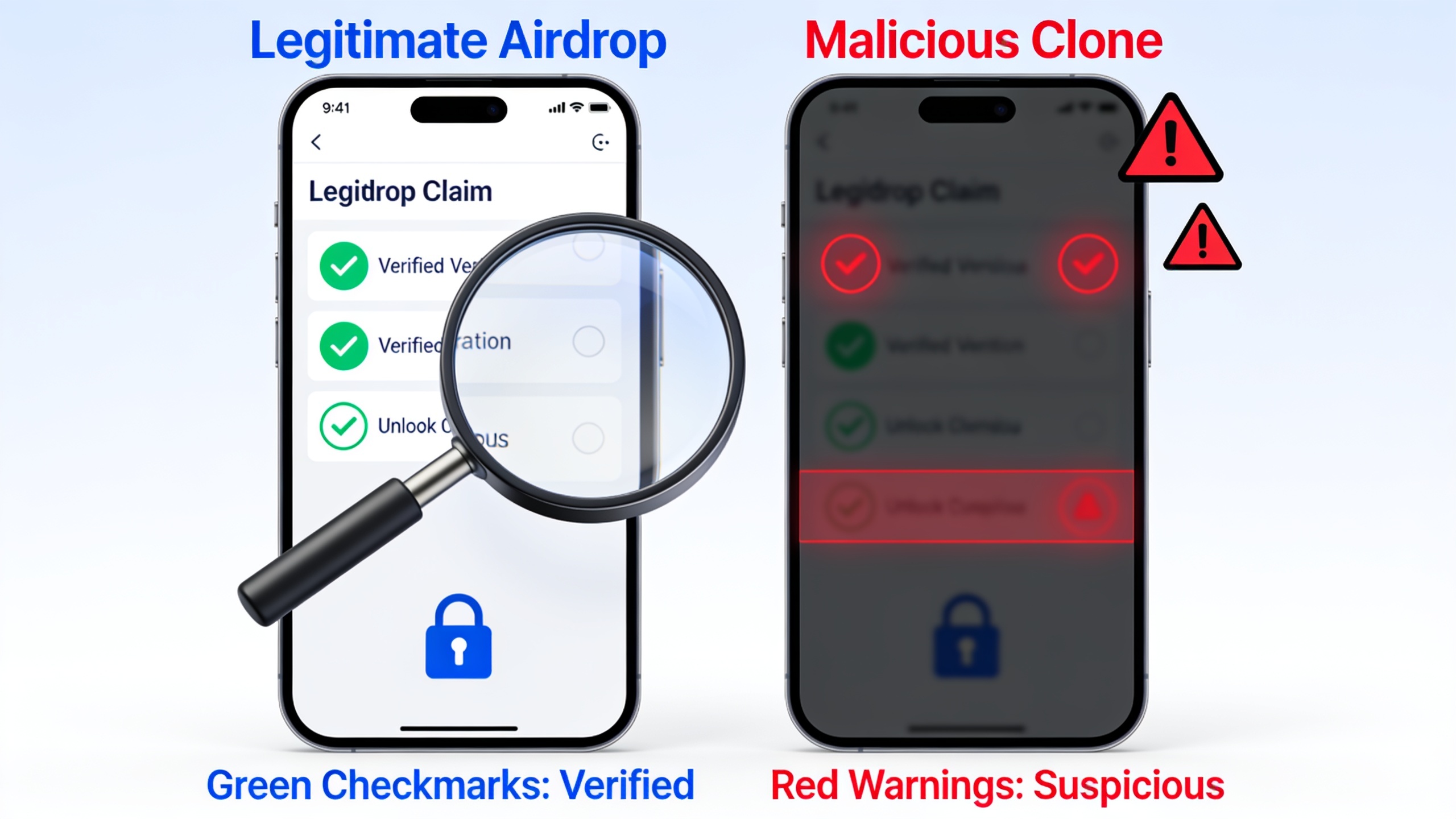
Fake airdrop scams bait you into connecting your wallet to a malicious site or approving a smart contract transaction that, once you sign it, hands the scammer permission to drain your tokens. They love riding the wave of real airdrops, where genuine projects hand out free tokens to early users, by cloning the official claim page so convincingly you'd never blink.
The trick underneath it all is a broad "approval" transaction that looks totally routine but actually grants unlimited access to a token or your whole wallet. Since the request just reads like ordinary blockchain gibberish to most people, plenty of victims click approve without a clue what they've just signed away.
How Can You Avoid Crypto Fraud? Practical Protection Strategies
You avoid crypto fraud by treating every unsolicited "opportunity," DM, and "guaranteed return" with default suspicion, and by verifying every platform, wallet, and contract yourself before you commit a cent. No single tool makes you bulletproof. But stacking a few good habits together shrinks your risk dramatically.
Verify Before You Trust
Always check a project's team, audit history, and liquidity lock status on your own instead of swallowing whatever the whitepaper or Telegram channel tells you. Real projects welcome the scrutiny. Scammers get squirmy about it. Run smart contract addresses through a block explorer like Etherscan, confirm the team's identities across multiple independent sources, and look for third-party audits from firms people have actually heard of, not some self-published "report."
That same due-diligence muscle applies way beyond crypto, honestly. If you're thinking about where to park money for genuine long-term growth rather than a speculative moonshot, talking to a regulated wealth management resource like Wealthmax can help you build something diversified that doesn't live or die on one high-risk token.
Secure Your Credentials and Devices
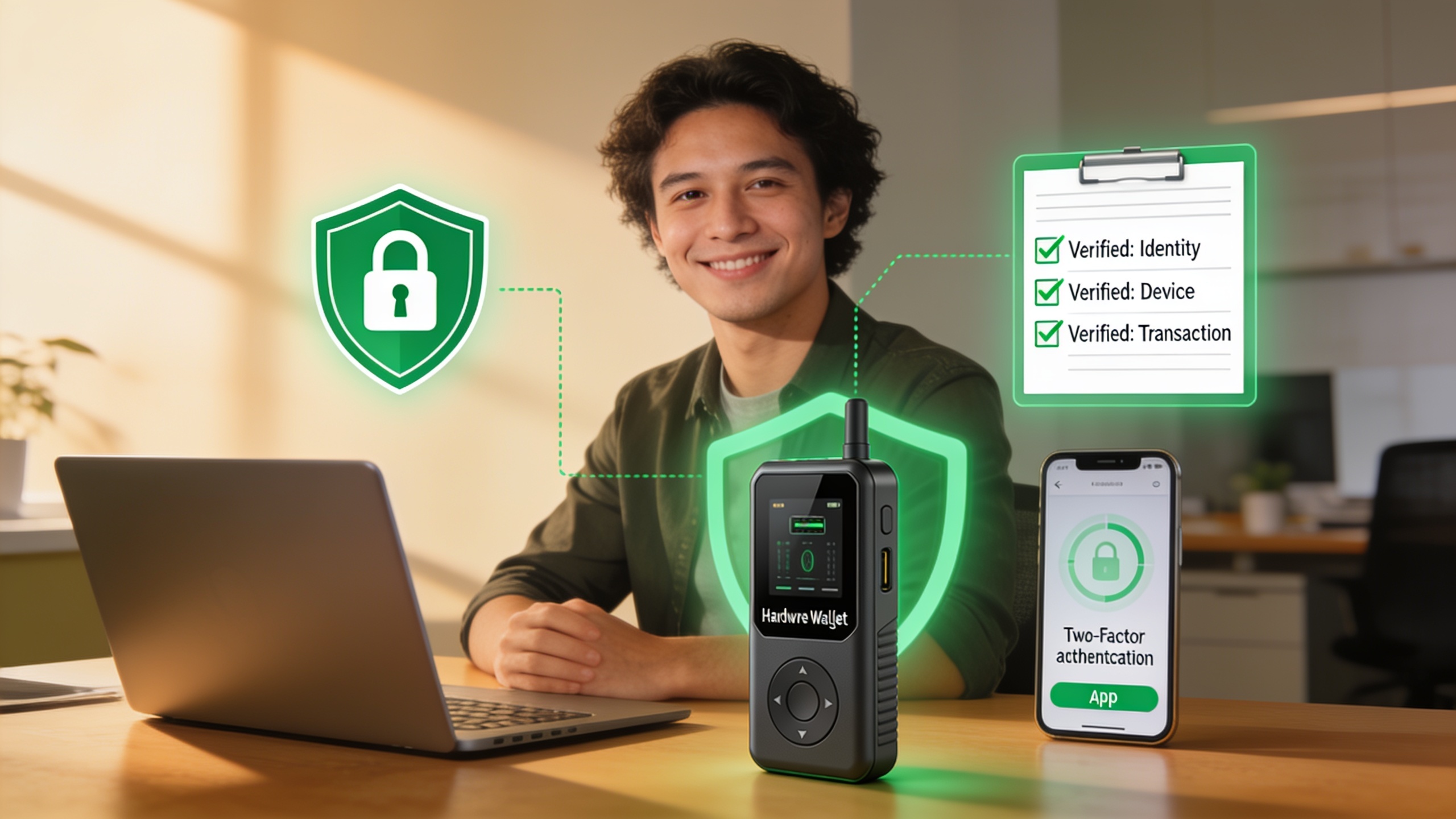
Use a hardware wallet for anything meaningful, switch on app-based or hardware-key 2FA instead of SMS codes, and never, under any circumstances, type your seed phrase into a website, app, or chat box. I mean never. No legitimate exchange, wallet provider, or support agent will ever ask for your seed phrase. Burn that fact into your brain and you've just killed off a huge chunk of phishing scams on the spot.
One thing worth sitting with: scammers lean hard on slick, professional-looking websites to fake credibility. Real businesses invest in good design and marketing for the exact same reason, because trust signals genuinely matter, which is why legit companies often work with agencies like Digital Fusion Hub for clean, transparent branding. The difference is that a real platform backs that polish up with verifiable business registration, actual audits, and support that answers when you email them. Scam sites fall apart the second you poke at them.
Slow Down Before Sending Funds
Scammers run on urgency. Countdown timers, "only 3 slots left," or emotional pressure from your shiny new online "friend." It's all designed to stop you from thinking clearly. So build a speed bump into your own process. Something like: wait 24 hours before any investment over a certain dollar amount. That gap gives you room to research, and it's astonishing how often red flags you completely missed in the heat of the moment become obvious the next morning.
Recognize That SEO and Search Rankings Can Be Gamed
Here's something people don't consider enough: scammers increasingly optimize their fake project sites and fake "review" articles to rank near the top of Google, so a garbage platform looks legit purely because it's the first result you see. And it's getting worse, because AI writing tools make it cheap and fast to spit out mountains of persuasive-but-hollow copy. Legitimate publishers, by contrast, use SEO tools like RobinRank to put out verified, transparent content and earn real backlinks instead of manufacturing fake trust. Something to keep in mind next time a "top-rated" crypto platform surfaces in your search results with zero actual track record behind it.
How Do Crypto Scams Compare in Risk and Warning Signs?
The table below summarizes the ten scam types, their typical financial risk level, and the clearest warning sign to watch for.
| Scam Type | Typical Risk Level | Key Warning Sign |
|---|---|---|
| Rug Pull | Very High | No locked liquidity, anonymous team |
| Phishing Attack | High | Urgent emails/links, slightly altered URLs |
| Pump-and-Dump | High | Coordinated hype in private group chats |
| Fake ICO/Token Sale | High | Vague whitepaper, fake audit claims |
| Ponzi/High-Yield Program | Very High | Fixed, guaranteed daily/weekly returns |
| Romance ("Pig Butchering") Scam | Very High | Online partner pushes a specific trading app |
| Fake Exchange/Wallet App | High | No verifiable company registration or reviews |
| Impersonation/Giveaway Scam | Medium | "Send crypto to receive more back" offers |
| SIM Swapping | Medium | Sudden loss of phone service, SMS 2FA reliance |
| Malicious Smart Contract/Airdrop | High | Unfamiliar "approve" transaction requests |
What Should You Do If You've Already Been Scammed?
If you've been scammed, move fast: stop sending any more funds, document every transaction and message, and report the whole thing to both the platform involved and the right authorities. In the U.S., that means filing with the FBI's IC3 (ic3.gov) and the Federal Trade Commission (reportfraud.ftc.gov). Both track patterns across scams and sometimes help untangle the bigger criminal networks behind them.
Now, I won't sugarcoat it. Getting your money back is uncommon, because blockchain transactions don't reverse. But it's not hopeless either. Blockchain analytics firms and law enforcement have traced, frozen, and occasionally recovered stolen assets when victims report quickly and hand over detailed transaction hashes and wallet addresses. If blockchain analysis can pinpoint the exchange where the scammer's funds eventually landed, contacting that exchange can sometimes trigger a freeze, assuming they cooperate with law enforcement. While you're at it, change your passwords, revoke any lingering smart contract approvals through something like Etherscan's Token Approval Checker, and keep an eye on your other financial accounts in case your personal info got swept up too. Oh, and one more thing: anyone who "guarantees" they can recover your funds for an upfront fee is running a second scam on top of the first. Walk away.
Frequently Asked Questions
What's the most common type of crypto scam?
Phishing attacks and rug pulls are consistently near the top of the reported list, per the FBI's IC3 and analytics firms like Chainalysis. Phishing is especially rampant because it barely requires technical skill and can be automated at massive scale through mass emails and fake sites. Low effort, high payout. Unfortunately.
Can you actually get your money back after a crypto scam?
It's hard, but not always impossible. Since blockchain transactions generally can't be reversed, your best shot comes from reporting fast to law enforcement and the exchange that received the funds, because some exchanges can freeze accounts if the dirty money lands there before it moves on. And again: do not pay any third party promising guaranteed recovery for a fee. That's just scam number two.
How do I tell if a crypto exchange is legit?
A real exchange will have verifiable business registration, a clear corporate address, transparent fees, support that actually responds, and a track record of independent reviews across multiple platforms, not just a wall of glowing testimonials on its own site. Checking its regulatory status with the financial authorities in your jurisdiction adds another layer of confidence on top of that.
Do I really need a hardware wallet?
For anything beyond a small trading balance, yeah, I'd say so. Hardware wallets keep your private keys offline, away from the internet-connected devices that malware, phishing, and remote hackers love to target. Most people in this space treat it as a baseline, not a luxury.
Why do crypto scams keep climbing every single year?
Because the pseudonymous, borderless, irreversible nature of blockchain is basically catnip for fraudsters, and the constant churn of new DeFi products, NFTs, and tokens keeps handing them fresh angles before regulation or public awareness can catch up. The FBI's 2023 IC3 data makes it plain: losses grew even as awareness campaigns expanded. The tactics just evolve right alongside the legit market.
Staying a Step Ahead
Crypto scams will keep mutating along with the technology, but the psychological levers underneath them barely change at all. Urgency, unrealistic guarantees, and manufactured trust show up in every single scheme on this list. And here's what I've noticed after watching this stuff for years: the people who dodge these scams best usually aren't the tech geniuses. They're the ones who slow down, verify things themselves, and treat any too-good-to-be-true offer with permanent, unshakeable skepticism. Building that habit today costs you almost nothing. Learning it the hard way costs a lot more.