10 Warning Signs of a Crypto Scam Before You Invest: Key Crypto Scam Red Flags
Crypto scams have grown right alongside the industry itself, and honestly, learning to spot the warning signs before you send a single dollar is the best defense your money's ever going to get. The...

Crypto scams have grown right alongside the industry itself, and honestly, learning to spot the warning signs before you send a single dollar is the best defense your money's ever going to get. The numbers are grim. Between January 2021 and June 2022, consumers reported losing more than $1 billion to cryptocurrency-related scams (Federal Trade Commission), and that's just what got reported. So this guide walks through the ten red flags I see over and over, explains how fake exchanges and phishing tricks actually operate under the hood, and hands you a checklist you can run before you commit any capital.
Table of Contents
- What Are Crypto Scam Red Flags?
- The 10 Warning Signs of a Crypto Scam Before You Invest
- How Do Fake Crypto Exchanges and Phishing Schemes Work?
- Legit Project vs. Scam Project: Quick Comparison
- How to Avoid Cryptocurrency Scams: A Verification Checklist
- What to Do If You Spot a Crypto Scam Red Flag
- FAQ
What Are Crypto Scam Red Flags?
Crypto scam red flags are the specific behaviors, claims, or technical tells that signal a project, exchange, or random "investment opportunity" is built to separate you from your money rather than deliver anything real. They show up everywhere. In whitepapers. In social media pitches. In wallet requests. Sometimes just in the tone of an unsolicited DM that lands in your inbox at 2am.
Here's why crypto is such fertile ground for this stuff. Traditional securities fraud has to fight against decades of regulation and paper trails. Crypto, though, runs on three built-in weaknesses that scammers absolutely feast on: pseudonymity (anyone can launch a token without showing their face), irreversibility (once a transaction confirms on-chain, it's gone, no chargebacks, no undo button), and a regulatory patchwork that changes wildly depending on which country you're standing in. Scammers exploit all three at once. Recognizing the patterns below won't make you bulletproof. But it'll knock your risk down dramatically, and it's the same due-diligence instinct that separates disciplined investors from easy marks.
The 10 Warning Signs of a Crypto Scam Before You Invest
Any one of these signs can technically show up in a legit project for innocent reasons. It happens. But when two or more turn up together? That combination is about as clear a warning as you're going to get.
1. Guaranteed or Unrealistic Returns
Any project promising a fixed, guaranteed return, whether that's "2% daily," "10x in 30 days," or "risk-free 20% APY," is describing something that literally cannot exist in a real, market-priced asset. Legitimate crypto carries genuine price risk. Nobody can guarantee future returns, not even the founders, because token prices are set by open markets and not by the platform waving its hands. Guaranteed-yield talk is one of the oldest cons in the book, recycled straight out of Ponzi schemes that were fleecing people decades before Bitcoin existed. Same scam. New coat of paint.
2. Artificial Urgency and FOMO Tactics
Scam promoters love to rush you. "Buy before the price doubles." "Presale closes in 6 hours." That pressure is completely deliberate. It shrinks the window you'd otherwise use to research the project, vet the team, or actually read the fine print. A real token launch or investment round will still be there tomorrow. A scam wants your money locked in before you've had a chance to sleep on it.

3. Anonymous or Unverifiable Team
If a project's website lists only first names, stock photos, and LinkedIn profiles with zero verifiable work history, pay attention. Now, some legitimate crypto devs genuinely do operate pseudonymously (Bitcoin's own creator, Satoshi Nakamoto, is still a mystery, after all). But most credible modern projects, especially anything raising money from regular retail investors, publish real founder identities, GitHub commit histories, the whole résumé. If you're trying to figure out whether a founding team is legit, it helps to know what real crypto credentials even look like. This guide to crypto careers, skills, and salaries lays out the kind of verifiable experience actual industry people have, which makes a fabricated founder bio a lot easier to sniff out.
4. Poorly Written, Vague, or Plagiarized Whitepaper
A whitepaper is supposed to tell you what the project does, how the token captures value, and what problem it's solving. Scam whitepapers, on the other hand, are usually a word-salad of buzzwords. "Revolutionary." "Next-generation." "Disruptive AI blockchain." Lots of noise, no substance. Sometimes they just copy-paste entire sections from other projects' docs. My rule of thumb: if you can't explain in one plain sentence what the token actually does after reading the thing, that's a problem.
5. No Clear Utility, Revenue Model, or Use Case
Every legit crypto asset should have some articulable reason to exist beyond "number go up." That said, let's be honest, not every token needs deep utility to trade. Memecoins are the obvious exception, and their value runs almost entirely on community vibes and social momentum, not a product roadmap. The line between a memecoin and a scam isn't utility. It's honesty. Established memecoins are openly speculative and don't pretend to be anything else. If you're wondering whether coins like these still belong in a 2025 portfolio, this breakdown of memecoin investing and whether Dogecoin and Shiba Inu are still worth it gets into how to size that risk sensibly. A scam does the opposite. It wraps a utility-free token in fake promises of partnerships, patents, and revenue-sharing that never, ever show up.
6. Unregistered or Unlicensed Exchanges and Platforms
Legitimate crypto exchanges operating in the U.S. generally register with FinCEN as money services businesses, and depending on what they offer, they may also hold state-level money transmitter licenses. Scam platforms skip all of it. Or they claim licensing is "in progress" for eternity. Before you deposit a cent, look for the exchange's legal entity name, its registration jurisdiction, and its regulatory status stated clearly, not buried three clicks deep in some terms-of-service page nobody reads.
7. Requests for Your Private Keys or Seed Phrase
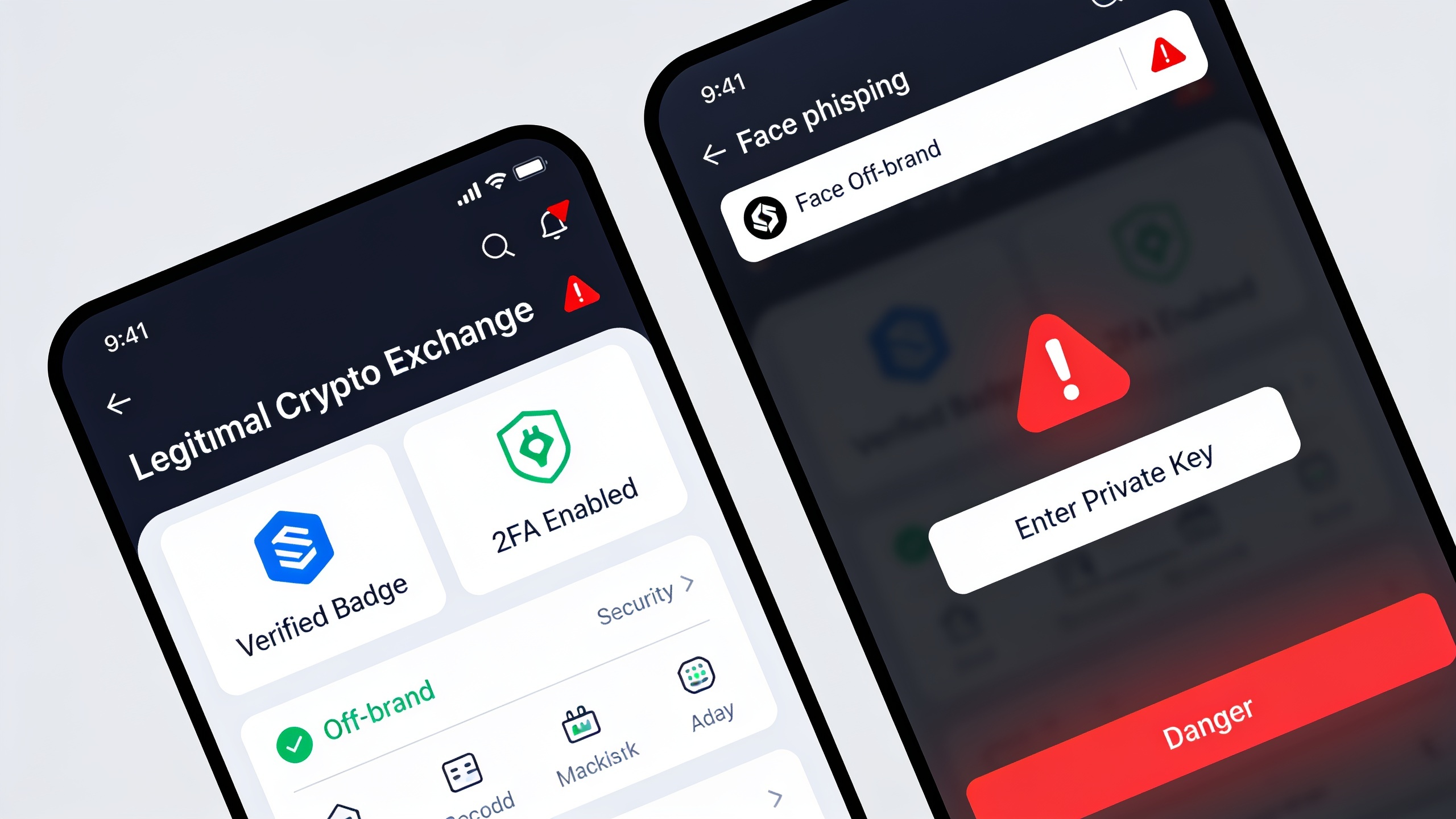
No legitimate wallet, exchange, support agent, or project will ever need your seed phrase or private keys to help you. Ever. This is probably the single most important rule in all of crypto security, so let me be blunt about it: your seed phrase is the master key to your entire wallet. Anyone who gets it can drain you instantly and irreversibly. Phishing crews love impersonating wallet support, firing off urgent messages about "account verification" or "wallet sync errors" that conveniently require you to "confirm" your recovery phrase on some fake site. Don't. There's no scenario where a real company needs it.
8. Fake Celebrity Endorsements or Impersonation
Deepfake videos, doctored screenshots, cloned social accounts showing tech billionaires or athletes or famous crypto folks hyping a token, this stuff is everywhere now and getting scarily good. A lot of it runs as paid ads or through hijacked verified accounts to look more legit. So if a celebrity endorsement is the main reason you're eyeing an investment, stop. Go verify it through the celebrity's own official channels, not the link in the ad. The ad is the scam.
9. You Can Deposit Easily But Can't Withdraw
Classic fake-platform move: deposits fly through instantly, but withdrawals hit a wall of excuses. "Processing fees" you have to pay upfront. "Account verification" that never quite finishes. Vague technical delays that stretch on forever. Some of these platforms even let small early withdrawals sail through, just to build trust, before the big amounts get frozen solid. If it's dramatically harder to take money out than to put it in, treat that asymmetry itself as the red flag. The excuse doesn't matter.
10. Pyramid-Style Referral and Recruitment Structures
When a project's main growth engine is recruiting new investors, with multi-level referral bonuses paid out for dragging in fresh capital rather than from any actual product revenue, you're almost certainly looking at a Ponzi wearing a crypto costume. This one overlaps a lot with fake job-offer scams, where "recruiters" dangle commissions for referring investors into some trading bot or staking platform. Real crypto employers hire for defined roles with transparent pay, the kind spelled out in an actual crypto jobs and salary guide. They don't pay you a cut just for hauling in new depositors.
How Do Fake Crypto Exchanges and Phishing Schemes Work?
Fake exchanges and phishing schemes work by mimicking the branding, interfaces, and even the URLs of trusted platforms so precisely that victims genuinely believe they're on the real thing, and then they either steal deposited funds outright or harvest your login credentials and keys for later. Most of it boils down to a handful of recurring plays.
Clone websites copy a well-known exchange pixel for pixel, usually on a URL that's off by a single character. A swapped letter. An extra hyphen. A different top-level domain. Victims land there through phishing emails, sponsored search results, or social links, log in with their real credentials, and hand those credentials straight to the attacker without ever realizing it.
Fake trading apps pop up in third-party app stores or get passed around as direct download links through social media and, weirdly often, dating apps. That last one's part of a nasty tactic called "pig butchering," where a scammer builds a slow, genuine-feeling relationship with a target for weeks before introducing a fraudulent trading platform. The FBI's Internet Crime Complaint Center (IC3) has flagged crypto investment fraud, including these romance-adjacent schemes, as one of the costliest categories of internet crime it tracks every single year, both in raw dollars and in the emotional wreckage left behind.
Fake customer support hangs out on social media and messaging apps, hunting for anyone publicly complaining about a transaction issue, then sliding into their replies or DMs offering to "help." And that help, surprise surprise, always ends in a request for wallet access or a seed phrase.
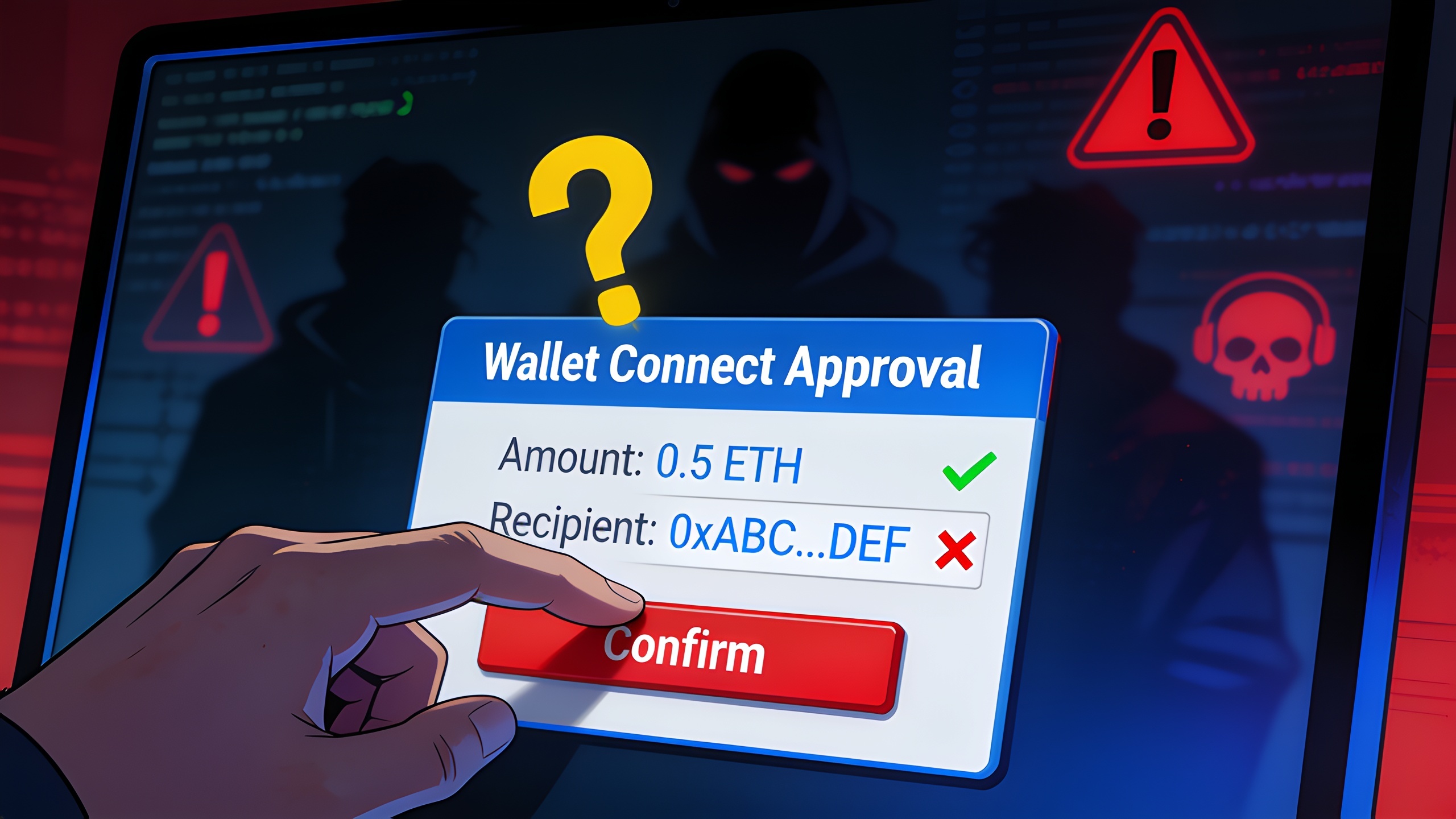
Malicious browser extensions and wallet-connect prompts are the sneaky one. They trick you into signing a transaction that looks totally routine but actually grants the scammer standing approval to move your tokens out whenever they feel like it. This is exactly why reading what a transaction is actually asking you to approve, instead of clicking "confirm" on autopilot, matters so much with any decentralized app.
Legit Project vs. Scam Project: Quick Comparison
| Signal | Legitimate Project | Likely Scam |
|---|---|---|
| Team transparency | Named founders with verifiable work history, LinkedIn, GitHub | Anonymous, stock-photo avatars, unverifiable claims |
| Returns messaging | Describes potential upside with clear risk disclosure | Promises guaranteed or fixed daily/weekly returns |
| Whitepaper quality | Technical detail specific to the project's architecture | Vague buzzwords, plagiarized or generic content |
| Regulatory status | Discloses registration/licensing status clearly | Licensing "pending" indefinitely or undisclosed |
| Withdrawal experience | Consistent, predictable processing times | Deposits are instant; withdrawals stall or require fees |
| Growth strategy | Product usage, partnerships, organic adoption | Multi-level referral bonuses for recruiting investors |
| Seed phrase requests | Never requested by support or the platform | Requested under "verification" or "sync" pretenses |
| Marketing tactics | Steady, factual communication | Countdown timers, fake celebrity endorsements, urgency |
How to Avoid Cryptocurrency Scams: A Verification Checklist
The most reliable way to dodge crypto scams is to build a short, repeatable verification habit you run before every new investment, instead of trusting your gut in the heat of the moment (your gut, by the way, is exactly what these scams are engineered to fool). Think of this as the minimum bar, not a full audit.
Start by verifying the team independently. Search founder names alongside words like "scam" or "fraud," and check whether their claimed history (previous companies, degrees, prior projects) actually holds up somewhere other than the project's own website.
Then read the smart contract audit, if one exists, and confirm it's real. Legit projects handling serious money usually commission audits from recognized security firms and publish the full report, not just a shiny badge. So go find the report on the auditing firm's own site. Don't trust a logo slapped on a landing page. That logo takes about four minutes to fake.
Check the exchange's regulatory footprint too. In the U.S., that means FinCEN money services business registration plus any applicable state money transmitter licenses. Internationally, see whether the platform is registered with a recognized financial regulator in whatever jurisdiction it claims.
And test withdrawals with a small amount first. Before you drop anything meaningful into a new platform, deposit and pull out a tiny test amount to confirm the whole process works, no surprise fees, no mysterious delays. This one simple step has saved a lot of people a lot of grief.
Two more, and they're non-negotiable. Never share your seed phrase, full stop, and use hardware-level security wherever you can. Treat any request for your recovery phrase, no matter who's asking or how official they sound, as an automatic scam signal. And slow down around urgency. If a deal demands an instant decision, that pressure is telling you something. Real opportunities can survive a day or two of you doing your homework.
What to Do If You Spot a Crypto Scam Red Flag
If you catch one or more of these red flags before investing, the move is simple: stop the transaction, send zero additional funds, and document everything before you do anything else. Screenshot the website, the social posts, the wallet addresses, all the correspondence. That paper trail matters if you end up reporting the thing later.
Already sent funds? Okay. Report it to the FTC at ReportFraud.ftc.gov, and for anything tied to online platforms or communications, file with the FBI's IC3 at ic3.gov. If a real exchange or wallet provider got impersonated, notify that company's official security or abuse team directly through channels on its verified website, never through a link the scammer sent you. I'll be straight with you: recovering stolen crypto is often really hard, because blockchain transactions don't reverse. But fast reporting genuinely helps investigators spot patterns, and in some cases it's led to fund freezes when the stolen assets happened to move through a compliant exchange. Speed is everything here.
Frequently Asked Questions
If I've already sent the money, can it be reversed?
Usually not. Cryptocurrency transactions confirmed on a blockchain are irreversible by design, which is exactly why prevention beats recovery every time. In rare cases funds can be clawed back if they pass through a regulated exchange that freezes the account before the scammer withdraws, but that's far from guaranteed and depends heavily on how fast you report.
Are all high-return crypto projects scams?
No. Crypto is a genuinely volatile asset class, and legitimate tokens can post huge gains (or brutal losses) based on real market dynamics. The real tell is guarantees versus possibilities. A legit project describes potential upside right alongside the real risk of loss. A scam guarantees a fixed return no matter what the market does, which is simply not something any authentic crypto asset can actually deliver.
How can I tell if an exchange is fake before I even sign up?
Check its registration status with the relevant financial regulators, search independently for user reviews and complaint patterns outside the exchange's own marketing bubble, confirm the URL matches the officially published domain (down to the last character), and run a small test deposit and withdrawal before committing anything real.
Do fake crypto job offers count as scams?
Yes, definitely. Fraudulent recruiters sometimes pose as crypto companies offering remote roles that require an upfront "training fee," personal wallet access, or buying into some related token as a condition of employment. None of which any legitimate employer would ever ask for. Comparing an offer against realistic industry roles and pay, like the ones laid out in established crypto career guides, makes the inconsistencies jump out fast.
Is it a red flag if a memecoin has no utility?
Not on its own, no. Memecoins are widely understood to be speculative, community-and-sentiment-driven assets, not utility products, and that's not fraudulent by itself. It becomes a red flag when a token markets itself as having real utility, partnerships, or revenue-sharing that you can't verify anywhere. That combo, fake utility claims stacked on top of speculative hype, is a classic scam pattern layered over memecoin-style marketing.
Final Thought
Spotting crypto scam red flags isn't about turning paranoid toward every new project that crosses your feed. It's about applying the same healthy skepticism to digital assets that any experienced investor brings to an unregulated, high-stakes market. The ten warning signs here, from guaranteed returns to seed-phrase requests to that maddening withdrawal friction, show up again and again across thousands of documented fraud cases. Catching even two or three of them together is usually all the reason you need to walk away. Take the extra hour to verify a team, an audit, a licensing claim before you invest. Not after. After is too late.