Best Decentralized Exchanges (DEX) to Use in 2025
If you want to find a decent decentralized exchange in 2025, you have to ignore the marketing and look at the boring stuff that actually protects your money. Where does the liquidity come from? How...

If you want to find a decent decentralized exchange in 2025, you have to ignore the marketing and look at the boring stuff that actually protects your money. Where does the liquidity come from? How are the fees structured? Which blockchains does it support? And does the team behind it treat smart-contract security like a priority or an afterthought? A DEX, if you're new to the term, is just a trading venue that lets you swap crypto straight from your own wallet. You never hand your funds over to a company. That one design choice is the whole reason millions of people now run at least part of their trading through DEXs instead of the usual custodial platforms.
So this guide walks through what actually matters, how the main types of DEX differ from each other, and what to check before you plug your wallet in and start trading. Doesn't matter if you've been in DeFi for years or you're just poking at non-custodial trading for the first time. I'm going for a practical framework here, not hype.
Table of Contents
- What Is a Decentralized Exchange, and Why Does It Matter in 2025?
- How to Choose the Best Decentralized Exchanges in 2025
- Top DEX Platforms Worth Knowing in 2025
- How Much Do DEX Fees Actually Cost?
- Security Features That Separate Safe DEXs From Risky Ones
- Why Multi-Chain Support Matters When Picking a DEX
- DEXs vs. Centralized Exchanges: Which Should You Use?
- FAQ
What Is a Decentralized Exchange, and Why Does It Matter in 2025?
A decentralized exchange is a trading platform built on blockchain smart contracts that lets you swap tokens directly from your own wallet, without any company ever taking custody of your assets. That's the whole thing in one sentence. Compare that to a centralized exchange, where you deposit funds into the exchange's accounts and then just... trust them to hold your money and not screw it up.
And here's why that difference is such a big deal right now. Pretty much every major custodial blowup in crypto history started the exact same way: a company controlling user funds and then losing or mismanaging them. DEXs get rid of that single point of failure entirely. Your assets sit in your wallet until the precise moment a trade goes through, and the trade itself gets settled by code, not by some company's internal spreadsheet.
Now, don't read that as "DEXs are risk-free," because they aren't. Smart contracts can have bugs. Liquidity can be painfully thin on smaller platforms. And you're on your own for wallet security. There's no support line to call when you fat-finger an address or approve some malicious contract you shouldn't have. But if you care about self-custody, transparency, and being able to trade without asking anyone's permission (no account approval, no waiting around, and in most cases no getting blocked because of where you live), DEXs are still one of the defining tools in crypto.
How to Choose the Best Decentralized Exchanges in 2025
The best DEXs in 2025 are the ones that pull together deep liquidity, fees that are both transparent and competitive, wide blockchain support, and a security record that doesn't make you nervous. Which one is right for you depends on what you actually care about. There's no universal "best" here. A trader flipping positions all day and chasing tight spreads wants something completely different from someone who holds long-term and swaps stablecoins once in a blue moon.
So before you commit real money to any platform, this is the checklist experienced DeFi people tend to run through. Liquidity depth comes first, because thin liquidity means high slippage, which is the gap between the price you expected and the price you actually got. It bites hardest on bigger trades. Popular pairs on established DEXs almost always have deeper pools than some obscure token that got listed last Tuesday.
Then there's the fee structure, which usually splits into a protocol trading fee plus a blockchain gas fee, and both can swing wildly depending on the chain and the specific pool. Chain and asset support matters too. Some DEXs live entirely inside one blockchain ecosystem, while others spread across multiple chains or pull liquidity from several networks at once. You'll also want to look at security posture, so whether the contracts have been reviewed, how long the thing has run without a major exploit, and whether the team is honest about the known risks. And finally, the actual user experience: wallet integrations, price-impact warnings, clear transaction previews. Boring, but that stuff is what stops you from making an expensive mistake at 1am.
Honestly, if hopping between platforms and babysitting trades sounds like more work than you signed up for, that's fair. There are automated options out there too. Copy trading platforms for crypto investors, for example, let you mirror what more experienced traders are doing instead of manually researching every DEX pool yourself.
Top DEX Platforms Worth Knowing in 2025
A handful of DEXs have become genuine fixtures in DeFi, mostly because of how they've handled liquidity, chain support, and trading mechanics. Below is a category-level rundown of the platforms people talk about most, sorted by the type of exchange model they use rather than by performance claims I can't verify. One warning before you read on: fees, supported networks, and audit status change constantly, so confirm the current details on the platform itself before you trade anything.
| Platform | DEX Type | Primary Chain Ecosystem | Fee Model | Notes |
|---|---|---|---|---|
| Uniswap | Automated Market Maker (AMM) | Ethereum and Ethereum-compatible networks | Variable, set per liquidity pool | One of the earliest and most widely referenced AMM designs in DeFi |
| PancakeSwap | Automated Market Maker (AMM) | BNB Chain and other EVM-compatible networks | Variable, set per liquidity pool | Known for lower network fees relative to Ethereum mainnet |
| Curve Finance | Specialized AMM for stable assets | Ethereum and multiple EVM networks | Variable, set per pool | Optimized for swaps between similarly priced assets like stablecoins |
| dYdX | Order-book style perpetuals DEX | Its own dedicated chain infrastructure | Variable, trade-dependent | Focused on derivatives and perpetual futures rather than simple spot swaps |
| 1inch | DEX aggregator | Multiple EVM-compatible chains | Routes across third-party DEXs | Searches multiple liquidity sources to find better execution prices |
| Balancer | Automated Market Maker (AMM) | Ethereum and other EVM networks | Variable, set per pool | Supports multi-asset liquidity pools beyond simple token pairs |
A few structural distinctions are worth getting straight, because they explain most of the differences in that table.
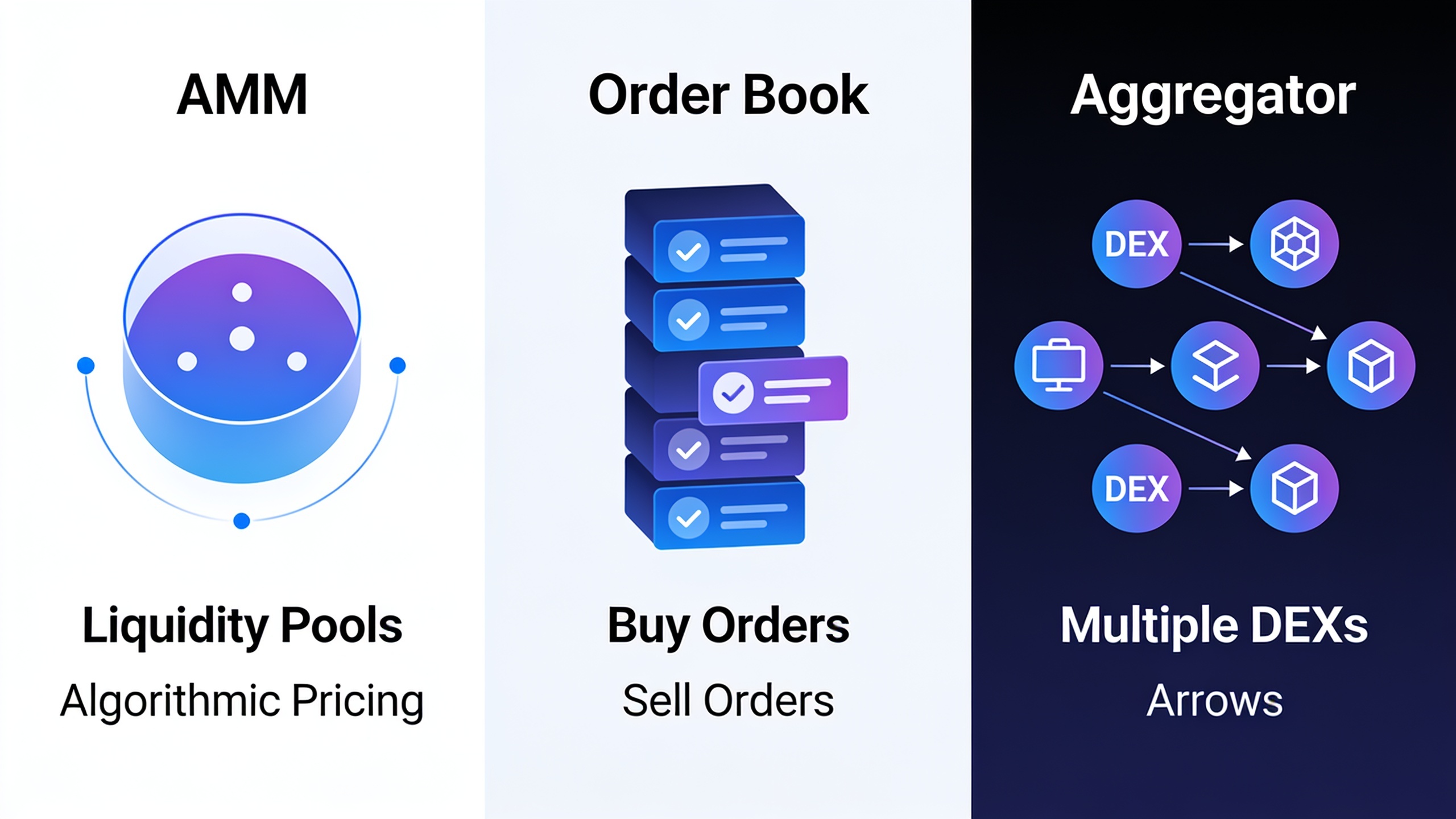
AMMs (Automated Market Makers) like Uniswap, PancakeSwap, Curve, and Balancer don't pair up individual buyers and sellers. You trade against a shared pool that other users have funded, and the price gets worked out algorithmically based on the ratio of assets in that pool. This is the mechanism that made permissionless, always-on trading possible without a traditional order book. Kind of a big deal when you think about it.
Aggregators like 1inch don't hold any liquidity of their own. They scan a bunch of DEXs and liquidity sources at once, then route your trade through whatever combination gives the best price right then. On larger trades that can seriously cut your slippage.
And then perpetuals and derivatives DEXs like dYdX are for people who want leveraged or derivative exposure, not just a straight spot swap. These usually run on order-book-style mechanics that feel closer to a traditional exchange, except everything settles non-custodially.
I'll say it one more time because it matters: fee percentages, supported chains, and incentive programs on these platforms get updated all the time. Treat any specific number you see quoted anywhere (including here) as a snapshot, not a permanent fact, and check the current terms on the actual interface before you trade.
How Much Do DEX Fees Actually Cost?
DEX trading costs almost always come from two separate places: a protocol trading fee charged by the liquidity pool itself, and a network (gas) fee you pay the underlying blockchain to process the transaction. Both can move around a lot depending on the chain and the pool. Getting this split into your head matters, because a DEX that looks cheap on paper can be brutally expensive to actually use if the chain underneath it is jammed.
The protocol trading fee on AMM-style DEXs is usually set per pool, not as one flat rate across the whole platform. So two pools on the same exchange can charge you totally different percentages depending on how the pool creator set it up and how volatile the assets in it are.
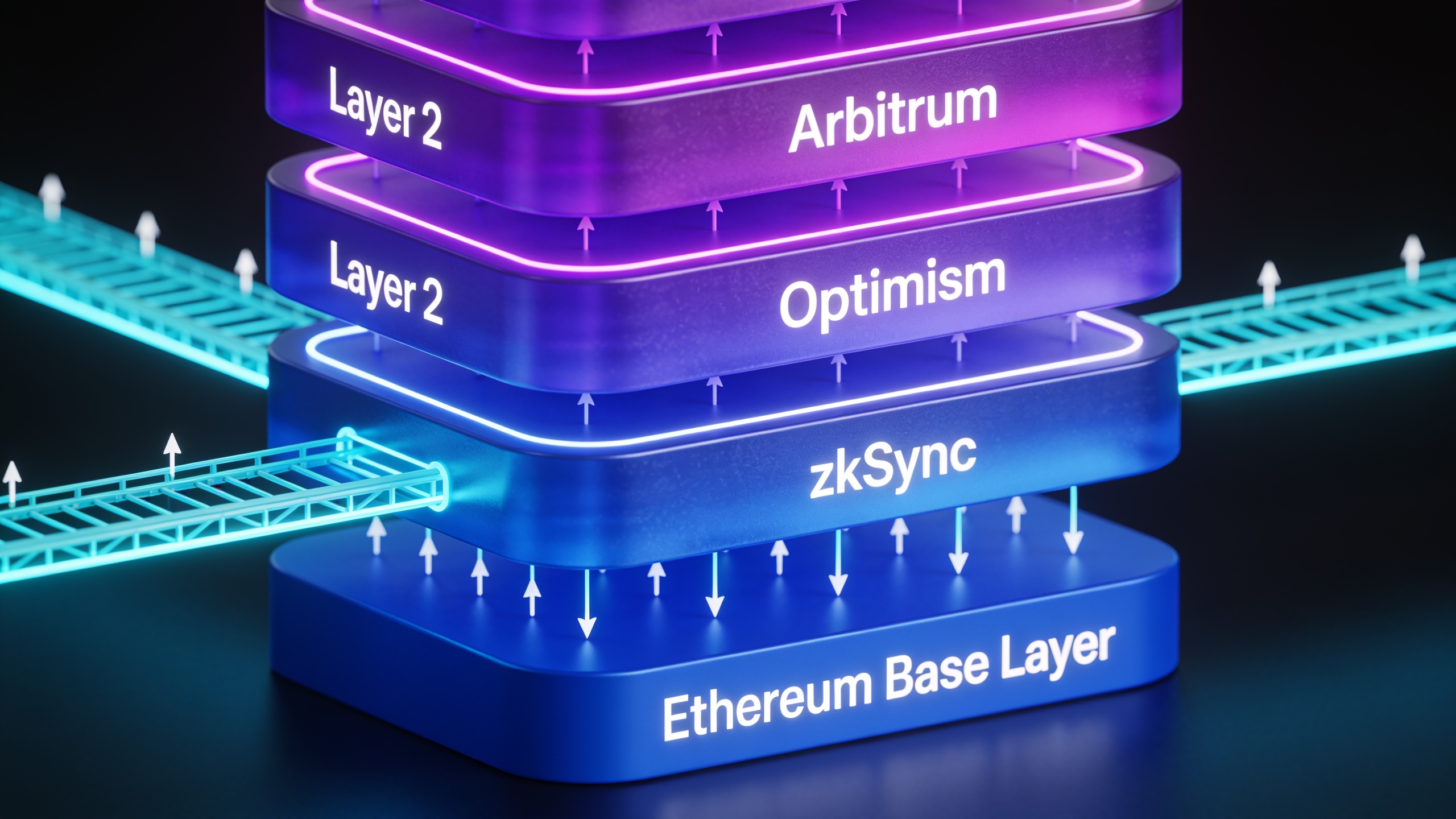
Gas fees are a completely separate animal. They've got nothing to do with the DEX and everything to do with how busy the blockchain is the second you hit submit. That's why the identical swap can cost you a fortune during a congestion spike and next to nothing on a quiet Sunday. It's also why so many traders drifted toward faster, cheaper EVM-compatible chains and layer-2 networks for everyday trading.
Aggregator fees work differently again. Platforms like 1inch don't necessarily slap a big fee on top of everything, because their whole pitch is finding you the best combined price across multiple sources. But the trade still ends up passing through the fee structure of whichever pool it gets routed to, so you're not escaping fees entirely.
Bottom line? Don't judge a DEX on its advertised protocol fee alone. Factor in the gas cost of the chain you're on, the size of your trade against how deep the pool is (that's your slippage), and whether you're going direct or through an aggregator that might actually save you money by splitting the order.
Security Features That Separate Safe DEXs From Risky Ones
The core security win with any legit DEX is that you never give up your private keys. Your funds stay in your wallet right up until a trade settles, which kills the risk of an exchange freezing your withdrawals or losing your deposits in some custodial meltdown. But non-custodial doesn't magically mean safe, and the risks on a DEX just look different from the ones on a centralized platform.
Smart contract risk is the big one that's unique to DEXs. Because trades run through code instead of a company's back office, a bug or vulnerability in that code can potentially get exploited. This is exactly why long-running, heavily-used protocols with years of history behind them are generally seen as safer bets. They've had far more real-world exposure, which means more chances for problems to surface and get patched, versus some shiny new contract nobody's stress-tested yet.
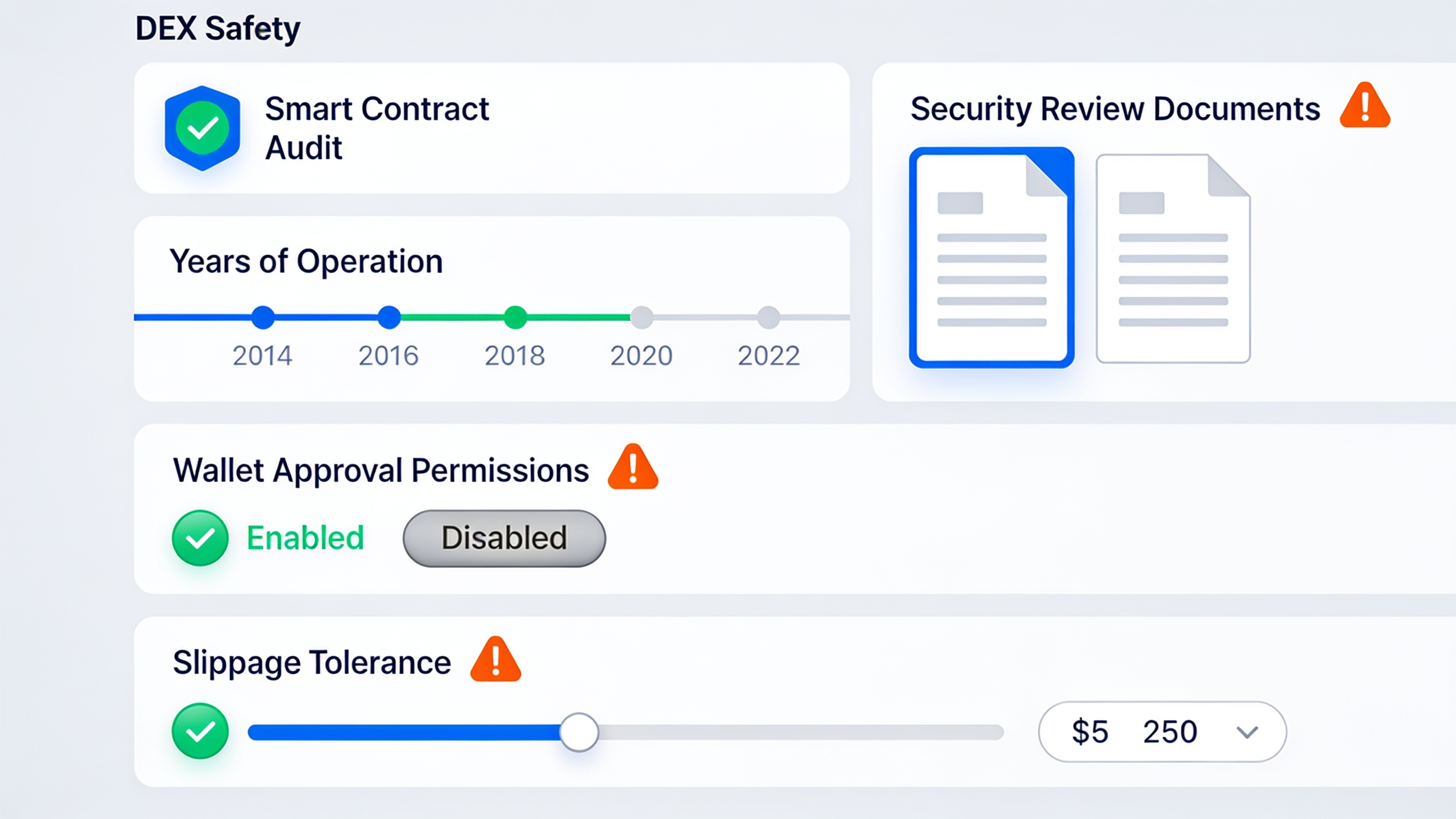
Wallet-approval risk is the other big factor, and this one's entirely on you. When you connect a wallet to a DEX, you're usually granting that contract permission to touch specific tokens. Sketchy or badly built dApps have tricked plenty of people into approving unlimited spending permissions that got drained later. Going back and revoking token approvals you don't need anymore is one of the easiest good habits a DEX user can build. Do it. Seriously.
Front-running and slippage manipulation round out the list. These come from how public blockchains work: transactions sit in a visible queue before they confirm, which in theory lets sophisticated players see pending trades and act on them. Decent DEX interfaces fight this with slippage tolerance settings and price-impact warnings. The catch is you actually have to understand what those warnings mean instead of clicking past them.
And since your private keys are the single point of failure in all of this, how you store them matters at least as much as which exchange you pick. Keeping the bulk of your holdings in a hardware wallet, rather than a browser extension that's plugged into every dApp you've ever visited, cuts your exposure to phishing and malicious approvals in a real way.
Why Multi-Chain Support Matters When Picking a DEX
A DEX's chain support decides which tokens you can even trade, how much you'll pay in network fees, and how painlessly you can shuffle assets between different corners of crypto. It's one of the most practical factors when you're comparing platforms, and also one of the most overlooked. Some DEXs are built for a single blockchain, some run across several EVM-compatible networks, and a smaller group work as true multi-chain aggregators.
Single-chain DEXs are usually tightly wired into their home ecosystem's tooling and liquidity, which is great until you're coming from a different network and have to bridge assets in, adding its own cost and headache.
Multi-chain DEXs deploy the same protocol across a bunch of EVM-compatible networks, so you can trade on whichever chain currently has the lowest fees or the pool you actually need, all without jumping to a different platform.
Aggregators go a step further and search across multiple DEXs, and sometimes multiple chains, at once to find the most efficient route. That's especially handy for larger orders, where slippage across one thin pool would otherwise eat you alive.
If you hold assets scattered across a few ecosystems, chain flexibility honestly matters more day-to-day than any single fee percentage. It's the difference between one clean swap and three bridging steps just to get where you're trying to go.
DEXs vs. Centralized Exchanges: Which Should You Use in 2025?
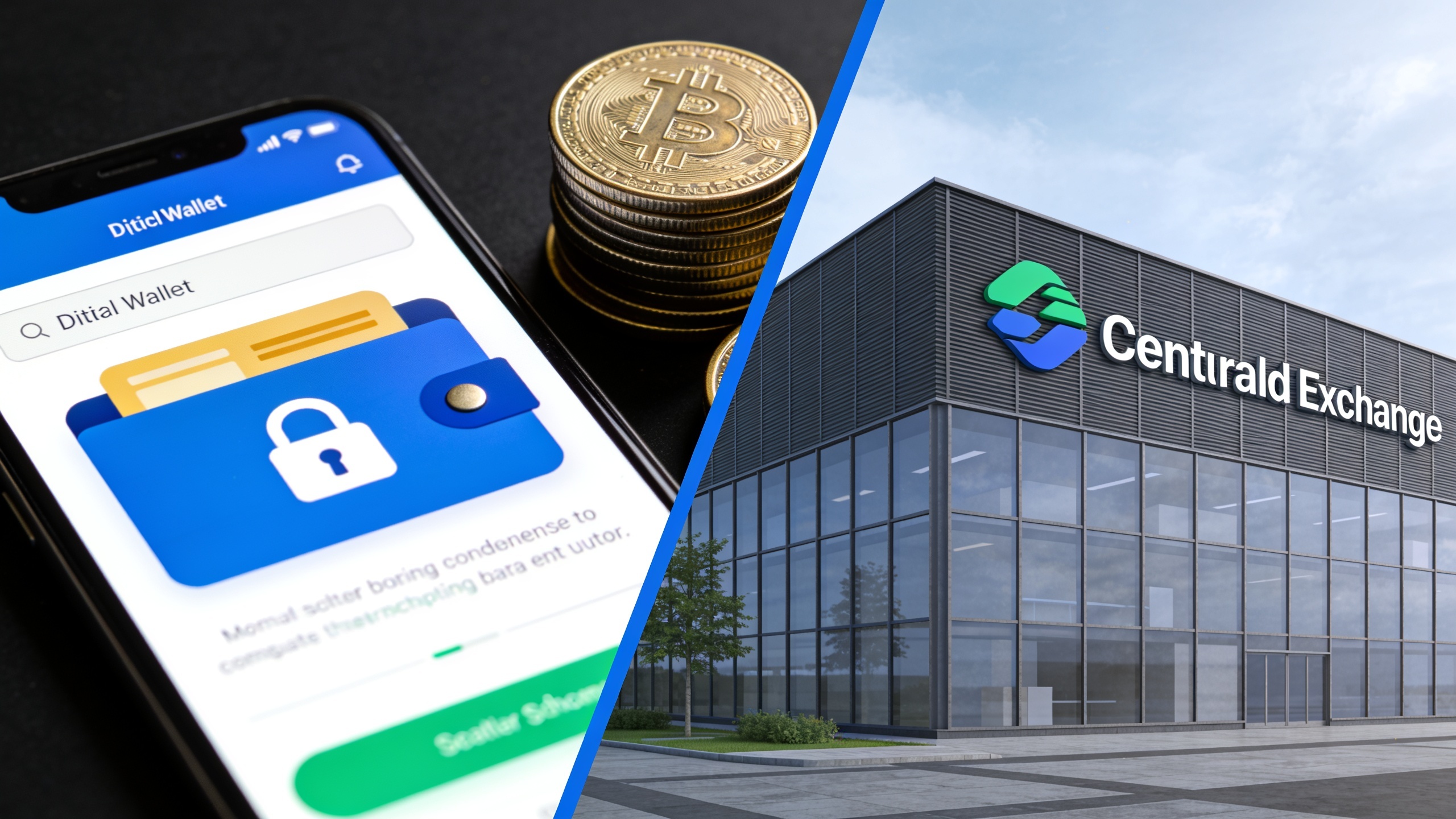
DEXs and centralized exchanges solve different problems, and most active traders in 2025 just use both instead of picking a side. Which one you reach for depends on whether you're prioritizing self-custody and permissionless access, or convenience, fiat on-ramps, and having actual customer support.
| Factor | Decentralized Exchange (DEX) | Centralized Exchange (CEX) |
|---|---|---|
| Custody of funds | User retains custody at all times | Exchange holds custody of deposited funds |
| Account requirements | Typically no sign-up or identity verification | Usually requires KYC identity verification |
| Asset access | Often broader access to newly listed or niche tokens | Curated listings, often slower to add new tokens |
| Fiat deposits/withdrawals | Generally not supported directly | Commonly supported |
| Customer support | Limited to none; users self-manage issues | Dedicated support teams typically available |
| Primary risk | Smart contract risk, user error, wallet security | Custodial risk, exchange insolvency or mismanagement |
One thing people forget: once you've actually made money on either type of platform, turning that crypto into spendable cash is a whole separate step. If your plan is to spend your profits rather than just keep reinvesting them forever, it's worth looking at the best crypto debit cards for everyday spending, which cover how to go from holding digital assets to buying real-world stuff with them.
Lots of experienced traders lean on centralized exchanges for fiat conversion and the big high-liquidity pairs, then switch to DEXs specifically for newer tokens, self-custody, or DeFi-native plays like providing liquidity. They don't treat it as one-or-the-other, and neither should you.
FAQ
What's the safest decentralized exchange to use in 2025?
There isn't one "safest" DEX that works for everybody, because safety comes down to a contract's history, how the specific pool you're using is built, and how carefully you handle your own wallet approvals. As a rule, protocols that have been running a long time and see heavy, steady real-world use are considered more battle-tested than brand-new contracts nobody's poked at yet. Always check the current audit status and security disclosures on the platform itself before committing.
Are DEXs safer than centralized exchanges?
They carry different risks, so "safer" isn't really the right frame. DEXs wipe out custodial risk since you never hand over your keys, but they add smart contract risk and dump full responsibility for wallet security onto you. Centralized exchanges take some of that technical burden off your plate, but you're trusting the company to guard your funds and handle withdrawals like grown-ups.
Do I need to do KYC (identity verification) to use a DEX?
Most DEXs don't require any identity verification to connect a wallet and trade, since everything runs through smart contracts instead of a company-managed account. That permissionless access is one of the defining features of DEXs. The flip side is there's usually no support line to sort out disputes or claw back lost funds, so the freedom cuts both ways.
What's the difference between an AMM and an order-book DEX?
An AMM like Uniswap or PancakeSwap prices trades algorithmically off the ratio of assets in a shared pool, rather than matching individual buy and sell orders. An order-book DEX, which you see more with derivatives platforms like dYdX, lists individual buy and sell orders like a traditional exchange does, except it settles through non-custodial infrastructure.
Can I use a DEX from my phone?
Yep. Most major DEXs work through mobile wallet apps or mobile browsers with wallet extensions, and plenty of wallet providers have dedicated apps with DEX access baked right in. Just don't get sloppy on mobile. Verifying URLs and actually reading transaction details before approving matters every bit as much on your phone as on a desktop.
Final Thoughts
Picking a decentralized exchange in 2025 isn't about hunting down one perfect platform. It's about matching a DEX's liquidity, fees, chain support, and security to how you actually trade. AMMs, aggregators, and derivatives DEXs each solve a different problem, and for most people the smart move is knowing which category fits a given trade instead of just defaulting to whatever's trending on Twitter this week. The DeFi landscape keeps shifting, but the fundamentals in this guide (liquidity, fees, chain flexibility, and basic security hygiene) stay the most reliable way to size up any non-custodial venue, this year and probably for a good while after.