Green Crypto Mining: Cutting Bitcoin's Carbon Footprint in 2025
Green crypto mining is the push to power Bitcoin and other proof-of-work networks with renewable or low-carbon energy, more efficient hardware, and honest emissions accounting instead of just quietly...

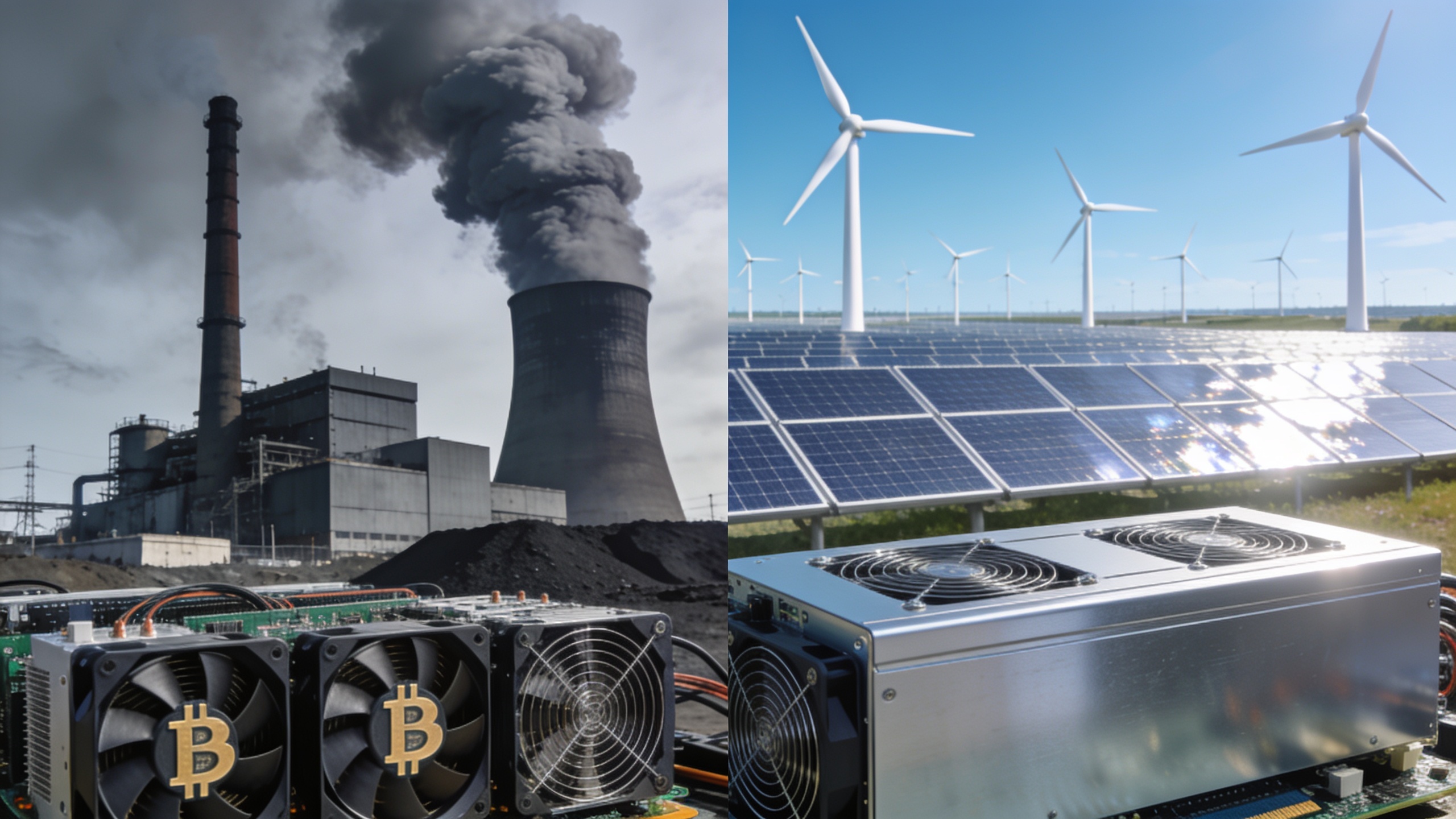
Green crypto mining is the push to power Bitcoin and other proof-of-work networks with renewable or low-carbon energy, more efficient hardware, and honest emissions accounting instead of just quietly burning fossil fuels and hoping nobody asks questions. And in 2025, it's not a PR line anymore. It's become a genuine business requirement, because institutional investors, regulators, and grid operators all keep asking the same uncomfortable question: how much carbon does a single mined coin actually represent?
This piece walks through what's driving the shift, how mining companies are actually responding (some sincerely, some not so much), and what you should check before you put money behind a mining operation or a mining-adjacent stock.
Table of Contents
- What Is Green Crypto Mining?
- Why Does Bitcoin Have a Carbon Footprint Problem?
- How Much Energy Does Bitcoin Mining Actually Use?
- Renewable Energy Strategies Reshaping Mining Operations
- Immersion Cooling and Hardware Efficiency Gains
- Carbon Offsets: Genuine Progress or Greenwashing?
- Proof-of-Work vs. Proof-of-Stake: The Ongoing Debate
- What Should Eco-Conscious Investors Look For?
- Frequently Asked Questions
What Is Green Crypto Mining?
Green crypto mining is Bitcoin (and other proof-of-work coin) mining that runs on renewable, nuclear, or otherwise low-emission electricity, paired with efficiency tricks like immersion cooling and heat reuse that shrink the energy needed per coin. It's not one certification or one gadget. Think of it more as a spectrum. On one end you've got miners who just buy some carbon offsets and call it a day. On the other, you've got operations building facilities right next to hydro dams or wind farms and shutting down when the grid gets stressed.
The reason the term caught on at all is that proof-of-work mining is energy-hungry by design. The whole process, where specialized computers (ASIC hardware, if you want the jargon) race to solve cryptographic puzzles to validate transactions and win block rewards, guzzles electricity on purpose. That's not a bug. It's exactly what makes Bitcoin expensive to attack. But it also means where you get your electricity is the single biggest lever a miner has over its environmental footprint. So in practice, "sustainable bitcoin mining" usually boils down to some combination of renewable power deals, setting up shop next to stranded or curtailed energy, playing nice with grid demand-response programs, and actually being transparent about emissions.
Why Does Bitcoin Have a Carbon Footprint Problem?
Bitcoin's carbon problem comes down to incentives: rewards go to whoever does the most computational work, so miners are pushed to run as much hardware as possible, for as long as possible, wherever the power is cheapest, regardless of how clean it is, unless cost or regulation forces them to care. And because the network hashrate (the combined computing muscle securing the blockchain) has exploded since 2009, the total electricity draw has climbed right along with it.
Things really heated up after China, which used to host most of the world's Bitcoin mining, banned crypto mining outright in mid-2021. That one decision set off a scramble. Mining hardware flooded into the United States, Kazakhstan, Russia, and elsewhere, reshuffling the network's whole energy mix practically overnight. The folks at the University of Cambridge, through the Cambridge Centre for Alternative Finance, have been tracking all this with their Bitcoin Electricity Consumption Index (CBECI). Since the China exodus, their data shows miners piling into Texas and other US regions with deregulated power markets and lots of wind or natural gas to tap.
Critics say any activity fighting households and industry for grid capacity deserves a hard look, especially with climate targets tightening. Fair point. But defenders push back with something worth hearing: mining is uniquely mobile and can be switched off in seconds, unlike most industrial loads. That flexibility is exactly why it's turned into a testing ground for renewable integration and grid balancing rather than a straightforward villain. Honestly, both sides have a point here, which is what makes it such a stubborn argument.
How Much Energy Does Bitcoin Mining Actually Use?
Bitcoin mining's global electricity use is big enough to sit alongside a mid-sized country, but the exact number bounces around constantly with hashrate, hardware efficiency, and power prices, which is why serious researchers give you a range instead of one tidy figure. The Cambridge CBECI is the most-cited independent estimate, and it deliberately shows upper- and lower-bound scenarios rather than pretending it knows the precise answer. It can't, really. You can't directly measure the energy mix and machine efficiency of thousands of anonymous miners. You can only infer it from hashrate and known hardware models.
That uncertainty is the whole ballgame, actually. Emissions don't just depend on how much electricity gets used, they depend on the generation mix at each specific location, which is why where a miner sits matters way more than some global energy headline number. A miner running purely on hydro in Washington State or Sichuan has a totally different carbon profile than one plugged into a coal-heavy grid, even if the two burn through identical kilowatt-hours.
The Bitcoin Mining Council, an industry group set up in 2021 by public miners and Bitcoin advocates, publishes member surveys on sustainable power usage. Just keep in mind that data is voluntary and self-reported, not independently audited. So read it as an industry-friendly estimate, not a neutral scorecard. That's a distinction worth remembering any time a company or trade group waves around its own sustainability percentage.
Renewable Energy Strategies Reshaping Mining Operations
The core idea behind greener mining is simple enough: instead of pulling from the general grid, put your hardware right next to energy that's cheap, low-carbon, and often getting wasted anyway. A few different flavors of this have emerged.
Stranded and Flared Gas Capture
Some operations set up shop at or near oil and gas wellheads to burn natural gas that would otherwise get flared (torched off) or vented straight into the sky because it's too expensive to pipe anywhere useful. The argument goes: burning that gas to power mining beats releasing it unburned, since methane is a much nastier greenhouse gas than the CO2 you get from combustion. This one's genuinely divisive. Environmental groups aren't sold, because at the end of it you're still burning a fossil fuel. Miners, meanwhile, love to call it a bridge solution for regions with no renewable infrastructure yet. I'd put it in the "better than nothing, but don't oversell it" bucket.
Hydro, Wind, and Solar Co-location
Hydro dams with seasonal excess, wind farms stranded by weak transmission lines, solar arrays flooding the grid at midday, they all produce power that can just go to waste when there's no nearby demand. Build a mining facility next door and you can soak up that surplus, basically monetizing energy that would otherwise be curtailed (that's the industry word for power deliberately throttled or dumped because the grid can't take it).
Demand Response and Grid Balancing
In deregulated markets like Texas's ERCOT grid, some miners have signed demand-response agreements. Translation: they agree to power down fast during peak stress, like a heat wave or a winter storm, in exchange for payments or cheaper rates. That turns a mining facility into a flexible load that actually helps stabilize the grid instead of piling onto peak demand. Regular factories and homes can't really do this, because you can't just flip them off on ten minutes' notice.
| Energy Sourcing Approach | How It Works | Primary Sustainability Argument | Main Criticism |
|---|---|---|---|
| Stranded/flared gas capture | Mining hardware co-located at wellheads uses gas that would otherwise be flared or vented | Reduces methane venting; converts waste gas to useful compute | Still burns fossil fuel; emissions accounting is disputed |
| Hydro/wind/solar co-location | Facilities built near renewable generation with seasonal or time-of-day excess capacity | Uses power that would otherwise be curtailed and wasted | Renewable output isn't guaranteed year-round; grid mix can shift |
| Demand-response participation | Miners agree to shut down during peak grid stress in exchange for payment | Acts as flexible load, supporting grid stability | Doesn't change baseline energy mix, only timing of use |
| Carbon offset purchases | Miners buy credits tied to reforestation, methane capture, or similar projects | Neutralizes reported emissions on paper | Offset quality varies widely; doesn't reduce actual electricity use |
Immersion Cooling and Hardware Efficiency Gains
Immersion cooling means dunking your ASIC mining hardware straight into a non-conductive dielectric fluid instead of blasting it with fans and open air, which lets you pack equipment tighter and pull heat away far more effectively. Since overheating is one of the big things holding back how hard you can push mining chips, better cooling more or less converts directly into more work per unit of electricity. Or, if you'd rather, the freedom to run at lower, more efficient power settings without losing performance.

There's more to it than raw efficiency, though. Immersion setups use less water than some evaporative cooling systems and tend to extend hardware lifespan by keeping dust and thermal stress off the components, which also means less e-waste from machines dying young. And a few operations have taken it further, capturing the waste heat from mining and piping it somewhere useful, like warming greenhouses, fish farms, or nearby buildings. Turning waste heat into a second product? That's the kind of clever I actually respect.
On the chip side, each new ASIC generation keeps chipping away at joules per terahash, meaning the newest machines crank out the same computational work on noticeably less electricity than the old ones. That refresh cycle is its own sustainability lever. A company constantly upgrading to more efficient rigs can shrink its carbon footprint per coin even if its power source and total hashrate never budge.
Carbon Offsets: Genuine Progress or Greenwashing?
Carbon offsets let mining companies buy credits tied to emissions-cutting projects somewhere else, say reforestation or methane capture, so they can claim a lower net footprint without actually touching their own energy sourcing. This has gotten popular among miners trying to look ESG-friendly for investors. It's also drawn a steady stream of criticism from environmental researchers and journalists who keep poking holes in the additionality and permanence of offset projects across pretty much every industry, not just crypto.
The concern is honestly not complicated. An offset only does real climate good if the project wouldn't have happened anyway (that's additionality) and if the reduction actually sticks around (permanence, which is especially shaky for forests that can burn down or get logged). If either of those falls apart, a "carbon neutral" claim starts overstating things fast. So for eco-conscious crypto investors, an offset disclosure is worth a whole lot less than hard evidence of renewable sourcing or lower total electricity use. Offsets can be a fine bonus on top of genuine efficiency gains. They just aren't a replacement for them, and anyone selling them that way should raise an eyebrow.
Proof-of-Work vs. Proof-of-Stake: The Ongoing Debate
Proof-of-work (PoW) and proof-of-stake (PoS) are the two big ways blockchains validate transactions and stay secure, and they're worlds apart on energy. PoW, which Bitcoin uses, makes miners burn real-world computational energy to compete for block rewards, and that's the whole source of the carbon footprint. PoS instead picks validators based on how much cryptocurrency they've staked (locked up) as collateral, ditching the energy-hungry race entirely.
The clearest proof of how big that gap is came in September 2022, when Ethereum pulled off "the Merge" and switched from proof-of-work to proof-of-stake. Per estimates from the Ethereum Foundation and independent researchers, the change slashed Ethereum's energy consumption by more than 99%, because validators no longer needed to run power-guzzling mining rigs at all. That number gets quoted constantly in arguments about whether Bitcoin should, or even could, do the same thing.
Bitcoin's core developers and a big chunk of its community have flatly refused to go that route. Their argument is that proof-of-work's energy cost is the point. It's what makes attacking the network credibly, painfully expensive, and PoS brings its own baggage around trust and the risk of power concentrating among big stakeholders. This is really more a philosophical fight than a technical one, if you ask me. Which means the "green mining" conversation for Bitcoin specifically isn't about swapping the mechanism out. It's about squeezing more efficiency and cleaner power into proof-of-work as it stands. Ethereum solved its carbon problem by changing the rules of the game. Bitcoin has no plans to.
What Should Eco-Conscious Investors Look For?
If you're sizing up a Bitcoin mining company or a mining-exposed stock, put verifiable, location-specific energy disclosures ahead of vague sustainability slogans, because slogans are cheap to say and nearly impossible to confirm. A handful of concrete checks make this manageable.
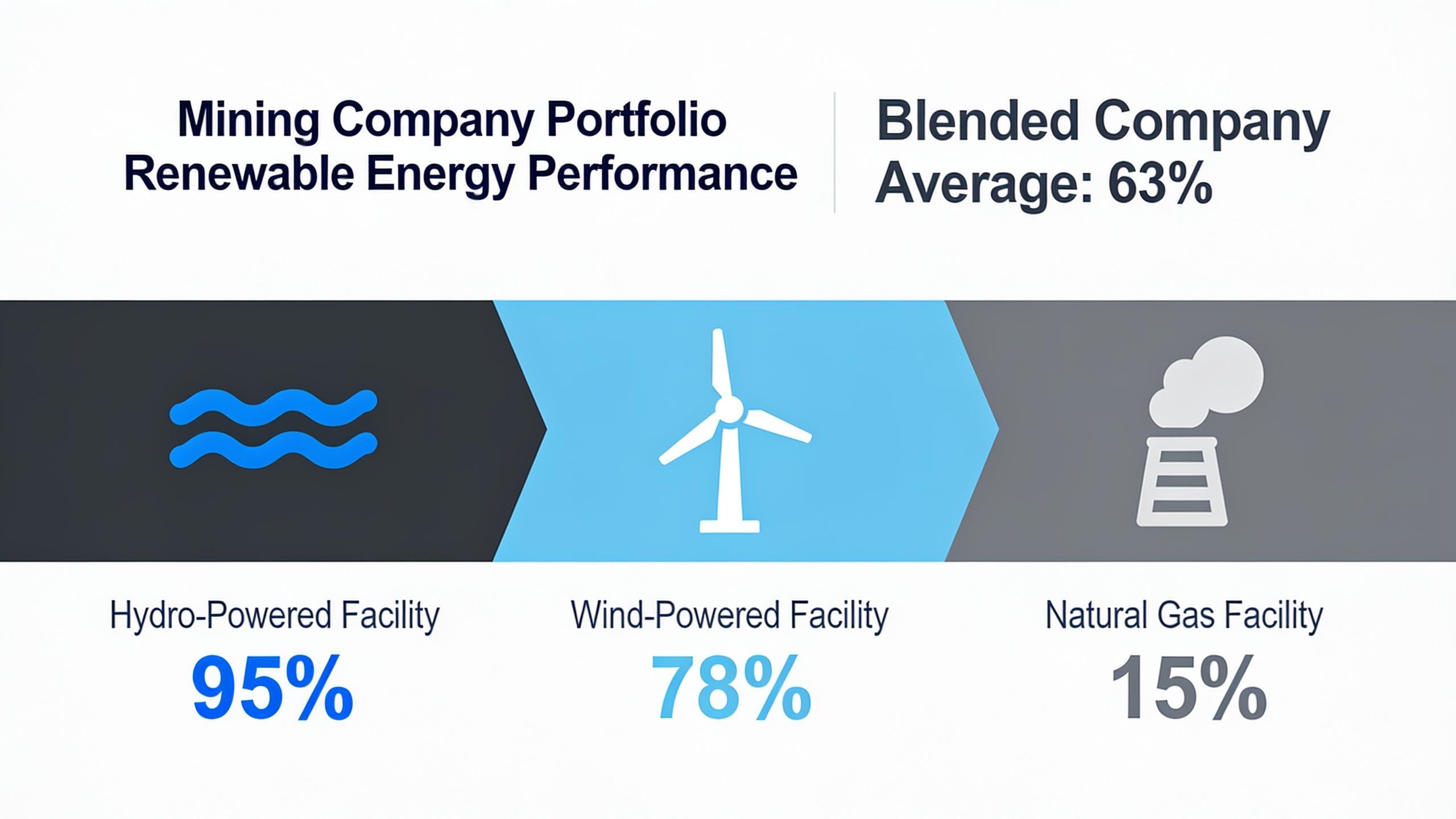
Start by seeing whether the company actually breaks down the grid or power source for each individual facility, instead of hiding behind one blended "percent renewable" number for the whole company. Blended averages are great at masking a heavily fossil-fueled site or two. Next, dig for third-party or regulatory-filed data, like the figures publicly traded miners have to include in SEC filings, rather than trusting press releases or self-reported industry surveys that have every reason to flatter themselves. And check whether the company takes part in demand-response programs with grid operators, since that's a real, contract-based commitment, not a marketing line.
One more thing worth keeping in your head: crypto's environmental story doesn't float free of its financial one. As institutional money has poured into digital assets, Bitcoin's price has increasingly moved in lockstep with the broader markets rather than acting like some uncorrelated "digital gold," a shift dug into over in Crypto Stock Market Correlation: What Recent Data Shows. That correlation matters for green mining too, because it means miners now answer to the same institutional players, pension funds, ETFs, asset managers, who are running ESG screens across their entire portfolios. Which puts real financial pressure on miners to clean up their act rather than treating it as optional PR fluff.
And if you're holding coins mined through greener operations and actually want to spend the stuff day-to-day instead of just hodling forever, it's worth seeing how the different options stack up. The roundup of Best Crypto Debit Cards for Everyday Spending in 2025 breaks down what's currently out there for turning crypto into actual purchasing power.
Frequently Asked Questions
Is Bitcoin mining getting more or less energy-hungry over time?
Total network energy use has mostly climbed as hashrate grows and more hardware comes online, even though individual machines keep getting more efficient. The Cambridge CBECI tracks this as a range, not a fixed number, because real consumption depends on the unknown mix of hardware models and power sources running at any given moment.
Could Bitcoin mining ever be fully carbon-neutral?
Individual facilities can absolutely run on nearly 100% renewable or low-carbon power if they're built in the right spot, like next to a hydro dam or a wind farm with excess capacity. But claiming the whole global network is carbon-neutral is a much taller order to verify, since mining is scattered everywhere and nobody audits its energy sourcing network-wide.
Why didn't Bitcoin just switch to proof-of-stake like Ethereum?
Bitcoin's community has largely said no thanks, because it sees proof-of-work's energy cost as core to the network's security, making attacks genuinely expensive in the real world. Ethereum's 2022 Merge to proof-of-stake was a deliberate trade-off, and Bitcoin's core developers and most of its community simply haven't chosen to make it.
Can you trust carbon offsets from mining companies?
Offset quality is all over the map depending on the project type and who's verifying it, and the wider carbon-offset market has taken plenty of heat over whether a lot of these credits represent real, additional cuts. Treat offset claims as a side note, not proof of a genuinely low footprint, and go looking for direct evidence of renewable sourcing instead.
Does mining location really affect a coin's carbon footprint?
Yep. Because generation mixes swing wildly by region and grid, a coin mined on a hydro-heavy grid has a totally different emissions profile than one mined on coal, even though the coins are identical on-chain. That's exactly why company-wide sustainability percentages tell you less than facility-by-facility disclosure.
Where This Leaves the Industry
The honest read on green crypto mining in 2025 is that it's an ongoing efficiency and transparency race, not a problem anyone's actually solved. Renewable co-location, immersion cooling, and demand-response deals are genuinely cutting the marginal carbon cost of new hashrate, even while total network energy keeps shifting around with price cycles and hardware upgrades.
For investors, the practical move is to treat sustainability claims exactly like any other unverified financial claim. Look for specifics. Ask for facility-level data. And give self-reported industry figures the side-eye they deserve. The companies willing to actually show their work, instead of just tossing out a percentage, are the ones worth watching closely.