ICO vs IEO vs IDO: Comparing Crypto Fundraising Models
If you've spent any time watching new crypto projects launch, you've probably run into three acronyms that all seem to mean roughly the same thing: ICO, IEO, and IDO. They're all just different ways...

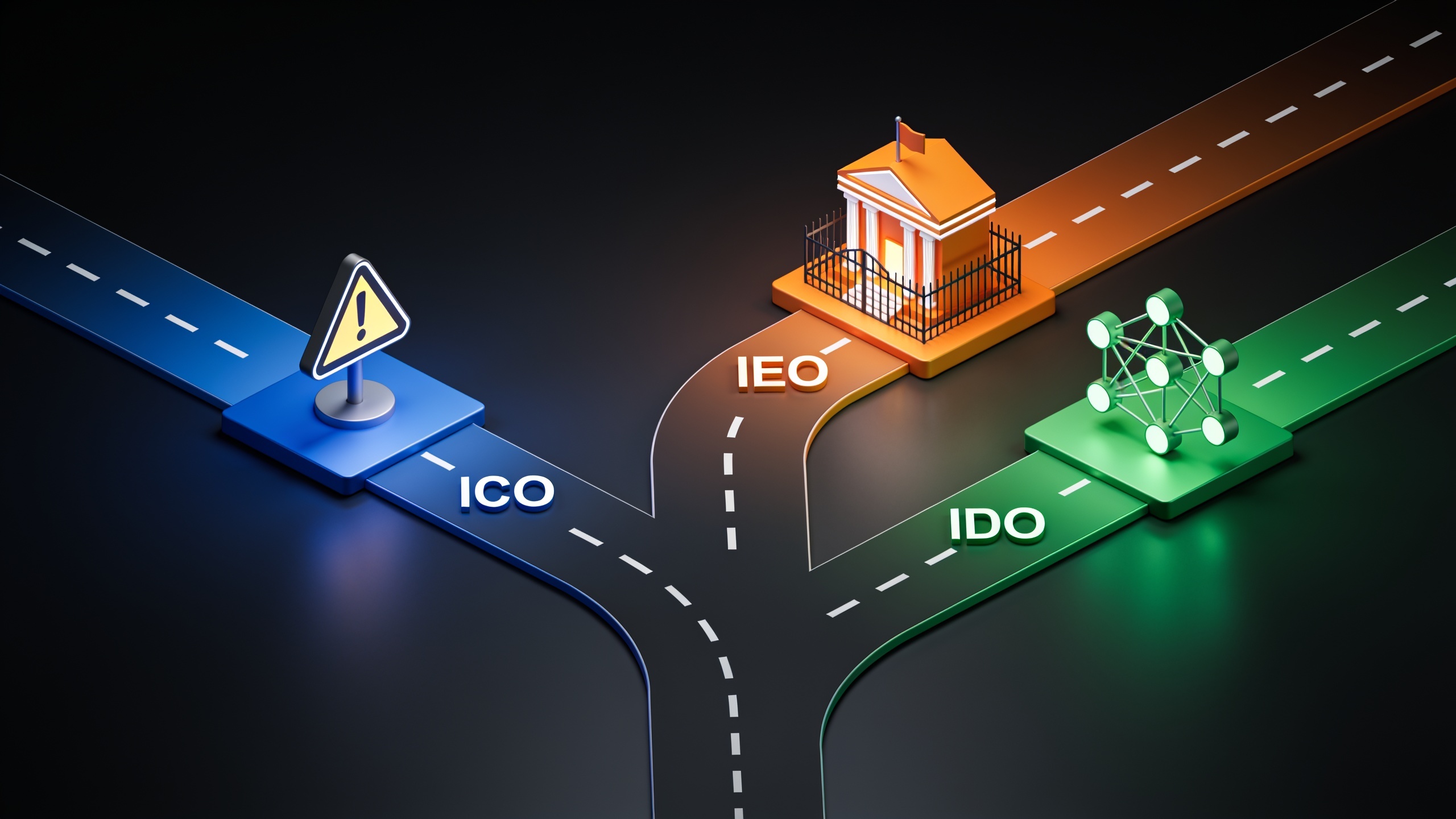
If you've spent any time watching new crypto projects launch, you've probably run into three acronyms that all seem to mean roughly the same thing: ICO, IEO, and IDO. They're all just different ways of selling brand-new tokens to the public. But the differences between them actually matter a lot, mostly because they tell you how much scrutiny a project has faced before it ever touched your wallet.
The whole reason these models exist is that crypto projects can't raise money the normal way. There's no bank, no stock exchange, no underwriter in a suit vouching for anyone. So the question becomes: how do you sell tokens to a bunch of strangers on the internet without any of that traditional infrastructure? Each model answers that question differently, and the answer usually comes down to one thing. Who, if anyone, is standing between the project and your money.
Let me walk you through how each one actually works, where regulators have been poking around, and what the track record tells us about which ones tend to blow up in people's faces.
Table of Contents
- What Are ICOs, IEOs, and IDOs?
- ICO vs IEO vs IDO: Key Differences at a Glance
- How Do ICOs Work, and Why Did They Fall Out of Favor?
- What Makes IEOs Different From ICOs?
- Why Are IDOs Becoming the Preferred Token Launch Model?
- ICO vs IEO vs IDO: Risk, Investor Protections, and Regulatory Scrutiny
- Historical Success Rates and Notable Examples
- ICO vs IEO vs IDO: Which Crypto Fundraising Model Should You Choose?
- Frequently Asked Questions
What Are ICOs, IEOs, and IDOs?
All three are just ways of selling new crypto tokens to investors, and the thing that separates them is who runs the sale and who checks the project out first. An ICO (Initial Coin Offering) is the DIY version. The project team runs the whole thing itself, usually straight from its own website and smart contract. An IEO (Initial Exchange Offering) is basically the same idea, except a centralized exchange hosts the sale, vets the project, and handles distributing the tokens. And an IDO (Initial DEX Offering) shifts all of that onto a decentralized exchange, using automated liquidity pools instead of some company-run order book.
So really the whole thing boils down to intermediation. ICOs have none. IEOs bolt a centralized gatekeeper onto the front. And IDOs add decentralized infrastructure without necessarily adding an actual human who looks at the project and goes "hm, is this legit?" That one variable, who's standing between the founder and your wallet, ends up driving almost everything else. The risk, the cost, the regulatory headaches. All of it.
ICO vs IEO vs IDO: Key Differences at a Glance
Honestly the quickest way to get your head around this is just to see them lined up next to each other. Who runs the sale, how much vetting happens, and whether you can actually trade the thing afterward.
| Factor | ICO | IEO | IDO |
|---|---|---|---|
| Hosting platform | Project's own website/smart contract | Centralized exchange (e.g., a launchpad) | Decentralized exchange or launchpad protocol |
| Vetting process | Minimal to none; self-reported | Exchange conducts due diligence before listing | Varies widely; often automated or community-driven |
| KYC/AML requirements | Often optional or inconsistent | Usually mandatory via the exchange | Increasingly required, but enforcement is inconsistent |
| Listing after sale | Not guaranteed | Typically listed on the hosting exchange immediately | Usually listed on the DEX immediately via liquidity pool |
| Upfront cost to project | Legal and marketing costs only | Exchange listing/hosting fees | Protocol or launchpad fees, generally lower than IEOs |
| Regulatory exposure | Highest historically; frequent SEC actions | Moderate; exchange absorbs some liability | Growing; regulators increasingly scrutinize DEX-based sales |
| Investor protection | Lowest | Moderate (exchange reputation at stake) | Low to moderate, depends on protocol design |
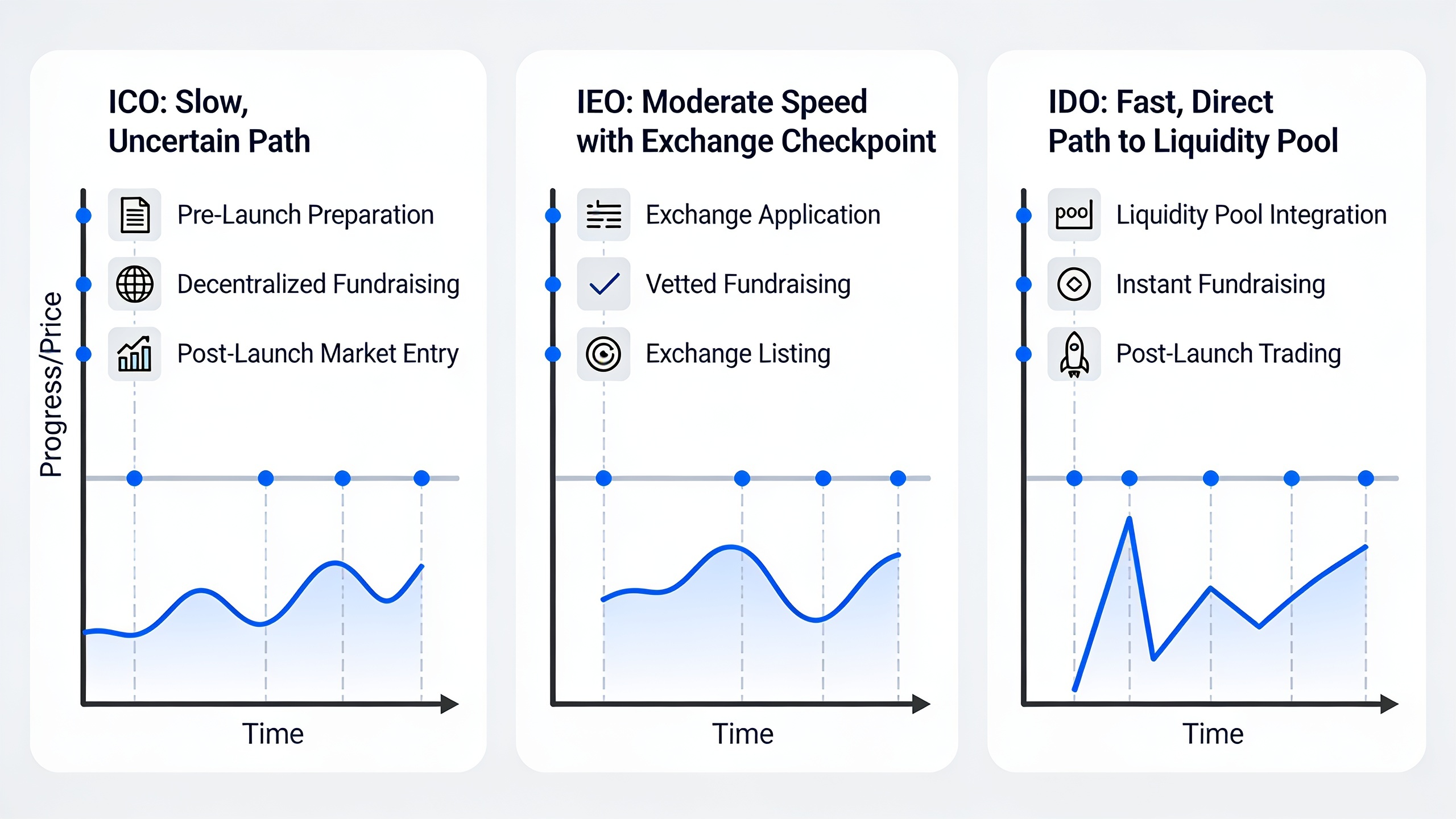
| Speed to market | Slower (requires building trust independently) | Moderate (subject to exchange approval timelines) | Fastest (permissionless, code-driven) |
How Do ICOs Work, and Why Did They Fall Out of Favor?
An ICO works like this: a project publishes a whitepaper, picks a token price, and takes contributions (back in the day, usually Bitcoin or Ether) straight into a wallet or smart contract it controls. No exchange. No regulator. Nobody in the middle. This was the model that ran wild during the 2017 boom, when thousands of projects raised money this way with basically zero standardized vetting.
And then it all fell apart. The ICO model collapsed under the weight of its own fraud rate and the regulatory hammer that came down afterward. The SEC's 2017 DAO Report concluded that certain tokens sold in ICOs could actually qualify as securities under U.S. law, which meant issuers were on the hook for registration and disclosure requirements they'd mostly just ignored. That kicked off years of enforcement actions against teams that had sold tokens to U.S. investors without registering them, and suddenly the "just post a whitepaper and take ETH" approach got a lot scarier for founders.
The number everyone still quotes comes from a 2018 research report by Satis Group, which estimated that roughly 80% of the ICOs run in 2017 showed signs of being scams or otherwise never delivered a working product. That figure became a rallying cry for tighter oversight, and it's a big part of why exchanges started actually vetting projects before listing them.
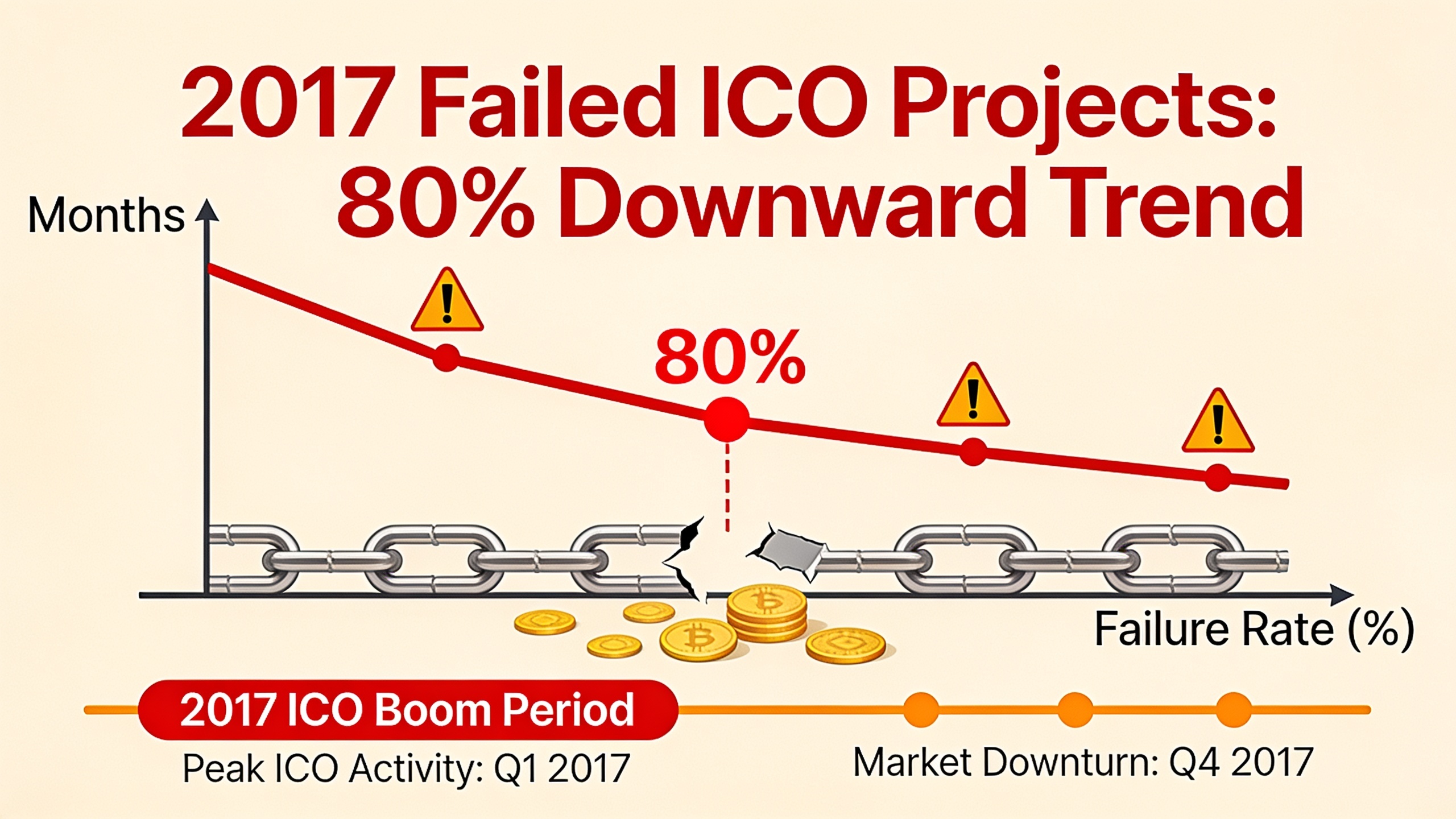
Here's the brutal part for investors. ICOs give you no built-in vetting, no guaranteed liquidity, and zero recourse if the team just vanishes. You're carrying nearly all the risk yourself. It's also the model most tied to "rug pulls," where a team scoops up everyone's money and abandons ship.
What Makes IEOs Different From ICOs?
The big difference is that with an IEO, a centralized exchange steps in as the gatekeeper and does due diligence on the project before letting the token sale go live on its launchpad. Instead of firing your funds off to some random wallet address and hoping for the best, you're buying tokens through the exchange's normal account system, often with an exchange-native token or a stablecoin you already hold there.
This whole model was basically a direct reaction to the ICO fraud mess. Exchanges figured out they could charge project teams a listing fee, market the sale to their existing users, and lend their own reputation as a stamp of approval. Binance Launchpad became the poster child for this, and its January 2019 sale of BitTorrent (BTT) tokens reportedly sold out in minutes. That tells you everything about how much more demand a trusted exchange brand could pull compared to some anonymous team hawking a PDF.
Now, IEOs cut down your risk, but they definitely don't erase it. The exchange usually runs KYC/AML checks and does some technical or legal review before green-lighting a sale, and it's got a reputation to protect so it won't want an obvious scam on its launchpad. But let's be clear: an exchange kicking the tires is not the same as a regulatory audit, and getting listed doesn't mean the token will actually perform or that the team will hit a single milestone on its roadmap. Oh, and exchanges charge projects real money to host these sales, which is a cost ICOs and some IDOs skip.
Why Are IDOs Becoming the Preferred Token Launch Model?
Newer projects keep gravitating toward IDOs because the token launches straight into a liquidity pool on a decentralized exchange, so it's tradable the instant the sale happens. No waiting around for some centralized exchange to approve you on its own sweet timeline. Since DEXs run on automated smart contracts instead of a company-operated order book, a project can go from fundraising to a live, tradable market in a single transaction.
That speed is the whole appeal. You don't have to negotiate a listing fee or survive a centralized exchange's internal review to reach the market. Some launchpad protocols built on top of DEXs have layered on things like staking requirements, allowlists, or community voting to cut down on spam and lazy launches. But how much scrutiny you actually get swings wildly from one launchpad to the next, and it's generally way lighter than what a big centralized exchange puts a project through before an IEO.
And here's the catch, because there's always a catch. That "immediate liquidity" cuts both ways. A token that lists instantly can also be dumped instantly, which makes IDOs especially prone to nasty price collapses the second early buyers cash out. Which is why, if you're playing in the IDO space, reading the tokenomics closely matters even more than usual. Vesting schedules, how deep the initial liquidity actually is, how much of the supply insiders are holding. That stuff is the difference between a launch and a bloodbath.
ICO vs IEO vs IDO: Risk, Investor Protections, and Regulatory Scrutiny
Risk and regulatory exposure do drop off a bit as you move from ICO to IEO, but let's not kid ourselves. None of these three offers anything close to the investor protections you'd get from a regulated securities offering. Adding an exchange or a DEX protocol changes who absorbs the reputational and operational risk, but it does not magically turn a token sale into some insured, guaranteed investment product. Not in any of the three.
ICOs carry the heaviest regulatory exposure, plain and simple, because there's no intermediary to share the liability. The SEC's Howey-test-based approach has repeatedly treated token sales made directly to U.S. persons as unregistered securities offerings whenever they hit the criteria laid out in that 2017 DAO Report. If you invest in an ICO, your protection is basically whatever the smart contract code enforces plus whatever legal recourse you can scrape together in the jurisdiction of a founding team that's often, well, anonymous. Good luck with that.
IEOs push some of that burden onto the exchange, which usually demands KYC/AML compliance and reviews the project's legal structure before agreeing to host anything. That doesn't get the exchange off the hook entirely (regulators in plenty of jurisdictions have gone after exchanges over the tokens they list), but it does mean you're transacting through a platform that has an actual compliance department and a real incentive not to let obvious fraud onto its own launchpad.
IDOs live in a gray zone regulators are still actively trying to map out. Because a DEX protocol is often run by decentralized, sometimes pseudonymous contributors rather than one clear corporate entity, it's genuinely hard for regulators to point at a single accountable party. But that hasn't slowed the scrutiny down. Regulators in the U.S., EU, and elsewhere keep widening their gaze from centralized platforms toward DeFi more broadly. The practical upshot for you? IDOs give you the least formal recourse if a project flops or turns out to be a scam, even though the underlying blockchain is completely transparent and auditable.
If you're eyeing a career tied to all this regulatory churn (compliance, tokenomics design, launchpad operations, that kind of thing), it's worth checking out this guide on launching a crypto career, including in-demand skills and salary expectations. Compliance and legal roles have basically exploded alongside this exact tug-of-war between innovation and oversight.
Historical Success Rates and Notable Examples
The pattern here is pretty clear once you look at it: the more vetting a sale goes through before launch, the lower the rate of outright fraud. That said, none of the three has exactly rained down consistent long-term returns on ordinary retail buyers. The Satis Group's 2018 research is still the most-cited attempt to put numbers on it, with that estimate that roughly 80% of 2017-era ICOs showed characteristics of scams, failed projects, or tokens that just went nowhere after raising a pile of money.
IEOs got to ride on the reputational filtering that exchanges started doing once the ICO wreckage was obvious. Binance Launchpad's early sales, BitTorrent among them in 2019, drew crazy demand precisely because people trusted the exchange's screening more than some anonymous team's whitepaper. But being listed via IEO has never guaranteed a good price. Plenty of IEO tokens have traded well below their sale price months or even years later, which just hammers home the point: exchange vetting cuts fraud risk, it doesn't touch market risk.
IDOs are the youngest of the bunch, so their track record is shorter and messier, scattered across dozens of launchpad protocols instead of a handful of big exchanges. The thing market watchers report most consistently is extreme dispersion. Some IDOs have handed early liquidity providers fast, huge gains. Others have watched prices crater within hours of the pool opening, usually because a tiny handful of wallets were sitting on a massive chunk of the initial supply. That volatility is the flip side of the exact same low-friction, permissionless setup that founders find so appealing.
Since all three models ultimately live or die by how a project handles the money flowing in (and the revenue coming later), any team thinking about how to actually take payments from users as they scale post-launch might want to compare processing options in this rundown of crypto payment gateways, BitPay versus Coinbase Commerce. It covers a separate but related chunk of the infrastructure a lot of token projects need once they graduate from fundraising to running an actual business.
ICO vs IEO vs IDO: Which Crypto Fundraising Model Should You Choose?
There's no single "best" one here, and anyone who tells you otherwise is selling something. It depends entirely on whether you're a founder juggling cost, speed, and credibility, or an investor weighing your own stomach for risk against how much vetting you want before you hand over money. Founders with solid legal counsel and the patience for compliance often do well with an IEO's built-in audience and screening. Founders who care most about speed and lean hard into decentralization ideology usually go for an IDO. And ICOs? Thanks to all that regulatory pressure, they've become the rarest route for any new, legitimate project launching today.
For investors, it really comes down to your personal risk framework. If you want the fastest possible shot at a fresh token and you're genuinely comfortable doing your own homework on tokenomics and team credibility, IDOs offer the most opportunity right alongside the most volatility. If you'd rather have at least a baseline of third-party screening and KYC-backed accountability, you'll probably drift toward IEOs run by established exchanges. And if you're looking at an ICO in this day and age? Treat it with maximum skepticism, given the fraud rate researchers like Satis Group documented and the regulatory attention this model has attracted ever since the SEC's 2017 findings.
But no matter which one you're dealing with, the boring fundamentals don't change. Read the tokenomics document. Check whether the team is public and actually verifiable. Understand the vesting schedule for insider tokens. That's the baseline due diligence regardless of the label on the box.
Frequently Asked Questions
Which is actually the safest way to buy into a new token, an ICO, IEO, or IDO?
None of them is genuinely "safe," sorry. But IEOs generally involve more third-party vetting than ICOs or IDOs, because a centralized exchange screens the project and runs KYC/AML checks before hosting the sale. That knocks down your fraud risk compared to the wild-west ICO era. It does absolutely nothing to protect you from a lousy price after launch, though.
Why did regulators single out ICOs specifically?
The SEC's 2017 DAO Report concluded that tokens sold through certain ICOs met the legal definition of securities under U.S. law, meaning issuers who sold to U.S. investors without registering the offering were potentially breaking securities law. Pair that with the widespread fraud documented in reports like Satis Group's 2018 study, and you get years of enforcement actions that made the ICO model far less viable for new projects.
Do IDOs make you do KYC (know-your-customer) verification?
Depends entirely on the launchpad or DEX protocol running the sale. Some make you do KYC before you can participate, others stay fully permissionless. Because DEXs are usually governed by smart contracts rather than one company, identity checks are way less standardized than they are on a centralized exchange hosting an IEO.
Can a token that launched via IDO end up on a big centralized exchange later?
Yep. A token that debuts through an IDO can absolutely get listed on a centralized exchange down the line if that exchange decides to add it. But that's a totally separate decision each exchange makes on its own, and it's neither guaranteed nor automatic. Lots of projects use an IDO for their initial liquidity and then chase centralized exchange listings afterward as a growth milestone.
So what actually happened to the ICO model after 2018?
ICO volume as the go-to fundraising method dropped off a cliff after the SEC's enforcement actions and all the reporting on ICO fraud, with projects and exchanges shifting toward the more structured IEO model and, later, the faster and more decentralized IDO. Direct-to-public ICOs still exist, they're just far less common among projects that want to be taken seriously.
At the end of it all, choosing between an ICO, IEO, or IDO is really choosing how much trust you're willing to put in a project team alone, an exchange's screening process, or a decentralized protocol's code and community. And as these fundraising models keep morphing, the safest move for any investor stays exactly the same regardless of format. Verify the team, read the tokenomics closely, and treat every early-stage token sale as a high-risk bet, not a sure thing.