Layer 2 Blockchain Solutions Explained: Scaling Ethereum and Beyond
A Layer 2 blockchain is a secondary network built on top of an existing blockchain (usually Ethereum) that processes transactions off the main chain, then settles the final results back onto it....

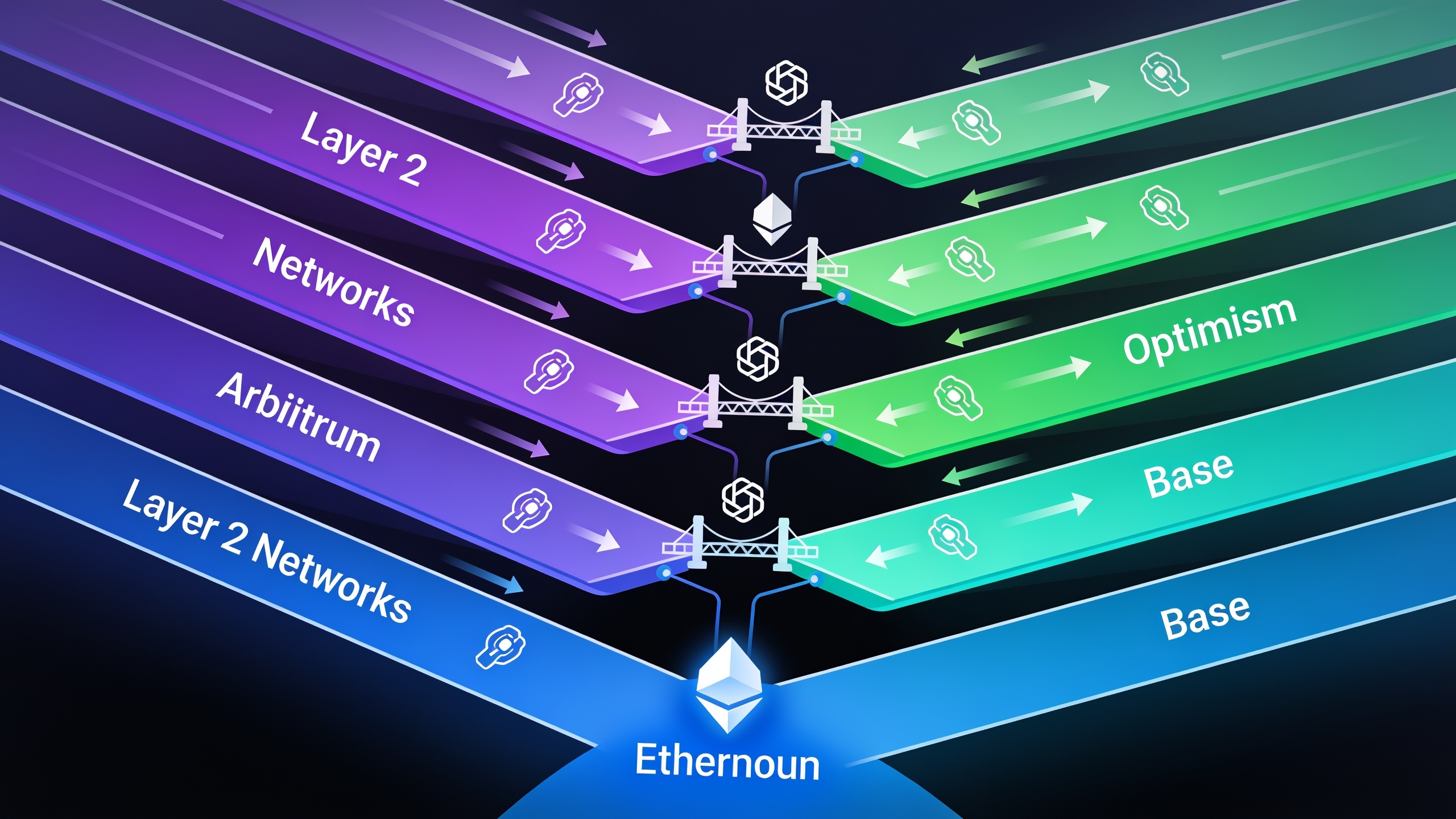
A Layer 2 blockchain is a secondary network built on top of an existing blockchain (usually Ethereum) that processes transactions off the main chain, then settles the final results back onto it. That's the whole trick, and it's why networks like Arbitrum and Optimism can hand you transactions that cost pennies instead of dollars and clear in seconds instead of minutes. If you're trying to figure out where crypto infrastructure is actually headed, Layer 2 isn't some nerdy side quest anymore. It's become the default way most people touch Ethereum, whether they realize it or not.
So let me walk you through how these things work, why they exist in the first place, how the big players stack up, and what all of it means for DeFi going forward.
Table of Contents
- What Is a Layer 2 Blockchain?
- Why Does Ethereum Need Scaling Solutions?
- How Do Layer 2 Blockchain Networks Actually Work?
- Arbitrum vs. Optimism: Comparing the Leading Layer 2 Platforms
- How Much Do Layer 2 Solutions Save on Fees and Speed?
- Beyond Ethereum: Layer 2 Solutions Across Other Blockchains
- Risks and Challenges of Layer 2 Blockchain Adoption
- The Future of Layer 2 Blockchain Scaling
- FAQ
What Is a Layer 2 Blockchain?
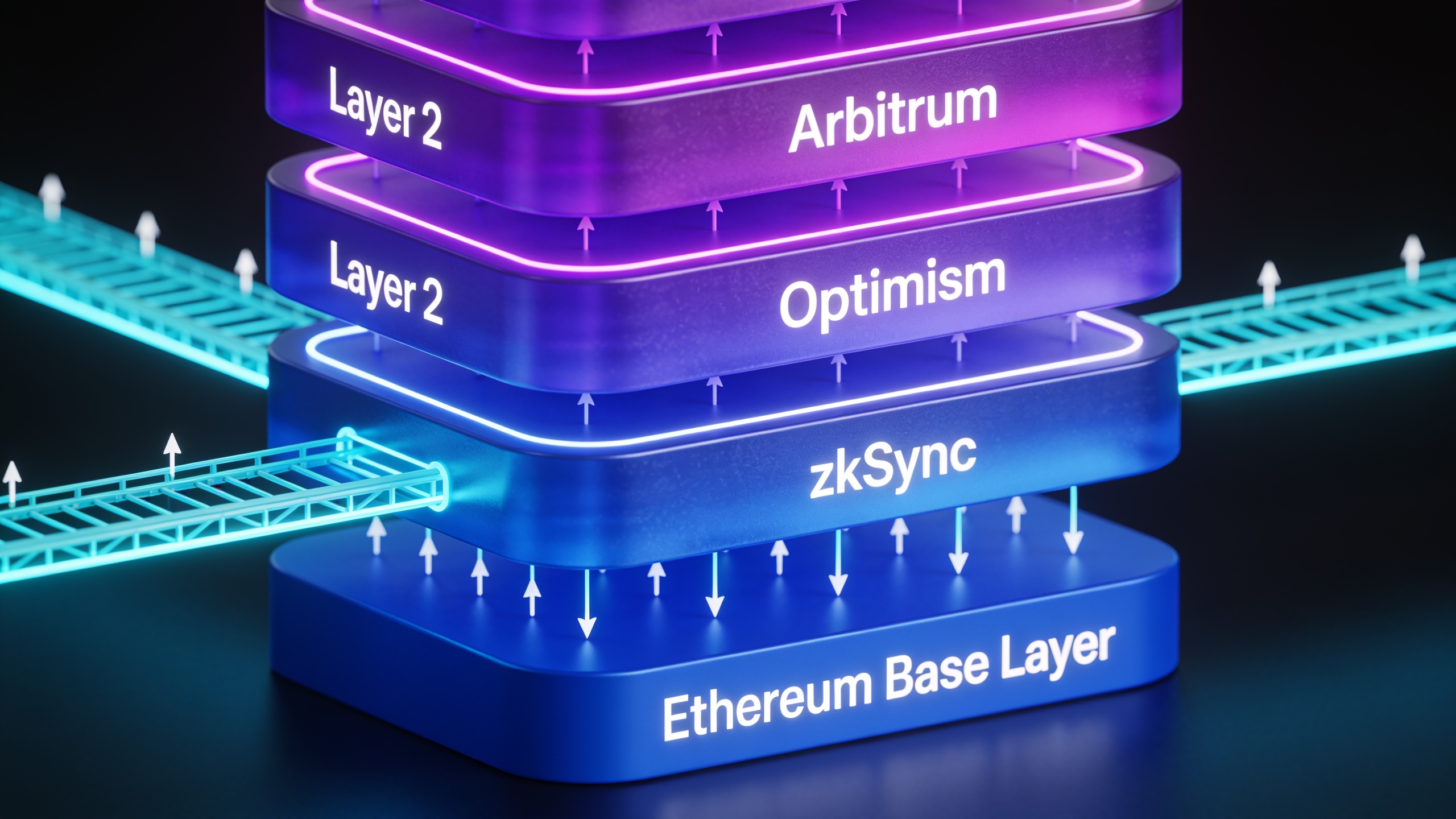
A Layer 2 blockchain is a protocol that sits on top of a Layer 1 base chain (Ethereum, Bitcoin, Solana, whatever) and does most of the transaction grunt work off-chain, then periodically bundles up a compressed record of everything and posts it back to the base layer. The idea underneath it is pretty simple. Instead of every single transaction elbowing its way onto the main blockchain for validation, the bulk of the computation happens somewhere else, and the base chain still gets the final say on security and finality.
And this isn't some crypto-only invention, by the way. Think of a jammed highway that adds express lanes instead of ripping up the whole road. Same destination, same rules, way more traffic moving through. In this analogy Ethereum's Layer 1 is the highway, and Arbitrum, Optimism, Base, zkSync, and Starknet are the express lanes. If you want the actual fundamentals of how a blockchain works before you get into any of this Layer 2 stuff, our guide on blockchain technology and how it powers crypto covers the groundwork that makes scaling necessary to begin with.
The important distinction: in most designs, Layer 2 networks inherit the security of the chain underneath them. That's what separates them from standalone "Layer 1 alternatives," which have to bootstrap their own validators and security from scratch. Not a small difference.
Why Does Ethereum Need Scaling Solutions?
Ethereum needs scaling solutions because its base layer can only process so many transactions per second, and the moment demand outruns that ceiling, gas fees go through the roof and confirmations crawl. Ethereum mainnet usually handles somewhere between 15 and 30 transactions per second. Visa, for comparison, can push thousands per second at peak. It's not really a fair fight.
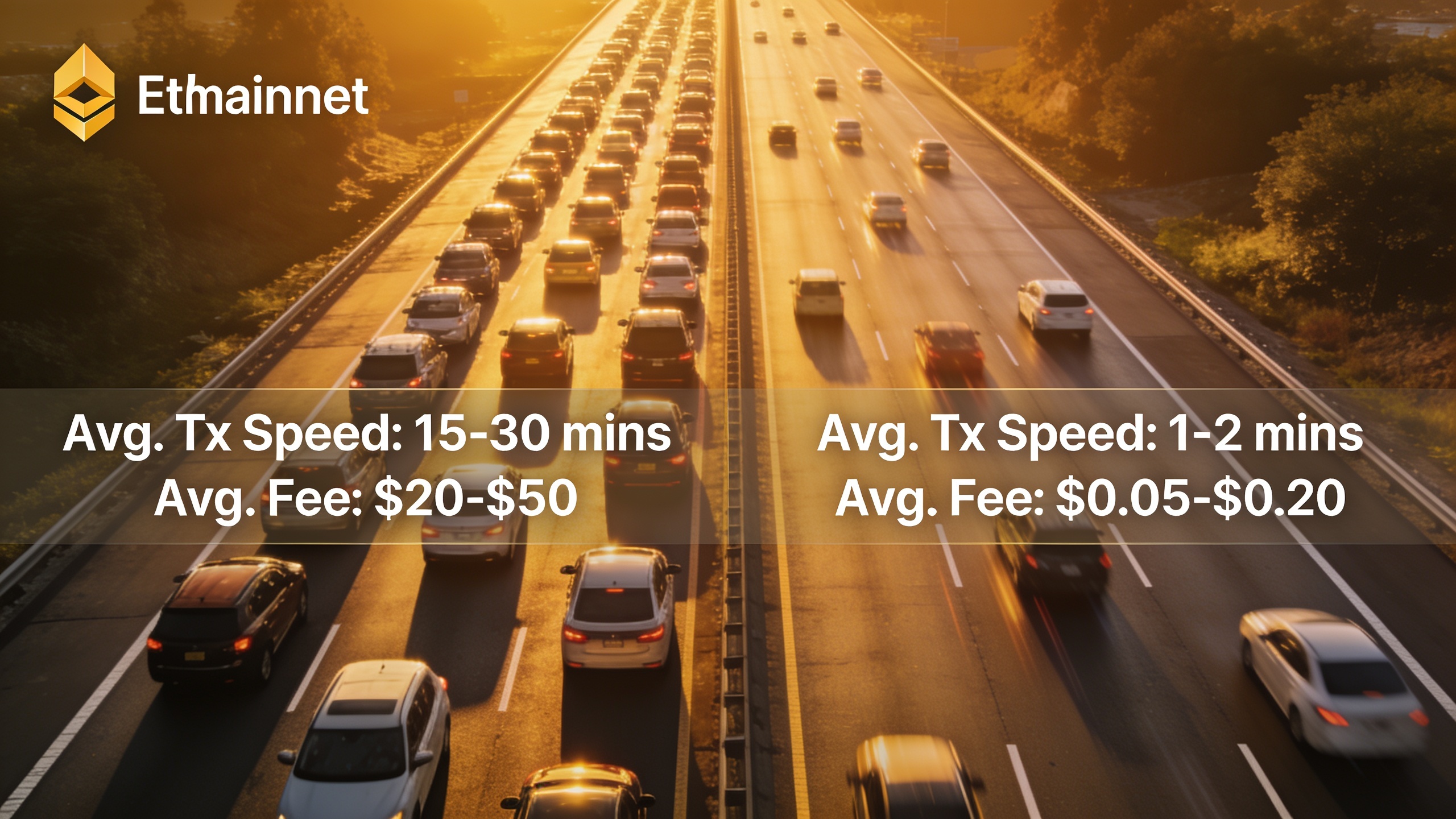
You could see the pain clearly during the busy stretches. In the DeFi summer of 2020 and the NFT mania of 2021, average Ethereum transaction fees blew past $50 a pop according to on-chain data tracked by Etherscan. Fifty bucks. To move some tokens around. That kind of thing prices out normal people instantly and turns a simple swap into a luxury purchase. This is exactly the mess scaling solutions were built to fix.
Vitalik Buterin actually saw this coming. He laid out a "rollup-centric roadmap" back in 2020, basically saying Ethereum's long game would lean on Layer 2 rollups to carry most of the transaction load while the base layer focused on security, decentralization, and data availability. And honestly? It played out more or less the way he said it would. A big chunk of daily Ethereum activity now lives on Layer 2s rather than on mainnet itself.
The real turning point on cost came with the Dencun upgrade in March 2024, which brought in EIP-4844, or "proto-danksharding" if you want the mouthful version. It created a new, cheaper data type called "blobs" specifically for Layer 2s to dump their transaction data into, and it slashed typical Layer 2 fees basically overnight, in a lot of cases by 80 to 90%, according to figures from the Ethereum Foundation and various L2 explorers. That's not a tweak. That's a step change.
How Do Layer 2 Blockchain Networks Actually Work?
Layer 2 networks mostly run on a mechanism called "rollups," which execute transactions off-chain, compress the results, and post them back to Layer 1 for final settlement and security. There are two dominant flavors of rollup, and if you understand the difference between them, you basically understand the whole Layer 2 map.
Optimistic Rollups
Optimistic rollups (the kind Arbitrum and Optimism use) assume transactions are valid by default and only bother verifying them if somebody actually disputes one during a challenge window, which usually runs around seven days. It's innocent-until-proven-guilty, applied to blockchains. Under normal conditions this makes everything fast and cheap. The catch is a withdrawal delay back to Layer 1 while that dispute window stays open. If you don't want to wait, third-party liquidity providers offer "fast withdrawal" services that skip the delay for a small fee.
Zero-Knowledge (ZK) Rollups
Zero-knowledge rollups (zkSync, Starknet, Polygon zkEVM) go the other direction entirely. They generate a cryptographic proof, a zk-SNARK or zk-STARK, that mathematically proves a whole batch of transactions is valid before it ever hits Layer 1. No challenge period needed, and withdrawals can in theory finalize a lot faster. The historic downside was that generating those proofs is computationally heavy and expensive. But that gap has been closing fast as the proving tech matures, and I'd bet on it closing further.
Other Layer 2 Approaches
Before rollups took over, there were other designs kicking around. State channels, which power Bitcoin's Lightning Network, and plasma chains, both of which predate the rollup era and don't get used much for general smart contract stuff anymore. Sidechains like Polygon's original PoS chain sometimes get lumped in with Layer 2s in casual conversation, but technically they run their own security model instead of fully borrowing it from Layer 1. Worth knowing that distinction, because people blur it constantly.
Arbitrum vs. Optimism: Comparing the Leading Layer 2 Platforms
Arbitrum and Optimism are the two biggest optimistic rollups by total value locked, and they're still where most everyday DeFi users first step into the Layer 2 world. Both launched mainnet in 2021, Arbitrum One in August and Optimism in December, and both have since sprawled out into their own multi-chain frameworks (Arbitrum Orbit and the OP Stack/Superchain, respectively).
| Feature | Arbitrum One | Optimism (OP Mainnet) |
|---|---|---|
| Rollup type | Optimistic rollup | Optimistic rollup |
| Mainnet launch | August 2021 | December 2021 |
| Native token | ARB | OP |
| Governance model | Arbitrum DAO | Optimism Collective (bicameral: token holders + Citizens' House) |
| Multi-chain framework | Arbitrum Orbit | OP Stack / Superchain |
| Notable ecosystem projects | GMX, Uniswap, Camelot, Radiant | Uniswap, Velodrome, Synthetix, Base (built on OP Stack) |
| Withdrawal challenge period | ~7 days (bypassable via fast bridges) | ~7 days (bypassable via fast bridges) |
| Fee reduction after Dencun (2024) | Sharp decrease via blob data | Sharp decrease via blob data |
Both hand out governance power through their tokens, ARB and OP, and both chose to compete on ecosystem growth rather than just bragging about raw throughput numbers. Optimism's OP Stack has been especially influential, mostly because it's the tech under Coinbase's Base network, which exploded in users after its 2023 launch and is now one of the busiest Layer 2s by daily transaction count.
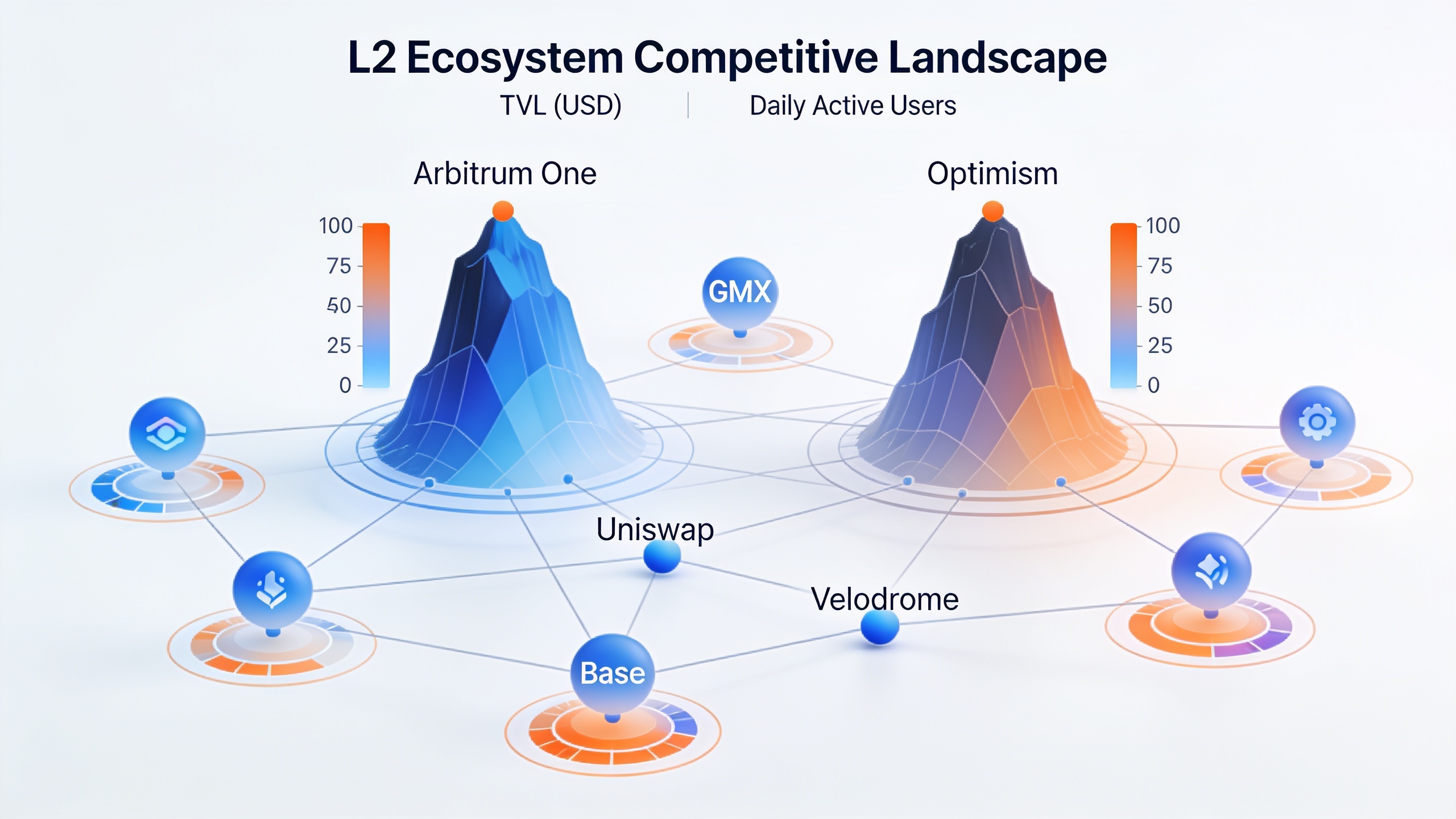
Where they really split is philosophy. Arbitrum's DAO gives token holders direct control over the treasury and protocol decisions, straightforward enough. Optimism's "Collective" splits power between token holders (the Token House) and a separate group focused on funding public goods (the Citizens' House). It's an actual experiment in mixing decentralized governance with, basically, philanthropy. Whether that experiment works long-term is one of the more interesting open questions in the space, at least to me.
How Much Do Layer 2 Solutions Save on Fees and Speed?
Layer 2 solutions typically drop transaction fees on Ethereum activity from several dollars down to a few cents, and they cut confirmation times from minutes to a few seconds. That combo, cheaper and faster, is the single biggest reason adoption took off the way it did. Retail users and institutional DeFi players alike, all chasing the same thing.
Here's what it looked like in practice. Before Dencun, a plain token swap on Ethereum Layer 1 during a moderately busy day could easily run you $5 to $20. The same swap on Arbitrum or Optimism? Well under a dollar. Then the March 2024 Dencun upgrade added dedicated blob space, and the gap got even wider. A lot of Layer 2 transactions now settle for a fraction of a cent under normal conditions, based on fee data from L2Beat, which is the independent analytics platform pretty much everyone cites for this stuff.
The speed side is just as real. Layer 1 Ethereum makes you wait for block confirmation (roughly every 12 seconds) plus more confirmations for finality, which can stretch to several minutes when things get congested. Layer 2s, on the other hand, usually give you a near-instant "soft confirmation" while you're clicking around in a dApp, even though the underlying batch settlement to Ethereum runs on its own clock in the background.
This matters a lot if you're using stablecoins for payments or trading, because fees are basically the make-or-break factor for whether moving small amounts even makes sense. Our breakdown of how USDT, USDC, and DAI compare gets into why shuffling stablecoins on a Layer 2 is usually way cheaper than doing it on Ethereum mainnet.
And the money has followed. Per L2Beat, total value locked across Ethereum Layer 2s went from essentially zero in 2020 to tens of billions of dollars by 2024. That's a lot of economic activity that quietly picked up and moved off the base layer while still leaning on it for settlement security.
Beyond Ethereum: Layer 2 Solutions Across Other Blockchains
Layer 2 scaling isn't an Ethereum-only thing. Bitcoin, Polygon, and a bunch of others have built their own second-layer systems to deal with the same throughput and cost headaches. Bitcoin's Lightning Network, conceived in 2015 and live since 2018, uses payment channels to enable near-instant, cheap Bitcoin transactions without stamping every single payment onto the base chain. It's a completely different technical approach from Ethereum rollups, but it's solving the exact same problem: making a slow, expensive base layer actually usable day to day.
Polygon went multi-pronged with its strategy, running Polygon zkEVM (a genuine zero-knowledge rollup) alongside its older, more sidechain-ish Polygon PoS network. Meanwhile newer names like zkSync Era, Starknet, Linea, and Scroll have been pushing ZK proof tech harder, trying to pair Ethereum-grade security with proof generation fast enough for actual consumer apps, gaming, social platforms, that kind of thing.
This whole race to handle more users at lower per-transaction cost isn't unique to crypto, either. You see the same pressure across the wider internet economy. Community and content platforms in emerging markets, like Indonesia's Vidbox, which offers free social media, gaming, and marketplace features to local users, show the same underlying demand: when digital participation grows in a region, the infrastructure underneath has to scale cheaply or it falls over. Doesn't matter whether that infrastructure is a blockchain or a social app. Same math.
Risks and Challenges of Layer 2 Blockchain Adoption
The main risks with Layer 2 adoption come down to sequencer centralization, bridge security holes, and the plain hassle of moving assets safely between Layer 1 and Layer 2. And these aren't theoretical worries someone dreamed up. They've already burned people, badly.
Bridge exploits have been some of the most expensive disasters in crypto, period. The Ronin Bridge hack in March 2022 drained roughly $625 million, according to blockchain security firms reporting at the time. That's the thing people underestimate: the "connective tissue" between chains can be the weakest link even when the Layer 1 and Layer 2 themselves are rock solid. So if you're bridging funds to a Layer 2, double-check you're using the official, audited bridge and not some sketchy third-party tool with a mystery security history. Please.
Then there's the sequencer problem. Most current optimistic rollups still lean on a single, centralized "sequencer," the entity that orders and batches transactions before they get posted to Layer 1. Early on this makes things fast and simple, sure. But it also introduces a chunk of centralization that kind of clashes with the whole decentralization pitch. Arbitrum, Optimism, and the other big names have all publicly promised to decentralize their sequencers over time. As of 2024, though, that's still very much a work in progress across most of the ecosystem. File it under "we'll see."
I'll also be honest about the learning curve, because it's steeper than the marketing lets on. Figuring out which network a token lives on, bridging assets correctly, understanding withdrawal delays, it all takes more technical literacy than just using one chain. It reminds me a bit of navigating specialized insurance markets. Much like someone comparing coverage through a service such as Super Visa Insurance Calgary has to understand the eligibility rules and product fine print before signing anything, crypto users need to know the specific rules of each Layer 2 before dumping real money onto it.
The Future of Layer 2 Blockchain Scaling
The future of Layer 2 scaling probably means tighter integration with Ethereum's roadmap, heavier use of zero-knowledge proofs, and continued splintering into specialized "rollup ecosystems" rather than one network taking the whole crown. Ethereum's own devs have already signaled that upcoming upgrades will keep expanding blob capacity, building right on the Dencun/EIP-4844 foundation, specifically to keep pushing Layer 2 costs down as more people pile in.
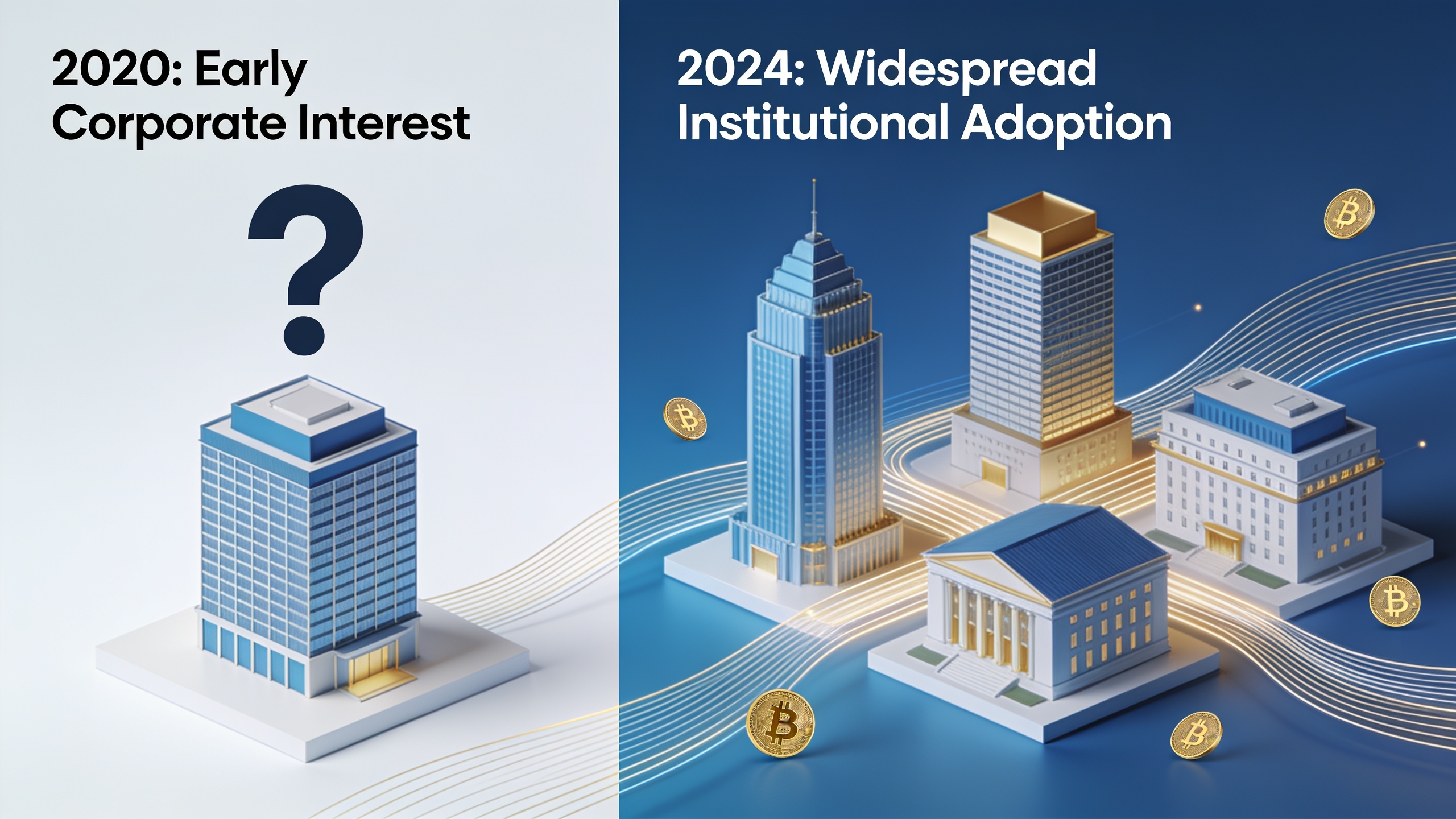
Base and the wider "Superchain" vision from Optimism tell you something about where the big money's head is at. Major companies increasingly see Layer 2 infrastructure as the sane way to bring mainstream users into crypto without exposing them to mainnet's wild fee swings. Arbitrum's Orbit framework does the same thing from a different angle, letting any team spin up its own custom rollup that still settles back to Arbitrum and, eventually, Ethereum. Follow that thread and you don't end up with a handful of dominant chains. You end up with hundreds of specialized, interconnected Layer 2 and even "Layer 3" chains.
For crypto businesses and creators trying to keep up with all of this (which changes weekly, frankly), the content and marketing side matters almost as much as the tech. Platforms like RobinRank, which automates SEO content creation and backlink building, are part of a broader wave of AI tools helping crypto media explain complicated, fast-moving topics like Layer 2 scaling to big audiences without dumbing them down.
If I had to bet on the next real frontier, it's interoperability between rollups. Standards for shared bridging, unified liquidity, and cross-rollup messaging are already being built out, all aiming to make hopping between multiple Layer 2s feel like using a single chain, even though dozens of separate execution environments are humming away underneath. Get that right and the whole fragmentation problem starts to disappear from the user's point of view.
Frequently Asked Questions
So what's actually the difference between Layer 1 and Layer 2?
A Layer 1 chain like Ethereum or Bitcoin is a base network with its own validators, consensus mechanism, and security model, the whole self-contained package. A Layer 2 builds on top of a Layer 1, handling transaction execution off-chain while relying on the Layer 1 for final settlement and security, instead of building an entirely separate trust system from the ground up.
Arbitrum or Optimism for a beginner?
Both offer similarly low fees, fast transactions, and big DeFi ecosystems, so the "better" one usually comes down to which apps you actually want to use. GMX and Camelot are big on Arbitrum, while Velodrome and Base-native apps hang around the Optimism/OP Stack side. You can honestly start with either, and bridging between them has gotten easier anyway.
Do I need a separate wallet for Layer 2 networks?
Nope. Most Layer 2s, including Arbitrum, Optimism, and Base, work with the same Ethereum wallets you already use, like MetaMask or Coinbase Wallet. You just add the right network config and then bridge or acquire funds directly on that chain.
Is my money as safe on a Layer 2 as on Ethereum mainnet?
Layer 2s generally inherit strong security from Ethereum for their core rollup mechanics, but there are extra risks around bridge contracts, sequencer centralization, and bugs specific to each network. So it really depends on which network and which bridge you pick. Check the audit history, use official bridges, don't wing it.
Why did Layer 2 fees crater in 2024?
Ethereum's Dencun upgrade in March 2024 introduced EIP-4844 "blob" transactions, a dedicated cheaper form of data storage built specifically for Layer 2s to post their batched data to Ethereum. That one change dropped typical Layer 2 fees dramatically, in many cases by 80% or more, according to data published by the Ethereum Foundation.
Layer 2 networks went from an experimental scaling idea to the main way most people touch Ethereum, and I don't see that reversing. As ZK proving tech keeps maturing and Ethereum keeps expanding blob capacity, the cost gap between Layer 1 and Layer 2 is only going to widen in Layer 2's favor. For anyone watching where transaction volume, developer activity, and total value locked are drifting, paying attention to Layer 2 stopped being optional a while ago. It's pretty much the center of Ethereum's story now.