Top NFT Trends 2025: How Digital Collectibles Are Moving Beyond Art
Remember 2021, when everyone and their dentist was flipping cartoon apes for six figures? Yeah, NFT trends 2025 look nothing like that. The whole speculative-jpeg circus has quieted down, and what's...

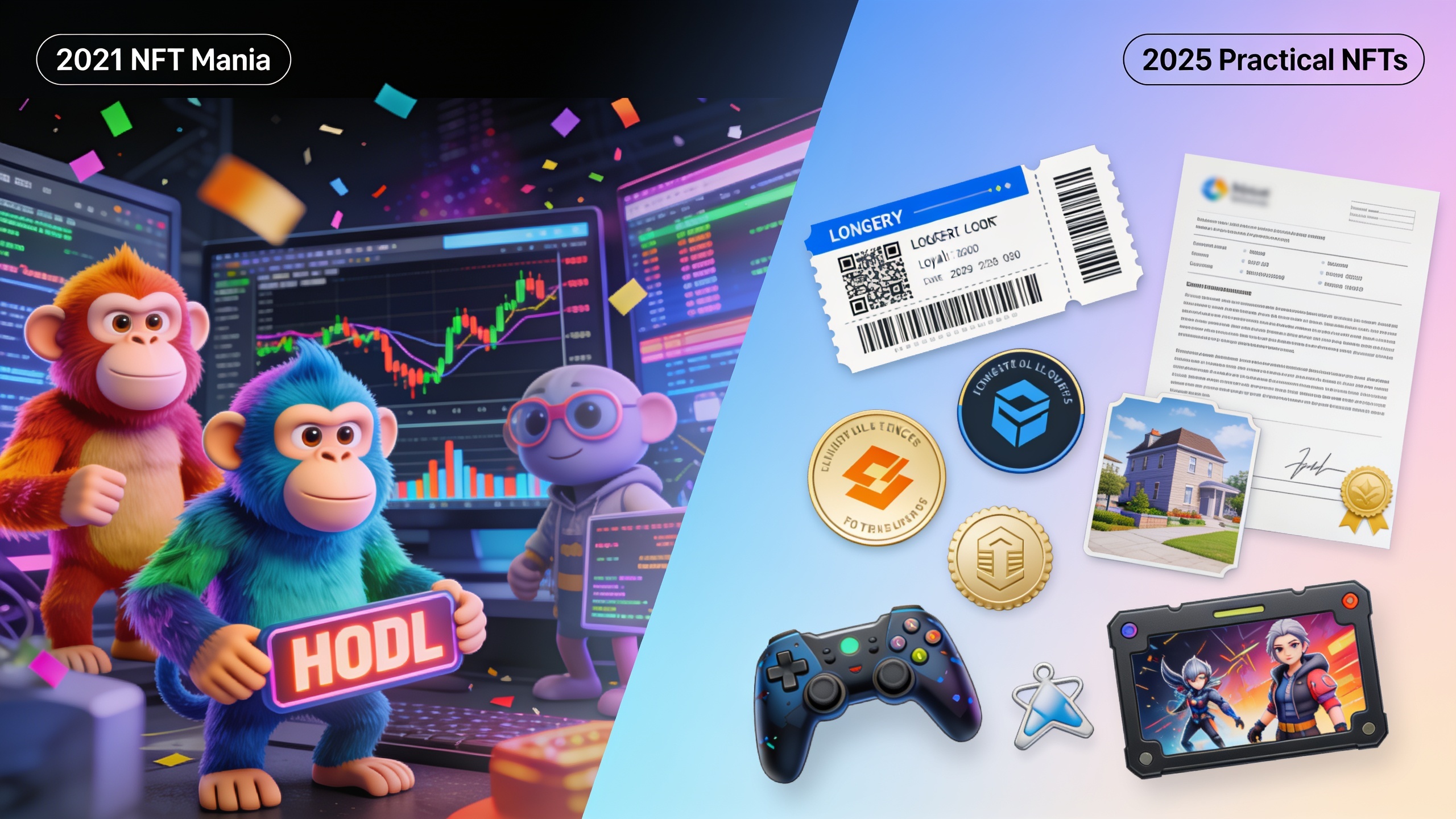
Remember 2021, when everyone and their dentist was flipping cartoon apes for six figures? Yeah, NFT trends 2025 look nothing like that. The whole speculative-jpeg circus has quieted down, and what's replaced it is honestly a lot more interesting. Non-fungible tokens are now showing up as concert tickets, loyalty badges, tokenized real estate, and in-game items you can actually own. Stuff that does something. So if you're a crypto investor trying to figure out where the next opportunity (or the next disaster) is hiding, paying attention to these shifts matters just as much as staring at price charts all day.
I'm going to walk through the biggest NFT trends 2025 has produced so far, why utility has basically dethroned pure collectibility as the thing that gives these tokens value, and what all of it means if you're thinking about putting money into NFTs.
Table of Contents
- What Are the Top NFT Trends 2025?
- NFT Ticketing: Turning Event Access Into a Digital Collectible
- Loyalty Programs and Membership NFTs: The New Brand Currency
- Utility Tokens and Real-World Asset Tokenization
- Gaming, Metaverse, and Phygital NFTs
- Is NFT Investing Still Worth It in 2025?
- NFT Use Cases Compared: Where's the Value in 2025?
- What's Next for NFT Trends 2025?
- FAQ
What Are the Top NFT Trends 2025?
The defining shift in NFT trends 2025 is a move away from pure digital art speculation and toward tokens that actually do something, whether that's granting access, proving you own a physical or financial asset, or unlocking a membership tier. Quick refresher for anyone who needs it: an NFT (non-fungible token) is a blockchain record that proves you own a unique digital or digital-linked item. That's what sets it apart from "fungible" stuff like Bitcoin or dollars, where one unit is identical to any other.
The 2021-2022 boom ran almost entirely on art and profile-picture collections that traded on hype and clout. And you know how that ended. Once the speculative demand dried up, a lot of people were left clutching tokens that did precisely nothing except signal that they'd bought one. What's happening now is more of a grown-up phase. Brands, event organizers, game studios, even asset managers are treating NFT technology as plumbing rather than as the shiny collectible itself.
A few threads tie all of this together. The big one is utility over aesthetics, meaning buyers care less about whether a token looks cool and more about what it unlocks. There's also serious enterprise adoption happening, with sports leagues, retailers, and event promoters quietly using NFTs as backend tools, often without ever using the word "NFT" in front of customers. On top of that, the tokenization of real-world assets keeps blurring the line between NFTs and broader crypto investing. And regulatory clarity is finally creeping in, slowly, which is a big reason brands prefer ticketing and loyalty use cases. They're just far less legally murky than tokens marketed as investments.
The rest of this piece goes through each of those use cases on its own, because they carry wildly different risk and opportunity profiles for anyone weighing up NFT investing this year.
NFT Ticketing: Turning Event Access Into a Digital Collectible
NFT ticketing uses blockchain tokens instead of the usual PDFs or barcodes to prove you're allowed into a concert, a game, or a conference, and it's one of the most genuinely practical trends of the year. The pitch is simple enough: your ticket becomes a verifiable, tamper-resistant token that can also double as a souvenir, a fan badge, or a key to future perks.
Traditional ticketing has three problems it's never really fixed, and NFT systems take a swing at all of them. First, fraud and duplication. Paper and PDF tickets get copied constantly, whereas a blockchain-recorded ticket has exactly one verifiable owner at any moment. Second, scalping. Smart contracts can cap resale prices or automatically send a slice of every secondary sale back to the artist or venue. And third, the fact that a normal ticket is worthless the second it's scanned. An NFT ticket can keep some value as a collectible or unlock something down the line, like early access to the next tour.
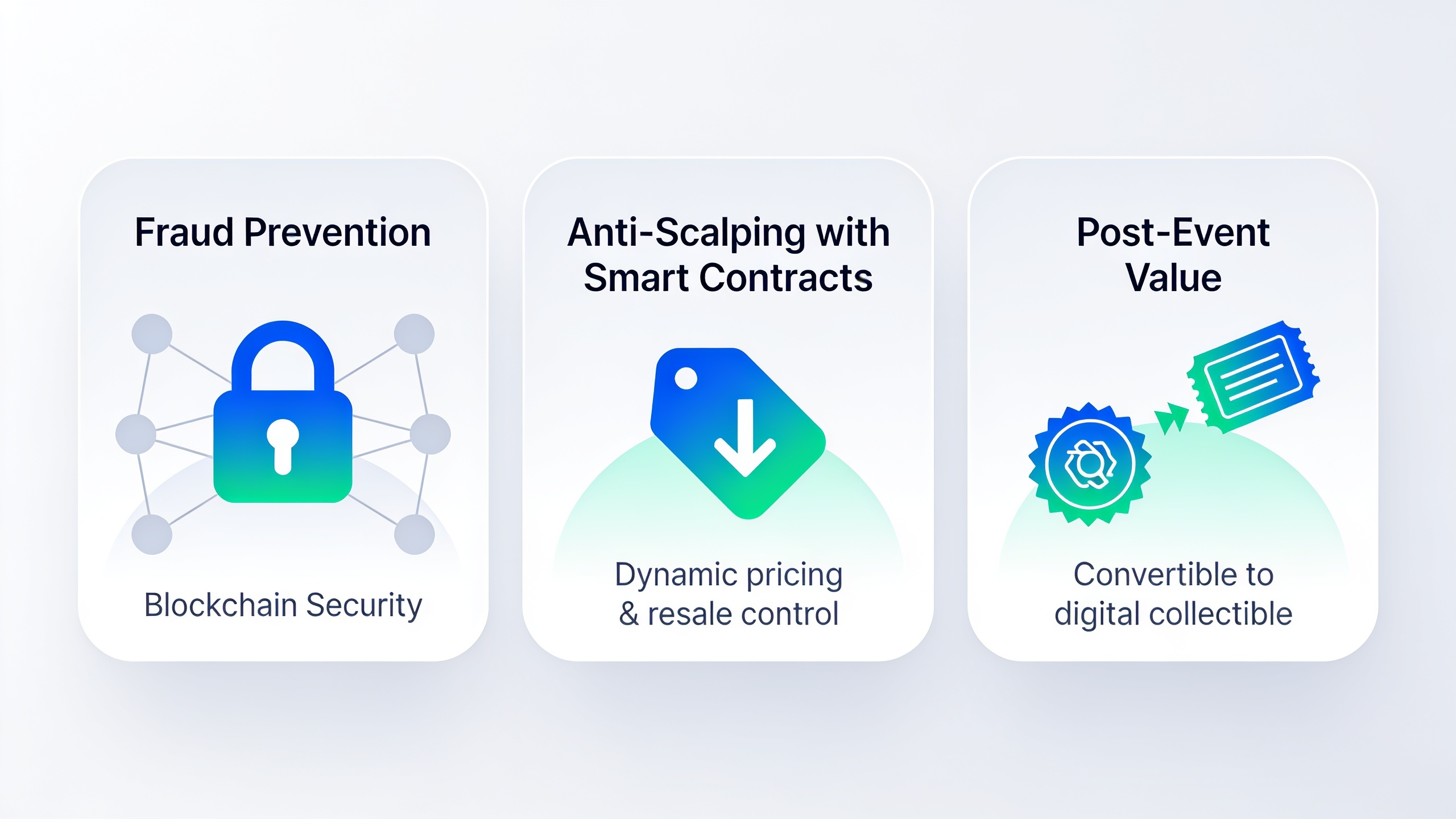
Music festivals, a handful of pro sports franchises, and plenty of independent promoters have already piloted this, letting fans keep a digital memento after the show, sometimes bundled with unlockable extras like exclusive photos or backstage footage. And here's the part I like: fans don't need to understand blockchain at all. Most of these platforms hide the wallet and gas-fee mess behind the scenes, so it feels like buying anything else through an app.
For investors, ticketing isn't really a "buy this token" play. It's more of a signal, a way to read where enterprise blockchain adoption is actually going. The companies building ticketing infrastructure are effectively laying down consumer-facing blockchain rails, and honestly, that infrastructure layer is where a lot of the durable value in this whole space tends to pool up.
Loyalty Programs and Membership NFTs: The New Brand Currency
Membership NFTs work like a digital membership card, giving holders perks such as early product drops, private communities, discounts, or a vote on brand decisions. This is probably the NFT trend with the clearest business logic right now, because it slots neatly into something every company already gets: loyalty programs.
Think about how the old ones work. Punch cards, airline miles, retailer points. They're centralized, non-transferable, and completely controlled by whoever issued them. A loyalty NFT turns that on its head. You hold the token in your own wallet instead of watching a points balance sit in some company's database. Depending on how the program's built, you might be able to resell or gift it, which creates an actual secondary market for brand access. And because it runs on smart contracts, tier upgrades, discounts, and raffle entries can happen automatically without anyone lifting a finger.
Retail brands, sneaker companies, and even a few financial firms have tested this, where holding a specific NFT unlocks tiered benefits. Picture a Costco membership crossed with a limited-edition trading card. For the brand it's about retention and building a community; for you, the membership itself can (in theory) hold or gain value instead of just evaporating when your subscription lapses.
The catch, and it's a real one, is that a loyalty NFT is only worth as much as the brand behind it. If the company fades into irrelevance, kills the program, or fumbles the smart contract, your token's usefulness can vanish overnight. That's the same kind of fragility investors have already watched play out in other speculative corners of crypto, including the meme-driven stuff covered in Memecoin Investing in 2025: Are Dogecoin & Shiba Inu Still Worth It?, where value tends to ride on community mood far more than on anything you could call fundamentals.
Utility Tokens and Real-World Asset Tokenization
Utility-based NFTs and real-world asset (RWA) tokenization are basically the same idea seen from two angles: a token's worth comes from what it unlocks or represents, not from scarcity for scarcity's sake. RWA tokenization specifically means using blockchain tokens to represent ownership in physical or financial assets, things like real estate, invoices, commodities, art, or fund shares, so ownership can be transferred, split up, or traded far more easily than through the usual mountain of paperwork.
This is a genuinely different animal from a collectible NFT, because the token is usually backed by, or legally tied to, something that has value on its own, off-chain. And that link is exactly what makes this segment appealing to institutions that have always been twitchy about crypto assets with no cash flow or collateral behind them.
So what does this look like in practice? A few things are showing up in 2025:
- Fractionalized real estate, where a property is split into tokenized shares so a bunch of investors can each hold a piece instead of buying the whole building.
- Tokenized fund shares, which allow faster settlement and wider access than old-school fund administration.
- Supply chain and provenance tracking, where an NFT certifies that a physical good is authentic, from luxury handbags to agricultural products.
- Access-key tokens that act like a digital keycard for software, in-game features, or professional tools rather than sitting there as a static collectible.
Because these tokens are tethered to real assets or actual functionality rather than pure speculation, they tend to move differently than art-based NFTs. Their prices track the underlying asset more closely, which is a dynamic worth understanding alongside the bigger question of how crypto assets move relative to traditional markets. There's a solid breakdown of that in Crypto Stock Market Correlation: What Recent Data Shows.
Gaming, Metaverse, and Phygital NFTs
Gaming NFTs and metaverse tokens represent in-game items, virtual land, or avatars that players genuinely own and can trade outside the game itself, as opposed to items that are just licensed to your account and can be yanked away. "Phygital" NFTs push this further by pairing a physical product, say a sneaker or a bottle of wine, with a digital twin token that verifies it's the real thing and can unlock digital-only extras.
The gaming angle has matured because it solves a problem gamers have complained about forever: when a publisher pulls the plug on a game's servers, everything you bought just disappears. Blockchain ownership means your sword, your skin, your land parcel exists independently of any one company sticking around. At least in theory. The game still has to be playable, and that depends on the studio keeping the software alive, so let's not oversell it.
Metaverse land, meaning virtual real estate you buy as an NFT on platforms built for persistent virtual worlds, is still one of the more speculative branches here. Buying a parcel is essentially a bet that a particular virtual world will pull in enough users, businesses, or events to make your spot worth something. Kind of like buying property based on where you think the foot traffic will be in five years rather than where it is today. Risky? Very.
Phygital tokens have found firmer footing in retail and collectibles, where a brand ships a limited physical item alongside a verifiable digital certificate. It cuts down on counterfeiting and gives brands a direct line to talk to buyers after the sale. In spirit that's much closer to the loyalty and ticketing stuff we've already covered than to pure art speculation.
Is NFT Investing Still Worth It in 2025?
NFT investing in 2025 is a completely different game than it was during the 2021 frenzy, and whether it's "worth it" depends enormously on which flavor of NFT you're looking at. Utility-backed tokens tied to ticketing, loyalty, gaming, or real-world assets carry a different risk profile than purely speculative art, simply because their value is anchored, at least partly, to a function or an underlying asset instead of pure vibes.
That said, some structural risks still very much apply. Liquidity is a big one; plenty of NFT collections, even the utility-focused ones, trade in thin markets where selling fast means taking an ugly discount. There's platform and smart contract risk too, because a ticketing or loyalty NFT is only as reliable as the code and the company behind it, and bugs, hacks, or an abandoned project can kill a token's usefulness in an instant. Valuation is still a mess as well. Unlike a stock with earnings or a bond with a coupon, most NFTs have no standard way to figure out what they're actually worth, which leaves them wide open to sentiment-driven swings.
And then there's the fact that NFT prices have historically moved with overall crypto sentiment, so a downturn in Bitcoin or Ethereum can drag NFT valuations down even when the token's utility hasn't changed one bit.
That last point is worth sitting with for a second. Just like memecoins can lurch around on social momentum rather than anything real, NFTs tied loosely to hype behave the same way. Which is precisely why the more cautious crowd is drifting toward ticketing, loyalty, and RWA rather than collectible art. If you want a fuller picture of how digital assets move in relation to each other and to stocks, it's genuinely worth reading how those correlation patterns have shifted in Crypto Stock Market Correlation: What Recent Data Shows, because NFTs don't float around in some vacuum separate from the rest of the market.
The practical takeaway, if you want one: treat utility-based NFTs as a small, diversified slice of a broader digital-asset allocation rather than a standalone bet. That's a far more defensible move than chasing whatever collectible drop is trending this week.
NFT Use Cases Compared: Where's the Value in 2025?
Not all NFTs are doing the same job, and lining them up side by side makes it obvious why "the NFT market" is really several different markets wearing the same name tag. The table below sums up how the major 2025 use cases stack up on value driver, typical buyer, and risk.
| NFT Use Case | Primary Value Driver | Typical Buyer/User | Investment Risk Profile |
|---|---|---|---|
| Digital art / PFP collectibles | Scarcity, community status, artist reputation | Collectors, speculators | High — value driven mostly by sentiment |
| Event ticketing NFTs | Verified access, anti-fraud, post-event perks | Concertgoers, sports fans | Low-to-moderate — value tied to event demand |
| Loyalty/membership NFTs | Brand perks, tiered access, community status | Brand loyalists, retail customers | Moderate — dependent on issuing brand's health |
| Utility/RWA tokenized assets | Underlying asset value, functional access | Institutional and retail investors | Moderate — tied to real-world asset performance |
| Gaming/metaverse NFTs | In-game utility, virtual land demand | Gamers, metaverse speculators | High — dependent on platform adoption |
| Phygital NFTs | Physical product authenticity, digital bonus content | Retail/luxury goods buyers | Low-to-moderate — tied to physical product demand |
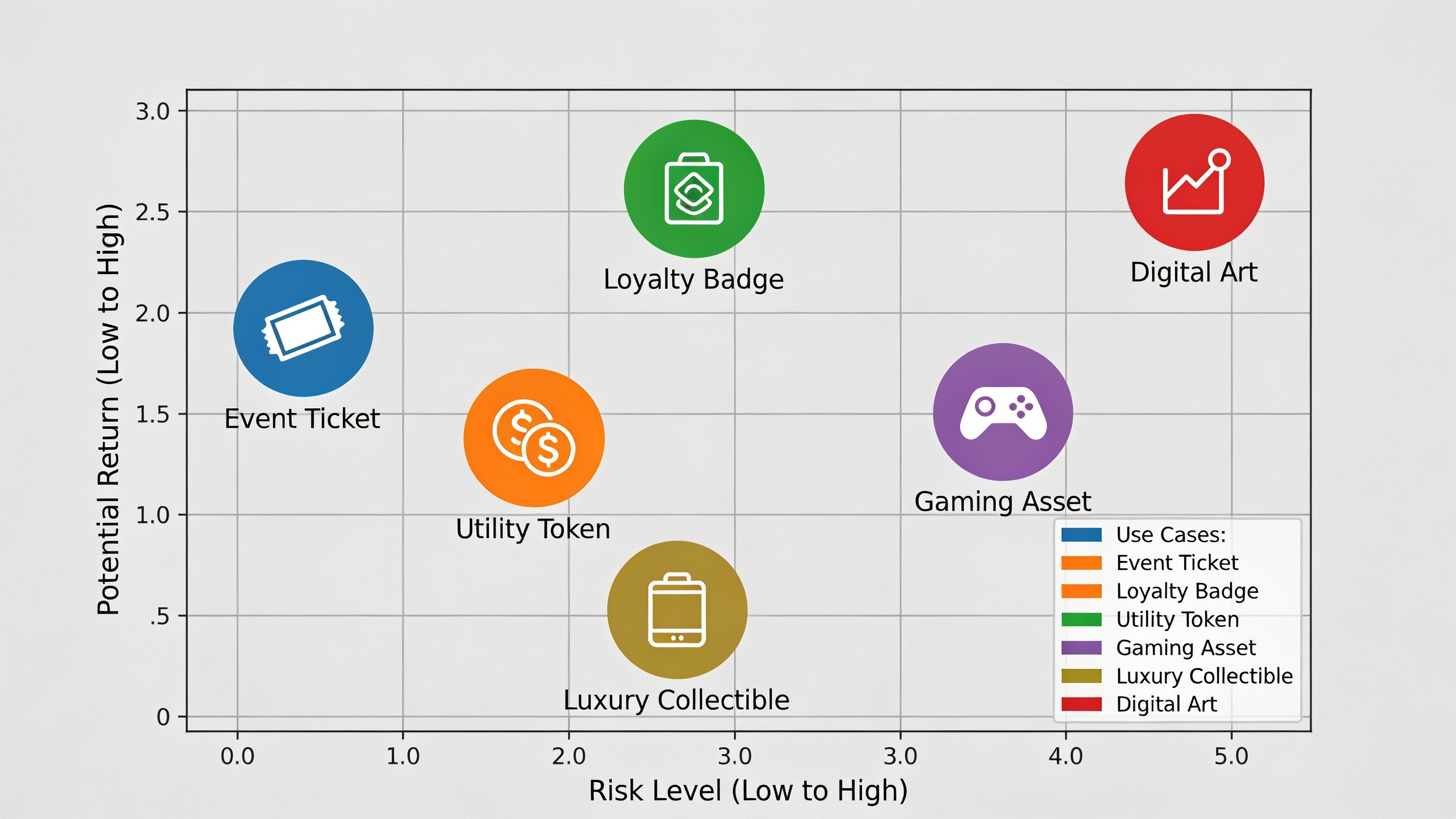
The whole point of this comparison is that shoving every NFT into one "risky or not" bucket completely misses the nuance. A concert ticket NFT and a speculative patch of metaverse land are both technically NFTs, sure, but as investments they've got about as much in common as a savings account and a lottery ticket.
What's Next for NFT Trends 2025?
The next phase of this is probably NFTs quietly vanishing from consumer branding while the underlying tech gets more and more embedded in ticketing, loyalty, and asset-tokenization systems people use without ever realizing an NFT is involved. Companies figured out the hard way that leading with blockchain jargon scares off mainstream customers, even when the tech genuinely makes the product better.
A few things I'd keep an eye on through the rest of the year. Interoperability standards are one; expect continued pushes to make NFTs usable across multiple platforms and games instead of locked in a single walled garden, which would seriously boost how useful they actually are. Institutional RWA tokenization is another, since traditional finance players messing around with tokenized funds and real estate are likely to keep scaling those pilots, because the settlement and fractional-ownership gains are real even to people who roll their eyes at crypto. Regulatory clarification should keep creeping forward too, drawing sharper lines between "utility token" and "security" as ticketing and loyalty use cases spread, which ought to clear out some of the legal fog that's held enterprises back.
And, like clockwork, consolidation. Just as it went in the wider crypto market, expect the weaker NFT platforms and speculative collections to quietly die off while better-funded, utility-focused projects hoover up the market share.
For investors, the upshot is that "NFT investing" in 2025 increasingly means evaluating infrastructure and utility providers, not chasing the next trending collectible. Less flashy, sure. But a lot more sustainable if you actually care where the value is heading.
FAQ
So are NFTs actually still worth buying in 2025?
They can still earn a spot in a diversified crypto portfolio, but the category has splintered. Utility-backed tokens (ticketing, loyalty, real-world asset tokenization) generally have more predictable value drivers than speculative art collections, though liquidity and platform risk stick around no matter which one you pick.
What's the difference between a utility NFT and a collectible NFT?
A collectible NFT's value comes mostly from scarcity, looks, and community demand. A utility NFT is built to unlock something specific, like event access, brand perks, or ownership of a real-world asset. The utility kind tends to lean less on hype cycles to hold its value.
How does NFT ticketing actually stop fraud?
It records ownership on a blockchain, so each ticket has exactly one verifiable holder at any given moment. That makes duplication way harder than with a scannable PDF or barcode, and on top of that, smart contracts can cap resale prices or funnel royalties back to the organizers.
Do NFT loyalty programs replace traditional loyalty points?
Not completely, but they offer a different model. Traditional points are centralized and stuck to your account, while loyalty NFTs live in your own wallet and can sometimes be resold or traded, depending on how the brand sets things up. Either way, their value is still tied directly to the health and reputation of whoever issued them.
Is real-world asset (RWA) tokenization the same thing as an NFT?
RWA tokenization often uses NFT tech, but the token represents a claim on a physical or financial asset, like a share of real estate or a fund, rather than existing purely as a digital collectible. That asset-backed structure is a big part of why RWA tokenization has pulled in more institutional interest than art-based NFTs.
The NFT market of 2025 looks less like a chaotic art bazaar and more like a layer of digital infrastructure quietly doing the unglamorous work of powering event tickets, loyalty programs, and tokenized assets behind the scenes. For investors and everyday crypto folks alike, keeping tabs on these utility-driven shifts is going to matter a whole lot more than sprinting after the next viral collectible drop.