Binance vs Coinbase vs Kraken: Which Exchange Wins in 2025?
Picking where to buy and store your crypto is one of the first real decisions you'll face as an investor, and no, it's not as simple as just going with the biggest name you've heard of. So I'm going...

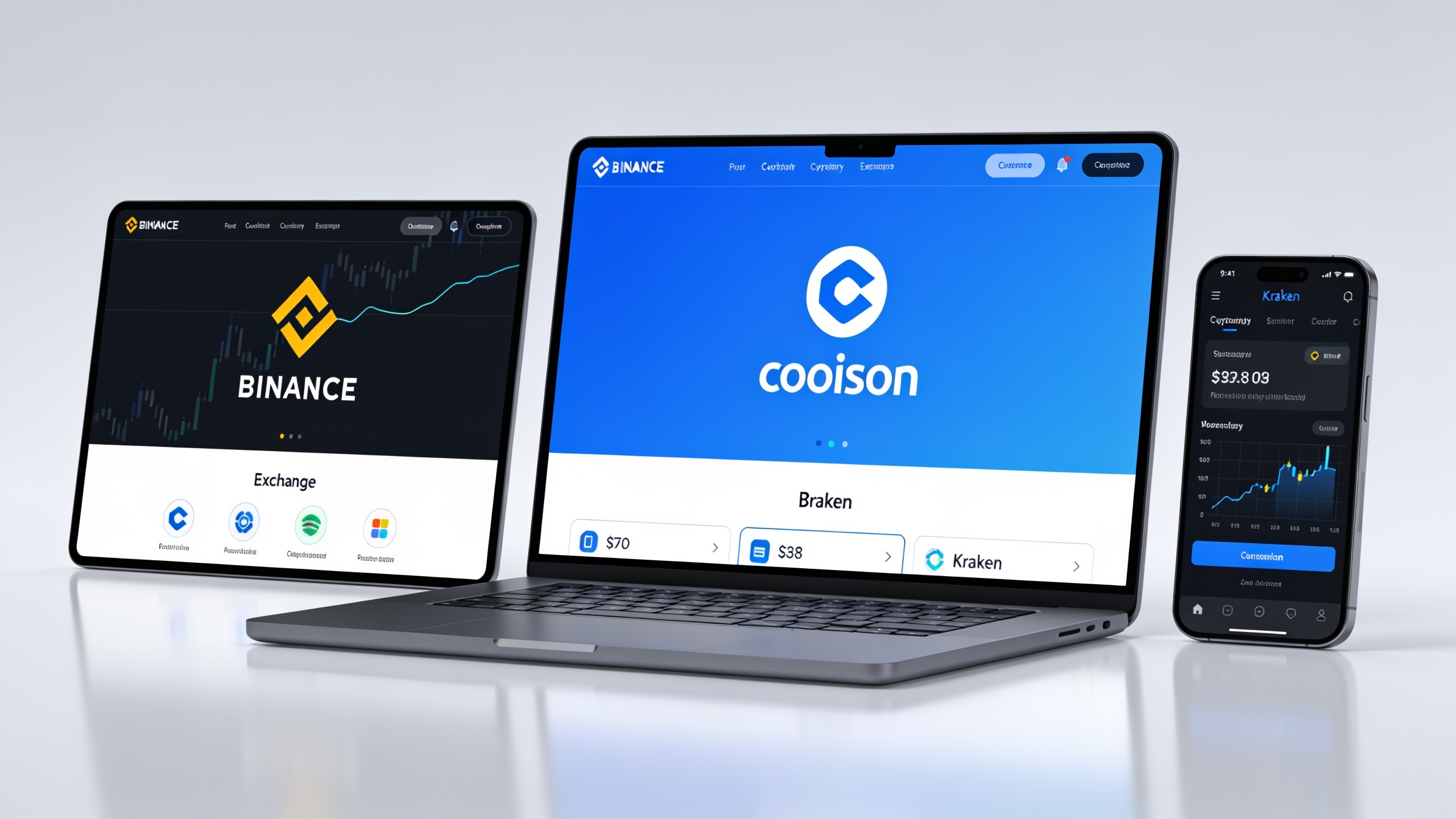
Picking where to buy and store your crypto is one of the first real decisions you'll face as an investor, and no, it's not as simple as just going with the biggest name you've heard of. So I'm going to walk through Binance, Coinbase, and Kraken the way I'd actually compare them if a friend asked me: fees, security, what you can trade, and whether the thing is a pain to use day to day. That's what actually affects your money, not marketing copy or reputations from three years ago.
Fair warning up front: none of these three is "the best" for everyone. They were each built for a different kind of person. The right answer depends a lot on where you live, how much you trade, and how much control you want over your own coins.
Table of Contents
- Why This Crypto Exchange Comparison Matters in 2025
- Binance, Coinbase, and Kraken at a Glance
- How Do Fees Compare Across the Three Exchanges?
- Which Exchange Has the Stronger Security Approach?
- Supported Assets and Trading Features
- User Experience: Beginners vs. Advanced Traders
- What Is the Best Crypto Exchange in 2025 for Your Situation?
- A Practical Checklist for Choosing an Exchange
- Frequently Asked Questions
Why This Crypto Exchange Comparison Matters in 2025
The platform you pick shapes your costs, your regulatory exposure, which coins you can actually touch, and how much of a headache it is to move money in and out. That's why this matters. And the whole landscape has changed a lot since the crazy days of 2021.
Regulators in the US, EU, and pretty much everywhere else have been pushing exchanges toward real licensing, real disclosures, real compliance. Which means "good" doesn't mean what it used to. It's no longer just about the cheapest fees or the flashiest charts. Now a big part of it is whether an exchange can actually show it plays by the rules in the places it operates.
Binance, Coinbase, and Kraken each took a different road here. Binance built its whole thing on scale and breadth, a sprawling global platform with a product for everything. Coinbase went the other way and leaned hard into being the clean, compliant, US-listed option for regular people who just want to buy some Bitcoin. Kraken has spent years positioning itself as one of the older US-founded exchanges with a security-first rep among people who've been in crypto a while. Knowing where each one started explains a lot about the tradeoffs they make today.
Binance, Coinbase, and Kraken at a Glance
Quick version: Binance is one of the largest crypto exchanges on the planet by trading volume, Coinbase is a publicly traded US company that's made compliance its whole brand, and Kraken is a long-running exchange that crypto folks tend to trust for both casual buying and serious trading. All three have grown way beyond plain spot trading into these huge product ecosystems. But the exact features, supported regions, and services shift constantly, so please double-check the current lineup on each site before you throw money at anything.
One thing I want to be honest about. Fee schedules, coin lists, and regional availability get updated all the time, sometimes several times a year. So instead of locking in numbers that'll be stale by next quarter, this piece focuses on the structural differences between the three. Where I couldn't verify a hard figure straight from each company's own published stuff, I say so instead of making something up. Go cross-check the official pages yourself. Seriously.
| Category | Binance | Coinbase | Kraken |
|---|---|---|---|
| General positioning | Large global exchange with broad product ecosystem | US-based, publicly traded, compliance-forward brand | Long-established exchange popular with both retail and active traders |
| Primary audience | Global users, including active/derivatives traders | Beginners and mainstream US investors | Retail users plus traders wanting more advanced tools |
| Fee model | Tiered/volume-based structure (exact rates change; verify current schedule) | Simple app pricing plus a separate advanced trading tier (exact rates change; verify current schedule) | Volume-based tiered structure (exact rates change; verify current schedule) |
| Regulatory footprint | Operates across multiple jurisdictions with region-specific entities | Regulated and listed on a major US stock exchange | Operates as a long-standing US-based exchange with global reach |
| Asset breadth | Very large catalog of listed coins and tokens (exact count changes) | Large but generally more curated catalog (exact count changes) | Sizable catalog with a reputation for vetting new listings (exact count changes) |
| Best suited for | Traders wanting maximum variety and global product range | First-time buyers wanting simplicity and brand trust | Users wanting a balance of security reputation and trading depth |
Note: Specific fee percentages, exact supported-asset counts, and region-by-region availability were not independently verifiable from primary source material at the time this article was written and should be confirmed on each exchange's current fee and listings pages before trading.
How Do Fees Compare Across the Three Exchanges?
All three run on some version of a maker-taker model with volume-based tiers, which basically means the more you trade, the less you pay per trade. But the actual percentages differ by platform, order type, and how you pay. This is one of the most fluid parts of the whole comparison, because all three tweak pricing constantly in response to competition and regulation.
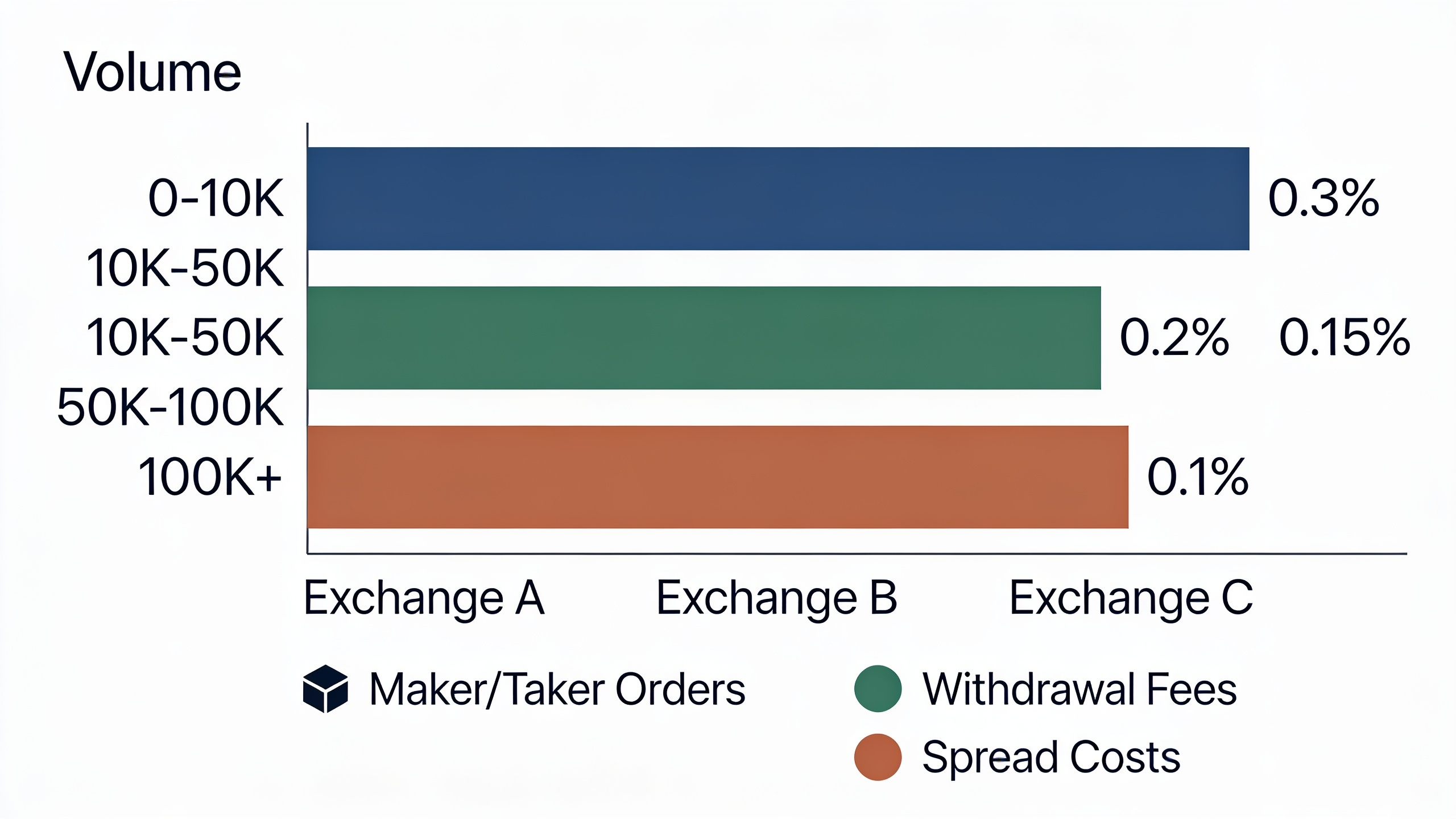
Rather than quote specific percentages that'll be wrong in a few months, it's more useful to just understand the buckets of cost you'll run into on basically any centralized exchange. Trading fees usually split into "maker" fees for orders that add liquidity and "taker" fees for orders that remove it, and they shrink as your monthly volume climbs. Then there's spread cost, which is sneaky. Those simple mobile buy screens aimed at beginners often bake a spread right into the price you see instead of showing you a separate fee line, so you don't always realize what you're paying.
On top of that you've got withdrawal and network fees when you move crypto off the exchange to your own wallet. That network fee reflects what the blockchain itself costs, not the exchange being greedy. And deposit fees vary a lot: bank transfers tend to be free or cheap, while card payments and instant funding almost always carry a premium.
Honestly, the only reliable way to compare real costs for your style is to pull up each platform's current fee page and run the math against your own typical trade size and payment method. If you're trading a lot, the difference between volume tiers can matter way more than the headline "starting fee" they wave in front of beginners.
Oh, and if your interest in crypto goes past trading and into actually acquiring coins, buying on an exchange isn't the only door in. Some people mine Bitcoin directly with hardware instead of paying exchange fees on every purchase. Our breakdown of the best Bitcoin ASIC miners for 2025 and their ROI potential gets into what that route actually costs in hardware and electricity versus just buying on an exchange.
Which Exchange Has the Stronger Security Approach?
Security on a centralized exchange really comes down to three things: how they store your assets (cold vs. hot wallets), what account protections they give you (2FA, withdrawal whitelisting), and how open they are about their practices. All three loudly say security is a priority. Fine. But the specific certifications, insurance, and audits at any given moment are best confirmed straight from each company's own security or trust pages, not assumed.
Centralized exchanges as a whole have had their share of ugly security incidents over the years, and that's exactly why regulators and users now watch a few things closely. Cold storage ratios matter, meaning what chunk of user funds sits offline versus connected to the internet. Proof-of-reserves reporting matters too, whether the exchange actually publishes evidence that your assets are backed one-to-one. Bug bounty and audit programs tell you whether they're paying outside researchers to hunt for holes. And then there's the account-level stuff you control yourself: hardware-key support, withdrawal address whitelisting, anti-phishing codes. Licensing counts as well, since operating under money-transmitter licenses or banking charters says something about oversight.
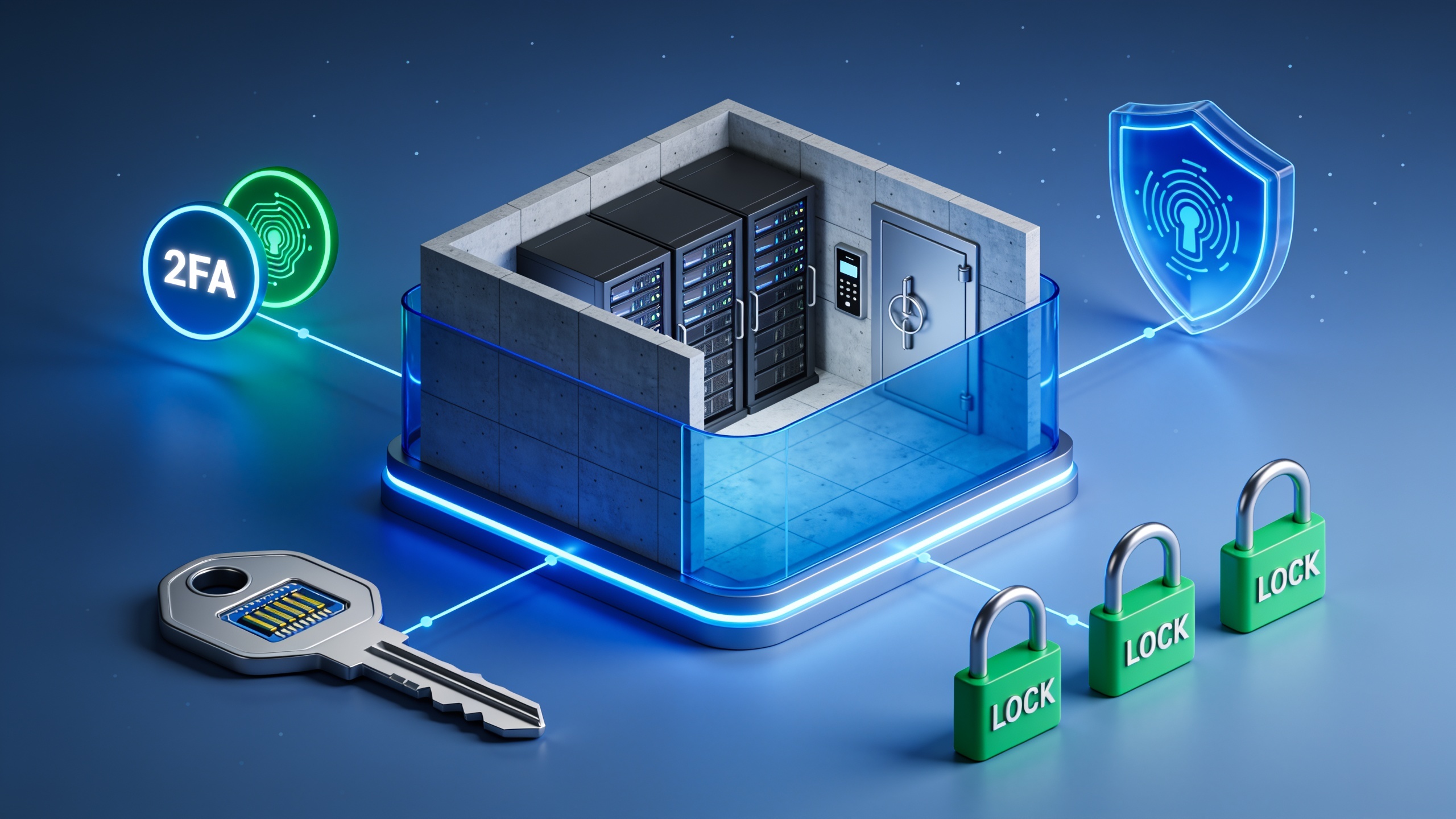
Here's where I'm going to disappoint you a little. I didn't have each exchange's current security disclosures as primary source material for this piece, so I'm not going to crown a security winner. And frankly, you shouldn't take any website's word for it anyway. Before you fund an account, read the exchange's own security page, look for recent proof-of-reserves reports if they publish them, and check whether the platform is actually licensed where you live. Treat this like you'd research any bank. Assuming "big brand equals safe" is how people get burned.
And no exchange, no matter how spotless its reputation, erases the basic custody risk of leaving your coins online. A lot of experienced people split the difference: active trading funds stay on the exchange, long-term holdings go into self-custody. That way one platform's screwup doesn't take everything down with it.
Supported Assets and Trading Features
What you can trade on each of these mostly comes down to design philosophy. Exchanges built for global reach and heavy trading list a ton of tokens. Exchanges built around mainstream, compliance-heavy positioning are pickier about what they list and when. All three add and delist coins constantly in response to regulation, liquidity worries, or a specific project blowing up, so exact counts are a moving target. Don't bother memorizing them.
Beyond plain spot trading, the feature sets usually overlap in a few predictable ways. You'll find spot trading for buying and selling crypto against fiat or other coins. Most offer staking so you can earn yield on certain proof-of-stake assets right through the platform. There's usually advanced or derivatives trading for the margin/futures/options crowd, often tucked away in a separate interface or sub-brand for experienced users. Beginners get recurring buy tools for dollar-cost averaging on a schedule. And all three run some kind of institutional or business-focused product for companies rather than individuals.
If your interest tips over into actually using crypto for payments rather than investing, just know that trading platforms and payment infrastructure are completely different animals. Our comparison of BitPay and Coinbase Commerce as crypto payment gateways digs into the merchant side of accepting crypto, which is a whole separate use case from trading on Binance, Coinbase, or Kraken.
User Experience: Beginners vs. Advanced Traders
The right exchange for a first-timer usually isn't the right one for an active day trader, because "easy for beginners" and "packed with pro tools" tend to pull an interface in opposite directions. Coinbase built its whole consumer brand around simplicity, an accessible front door for people buying crypto for the very first time, with a clean app experience meant to keep non-technical folks from getting confused. Binance and Kraken, on the other hand, are the ones traders reach for when they want deeper charts, more order types, and more pairs. If you already know your way around an order book and understand margin, they'll feel more like home.
That doesn't mean beginners can't touch Binance or Kraken, or that serious traders never use Coinbase. Most exchanges, these three included, offer a simple buy screen alongside a separate "pro" or advanced view. The real difference shows up in a handful of everyday things.
- Onboarding speed: how fast you can verify your identity and make that first purchase.
- Learning curve: whether the default screen assumes you already know how to trade.
- Customer support: live chat versus phone versus a ticket you file into the void.
- Mobile app: whether the app mirrors the full desktop experience or gives you a stripped-down version.
If you're brand new, honestly just start with whichever basic buy/sell interface feels least intimidating to you. Comfort and not fat-fingering an order matter way more in your first few months than access to fancy order types you won't use yet.
What Is the Best Crypto Exchange in 2025 for Your Situation?
There's no single best crypto exchange in 2025. It depends entirely on whether you care most about asset variety, regulatory comfort, advanced tools, or just plain simplicity, and each of these three leans into a different one of those. Want access to a huge range of tokens and global markets? Binance's breadth is the pitch. Value dealing with a US-listed, publicly traded company and an easy buying experience? Coinbase. Want an old-guard exchange that's comfortable serving both casual buyers and serious traders? Kraken.
So stop hunting for a universal winner and match the exchange to how you actually behave. If you plan to trade often and want the widest coin selection, go with the platform that has the broadest listings and the most competitive volume-tier fees for your size. If this is your first ever crypto purchase and you just want minimal friction, pick whichever has the simplest onboarding and cleanest app. If you're mostly a long-term holder rather than a trader, prioritize security practices and how smoothly you can move assets into self-custody, since you won't be logging in daily to babysit anything. And if regulatory clarity in your country matters to you, check each exchange's current licensing status where you live before you fund anything. That stuff varies wildly by region.
A Practical Checklist for Choosing an Exchange
Picking between Binance, Coinbase, and Kraken (or any centralized exchange) really comes down to verifying a short list of concrete facts for your own situation instead of trusting general reputation. Before you deposit a dime anywhere, work through this:
- Confirm regional availability. Not every exchange runs the same way in every country, and some products are locked behind jurisdiction.
- Check the current fee schedule on the exchange itself. Compare it against your expected trade size and frequency, not the advertised "starting" rate.
- Read the exchange's own security disclosures. Look for cold storage practices, 2FA options, and any published proof-of-reserves info.
- Look at the asset list that actually matters to you. Want a specific token? Confirm it's listed and has enough liquidity there.
- Test the withdrawal process with a small amount first. Before moving real money, prove to yourself you can deposit, trade, and withdraw without drama.
- Understand custodial vs. self-custody. Funds sitting on any exchange are exposed to that platform's risks until you pull them into a wallet you control.
Yeah, this takes an extra hour. But that hour is nothing compared to finding out about a nasty fee structure or a withdrawal limit after you've already parked serious money there.
Frequently Asked Questions
Which one's actually best for total beginners?
Coinbase has leaned hard into simplicity and mainstream accessibility, so its basic buy/sell screen tends to feel the most approachable if you've never done this before. That said, Binance and Kraken both offer simplified buying options alongside their heavier tools, so beginners aren't stuck with just one option.
Who has the lowest fees?
There's no answer that stays true for long, because all three use volume-based fees that change periodically. The only way to know for sure is to pull up each exchange's current published fee schedule and compare it against your typical trade size and payment method. Sorry, no shortcut on this one.
Are all three actually regulated?
Each operates under different regulatory setups depending on where you are. Coinbase trades on a major US stock exchange, which drags a whole set of disclosure requirements along with it. Binance and Kraken operate across multiple regions with region-specific compliance structures. Regulatory status shifts, so check each company's current standing in your specific country before signing up.
Can I use more than one exchange at once?
Yep, and plenty of active investors do exactly that. Maybe one platform for its asset variety, another for its cleaner mobile app or better fees on certain trade sizes. Spreading funds around also softens the blow if one exchange has downtime, withdrawal delays, or a security scare.
Should I keep my crypto on the exchange or move it to my own wallet?
If you're actively trading, leaving funds on the exchange is usually just more practical. For long-term holding, a lot of people move their coins into a wallet they personally control, because anything sitting on an exchange stays exposed to that platform's operational and security risks until you withdraw it.
At the end of it, choosing between Binance, Coinbase, and Kraken is about matching a platform's strengths to your own habits, risk tolerance, and location, not chasing whichever name is shouting loudest in the headlines this year. Take the time to verify current fees, security disclosures, and asset availability straight from each exchange before you commit. The "best" choice here is simply the one that fits how you actually plan to use it. Not the one with the biggest ad budget.